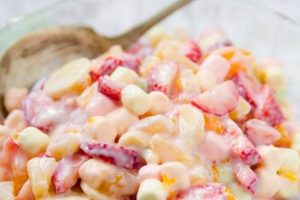
A simple dessert often served chilled combines the convenience of pre-prepared fruit cocktail with a whipped topping. This dessert typically features a mixture of canned fruits such as peaches, pears, pineapple, grapes, and cherries, enveloped in a fluffy, pre-made whipped dessert topping. Variations may include the addition of mini marshmallows, shredded coconut, or other flavor enhancements.
This dish offers a quick and easy solution for potlucks, picnics, or everyday treats. Its affordability and minimal preparation time contribute to its enduring popularity, particularly for large gatherings or busy individuals. Historically, the rise of this type of dessert coincides with the increasing availability of canned goods and commercially produced whipped toppings in the mid-20th century, reflecting a shift towards convenience in home cooking. Its straightforward nature makes it accessible to cooks of all skill levels, and it can easily be adapted to incorporate personal preferences and dietary restrictions.
The following sections will explore variations on this classic dish, offering ideas for ingredient substitutions, creative additions, and presentation tips. Discussions on nutritional information, storage techniques, and alternative preparation methods will also be provided.
Tips for Elevating a Simple Fruit Dessert
While inherently straightforward, several techniques can enhance the flavor and presentation of this classic dessert. Careful consideration of ingredients and preparation methods can transform a simple dish into a more appealing and satisfying treat.
Tip 1: Drain Excess Syrup: Thoroughly draining the canned fruit minimizes excess sweetness and prevents a watery consistency in the final product. This step allows the flavor of the fruit and the whipped topping to shine through.
Tip 2: Enhance with Fresh Fruit: Incorporating fresh fruits such as berries, bananas, or oranges adds textural complexity and elevates the nutritional value. Select fruits that complement the canned fruit cocktail.
Tip 3: Experiment with Spices: A dash of cinnamon, nutmeg, or ginger can add warmth and depth of flavor. Start with a small amount and adjust according to preference.
Tip 4: Consider Citrus Zest: The zest of a lemon, lime, or orange provides a bright, citrusy note that balances the sweetness. Use a fine grater to avoid including the bitter white pith.
Tip 5: Fold Gently: When combining the fruit and whipped topping, fold gently to maintain the airy texture of the topping. Overmixing can result in a denser, less appealing dessert.
Tip 6: Chill Thoroughly: Chilling for at least two hours allows the flavors to meld and enhances the refreshing qualities of the dessert. This step is particularly important when incorporating fresh fruit.
Tip 7: Presentation Matters: Serving in attractive bowls or individual glasses elevates the perceived value. Garnishing with a sprig of mint or a sprinkle of toasted nuts adds a touch of elegance.
By implementing these tips, one can create a dessert that is both satisfying and visually appealing. These simple enhancements elevate the basic combination of canned fruit and whipped topping, resulting in a more enjoyable culinary experience.
In conclusion, this dessert, while simple in its essence, offers significant potential for customization and refinement. The versatility and accessibility of this dish ensure its continued presence as a popular choice for various occasions.
1. Canned Fruit Cocktail
Canned fruit cocktail serves as the foundation of the dessert often referred to as a “canned fruit salad with Cool Whip.” Its availability and consistent composition make it a convenient and reliable base. The pre-cut, mixed fruit simplifies preparation, eliminating the need for fresh fruit selection, washing, peeling, and chopping. This characteristic contributes to the dessert’s popularity for quick meals and large gatherings. The syrup within the canned fruit, while requiring draining to manage sweetness levels, also contributes to the overall flavor profile and moisture content. Variations in syrup density and sweetness across brands can influence the final product, highlighting the importance of selecting a preferred canned fruit cocktail based on individual taste.
The practical significance of understanding the role of canned fruit cocktail lies in its impact on the final dessert. For example, choosing a variety with larger fruit pieces yields a more substantial texture, while a cocktail containing smaller pieces offers a smoother consistency. The specific fruits included typically peaches, pears, grapes, pineapple, and cherries create a recognizable flavor profile often associated with nostalgic or traditional desserts. Substituting a different canned fruit mixture, such as tropical fruits or fruit salad in juice, directly impacts the overall flavor and visual appeal. This understanding empowers individuals to tailor the dessert to specific preferences or dietary considerations, such as opting for a fruit cocktail packed in light syrup or juice.
In summary, canned fruit cocktail’s convenience and consistent composition make it integral to this simple dessert. Its characteristics influence texture, flavor, and sweetness. An awareness of these factors allows for informed choices regarding canned fruit selection and customization, ultimately affecting the sensory experience and satisfaction derived from the final product. This foundational understanding opens opportunities for creative variations and ensures a predictable, enjoyable outcome.
2. Cool Whip Topping

Cool Whip topping forms an integral part of the dessert commonly referred to as “canned fruit salad with Cool Whip.” Its light, airy texture and pre-made convenience contribute significantly to the dessert’s appeal. Cool Whip provides a textural contrast to the canned fruit, creating a balance between the soft fruit pieces and the fluffy topping. Its sweetness complements the fruit, often mitigating the tartness of certain canned fruit varieties like pineapple. The stability of Cool Whip, particularly its resistance to melting at room temperature, makes it a practical choice for gatherings and outdoor events. This characteristic allows the dessert to maintain its appealing presentation even in warmer environments. For instance, a picnic or potluck scenario benefits from Cool Whip’s ability to retain its form, ensuring an aesthetically pleasing dish throughout the serving period.
Cool Whip’s role extends beyond mere texture and sweetness; it also contributes to the overall sensory experience. Its smooth, creamy consistency complements the varied textures of the canned fruit pieces. The flavor profile, while generally neutral, harmonizes with the mixed fruit flavors without overpowering them. This allows the fruit flavors to remain prominent while providing a unifying element. Furthermore, Cool Whip’s availability and ease of use simplify preparation, making it a practical choice for time-constrained settings. One example lies in its quick integration into the dessert simply folding it into the drained fruit creates a ready-to-serve dish within minutes. This convenience factor contributes significantly to the dish’s popularity, especially when time is a limiting factor.
In summary, Cool Whip’s contribution to the “canned fruit salad with Cool Whip” dessert extends beyond basic ingredient status. Its impact on texture, flavor balance, stability, and ease of preparation positions it as a crucial element. Understanding its role informs recipe variations and ingredient selection, ultimately shaping the overall dining experience. This knowledge enables individuals to appreciate the functional and sensory contributions of Cool Whip, transforming a simple dessert into a predictable and satisfying treat.
3. Mixing Technique

Mixing technique plays a crucial role in the final quality of a canned fruit salad with whipped topping. Improper mixing can lead to a broken emulsion in the topping, a crushed fruit mixture, or an uneven distribution of ingredients. Careful consideration of the mixing process ensures a desirable texture and presentation.
- Folding vs. Stirring
Folding, a gentle lifting and turning motion, is the preferred method for incorporating the whipped topping into the fruit. This technique preserves the airiness of the topping, preventing a dense or deflated final product. Stirring, a more vigorous action, can break down the whipped topping’s structure, resulting in a less desirable texture. For example, folding maintains the distinct layers of fruit and topping in a trifle, while stirring would create a homogenous mixture.
- Timing
The timing of mixing is equally important. The whipped topping should be added just prior to serving to prevent the fruit from releasing excess liquid and compromising the topping’s stability. Premature mixing can lead to a watery, less appealing dessert. For instance, preparing the dish hours in advance necessitates separate storage of the fruit and topping until just before serving.
- Utensil Selection
Using a rubber spatula or large spoon is recommended for folding. These tools facilitate the gentle lifting and turning motion required for proper incorporation. Avoid using whisks or electric mixers, as these tools introduce excess air and can overmix the ingredients. A rubber spatula’s flexibility allows for clean, efficient folding without damaging delicate fruit pieces.
- Degree of Incorporation
The desired degree of mixing depends on personal preference. Some prefer a fully integrated mixture where the fruit and topping are evenly distributed. Others opt for a lighter touch, maintaining a more distinct separation between the components. This allows for individualized presentation and caters to varied textural preferences. A layered parfait, for example, benefits from a less integrated approach, showcasing distinct bands of fruit and topping.
The proper mixing technique enhances the overall enjoyment of a canned fruit salad with whipped topping. Careful consideration of folding versus stirring, timing, utensil selection, and the desired degree of incorporation contributes significantly to the final product’s texture, appearance, and overall appeal. By employing the correct methods, one ensures a light, fluffy, and well-balanced dessert that maximizes the qualities of both the fruit and the whipped topping.
4. Chill Time
Chill time significantly influences the palatability and structural integrity of a canned fruit salad combined with whipped topping. Proper chilling enhances flavor development, texture, and overall presentation. Understanding the impact of chill time is crucial for optimizing the sensory experience of this dessert.
- Temperature Influence on Flavor Perception
Chilling allows the flavors of the fruit and the whipped topping to meld, creating a more harmonious and balanced profile. Cold temperatures suppress volatile aroma compounds, preventing them from dissipating too quickly and allowing for a more nuanced flavor experience upon consumption. For example, the sweetness of canned peaches becomes more integrated with the vanilla notes of the topping after adequate chilling.
- Texture Enhancement through Chilling
Chilling firms the whipped topping, preventing it from becoming runny or losing its structural integrity. This is particularly important when serving the dessert in warmer environments. The chilled temperature also provides a pleasant textural contrast between the soft fruit and the cool, airy topping. A chilled dessert maintains its form better during serving, preventing a collapse into a soupy consistency.
- Impact on Food Safety
While the dessert itself may not be inherently high-risk, chilling helps maintain food safety by inhibiting bacterial growth. This is especially relevant if fresh fruit additions are incorporated. Maintaining a refrigerator temperature of 40F (4C) or below minimizes the risk of spoilage and ensures the dessert remains safe for consumption. Prompt refrigeration after preparation, particularly for desserts containing dairy-based toppings, is a crucial food safety practice.
- Visual Appeal and Serving Temperature
A chilled dessert offers enhanced visual appeal. The cool temperature creates a refreshing impression and enhances the vibrant colors of the fruit. The firm texture of the chilled whipped topping also holds its shape better, allowing for more attractive presentation. Serving the dessert cold enhances the overall sensory experience, offering a pleasant contrast to warmer ambient temperatures. A visually appealing dessert, maintained at the optimal serving temperature, contributes positively to the dining experience.
The appropriate chill time for this type of dessert allows for optimal flavor development, textural stability, and food safety. Understanding these factors ensures a more enjoyable sensory experience. Insufficient chilling can result in a less flavorful, structurally compromised, and potentially unsafe product. Adequate chill time, typically a minimum of two hours, elevates this simple dessert into a more satisfying and aesthetically pleasing culinary creation.
5. Serving Suggestions
Serving suggestions significantly impact the perceived value and enjoyment of a canned fruit salad with whipped topping. While the dessert’s inherent simplicity remains constant, varied presentations elevate it from a casual treat to a more elegant offering. Consideration of serving vessel, portion size, and accompanying elements transforms the dining experience.
Individual portions in stemmed glasses or dessert bowls create a more formal presentation compared to a communal bowl. This approach allows for controlled portioning and enhances visual appeal. Garnishes, such as fresh mint sprigs, toasted coconut flakes, or a drizzle of chocolate syrup, further elevate the dessert’s aesthetic. The choice of accompanying elements influences the overall sensory experience. For instance, serving the dessert alongside crisp cookies or wafers offers textural contrast and complements the sweetness of the fruit and topping. Similarly, a dollop of crme frache or a sprinkle of chopped nuts adds complexity and richness. In a buffet setting, smaller portions served in individual cups allow for easy handling and minimize mess, while maintaining an elegant presentation. Conversely, a large trifle bowl filled with layers of fruit, whipped topping, and cake creates a centerpiece suitable for a celebratory occasion.
Understanding the interplay between serving suggestions and the overall perception of this simple dessert is crucial for maximizing enjoyment. Careful consideration of presentation elements enhances visual appeal and adds sophistication to an otherwise basic dish. Thoughtful serving suggestions demonstrate attention to detail and elevate the dining experience, transforming a casual treat into a more memorable and aesthetically pleasing culinary offering. The practical application of these principles allows individuals to tailor the presentation to specific occasions and preferences, demonstrating the versatility of this simple dessert.
6. Optional Additions
Optional additions represent a significant opportunity to personalize and enhance the flavor profile and textural complexity of a canned fruit salad with whipped topping. These additions, while not essential to the core recipe, offer avenues for creative expression and customization, transforming a simple dessert into a more nuanced culinary experience. The selection of optional additions directly influences the overall sensory experience, offering the potential to balance sweetness, introduce contrasting flavors, or add textural depth.
Several categories of optional additions offer distinct benefits. Nuts, such as chopped pecans or slivered almonds, provide a satisfying crunch and a complementary richness. Shredded coconut introduces a subtle sweetness and a chewy texture. Mini marshmallows contribute a light, airy sweetness and a nostalgic element. Spices, such as cinnamon or nutmeg, offer warming notes that enhance the fruit flavors. Fresh fruit additions, like berries or sliced bananas, introduce contrasting textures and vibrant flavors. Citrus zest, particularly lemon or orange, provides a refreshing brightness that balances the sweetness of the canned fruit and whipped topping. The choice of additions should be guided by the desired flavor profile and textural complexity. For example, toasted nuts complement a fall-themed dessert, while fresh berries create a brighter, summery variation. Introducing a small quantity of each addition initially allows for adjustments based on personal preference. Over-reliance on additions may mask the delicate flavors of the canned fruit and whipped topping. A judicious approach ensures a balanced and harmonious final product.
Understanding the impact of optional additions on the final product allows for informed decision-making and creative customization. The practical application of this knowledge empowers individuals to tailor the dessert to specific preferences and dietary needs. Optional additions represent an accessible pathway to transforming a simple canned fruit salad with whipped topping into a more personalized and enjoyable culinary creation. The ability to incorporate these additions successfully elevates the dish from a basic dessert to a more complex and satisfying sensory experience.
7. Storage Practices

Storage practices are crucial for maintaining the quality, safety, and palatability of a canned fruit salad combined with whipped topping. Improper storage can lead to spoilage, textural degradation, and flavor deterioration, compromising the overall enjoyment and potentially posing health risks. Effective storage preserves the desired characteristics of both the fruit and the topping, ensuring a satisfying culinary experience.
- Container Selection
Selecting appropriate containers plays a vital role in preserving the dessert’s quality. Airtight containers minimize exposure to oxygen, reducing oxidation and preventing the topping from drying out or developing off-flavors. Using shallow containers, rather than deep ones, promotes even cooling and minimizes the time the dessert spends in the temperature danger zone. For instance, storing the dessert in a shallow, airtight container in the refrigerator preserves its texture and flavor more effectively than storing it in a deep bowl covered with plastic wrap.
- Temperature Control
Maintaining a consistent and appropriate temperature is critical for preventing bacterial growth and preserving the structural integrity of the whipped topping. Refrigeration at or below 40F (4C) inhibits bacterial proliferation and maintains the topping’s desired texture. Avoid storing the dessert near the refrigerator door, where temperature fluctuations are more common. Placing the container towards the back of the refrigerator ensures more stable temperature conditions and extends the dessert’s shelf life.
- Separation of Components Prior to Storage
If preparing the dessert in advance, storing the fruit and whipped topping separately until just before serving can be beneficial. This prevents the fruit from releasing excess liquid, which can dilute the topping and compromise its texture. Once combined, the dessert should be refrigerated promptly. This practice is particularly important when incorporating fresh fruit additions, which tend to release moisture more readily than canned fruit.
- Shelf Life Considerations
While canned fruit has a relatively long shelf life, the whipped topping is more perishable. The combined dessert should be consumed within 2-3 days for optimal quality and safety. Discarding any leftover dessert after this period minimizes the risk of foodborne illness. Proper labeling with the preparation date helps track storage duration and ensures timely consumption.
Implementing effective storage practices is essential for preserving the quality and safety of a canned fruit salad with whipped topping. Careful consideration of container selection, temperature control, component separation, and shelf life contributes to a more enjoyable and safe culinary experience. Neglecting these factors can lead to spoilage, textural degradation, and a diminished sensory experience. Proper storage ensures that the dessert retains its desired characteristics, maximizing enjoyment and minimizing potential health risks.
Frequently Asked Questions
This section addresses common inquiries regarding the preparation, storage, and variations of canned fruit salad with whipped topping. The information provided aims to clarify potential uncertainties and offer practical guidance for achieving optimal results.
Question 1: How long can this dessert be stored in the refrigerator?
For optimal quality and food safety, it is recommended to consume the dessert within two to three days of preparation. Storage beyond this timeframe may lead to textural degradation and an increased risk of spoilage.
Question 2: Can frozen fruit be used in place of canned fruit?
While frozen fruit can be substituted, thawing and draining it thoroughly before mixing with the whipped topping is crucial. Excess moisture from frozen fruit can compromise the topping’s stability and create a watery consistency.
Question 3: What are suitable alternatives to Cool Whip?
Whipped cream, Greek yogurt, or a dairy-free whipped topping can be used as alternatives to Cool Whip. These alternatives may impact the dessert’s overall flavor and texture.
Question 4: Can this dessert be frozen?
Freezing is generally not recommended. The whipped topping’s texture is negatively affected by freezing and thawing, often resulting in a separated and watery consistency upon thawing.
Question 5: How can excess sweetness be mitigated?
Thoroughly draining the canned fruit is crucial for managing sweetness levels. Opting for fruit canned in juice or light syrup can further reduce overall sweetness.
Question 6: How can this dessert be made more visually appealing?
Serving the dessert in individual glasses or bowls enhances presentation. Garnishes, such as fresh mint, toasted nuts, or a drizzle of chocolate, further elevate the visual appeal.
Understanding these frequently asked questions equips individuals with the knowledge necessary to prepare, store, and customize this simple dessert effectively. These practical insights contribute to a more successful and enjoyable culinary experience.
For additional information and recipe variations, please consult the preceding sections of this article.
Canned Fruit Salad Recipe with Cool Whip
This exploration of a canned fruit salad recipe with Cool Whip has examined the dish’s components, preparation methods, and potential enhancements. From the selection of canned fruit and the role of the whipped topping to the importance of chilling and the impact of optional additions, each aspect contributes to the final product’s overall quality. Proper mixing techniques preserve textural integrity, while careful attention to storage practices maintains freshness and flavor. Serving suggestions and creative presentation elevate the dish beyond its inherent simplicity.
The enduring popularity of this dessert underscores its accessibility and adaptability. Understanding the interplay of ingredients and techniques empowers individuals to personalize this classic recipe, transforming a simple combination into a customized culinary experience. Further experimentation with flavor profiles, textural contrasts, and presentation styles offers continued potential for innovation within this familiar framework.