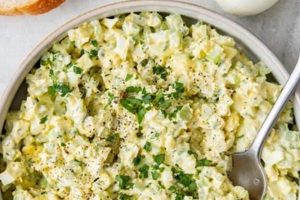
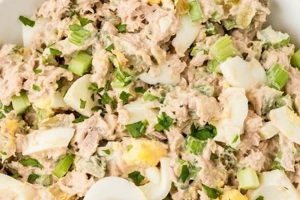
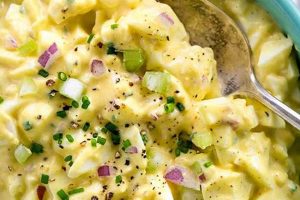
A simple preparation of this classic dish typically involves minimal ingredients: hard-boiled eggs, mayonnaise, mustard, salt, and pepper. Chopped celery, onion, or paprika can be added for extra flavor and texture. Variations might include different types of mustard, the addition of herbs like dill or chives, or the use of Greek yogurt in place of some mayonnaise for a lighter version.
Quick, nutritious, and budget-friendly, this dish offers a versatile meal option. It can be enjoyed as a sandwich filling, a salad topping, or a standalone snack. Its adaptability makes it suitable for picnics, lunches, and quick dinners. Historically, egg salad emerged as a popular dish with the advent of reliable refrigeration and increased egg production, becoming a staple in many cultures.
The following sections will explore optimal egg-boiling techniques, provide variations on the basic recipe, and offer suggestions for serving and storage.
Tips for Preparing Egg Salad
Creating a superior egg salad involves attention to detail throughout the preparation process. The following tips offer guidance for achieving optimal results.
Tip 1: Perfect Hard-Boiled Eggs: Avoid overcooking eggs, which can lead to a rubbery texture and a green ring around the yolk. Adding a teaspoon of baking soda to the boiling water can aid in peel removal. Start with cold water, bring to a rolling boil, then remove from heat and cover for 10-12 minutes for large eggs.
Tip 2: Precise Chopping: Uniformly chopped eggs create a pleasing texture and ensure even distribution of flavor. An egg slicer can achieve consistent results, or a sharp knife can be used for a more rustic chop.
Tip 3: Mayonnaise Matters: The quality and quantity of mayonnaise significantly impact the final product. Start with a good quality mayonnaise and add gradually until the desired consistency is reached. Over-mayonnaising can lead to a bland and overly rich salad.
Tip 4: Seasoning is Key: Proper seasoning elevates the flavor profile. Salt and pepper are essential, but consider adding a pinch of paprika, cayenne pepper, or a dash of hot sauce for added depth.
Tip 5: Texture Enhancement: Finely diced celery or red onion adds a welcome crunch. For a smoother texture, these ingredients can be finely minced or grated.
Tip 6: Fresh Herbs: Fresh dill, chives, or parsley provide a burst of fresh flavor and visual appeal. Add these herbs just before serving to maximize their impact.
Tip 7: Storage: Egg salad should be stored in an airtight container in the refrigerator. For optimal freshness, consume within three to five days.
By following these tips, one can achieve a consistently delicious and satisfying egg salad. Careful attention to these details elevates a simple dish to a culinary delight.
These preparation techniques lay the foundation for a variety of egg salad recipes and serving suggestions, explored further in the concluding section.
1. Simple Ingredients
The ease of an egg salad recipe is directly correlated with the simplicity of its ingredients. Accessibility and minimal processing contribute significantly to the convenience and speed of preparation. This section explores the core components of a basic egg salad and their contribution to the dish’s simplicity.
- Eggs:
Eggs form the foundation of this dish. Their widespread availability and affordability make them a convenient choice. The preparation, whether hard-boiled, scrambled, or fried, requires minimal culinary skill. The protein content of eggs also contributes to the nutritional value of the salad.
- Mayonnaise:
Mayonnaise serves as the binding agent and contributes richness and creaminess. While homemade mayonnaise is possible, commercially available options offer convenience without compromising the final product. Different types of mayonnaise, such as light or olive oil-based versions, allow for customization of flavor and calorie content.
- Seasonings:
Basic seasonings like salt and pepper are essential for enhancing the flavor of the eggs and mayonnaise. Their ubiquitous presence in most kitchens eliminates the need for specialized ingredients. Additional seasonings, such as mustard powder, paprika, or garlic powder, can further elevate the flavor profile with minimal effort.
- Optional Add-ins:
While not strictly necessary, simple additions like chopped celery, onion, or relish introduce textural and flavor complexity without demanding extensive preparation. These readily available ingredients require minimal chopping or dicing, maintaining the overall ease of the recipe.
The reliance on readily available, minimally processed ingredients allows for quick assembly and contributes to the overall ease and accessibility of egg salad as a dish. This simplicity allows for a wide range of adaptations and variations, making it a versatile and adaptable meal option.
2. Quick Preparation
The speed at which a dish can be prepared is a critical factor in its designation as “easy.” In the context of egg salad, quick preparation is a defining characteristic, contributing significantly to its popularity as a convenient meal option. This section will explore the elements that facilitate the rapid assembly of egg salad.
- Minimal Cooking Time:
The primary cooking process involved in egg salad, hard-boiling the eggs, typically requires less than 15 minutes. This brevity contributes significantly to the overall speed of preparation. Even accounting for variations in cooking time based on egg size or desired yolk consistency, the cooking phase remains relatively short. This minimal cooking time distinguishes egg salad from more labor-intensive dishes.
- Simple Ingredient Preparation:
Beyond boiling the eggs, the remaining steps involve minimal processing. Chopping or mashing the eggs, along with any optional add-ins such as celery or onion, can be accomplished quickly. Pre-chopped ingredients, available in many grocery stores, further reduce preparation time. This streamlined ingredient preparation contributes significantly to the ease and speed of assembling egg salad.
- Straightforward Assembly:
Once the eggs and other ingredients are prepared, combining them with mayonnaise and seasonings is a straightforward process. Thorough mixing ensures even distribution of flavors but adds minimal time to the overall preparation. This simple assembly process, requiring no specialized equipment or techniques, underscores the ease and convenience of egg salad preparation.
- No Complex Techniques:
Egg salad preparation necessitates no complex culinary techniques. Unlike dishes requiring precise temperature control, specific cooking methods, or intricate plating, egg salad relies on basic kitchen skills. This absence of complexity makes it accessible to cooks of all levels, further reinforcing its categorization as an easy recipe.
The convergence of minimal cooking time, simple ingredient preparation, straightforward assembly, and the absence of complex techniques culminates in a dish that can be prepared quickly and efficiently. This characteristic of quick preparation is central to the appeal of egg salad as an easy and convenient meal choice, suitable for a variety of occasions and skill levels.
3. Versatile Serving
Versatility in serving options significantly contributes to the perception of a recipe’s ease. An “easy recipe for egg salad” benefits greatly from this versatility, as it expands the dish’s utility and reduces the need for elaborate meal planning. This adaptability stems from the egg salad’s fundamental characteristics: a malleable texture, a balanced flavor profile, and compatibility with various complementary ingredients.
This inherent versatility manifests in numerous practical applications. Egg salad functions effectively as a sandwich filling, offering a quick and satisfying lunch or snack. Its adaptability extends to wraps, where it pairs well with tortillas and various greens. As a salad topping, it adds protein and richness to leafy greens or composed salads. Furthermore, egg salad can stand alone as a dip, accompanied by crackers, crudits, or chips. This range of applications simplifies meal preparation, eliminating the need for multiple, distinct recipes for different meal occasions. For example, a batch of egg salad prepared for sandwiches can easily transition into a salad topping or a standalone snack the following day. This adaptability minimizes food waste and maximizes the utility of a single, simple recipe.
The connection between versatile serving and an “easy recipe for egg salad” lies in the simplification of meal planning and execution. This versatility reduces the cognitive load associated with meal preparation, offering a readily adaptable solution for various culinary needs. The ability to repurpose egg salad across different meals and snacks contributes to its overall convenience and reinforces its value as an easy and efficient culinary solution. Challenges may arise in maintaining optimal texture and flavor across different serving methods; however, these can be mitigated through careful ingredient selection and storage practices. Ultimately, the versatile serving options associated with egg salad play a crucial role in establishing its position as an easy and adaptable recipe within a broader culinary context.
4. Budget-Friendly Meal
Affordability plays a significant role in the appeal of an “easy recipe for egg salad.” The classification of egg salad as a budget-friendly meal stems from the relatively low cost of its core ingredients. Eggs, a primary component, are generally an inexpensive source of protein. Mayonnaise, another key ingredient, is also readily available at a modest price point. Even supplemental ingredients like celery, onion, or mustard contribute minimally to the overall cost. This inherent affordability makes egg salad an attractive option for individuals or families seeking economical meal solutions.
This cost-effectiveness is further amplified by the inherent versatility of egg salad. A single batch can yield multiple meals, stretching food budgets further. For instance, egg salad can serve as a sandwich filling for lunch one day and be repurposed as a salad topping for dinner the next. This adaptability minimizes food waste and maximizes the return on investment for relatively inexpensive ingredients. Consider a scenario where a dozen eggs, costing approximately $3, are used to prepare egg salad. This quantity can easily provide several meals, effectively reducing the per-meal cost significantly. Such practical applications demonstrate the tangible benefits of egg salad’s budget-friendly nature.
The connection between “budget-friendly meal” and “easy recipe for egg salad” is integral to the dish’s enduring popularity. Its affordability, combined with ease of preparation and versatile serving options, positions egg salad as an accessible and economical choice for a wide range of individuals. While fluctuating food prices can impact the precise cost of ingredients, egg salad generally remains a relatively inexpensive meal option. This inherent affordability strengthens its position as a practical and sustainable culinary solution, particularly in contexts where budget constraints are a significant consideration.
5. Customizable Flavors

The ability to customize flavors significantly contributes to the sustained popularity of egg salad. This adaptability stems from the recipe’s inherent simplicity, allowing for a wide range of flavor modifications without compromising ease of preparation. The neutral base of eggs and mayonnaise provides a blank canvas for various additions, enabling cooks to tailor the final product to individual preferences or dietary needs. This customization potential ranges from simple additions of herbs and spices to more complex incorporations of different vegetables, cheeses, or proteins. For instance, a classic egg salad can be transformed with the addition of curry powder for an Indian-inspired twist, or by incorporating chopped pickles and relish for a tangy, Southern-style flavor profile.
This inherent flexibility extends beyond personal preference. Customizable flavors accommodate diverse dietary restrictions and cultural influences. A vegan egg salad can be created using plant-based mayonnaise and substitutes like chickpeas or tofu. Regional variations, such as adding chopped olives and feta cheese for a Mediterranean flair, further demonstrate the adaptability of the basic recipe. The practical significance of this customization lies in its capacity to cater to a broader audience, making egg salad a versatile dish suitable for various culinary contexts. Consider a scenario where a family member has an aversion to onions. The customizable nature of egg salad allows for the omission of onions without compromising the integrity of the dish for other family members. Such practical applications highlight the value of adaptable flavors.
The link between “customizable flavors” and “easy recipe for egg salad” reinforces the dish’s accessibility and continued relevance. This adaptability ensures that a simple recipe can remain engaging and satisfying despite repeated consumption. Challenges can arise in balancing flavor profiles and maintaining textural integrity with numerous additions; however, careful consideration of ingredient combinations and proportions mitigates these potential issues. Ultimately, the capacity for flavor customization distinguishes egg salad as a versatile and adaptable dish, suitable for a wide range of palates and dietary needs, solidifying its status as an “easy recipe” with enduring appeal.
Frequently Asked Questions
This section addresses common inquiries regarding the preparation and enjoyment of egg salad, offering concise and informative responses to clarify potential uncertainties.
Question 1: How can one prevent hard-boiled eggs from becoming overcooked and developing a green ring around the yolk?
Overcooking can be avoided by using a timer and adhering to recommended cooking times. Adding a teaspoon of baking soda to the boiling water can aid in peel removal and potentially reduce the occurrence of a green ring, which is caused by a reaction between iron in the yolk and sulfur in the egg white during prolonged cooking.
Question 2: What is the optimal method for chopping eggs for egg salad?
An egg slicer provides uniform pieces, contributing to a pleasing texture and even flavor distribution. Alternatively, a sharp knife can be used, aiming for consistent chop sizes. Over-chopping can lead to a mushy consistency, while uneven chopping may result in pockets of plain egg or mayonnaise.
Question 3: How can one determine the appropriate amount of mayonnaise to use?
Mayonnaise should be added gradually, starting with a small amount and increasing until the desired consistency is achieved. The ideal consistency allows the egg salad to hold its shape but remains spreadable. Over-mayonnaising results in a bland and excessively rich salad, while too little mayonnaise can lead to a dry and crumbly texture.
Question 4: Beyond salt and pepper, what other seasonings can enhance the flavor of egg salad?
Paprika, cayenne pepper, mustard powder, garlic powder, dill, chives, and hot sauce can add complexity and depth to the flavor profile. Experimentation with different seasonings can yield a variety of flavor profiles tailored to individual preferences.
Question 5: How long can egg salad be safely stored in the refrigerator?
Egg salad should be stored in an airtight container in the refrigerator for no more than three to five days. Proper storage helps maintain optimal freshness and minimizes the risk of bacterial growth.
Question 6: Can egg salad be frozen?
Freezing egg salad is not recommended. The mayonnaise-based dressing separates and becomes watery upon thawing, significantly altering the texture and flavor of the final product.
Addressing these common questions aims to provide a comprehensive understanding of egg salad preparation and storage. Adhering to these guidelines ensures a consistently satisfying and safe culinary experience.
This concludes the frequently asked questions section. The subsequent section will provide a variety of recipe variations to further explore the possibilities of egg salad.
Conclusion
This exploration of simplified egg salad preparation has highlighted the dish’s accessibility through readily available ingredients, straightforward techniques, and rapid assembly. The versatility of egg salad, adaptable as a sandwich filling, salad component, or standalone snack, underscores its utility in diverse meal contexts. Furthermore, the potential for customization, accommodating various flavor preferences and dietary needs, expands the dish’s appeal. The inherent affordability of egg salad reinforces its value as a budget-conscious meal option.
Culinary exploration often reveals that simplicity does not equate to a lack of sophistication. Egg salad, despite its unassuming nature, embodies this principle. Its enduring popularity speaks to the inherent satisfaction derived from a well-executed, uncomplicated dish. Continued experimentation with flavor profiles and ingredient combinations promises further evolution and enjoyment of this classic recipe.