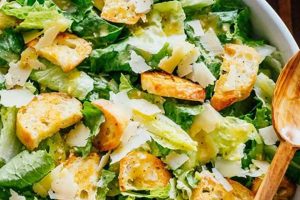
Homemade seasoned bread cubes add a satisfying crunch and complementary flavor to this classic salad. They offer a textural contrast to the crisp romaine lettuce and creamy dressing, elevating the overall sensory experience. For instance, a simple preparation involves cubing day-old bread, tossing it with olive oil and seasonings like garlic powder, salt, and pepper, then baking until golden brown. Variations can include herbs like thyme or rosemary, grated Parmesan cheese, or even a sprinkle of smoked paprika for added depth.
Crisp, flavorful bread cubes are essential for a truly enjoyable Caesar salad. Preparing them at home allows for control over ingredients and freshness, resulting in a superior taste compared to store-bought alternatives. Historically, the crouton’s role was functional, utilizing stale bread. Today, they have evolved into a key component that significantly enhances the dish’s flavor profile and texture. This highlights the evolution from simple necessity to a culinary enhancement.
The following sections will explore various methods for preparing these essential components, from basic recipes to more elaborate variations, alongside tips for achieving optimal texture and flavor. Techniques for using different types of bread, seasonings, and cooking methods will also be covered to cater to a range of tastes and preferences.
Tips for Perfect Caesar Salad Croutons
Achieving perfectly textured and flavorful bread cubes elevates the Caesar salad experience. Attention to detail in bread selection, seasoning, and cooking methods ensures optimal results.
Tip 1: Stale Bread is Key: Day-old bread, slightly dried out, is ideal as it absorbs flavors more readily and crisps up beautifully when toasted. Fresh bread tends to become overly soft and chewy.
Tip 2: Uniform Sizing Matters: Evenly sized cubes ensure consistent cooking and contribute to a pleasant visual appeal. Aim for approximately -inch to -inch cubes.
Tip 3: Seasoning is Essential: A simple blend of olive oil, garlic powder, salt, and pepper provides a foundational flavor. Experiment with additional herbs like thyme, rosemary, or oregano.
Tip 4: Control the Heat: Moderate oven temperatures (around 350F/175C) promote even browning and prevent burning. Toss the cubes halfway through for consistent crispness.
Tip 5: Don’t Overcrowd the Pan: Ensure adequate spacing between bread cubes on the baking sheet allows for proper air circulation and even toasting. Overcrowding results in steaming rather than crisping.
Tip 6: Consider the Bread Type: While a classic sourdough or country loaf works well, explore other options like ciabatta, baguette, or even rye for unique flavor profiles.
Tip 7: Enhance with Parmesan: Toss the cubes with grated Parmesan cheese during the last few minutes of baking for a savory, cheesy crust.
By following these guidelines, one can achieve perfectly golden, crispy, and flavorful bread cubes that enhance the overall Caesar salad experience. The right balance of texture and taste elevates this classic dish to new heights.
By understanding these nuances, one can consistently create croutons that provide the ideal complement to a Caesar salad, transforming a simple side dish into a star component.
1. Bread Type

Bread selection significantly impacts the final quality of croutons for Caesar salad. The bread’s density, texture, and flavor profile influence the crouton’s ability to absorb seasonings, maintain structural integrity during cooking, and contribute to the overall taste and texture of the salad.
- Density and Texture
Denser breads like sourdough, country loaves, and ciabatta create sturdy croutons that hold their shape well and offer a substantial crunch. Conversely, airier breads like focaccia or challah may result in lighter, more delicate croutons that are prone to crumbling.
- Flavor Compatibility
The bread’s inherent flavor should complement the Caesar salad’s other components. Neutral-flavored breads like white or whole wheat provide a blank canvas for seasonings, while breads with stronger flavors, such as rye or pumpernickel, can add complexity but may not pair well with traditional Caesar dressings.
- Staling Properties
Slightly stale bread is generally preferred for croutons as it has lost some moisture, allowing it to crisp up more effectively. Freshly baked bread can result in soft, chewy croutons. The rate at which different bread types stale also affects their suitability.
- Crust Characteristics
Breads with a thick, well-developed crust, such as baguettes or boules, often yield croutons with a desirable textural contrast between the crunchy exterior and slightly softer interior. Breads with thinner crusts may produce more uniform, but potentially less interesting, croutons.
Careful consideration of these bread characteristics ensures the creation of croutons that not only provide a pleasing texture but also enhance the overall flavor profile of the Caesar salad, balancing the other elements like romaine lettuce, Parmesan cheese, and creamy dressing.
2. Cube Size

Crouton cube size significantly influences the overall Caesar salad experience. Size affects not only the texture and flavor but also the visual appeal and ease of eating. Balancing these factors contributes to a well-rounded and enjoyable culinary experience.
- Texture and Mouthfeel
Smaller cubes offer a delicate crunch and integrate more seamlessly with the other salad components. Larger cubes provide a more substantial bite and a contrasting textural element. The desired textural experience influences the optimal cube size.
- Flavor Absorption and Distribution
Smaller cubes possess a greater surface area to volume ratio, allowing for more efficient absorption of seasonings and dressings. This results in a more intense flavor experience. Larger cubes offer a milder flavor as the seasoning is concentrated on the surface.
- Visual Presentation
Uniformly sized croutons contribute to a visually appealing salad. Irregular sizes can appear less refined. Cube size can also be adjusted to complement the scale of other salad components, such as the size of the lettuce leaves.
- Practicality and Eating Experience
Overly large croutons can be unwieldy to eat, potentially disrupting the flow of enjoying the salad. Smaller cubes are easier to manage and distribute evenly throughout the salad.
Careful consideration of cube size allows for optimization of texture, flavor, visual presentation, and practicality within the context of a Caesar salad. Balancing these considerations ensures a harmonious and enjoyable dining experience.
3. Seasoning

Seasoning plays a crucial role in elevating basic bread cubes into flavorful croutons that complement a Caesar salad. The careful application of seasonings enhances the inherent taste of the bread, adding depth and complexity while balancing the other salad components like the dressing and cheese. The choice of seasonings directly impacts the overall flavor profile, transforming simple croutons into a key element of the dish.
A foundational seasoning blend often includes garlic powder, onion powder, salt, and black pepper. This combination provides a savory base that complements the umami notes of the Caesar dressing. Herbs like dried oregano, thyme, or rosemary can be incorporated to add an earthy or herbaceous dimension. A touch of smoked paprika can introduce a smoky nuance, while red pepper flakes contribute a subtle heat. The selection and balance of these seasonings directly influence the final flavor profile, allowing for customization based on individual preferences.
For instance, incorporating grated Parmesan cheese into the seasoning blend adds a salty, umami richness. A sprinkle of nutritional yeast contributes a cheesy, nutty flavor while offering a vegan alternative. Alternatively, using seasoned salts, such as garlic salt or onion salt, can simplify the seasoning process while still delivering robust flavor. The quantity and combination of seasonings should be adjusted based on the desired intensity and overall flavor profile. Over-seasoning can overwhelm the other salad components, while under-seasoning results in bland croutons that fail to contribute meaningfully to the dish. Careful experimentation and tasting throughout the preparation process are essential for achieving the desired flavor balance.
The timing of seasoning application also influences the final outcome. Adding seasonings before the toasting process allows them to infuse the bread more thoroughly, resulting in a more evenly distributed flavor. Seasoning after toasting provides a more pronounced surface flavor. Combining both methods can create a layered flavor profile. Understanding the impact of seasoning choices, quantities, and timing is crucial for creating croutons that contribute positively to the overall flavor profile and enjoyment of a Caesar salad.
4. Fat/Oil

Fat or oil is essential in crouton preparation for Caesar salad, contributing significantly to texture, flavor, and overall palatability. The choice of fat influences how the bread cubes brown and crisp, affecting their structural integrity and how they interact with the other salad components. Understanding the role of fat selection is crucial for creating croutons that enhance the dining experience.
- Flavor Enhancement
The selected fat imparts its unique flavor profile to the croutons. Olive oil contributes a fruity, peppery note, while butter offers a rich, savory taste. Neutral oils, such as canola or vegetable oil, allow other seasonings to shine. The fat’s flavor should complement the overall salad composition.
- Browning and Crispness
Fat facilitates the Maillard reaction, the chemical process responsible for browning and the development of complex flavors during cooking. Different fats have varying smoke points, influencing how quickly and effectively they promote browning. The desired level of crispness dictates the appropriate fat and cooking method.
- Texture and Structural Integrity
Fat coats the bread cubes, preventing them from becoming overly dry and brittle during cooking. This contributes to a desirable textural contrast between the crisp exterior and slightly softer interior. The fat’s viscosity and how it interacts with the bread’s starch structure affect the final texture.
- Overall Palatability and Sensory Experience
Fat contributes to the overall richness and mouthfeel of the croutons, enhancing the sensory experience of the salad. It also aids in the distribution of seasonings, ensuring a more even flavor. The fat’s ability to carry and distribute flavors contributes to the crouton’s overall palatability.
The careful selection and application of fat are essential for producing croutons that not only provide textural contrast but also contribute positively to the overall flavor profile of the Caesar salad. Balancing these considerations ensures a harmonious and enjoyable culinary experience.
5. Cooking Method

The cooking method employed significantly impacts the final characteristics of croutons intended for Caesar salad. Different methods yield variations in texture, from delicate crispness to substantial crunch, and influence the overall flavor profile. Understanding the nuances of each cooking method allows for precise control over the final product, optimizing its contribution to the salad.
- Baking
Baking offers consistent results and allows for larger batches. Even heat distribution promotes uniform browning and crispness. Lower temperatures result in a drier, more delicate texture, while higher temperatures yield a quicker, more robust crunch. This method offers control over the final texture, ranging from delicate to substantial.
- Pan-Frying
Pan-frying offers greater control over browning and allows for the development of more complex flavors through direct contact with the heated surface. The use of fat, such as butter or olive oil, contributes to flavor development and influences the final texture. This method produces croutons with more pronounced surface browning and a richer flavor profile.
- Air-Frying
Air-frying offers a rapid and efficient method, producing evenly browned and crispy croutons with minimal added fat. The circulating hot air promotes uniform cooking, resulting in a consistent texture throughout the crouton. This method is particularly suitable for achieving a light and airy crispness.
- Broiling
Broiling produces intensely browned and crispy croutons in a short amount of time. The high heat caramelizes surface sugars, resulting in a distinct flavor profile and a crunchy texture. This method requires careful monitoring to prevent burning, but offers a quick route to a deeply browned, crunchy crouton.
Selecting the appropriate cooking method depends on the desired textural and flavor characteristics of the croutons. Each method offers distinct advantages and contributes uniquely to the overall Caesar salad experience. Consideration of factors such as time constraints, equipment availability, and desired flavor profile informs the selection process, ensuring the croutons complement the salad harmoniously.
6. Crispness Level
Crouton crispness significantly impacts the overall sensory experience of a Caesar salad. Texture plays a crucial role in balancing the other components, such as the crisp romaine lettuce and creamy dressing. The desired level of crispness influences recipe choices, from bread selection to cooking methods, affecting the croutons’ interaction with other ingredients and their contribution to the dish’s overall palatability.
Several factors influence achievable crispness levels. Bread type, with its inherent moisture content and density, plays a foundational role. Denser, drier breads tend to produce crispier croutons compared to airier, moister varieties. Cooking methods also exert a substantial influence. Baking allows for even drying and crisping, while pan-frying or air-frying can achieve a quicker, more intense crunch. Furthermore, the amount and type of fat used affect both the browning process and the final texture. For instance, using olive oil contributes to a different type of crispness compared to butter, influencing the overall mouthfeel.
Understanding the interplay between these factors allows for precise control over crouton texture. A lightly crisped crouton, achieved through lower oven temperatures or shorter cooking times, offers a delicate crunch that complements the other salad elements without overpowering them. This texture is often preferred when the salad features a richer dressing or other prominent toppings. Conversely, a deeply crisped crouton, achieved through higher temperatures or longer cooking times, provides a substantial textural contrast and can stand up to bolder flavors. This robust crunch can be particularly effective in salads with simpler dressings or when the croutons are intended to be a more prominent component. Achieving the desired crispness level enhances the overall balance and enjoyment of the Caesar salad, demonstrating the crucial role of texture in culinary satisfaction.
7. Storage
Proper storage is crucial for maintaining the desired texture and flavor of homemade croutons, preserving their contribution to the overall Caesar salad experience. Improper storage can lead to undesirable changes in texture, such as sogginess or excessive hardening, and can compromise the flavor profile. Understanding effective storage techniques ensures the croutons remain a valuable asset to the salad, enhancing both its textural and flavor dimensions.
- Container Selection
An airtight container is essential for protecting croutons from moisture and humidity, which can lead to sogginess. Materials like glass or plastic are suitable. Avoid storing croutons in paper bags or loosely covered containers, as these do not provide adequate protection against environmental factors. Choosing an appropriately sized container prevents excess air space, minimizing potential moisture absorption.
- Temperature Control
Room temperature storage is generally suitable for freshly made croutons, provided they are stored in an airtight container. Avoid storing croutons near heat sources, such as ovens or stoves, as this can accelerate staling and compromise texture. Refrigeration can extend shelf life but may slightly alter the texture, making the croutons less crispy. Freezing is generally not recommended, as it can significantly impact texture upon thawing.
- Separation from Other Ingredients
Store croutons separately from the other salad components, especially the dressing. Direct contact with moist ingredients will compromise the croutons’ crispness. Adding croutons to the salad just before serving ensures optimal texture and prevents them from absorbing excess moisture from the dressing or other ingredients.
- Shelf Life Expectations
Homemade croutons typically maintain optimal quality for 2-3 days when stored properly at room temperature. Refrigeration can extend this to up to a week, though some textural changes may occur. Monitor the croutons’ texture and discard any that have become stale or soggy. Understanding realistic shelf life expectations helps prevent disappointment and ensures the croutons contribute positively to the salad’s overall quality.
By adhering to these storage guidelines, one can ensure that homemade croutons retain their desirable texture and flavor, enhancing the Caesar salad experience. Proper storage preserves the croutons’ carefully crafted crispness and prevents undesirable changes that can compromise the overall enjoyment of the dish. This attention to detail elevates the croutons from a simple addition to a key component that contributes significantly to the salad’s success.
Frequently Asked Questions
This section addresses common inquiries regarding the preparation and utilization of homemade croutons specifically designed to enhance Caesar salads.
Question 1: What type of bread is best suited for Caesar salad croutons?
Sturdier breads like sourdough, ciabatta, and country loaves are generally preferred for their ability to hold their shape and develop a desirable crunch when toasted. These denser breads also absorb seasonings effectively.
Question 2: Can fresh bread be used for croutons?
While fresh bread can be used, slightly stale bread is generally recommended. Stale bread has lower moisture content, promoting better browning and crisping during the toasting process. Fresh bread may result in softer, less crunchy croutons.
Question 3: What is the ideal size for Caesar salad croutons?
Optimal crouton size depends on personal preference, but generally, cubes ranging from -inch to -inch are recommended. This size offers a pleasant balance of texture and ease of eating.
Question 4: How can one achieve a uniform cube size?
Using a sharp knife and a cutting board with a stable surface aids in achieving uniform cube sizes. Careful measurement and consistent cutting techniques further ensure consistency.
Question 5: How should Caesar salad croutons be seasoned?
A basic seasoning blend typically includes garlic powder, onion powder, salt, and pepper. Additional herbs, spices, or grated cheese can be incorporated to enhance the flavor profile.
Question 6: What is the best way to store homemade croutons?
Storing croutons in an airtight container at room temperature helps maintain their texture and prevents them from absorbing moisture. Avoid storing them in the refrigerator, as this can make them less crispy.
Careful consideration of these frequently asked questions ensures the successful preparation and utilization of homemade croutons, enhancing the overall Caesar salad experience.
The following section will delve into specific recipes, offering detailed instructions for creating a variety of flavorful croutons tailored to complement Caesar salads.
Recipe Croutons for Caesar Salad
Exploration of crouton recipes for Caesar salad reveals the significant impact seemingly simple bread cubes have on the dish. Factors such as bread type, cube size, seasoning, fat choice, and cooking method contribute significantly to the final product’s texture and flavor. Proper storage techniques further ensure the croutons retain their desirable qualities. Consideration of these elements allows for the creation of croutons that elevate the Caesar salad experience, transforming a basic side dish into a culinary highlight.
Mastery of crouton preparation empowers culinary enthusiasts to personalize this classic salad component, enhancing flavor profiles and textural experiences. Continued experimentation with various bread types, seasonings, and cooking methods offers a path toward further refinement and culinary discovery, ensuring the Caesar salad remains a vibrant and evolving culinary creation.