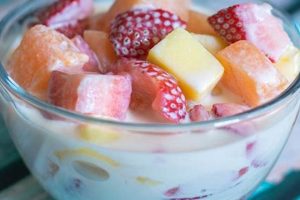
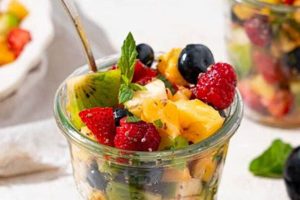
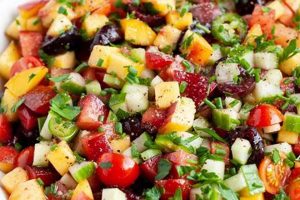
A delectable dessert or refreshing side dish typically consists of various fresh fruits, combined and sometimes dressed with a light syrup or juice. The addition of whipped cream elevates the dish, adding a creamy texture and sweetness. For instance, a summer version might include berries, melon, and grapes, while a tropical variation could feature mango, pineapple, and kiwi, all enhanced by a dollop of freshly whipped cream.
This type of dish offers both nutritional value and culinary versatility. Fresh fruit provides essential vitamins, minerals, and fiber. The creamy topping contributes richness and visual appeal, making it a popular choice for gatherings and celebrations. Historically, elaborately presented fruit courses have been a staple of festive meals, and the addition of cream enhances this luxurious element. The adaptability of this dish allows for seasonal variations and personalized creations, ensuring its enduring appeal.
The following sections will delve into specific recipes, explore variations based on seasonal fruits, discuss techniques for achieving optimal fruit ripeness and cream consistency, and provide expert tips for presentation and storage.
Tips for Creating the Perfect Fruit Salad with Whipped Cream
Achieving a balanced and flavorful combination requires attention to detail. The following tips offer guidance on fruit selection, preparation, and presentation.
Tip 1: Select ripe, but firm, fruit. Optimal ripeness ensures peak flavor and texture. Avoid overripe fruit, as it can become mushy and compromise the overall quality of the dish.
Tip 2: Consider a variety of textures and flavors. Combining fruits with different levels of sweetness and textures creates a more interesting and enjoyable culinary experience. Incorporating contrasting elements, such as tart berries and sweet melons, provides complexity.
Tip 3: Prepare fruit close to serving time. This prevents oxidation and maintains freshness. If advance preparation is necessary, store cut fruit in airtight containers refrigerated until ready to assemble.
Tip 4: Use high-quality heavy cream for whipping. Higher fat content yields a richer, more stable whipped cream. Chill the cream thoroughly before whipping to achieve optimal volume and texture.
Tip 5: Sweeten whipped cream judiciously. Excessive sweetness can overpower the natural flavors of the fruit. Taste and adjust sweetness according to preference.
Tip 6: Enhance presentation with thoughtful arrangements. Consider color combinations and varying sizes of fruit pieces to create a visually appealing presentation. Garnishments, such as mint sprigs or a light dusting of powdered sugar, add an elegant touch.
Tip 7: Prevent browning by using a citrus glaze. A light coating of lemon or orange juice can help to prevent certain fruits, such as apples and bananas, from browning after being cut.
By following these guidelines, one can create a delightful dish that showcases the natural flavors of fresh fruit, enhanced by the richness of whipped cream. Careful selection, proper preparation, and thoughtful presentation ensure a satisfying culinary experience.
The concluding section will offer additional resources and inspiration for further exploration of fruit combinations and dessert presentations.
1. Fresh, Ripe Fruits

The foundation of a successful fruit salad with whipped cream lies in the selection of fresh, ripe fruits. Quality ingredients directly impact the overall flavor, texture, and aesthetic appeal of the dish. Understanding the nuances of ripeness and selecting appropriate varieties are crucial for achieving optimal results.
- Flavor Optimization
Peak ripeness corresponds with peak flavor. Fully ripened fruits exhibit their characteristic sweetness, tartness, or other defining flavor notes. For instance, a perfectly ripe strawberry offers a burst of sweetness balanced by a subtle tang, while a ripe mango delivers a rich, tropical sweetness. Utilizing fruits at their flavor peak enhances the overall complexity and enjoyment of the fruit salad.
- Textural Integrity
Proper ripeness ensures optimal texture. Ripe fruit should yield slightly to gentle pressure but maintain its structural integrity. Overripe fruit becomes mushy and contributes to an undesirable texture in the salad. Consider the contrast between a firm, juicy grape and an overripe, soft grape to understand the importance of textural integrity.
- Visual Appeal
Vibrant colors and appealing aromas characterize fresh, ripe fruit. The visual appeal of a fruit salad significantly contributes to its overall desirability. A mix of colorful fruits, such as vibrant berries, deep green kiwi, and bright orange cantaloupe, creates an attractive presentation, enhancing the dining experience.
- Nutritional Value
While nutritional content varies slightly with ripeness, generally, ripe fruits offer readily available nutrients. Ensuring the fruit is at its peak ripeness maximizes the potential health benefits derived from consuming the fruit salad.
The careful selection and incorporation of fresh, ripe fruits elevates the fruit salad with whipped cream from a simple dessert to a culinary experience. By prioritizing quality ingredients, one can create a dish that is not only visually appealing but also rich in flavor, varied in texture, and nutritionally beneficial.
2. Balanced Sweetness
Balanced sweetness is paramount in a successful fruit salad with whipped cream. The interplay of sugars naturally present in the fruit with the added sweetness of the whipped cream determines the overall palatability of the dish. Overly sweet combinations can mask the delicate nuances of individual fruits, while insufficient sweetness can result in a bland, unappetizing experience. The goal is to achieve a harmonious blend where the sweetness of the cream complements, rather than overpowers, the natural fruit flavors.
Consider a fruit salad incorporating tart raspberries, sweet strawberries, and mildly sweet honeydew melon. The raspberries contribute a tartness that balances the sweetness of the strawberries and melon. Whipped cream, lightly sweetened with powdered sugar or honey, enhances the overall sweetness without obscuring the individual fruit flavors. Conversely, if overly ripe, excessively sweet fruits are used, or the whipped cream is excessively sweetened, the nuances of each fruit become lost in a cloying sweetness. The tartness of the raspberries, in this example, becomes crucial in preventing such an outcome. Achieving this balance requires careful consideration of the sugar content of each fruit and a judicious approach to sweetening the whipped cream.
Understanding the role of balanced sweetness allows for informed choices regarding fruit selection and cream preparation. It enables the creation of a dish that is both refreshing and satisfying, showcasing the natural flavors of the fruit while benefiting from the creamy richness of the whipped cream. This principle extends beyond mere taste; it contributes to a more nuanced and enjoyable culinary experience, highlighting the inherent qualities of each ingredient.
3. Variety of Textures
Textural diversity significantly contributes to the overall sensory experience of a fruit salad with whipped cream. Beyond flavor, the interplay of contrasting textures elevates the dish, creating a more dynamic and enjoyable consumption experience. This involves considering the inherent textures of different fruits and how they interact with the smooth, airy texture of the whipped cream.
- Soft vs. Firm
Incorporating both soft and firm fruits provides textural contrast. Soft fruits, such as berries and bananas, offer a delicate, yielding texture, while firmer fruits, like apples and grapes, provide a satisfying bite. The juxtaposition of these textures creates a more engaging mouthfeel. Imagine the contrast between a soft slice of banana and a crisp grape.
- Smooth vs. Coarse
The smooth texture of whipped cream complements the varied textures of the fruit. Fruits like kiwi or pineapple, with their slightly coarse texture, provide a counterpoint to the cream’s smoothness. This contrast prevents a monotonous textural experience. The addition of chopped nuts or seeds can further enhance this interplay.
- Juicy vs. Dry
Balancing juicy fruits with those possessing less inherent moisture contributes to a well-rounded textural profile. Watermelon and oranges offer a burst of juiciness, while apples and pears provide a denser, less juicy texture. This balance prevents the salad from becoming excessively watery or dry.
- Layered Textures through Preparation Techniques
Different cutting techniques further influence texture. Dicing creates a uniform texture, while slicing preserves the integrity of the fruit’s natural structure. Incorporating both diced and sliced fruits allows for a layered textural experience. Consider the difference between diced mango and a thin slice of mango; both offer unique textural contributions.
The strategic combination of various textures transforms a simple fruit salad with whipped cream into a multi-sensory culinary delight. The interplay of soft and firm, smooth and coarse, juicy and dry elements, enhanced by varied preparation techniques, creates a dish that is not only flavorful but also texturally stimulating, enhancing overall enjoyment.
4. Proper Cream Whipping

Proper cream whipping is integral to a successful fruit salad with whipped cream. The whipped cream’s texture and stability significantly influence the dish’s overall appeal, impacting both presentation and palatability. Incorrectly whipped cream can detract from the experience, resulting in a watery, unstable topping that compromises the fruit salad’s integrity.
The objective is to achieve a light, airy cream with stable peaks. This requires attention to temperature, fat content, and whipping technique. Cold cream whips more effectively; higher fat content contributes to stability. Over-whipping produces a grainy, dense texture, while under-whipping results in a loose, runny consistency. Consider the contrast between a dollop of properly whipped cream, holding its shape atop the fruit, and a puddle of under-whipped cream seeping into the salad. The former enhances presentation and provides a pleasant textural counterpoint to the fruit, while the latter detracts from both visual appeal and enjoyment.
Achieving properly whipped cream requires selecting appropriate cream, chilling it thoroughly, and employing appropriate whipping techniques. Stabilizers, such as gelatin or powdered sugar, can further enhance stability, particularly in warmer environments. Understanding the principles underlying proper cream whipping ensures a visually appealing and texturally satisfying fruit salad with whipped cream. The whipped cream complements the fruit rather than detracting from its presentation or flavor. This attention to detail elevates the dessert from a simple mixture of ingredients to a carefully constructed culinary creation.
5. Elegant Presentation

Elegant presentation elevates a fruit salad with whipped cream from a simple dish to a visually appealing dessert. Presentation encompasses the arrangement of fruit, the method of serving, and the choice of garnishes. A thoughtfully presented fruit salad enhances the dining experience, stimulating appetite and creating a sense of occasion. Consider the contrast between a haphazardly arranged bowl of fruit and a meticulously crafted arrangement. The former may be perceived as an afterthought, while the latter suggests care and attention to detail, transforming the perception of the dish.
Several factors contribute to elegant presentation. Color plays a significant role; a variety of vibrant hues creates visual interest. Varying the sizes and shapes of fruit pieces adds dimension and texture. The choice of serving vessel also contributes; a clear glass bowl showcases the colorful fruit, while individual portions in elegant glasses or small bowls add a touch of sophistication. Garnishes, such as fresh mint sprigs, edible flowers, or a light dusting of powdered sugar, provide finishing touches that enhance visual appeal. For a summer luncheon, individual servings of fruit salad with whipped cream presented in stemmed glasses, garnished with a sprig of mint, create an impression of elegance and refinement. This attention to detail transforms a simple dessert into a memorable part of the dining experience.
Elegant presentation enhances the perceived value and enjoyment of a fruit salad with whipped cream. While taste remains paramount, visual appeal significantly influences the overall dining experience. Thoughtful presentation demonstrates care and attention to detail, transforming a simple combination of ingredients into a visually stunning and delectable dessert. This understanding allows for the creation of fruit salads that are not only delicious but also visually captivating, contributing to a more satisfying and memorable culinary experience.
6. Storage Techniques
Appropriate storage techniques are crucial for maintaining the quality and safety of fruit salad with whipped cream. Improper storage can lead to undesirable changes in texture, flavor, and appearance, as well as potential bacterial growth. This necessitates understanding the factors influencing spoilage and implementing effective preservation methods. For instance, cut fruit is susceptible to oxidation, resulting in browning and flavor degradation. Whipped cream, being dairy-based, is prone to spoilage if not kept adequately refrigerated. These vulnerabilities underscore the importance of correct storage procedures.
Effective storage involves several key practices. Refrigeration at or below 40F (4C) is essential to slow bacterial growth and enzymatic activity. Airtight containers prevent oxidation and maintain the fruit’s moisture content. Storing cut fruit separately from the whipped cream until serving minimizes the risk of the cream becoming watery or the fruit becoming soggy. If preparing the salad in advance, consider using a light coating of lemon or lime juice on susceptible fruits like apples and bananas to prevent browning. Storing leftover fruit salad with whipped cream promptly and correctly ensures its continued enjoyment and minimizes food safety risks. For a picnic or outdoor event, using insulated containers with ice packs helps maintain safe temperatures and preserve the salad’s quality.
Proper storage techniques extend the shelf life of fruit salad with whipped cream while preserving its sensory qualities and ensuring food safety. Understanding these techniques, coupled with their consistent application, minimizes waste and allows for the continued enjoyment of a freshly prepared dish. Neglecting appropriate storage, conversely, compromises quality, potentially leading to spoilage and foodborne illness. This reinforces the practical significance of incorporating effective storage practices into the overall preparation and consumption process.
Frequently Asked Questions
This section addresses common inquiries regarding the preparation and enjoyment of fruit salad with whipped cream. Clarity on these points contributes to a more successful culinary outcome.
Question 1: How can browning of certain fruits, such as apples and bananas, be prevented?
A light coating of citrus juice, such as lemon or lime, helps prevent enzymatic browning in susceptible fruits. This protective layer minimizes oxidation, preserving the fruit’s appearance and flavor.
Question 2: What is the recommended storage duration for leftover fruit salad with whipped cream?
Refrigerated storage in an airtight container is recommended for a maximum of two days. Beyond this timeframe, quality degradation and potential bacterial growth become concerns.
Question 3: Can frozen fruit be used in a fruit salad with whipped cream?
While frozen fruit can be incorporated, thawing and draining excess liquid beforehand is crucial. Failure to do so can result in a watery, less appealing salad. Fresh fruit, however, generally yields optimal results.
Question 4: What type of cream is best suited for whipping?
Heavy cream, with a higher fat content (typically 36% or higher), is ideal for whipping. The higher fat content contributes to a stable, voluminous whipped cream that holds its shape well.
Question 5: How can one ensure the whipped cream maintains its stability?
Thoroughly chilling the cream and equipment before whipping is crucial. Incorporating a stabilizer, such as a small amount of gelatin or powdered sugar, further enhances stability, particularly in warmer environments.
Question 6: What are some suitable alternatives to whipped cream?
Alternatives include Greek yogurt, coconut cream, or a mixture of both. These options offer different flavor profiles and can accommodate dietary restrictions or preferences. Adjusting sweetness may be necessary to complement the fruit.
Addressing these common queries facilitates a more informed approach to preparing and enjoying fruit salad with whipped cream. Attention to these details contributes to a more successful and satisfying culinary outcome.
For further exploration of fruit salad variations and culinary inspiration, consult the resources provided in the following section.
Fruit Salad Recipe with Whipped Cream
This exploration of fruit salad recipes incorporating whipped cream has highlighted the multifaceted nature of this seemingly simple dessert. From the careful selection of fresh, ripe fruits to the nuances of cream whipping and the art of elegant presentation, each element contributes to the overall culinary experience. Balancing sweetness, incorporating diverse textures, and employing proper storage techniques are essential for maximizing flavor, visual appeal, and food safety. Addressing common queries regarding ingredient selection, preparation methods, and storage further empowers culinary enthusiasts to create exceptional fruit salads with whipped cream.
The potential for creativity within this culinary framework remains vast. Seasonal variations, personalized flavor combinations, and innovative presentation styles offer endless opportunities for exploration. A deeper understanding of the underlying principles governing ingredient interaction and preparation techniques empowers individuals to elevate this classic dessert to new heights of culinary artistry. The continued exploration of flavor profiles, textural contrasts, and visual aesthetics promises a future rich with innovative and delightful fruit salad creations enhanced by the richness of whipped cream.