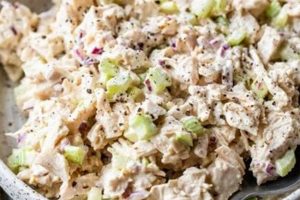
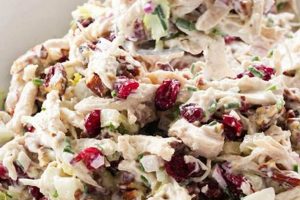
A Waldorf salad traditionally features a base of apples, celery, and grapes, dressed in mayonnaise and often served on a bed of lettuce. Variations incorporating diced cooked chicken breast provide a heartier, protein-rich meal option. These adaptations commonly retain the core ingredients while allowing for additions like walnuts, dried cranberries, or other fruits and nuts.
This dish offers a balance of sweet, savory, and crunchy textures, contributing to its enduring popularity. Its adaptability makes it suitable for picnics, potlucks, light lunches, or a component of a larger meal. Originating in the late 19th century at the Waldorf-Astoria Hotel in New York City, the original recipe did not include chicken, but the addition complements the existing flavors and enhances the nutritional profile. The dish provides a good source of protein, fiber, and vitamins.
Further exploration will delve into specific variations, ingredient selection, preparation methods, and tips for achieving optimal results. This examination will equip readers with the knowledge to create their own delicious renditions of this classic dish.
Tips for Waldorf Salad Preparation
Achieving optimal flavor and texture requires attention to detail throughout the preparation process. The following tips offer guidance for creating a successful rendition of this classic dish.
Tip 1: Ingredient Quality is Paramount: Use crisp, fresh apples such as Granny Smith or Honeycrisp for a balanced sweetness and tartness. Select firm, flavorful celery stalks and plump, seedless grapes. Opt for high-quality mayonnaise and freshly roasted or rotisserie chicken for optimal flavor.
Tip 2: Dice Ingredients Uniformly: Consistent sizing ensures even distribution of flavors and textures. Aim for bite-sized pieces that blend harmoniously.
Tip 3: Prevent Browning: To prevent enzymatic browning of apples, toss them with a small amount of lemon juice immediately after dicing. This preserves their appearance and fresh flavor.
Tip 4: Dressing Application: Add the mayonnaise dressing gradually, tossing gently to coat the ingredients evenly. Avoid overdressing, which can result in a soggy salad.
Tip 5: Chill for Enhanced Flavor: Allowing the salad to chill in the refrigerator for at least 30 minutes allows the flavors to meld and enhances the overall experience.
Tip 6: Consider Textural Variations: Toasted walnuts or pecans provide a satisfying crunch. Dried cranberries or chopped dates offer bursts of sweetness and chewiness.
Tip 7: Serve on Crisp Lettuce: A bed of crisp lettuce, such as butter lettuce or romaine, adds a refreshing element and enhances the presentation.
By adhering to these guidelines, one can elevate a simple Waldorf salad to a culinary delight. These tips ensure a well-balanced, flavorful, and visually appealing dish.
This information provides a foundation for creating a successful Waldorf salad experience. The following section will offer variations and adaptations to further personalize this versatile dish.
1. Chicken (cooked, diced)

Cooked, diced chicken serves as the defining protein component of chicken Waldorf salad, differentiating it from the classic fruit-and-nut-based original. Its inclusion elevates the dish from a side salad or appetizer to a more substantial meal option. The preparation and type of chicken employed significantly influence the overall flavor profile and texture of the final product.
- Cooking Method
Various cooking methods yield distinct results. Roasting produces a richer, more intense flavor, while poaching creates a milder, more delicate taste. Grilled chicken imparts a smoky char, and using leftover rotisserie chicken offers convenience. The chosen method should complement the desired overall flavor profile of the salad.
- Chicken Type
Different cuts of chicken offer varying textures and flavors. Breast meat provides a lean, clean flavor, while thigh meat contributes more richness and moisture. Using a combination of white and dark meat can create a balanced flavor profile.
- Dicing Technique
Uniform dicing ensures even distribution of chicken throughout the salad, enhancing both presentation and the eating experience. Bite-sized pieces facilitate easy mixing and prevent overwhelming the other ingredients.
- Seasoning Considerations
While the chicken itself doesn’t require heavy seasoning, pre-seasoning or marinating before cooking can subtly enhance the overall flavor of the salad. Simple seasonings such as salt, pepper, and herbs complement the other ingredients without overpowering them.
Careful consideration of these facets of chicken preparation contributes significantly to the ultimate success of a chicken Waldorf salad. The chosen cooking method, chicken type, dicing technique, and seasoning choices directly influence the final flavor, texture, and overall enjoyment of the dish. These choices allow for customization based on individual preferences and desired outcomes, transforming a simple ingredient into a key component of a well-crafted salad.
2. Apples (crisp, diced)

Apples contribute a crucial textural and flavor dimension to chicken Waldorf salad. Crispness offers a counterpoint to the creamy mayonnaise and tender chicken, while the apple’s sweetness and subtle tartness balance the savory elements. The choice of apple variety significantly impacts the final result. A tart apple like Granny Smith provides a pronounced contrast to the other ingredients, while a sweeter variety like Honeycrisp or Fuji offers a milder, more integrated sweetness. Dicing ensures even distribution of flavor and texture throughout the salad. Additionally, the exposed apple flesh necessitates preventative measures against enzymatic browning. Tossing the diced apples with a small amount of lemon juice inhibits oxidation, preserving both appearance and flavor.
Specific examples illustrate the impact of apple selection. A Granny Smith apple’s tartness cuts through the richness of mayonnaise and roasted chicken, creating a vibrant flavor profile. Conversely, a Honeycrisp apples sweetness complements the savory notes of grilled chicken and toasted walnuts, resulting in a more mellow, balanced flavor combination. These examples demonstrate the importance of considering the interplay between apple variety and other salad components. Furthermore, uniform dicing ensures that each bite contains a harmonious blend of flavors and textures, preventing an uneven distribution where some bites lack apple entirely.
Understanding the role of apples, specifically their crispness, variety, and preparation, allows for informed decisions when constructing a chicken Waldorf salad. This knowledge enables the creation of a salad that balances sweetness, tartness, and texture according to individual preferences. The practical application of this understanding results in a more satisfying culinary experience. Addressing the potential for browning through preventative measures further ensures the final product maintains both visual appeal and fresh flavor, preventing an otherwise unappetizing and less palatable outcome.
3. Celery (diced)
Celery contributes a distinct textural and flavor element crucial to a well-balanced chicken Waldorf salad. Its crisp, fibrous stalks offer a refreshing crunch that contrasts with the creamy mayonnaise and tender chicken. Furthermore, celery imparts a subtle, slightly herbaceous, savory flavor that complements the sweetness of the apples and grapes. Dicing the celery into uniform pieces ensures even distribution throughout the salad, guaranteeing its presence in each bite and enhancing the overall sensory experience. This consistent size also contributes to a visually appealing presentation.
The importance of diced celery becomes evident when considering its interplay with other ingredients. Imagine a chicken Waldorf salad lacking celery’s refreshing crunch; the texture would become monotonous, dominated by the softer elements. The subtle vegetal notes of celery also play a critical role. They prevent the salad from becoming overly sweet, providing a savory counterpoint that balances the other flavors. A specific example illustrates this: the mild bitterness of celery offsets the sweetness of Honeycrisp apples and the richness of roasted chicken, resulting in a more complex and satisfying flavor profile. Omitting celery would leave a noticeable void in this intricate balance.
Properly incorporating diced celery elevates the chicken Waldorf salad from a simple combination of ingredients to a thoughtfully composed dish. Understanding its textural and flavor contributions allows for a more informed approach to preparation and ingredient selection. This knowledge empowers individuals to create a salad that harmoniously blends a range of flavors and textures, resulting in a more enjoyable culinary experience. Careful attention to such details distinguishes a truly exceptional chicken Waldorf salad from a mediocre one.
4. Grapes (halved)
Grapes provide a crucial element of sweetness and juiciness to chicken Waldorf salad, complementing the other ingredients and contributing to the overall balance of flavors and textures. Halving the grapes serves several important functions. It exposes the juicy interior, allowing their sweetness to permeate the salad more readily. It also creates a more manageable size for consumption, preventing whole grapes from dominating each bite. Furthermore, halving exposes more surface area, which aids in absorbing the mayonnaise-based dressing, ensuring the grapes are well integrated into the overall flavor profile. The choice of grape variety, whether red, green, or black, also influences the final outcome. While green grapes offer a traditional, clean sweetness, red grapes introduce a subtle tartness, and black grapes can contribute a richer, more complex flavor profile.
The impact of halved grapes becomes particularly apparent when considering their interaction with other components. The sweetness of grapes balances the savory notes of the chicken and the subtle bitterness of the celery. Their juiciness contrasts with the crispness of the apples and celery, adding another layer of textural complexity. For instance, the sweetness of red grapes might pair particularly well with the nutty flavors of toasted walnuts and the richness of roasted chicken, creating a balanced and harmonious flavor profile. Conversely, the milder sweetness of green grapes might be preferred in a salad featuring a lighter dressing and poached chicken. These nuanced considerations illustrate how grape selection contributes to the overall character of the dish.
Understanding the role of halved grapes in chicken Waldorf salad, from their contribution to sweetness and juiciness to the practical considerations of size and variety, allows for a more informed approach to recipe development and ingredient selection. Recognizing the interplay of flavors and textures among all components ensures a well-balanced and enjoyable culinary experience. This knowledge empowers individuals to create a salad that truly reflects their personal preferences and achieves the desired balance of sweet, savory, and textural elements. Careful consideration of these seemingly small details ultimately differentiates a truly exceptional chicken Waldorf salad from a merely satisfactory one.
5. Mayonnaise (dressing)

Mayonnaise serves as the unifying element in chicken Waldorf salad, binding the diverse ingredients and contributing a creamy texture and richness that complements the other flavors. The quality, quantity, and potential additions to the mayonnaise significantly influence the final character of the dish, impacting both flavor and overall sensory experience. Understanding the role of mayonnaise extends beyond simply using it as a binding agent; it involves appreciating its contribution to the overall balance and harmony of the salad.
- Type of Mayonnaise
Different types of mayonnaise offer varying flavor profiles. Classic mayonnaise provides a traditional, creamy base, while flavored mayonnaises, such as those infused with herbs or spices, can introduce additional complexity. Homemade mayonnaise allows for complete control over ingredients and flavor intensity. The selection of mayonnaise should align with the desired overall flavor profile of the salad. For example, a Dijon-infused mayonnaise might complement a salad featuring roasted chicken and grapes, while a lighter, lemon-infused mayonnaise might be preferred with poached chicken and green apples.
- Quantity of Mayonnaise
The amount of mayonnaise used directly impacts the salad’s texture and overall richness. Too little mayonnaise can result in a dry, disjointed salad, while an excessive amount can create a heavy, overly rich dish. The ideal quantity coats the ingredients evenly without overwhelming them, allowing their individual flavors and textures to shine through. Achieving this balance requires careful consideration of the other ingredients and their inherent moisture content.
- Additions and Enhancements
Mayonnaise serves as a versatile base for flavor enhancements. Incorporating ingredients like lemon juice, fresh herbs, or spices can create a more complex and nuanced dressing. For example, a squeeze of lemon juice adds brightness and acidity, while chopped fresh dill or tarragon introduces herbaceous notes. These additions should complement the other salad ingredients without overpowering their individual flavors. A small amount of Dijon mustard can add a subtle tanginess, while a pinch of cayenne pepper can introduce a hint of heat.
- Incorporation Technique
The method of incorporating the mayonnaise affects the final texture and distribution of flavor. Gently folding the mayonnaise into the other ingredients ensures even coating and prevents crushing or bruising delicate components like grapes and apple pieces. This approach also helps maintain the desired textural contrast between the creamy dressing and the crisp fruits and vegetables.
The careful consideration of mayonnaise, including its type, quantity, potential additions, and incorporation technique, elevates chicken Waldorf salad beyond a simple combination of ingredients. These factors contribute not only to the overall flavor and texture but also to the balance and harmony of the dish. Understanding the nuances of mayonnaise usage allows for a more informed approach to recipe development and ensures a more satisfying culinary experience. This attention to detail distinguishes a truly exceptional chicken Waldorf salad from a merely adequate one.
6. Nuts (optional, toasted)
Nuts, while optional, offer a significant textural and flavor enhancement to chicken Waldorf salad. Their inclusion introduces a satisfying crunch that contrasts with the softer elements, such as the chicken, grapes, and mayonnaise-dressed apples and celery. Toasting the nuts intensifies their inherent flavors, creating a more pronounced and complex profile. Common choices include walnuts, pecans, and almonds, each contributing unique characteristics. Walnuts offer a slightly bitter, earthy note, pecans provide a buttery richness, and almonds lend a delicate sweetness and subtle crunch. The choice of nut should complement the other ingredients and the overall desired flavor profile. Furthermore, the quantity of nuts added should be carefully considered to avoid overwhelming the other components. For individuals with nut allergies, sunflower seeds or pumpkin seeds can provide a comparable textural element.
The impact of toasted nuts becomes evident when analyzing their interaction with the other salad components. Consider a chicken Waldorf salad featuring roasted chicken, Granny Smith apples, and toasted walnuts. The walnuts’ earthy bitterness complements the richness of the chicken, while their crunch provides a counterpoint to the tartness of the apples and the creamy mayonnaise. Alternatively, a salad with poached chicken, Honeycrisp apples, and toasted pecans offers a different experience. The pecans’ buttery sweetness harmonizes with the sweeter apples and the milder chicken, resulting in a more delicate flavor combination. These examples demonstrate the importance of considering the interplay of flavors and textures when incorporating nuts. Omitting nuts entirely results in a different textural experience, lacking the contrasting crunch that adds depth to the salad. Substituting seeds for nuts introduces a distinct flavor profile and a slightly different, often more delicate, crunch.
Understanding the role of nuts, especially their textural and flavor contributions, empowers informed decision-making regarding their inclusion and selection in chicken Waldorf salad. This knowledge allows for the creation of a salad that balances flavors and textures according to individual preferences. Recognizing the interplay between nuts and other components, and considering alternatives for those with dietary restrictions, ensures a satisfying and well-rounded culinary experience. Careful attention to these details distinguishes a thoughtfully composed and truly enjoyable chicken Waldorf salad.
Frequently Asked Questions
This section addresses common inquiries regarding chicken Waldorf salad preparation and variations, providing concise and informative responses.
Question 1: Can other fruits be used in chicken Waldorf salad?
While apples and grapes are traditional, other fruits can complement the salad. Consider dried cranberries, chopped dates, or diced pears for variations. However, maintain a balance of sweetness and tartness to avoid overpowering the other flavors.
Question 2: What is the best way to prevent the apples from browning?
Tossing diced apples with a small amount of lemon juice immediately after cutting inhibits enzymatic browning, preserving both appearance and flavor. This acidic treatment effectively slows down the oxidation process.
Question 3: Can chicken Waldorf salad be prepared in advance?
While the salad can be assembled a few hours in advance, it is generally recommended to add the dressing and nuts just before serving to maintain optimal texture and prevent the salad from becoming soggy. Storing the components separately allows for greater control over freshness.
Question 4: What type of dressing is traditionally used in chicken Waldorf salad?
Mayonnaise forms the base of the traditional dressing. Variations can include the addition of lemon juice, yogurt, or sour cream to lighten the texture and adjust the flavor profile. However, classic mayonnaise remains the most common choice.
Question 5: Are there suitable alternatives to chicken in this salad?
For those seeking alternatives to chicken, diced turkey, ham, or even chickpeas can provide a protein component while maintaining a complementary flavor profile. These substitutions offer variations while retaining the essence of the dish.
Question 6: How can the nutritional value of chicken Waldorf salad be enhanced?
Adding ingredients such as chopped walnuts, sunflower seeds, or dried cranberries enhances the nutritional profile by providing healthy fats, fiber, and antioxidants. These additions complement the existing nutrients present in the core ingredients.
Understanding these common points of inquiry facilitates successful preparation and customization of chicken Waldorf salad. Careful consideration of these aspects ensures a flavorful and enjoyable culinary experience.
This FAQ section concludes the exploration of chicken Waldorf salad. Further culinary endeavors are encouraged.
Chicken Waldorf Salad Recipes
Exploration of this dish reveals its adaptability and enduring appeal. From the careful selection of crisp apples and flavorful chicken to the nuanced balance of mayonnaise, the interplay of ingredients contributes to a harmonious blend of textures and tastes. Variations incorporating diverse nuts, fruits, and seasonings allow for personalized interpretations while retaining the essence of this classic salad. Proper preparation techniques, including dicing ingredients uniformly and preventing enzymatic browning of apples, ensure both visual appeal and optimal flavor. Understanding the role of each component, from the protein-rich chicken to the creamy mayonnaise dressing, empowers informed culinary choices.
Chicken Waldorf salad stands as a testament to the potential of simple ingredients transformed into a satisfying and versatile dish. Continued experimentation with flavors and textures promises further culinary discoveries within this classic framework. Its adaptability ensures its relevance in contemporary cuisine, offering a refreshing and nutritious option for various occasions.