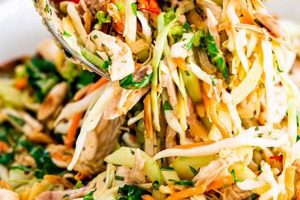
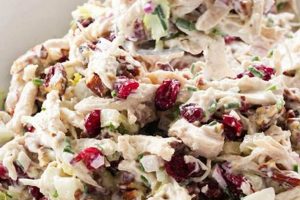
A dish combining cooked chicken, typical taco seasonings, and salad ingredients offers a flavorful and customizable meal. Variations can include traditional taco components such as shredded lettuce, diced tomatoes, cheese, onions, and sour cream or incorporate other elements like corn, black beans, avocado, or different types of dressing. The dish can be served in a traditional salad bowl, taco shells, or as a filling for wraps or sandwiches.
This culinary creation provides a convenient way to enjoy the flavors of tacos in a lighter, often healthier format. Its adaptability to different dietary needs and preferences makes it a versatile option for lunch, dinner, or even potlucks. The blend of spices and fresh ingredients offers a balanced and satisfying meal. The concept likely evolved as a creative adaptation of traditional taco fillings, reflecting culinary trends towards lighter and more adaptable meal options.
Further exploration will cover variations in ingredients, preparation methods, nutritional information, and serving suggestions for this adaptable and flavorful dish.
Tips for a Delicious Chicken Taco Salad
Optimizing flavor and texture requires attention to several key preparation details. The following tips offer guidance for creating a satisfying and flavorful dish.
Tip 1: Chicken Selection and Preparation: Using pre-cooked rotisserie chicken offers convenience. Alternatively, grilling or pan-frying seasoned chicken breast provides a fresher, more flavorful base. Dicing or shredding the chicken into bite-sized pieces ensures even distribution throughout the salad.
Tip 2: Seasoning Strategies: Pre-made taco seasoning blends offer a simple approach. For greater control over flavor profiles, consider blending individual spices like chili powder, cumin, paprika, oregano, and garlic powder. Marinating the chicken in the chosen spices before cooking enhances flavor penetration.
Tip 3: Ingredient Freshness: Utilizing fresh, crisp lettuce, ripe tomatoes, and other vegetables significantly impacts the salad’s overall quality and taste. Washing and properly drying produce helps maintain texture and prevents sogginess.
Tip 4: Dressing Considerations: A creamy cilantro-lime dressing complements the taco flavors beautifully. Alternatively, a lighter vinaigrette or a classic ranch dressing offers different flavor profiles. Consider offering a selection of dressings to cater to individual preferences.
Tip 5: Balancing Textures: Incorporating crunchy elements like tortilla chips or toasted pepitas adds textural contrast to the softer ingredients. Adjusting the ratio of crunchy to soft elements allows for customization based on individual preference.
Tip 6: Serving Suggestions: Traditional taco shells, crisp lettuce cups, or large flour tortillas provide various serving options. For a heartier meal, consider layering the salad over a bed of rice or quinoa.
Tip 7: Storage and Make-Ahead Strategies: Store prepared chicken and dressing separately from the other ingredients to maintain optimal freshness. Assemble the salad just before serving to prevent the vegetables from becoming soggy.
Attention to these details ensures a balanced and satisfying culinary experience. By following these tips, one can create a flavorful and customizable dish suitable for various occasions.
By understanding these nuances, culinary enthusiasts can create a consistently satisfying and flavorful meal.
1. Ingredient Quality
Ingredient quality significantly impacts the overall flavor, texture, and nutritional value of a taco chicken salad. Fresh, flavorful ingredients elevate the dish from simple to exceptional. For example, using freshly grilled or roasted chicken, as opposed to pre-cooked or processed chicken, contributes a more robust, nuanced flavor. Similarly, opting for ripe, in-season tomatoes and crisp lettuce enhances both the taste and visual appeal. The quality of spices also plays a crucial role; fresh, high-quality spices offer a more vibrant and complex flavor profile compared to stale or low-grade alternatives. Choosing high-quality cheeses, such as freshly grated cheddar or Monterey Jack, contributes a richer, more satisfying texture and taste compared to pre-shredded or processed cheese products.
The selection of flavorful, ripe avocados and vibrant, fresh cilantro can distinguish a mediocre salad from a truly exceptional one. Using stale or subpar ingredients can negatively impact the final dish, resulting in bland flavors, unappealing textures, and diminished nutritional benefits. Selecting fresh, high-quality ingredients not only enhances the taste and texture but also contributes to a more nutritious and satisfying meal.
Prioritizing ingredient quality directly correlates with the overall success of a taco chicken salad. Investing in fresh, high-quality components elevates the sensory experience, offering a more flavorful, visually appealing, and nutritionally beneficial meal. While convenience may tempt the use of pre-processed or lower-quality ingredients, the difference in the final product underscores the importance of ingredient quality in achieving a truly exceptional taco chicken salad.
2. Flavor Balance

Flavor balance is paramount in a successful taco chicken salad recipe. A harmonious blend of tastes elevates the dish beyond a simple combination of ingredients, creating a complex and satisfying culinary experience. Achieving this balance involves careful consideration of various flavor components and their interactions within the salad.
- Savory Depth:
The savory foundation of the salad typically comes from the chicken itself. Enhancing this depth involves seasonings and cooking methods. Grilled or roasted chicken offers a smoky char, while pan-frying can create a crispy exterior. Spices like cumin, chili powder, and paprika contribute earthy, warm notes. The savory element grounds the other flavors, preventing the salad from becoming overly sweet or acidic.
- Acidity as a Brightener:
Acidity plays a crucial role in cutting through richness and brightening the overall flavor profile. Common sources of acidity in taco chicken salad include lime juice, tomatoes, and certain dressings. The tangy notes balance the savory elements and add a refreshing contrast. The level of acidity should be carefully calibrated to complement rather than overpower the other flavors.
- Creaminess and Texture:
Creamy elements, such as avocado, sour cream, or a creamy dressing, contribute a richness and textural contrast. These elements bind the flavors together and create a more satisfying mouthfeel. The choice of creamy component influences the overall flavor profile. Avocado offers a subtle, buttery flavor, while sour cream provides a tangy creaminess. Balancing the creamy elements with lighter, crisper ingredients prevents the salad from becoming heavy or overly rich.
- Spice as an Accent:
Spice adds complexity and depth to the flavor profile. Common spices used in taco chicken salad include chili powder, cumin, paprika, and cayenne pepper. The level of spice should be adjusted to individual preferences, ranging from mild warmth to a fiery kick. Fresh jalapeos or other chili peppers can be incorporated for added heat and flavor. Balancing the spice with other flavor components ensures a harmonious and enjoyable experience.
The interplay of these flavor components defines the overall taste experience of a taco chicken salad. A well-balanced salad harmonizes these elements, creating a complex and satisfying dish that appeals to the palate. Careful consideration of each flavor component and its contribution to the overall balance elevates the salad from a simple combination of ingredients to a truly enjoyable culinary creation.
3. Texture Variations

Textural diversity significantly enhances the sensory experience of consuming taco chicken salad. A combination of contrasting textures creates a more dynamic and satisfying meal, elevating it beyond a simple mix of ingredients.
- Crunchy Elements:
Crunchy components provide a satisfying contrast to softer ingredients. Tortilla chips, crushed tostadas, or toasted nuts, such as pepitas or slivered almonds, introduce a delightful crispness. The interplay of crunchy and soft textures enhances the overall enjoyment of the salad.
- Soft Components:
Soft elements, such as shredded chicken, lettuce, and diced tomatoes, create a foundation of tenderness. These ingredients provide a backdrop against which the crunchy elements can shine. The balance of soft and crunchy textures is crucial for a well-rounded sensory experience.
- Creamy Additions:
Creamy ingredients, like avocado, sour cream, or a creamy dressing, contribute a smooth, rich texture that complements both crunchy and soft elements. These additions bind the salad together and create a more luxurious mouthfeel. The level of creaminess can be adjusted based on personal preference.
- Chewy Inclusions:
Chewy ingredients, such as black beans or corn, add another layer of textural complexity. These elements offer a subtle resistance that contrasts with the other textures, creating a more dynamic and engaging eating experience.
The interplay of these diverse textures elevates the taco chicken salad from a simple dish to a multi-sensory culinary experience. The strategic combination of crunchy, soft, creamy, and chewy elements creates a dynamic and satisfying meal that appeals to a wide range of palates. A thoughtful approach to texture enhances the overall enjoyment and satisfaction derived from this versatile dish.
4. Preparation Methods
Preparation methods significantly influence the final outcome of a taco chicken salad recipe. Distinct techniques applied to each ingredient contribute to the overall flavor, texture, and presentation of the dish. Consider the impact of various approaches on the core components.
Chicken: Several methods yield different results. Grilling imparts a smoky char and enhances the chicken’s inherent flavors. Roasting produces tender, juicy meat. Poaching offers a leaner, milder option. Shredding or dicing the cooked chicken ensures easy incorporation into the salad and even distribution of flavor. The chosen method affects the final taste and texture, shaping the overall salad experience.
Vegetables: Proper preparation techniques maximize flavor and texture. Tomatoes, for example, benefit from careful dicing, ensuring consistent bite-sized pieces while minimizing excess juice. Lettuce requires thorough washing and drying to maintain crispness and prevent a soggy salad. Onions, whether red, white, or green, can be thinly sliced or finely diced to complement the other ingredients. The way vegetables are handled directly impacts the salad’s freshness and overall appeal.
Dressing: The preparation of the dressing is crucial. A homemade cilantro-lime dressing, for instance, requires careful balancing of lime juice, cilantro, oil, and seasonings. The emulsification process, whether by whisking or blending, affects the dressing’s texture and stability. Pre-made dressings, while convenient, may lack the fresh, vibrant flavors achievable through homemade preparations.
Assembly: The order and method of combining ingredients also influence the final result. Layering ingredients strategically prevents sogginess and ensures even distribution of flavors. Tossing the salad gently with the dressing just before serving maintains the crispness of the vegetables and prevents over-dressing. Attention to these details optimizes the overall dining experience.
Careful execution of each preparation step, from ingredient handling to final assembly, significantly contributes to the success of the taco chicken salad. The chosen methods directly affect the flavor, texture, and overall enjoyment of the dish. Understanding the impact of these techniques empowers culinary enthusiasts to create a truly satisfying and flavorful salad.
5. Presentation style
Presentation style significantly impacts the perceived value and enjoyment of a taco chicken salad. While flavor and ingredient quality remain paramount, the visual appeal and manner of serving influence the overall dining experience. Different presentation styles cater to various occasions and individual preferences, transforming a simple salad into a visually engaging and appetizing meal.
Serving the salad in a crisp taco shell offers a familiar and convenient approach, ideal for casual gatherings or individual meals. This presentation maintains the connection to traditional taco flavors while offering a lighter, salad-based alternative. Using large, colorful bowls allows for an abundant display of ingredients, highlighting the freshness and variety of components. This approach suits family-style meals or buffet settings, encouraging sharing and customization. Individual portions layered in clear glasses or jars showcase the vibrant colors and textures, creating an elegant and visually appealing presentation suitable for more formal occasions or catered events. Wrapping the salad in large flour tortillas transforms it into a portable and convenient meal, perfect for picnics or lunches on the go.
Consideration of the dining context informs the choice of presentation style. A casual backyard barbecue calls for a different approach than a catered luncheon. The presentation should complement the occasion and enhance the overall dining experience. A visually appealing presentation elevates the perceived value of the dish, stimulating appetite and enhancing enjoyment. Whether served in a classic taco shell, a vibrant bowl, an elegant glass, or a convenient wrap, the presentation style significantly contributes to the overall success and satisfaction derived from a taco chicken salad.
6. Dietary Adaptability

Dietary adaptability represents a significant advantage of taco chicken salad recipes. The inherent flexibility of this dish allows modifications to accommodate various dietary restrictions and preferences, expanding its appeal to a wider audience. Understanding these adaptable elements allows for customization without compromising flavor or satisfaction.
- Gluten-Free Options:
Individuals following gluten-free diets can easily adapt taco chicken salad recipes. Substituting corn tortillas for flour tortillas or opting for a bowl presentation eliminates gluten-containing ingredients. Ensuring other components, such as dressings and spice blends, are also gluten-free maintains dietary compliance while preserving the intended flavors.
- Vegetarian/Vegan Adaptations:
Vegetarian and vegan adaptations focus on replacing the chicken with plant-based protein sources. Beans, lentils, or textured vegetable protein (TVP) offer viable alternatives, providing similar texture and nutritional value. Incorporating a variety of vegetables and flavorful spices further enhances the salad’s appeal and compensates for the absence of meat.
- Dairy-Free Modifications:
Dairy-free versions involve omitting cheese and sour cream or substituting them with plant-based alternatives. Vegan cheese shreds or cashew-based sour cream replicate the traditional flavors and textures while accommodating dairy sensitivities. Choosing dairy-free dressings or creating homemade versions using plant-based milks and oils ensures complete adherence to dietary restrictions.
- Calorie and Macronutrient Adjustments:
Controlling calorie and macronutrient content allows for customization based on individual health goals. Adjusting portion sizes, using leaner protein sources, and incorporating more vegetables can reduce overall calorie intake. Modifying the type and amount of dressing further influences fat and calorie content. These adjustments accommodate weight management or specific dietary needs without sacrificing flavor or satisfaction.
The adaptability of taco chicken salad recipes extends beyond simple ingredient substitutions. The flexible nature of this dish allows for creative exploration of flavors and textures, catering to a wide range of dietary needs and preferences. This versatility positions taco chicken salad as an inclusive and adaptable meal option for diverse culinary contexts.
7. Recipe Variations

Recipe variations represent a key aspect of the taco chicken salad’s enduring appeal. The basic frameworkchicken, taco seasonings, and salad componentsprovides a versatile canvas for culinary exploration. Variations arise from ingredient substitutions, additions, and alterations to preparation methods. These modifications cater to diverse palates, dietary needs, and available ingredients. A southwestern variation might incorporate black beans, corn, and a chipotle-lime dressing, while a more traditional approach might use cheddar cheese, diced tomatoes, and a ranch-style dressing. The adaptability of the core recipe fosters creativity and personalization.
The practical significance of recipe variations lies in their ability to transform a standard dish into a customized culinary experience. Seasonal ingredients can be incorporated to maximize freshness and flavor. Dietary restrictions can be accommodated through ingredient substitutions, such as using cauliflower rice for a lower-carbohydrate option or substituting plant-based protein for chicken. Recipe variations also offer opportunities to explore different cultural influences, such as adding mango salsa for a tropical twist or incorporating Korean-inspired flavors with kimchi and gochujang. These variations demonstrate the adaptability and enduring relevance of the taco chicken salad in diverse culinary contexts.
Understanding the potential for recipe variation unlocks the full potential of the taco chicken salad. It transforms a simple dish into a platform for culinary creativity, dietary accommodation, and exploration of diverse flavor profiles. The ability to adapt the core recipe ensures its continued relevance and enjoyment across a broad range of individual preferences and culinary traditions.
Frequently Asked Questions
This section addresses common inquiries regarding the preparation and enjoyment of taco chicken salad.
Question 1: What type of chicken works best in this dish?
While pre-cooked rotisserie chicken offers convenience, grilling or pan-frying fresh chicken breast allows for greater control over seasoning and results in a more flavorful outcome. Other options include using leftover cooked chicken or canned chicken, though these may impact the overall texture and taste.
Question 2: Can the salad be prepared in advance?
While components like the chicken and dressing can be prepared ahead of time, it is generally recommended to assemble the salad just before serving. This prevents the vegetables from becoming soggy and maintains the desired texture of the crunchy elements.
Question 3: What are some suitable dressing alternatives to ranch or cilantro-lime?
A variety of dressings complement taco chicken salad. A honey-lime vinaigrette offers a lighter, tangier option. A creamy avocado dressing provides a healthy and flavorful alternative. A chipotle ranch dressing adds a smoky, spicy dimension.
Question 4: How can the recipe be adapted for a vegetarian diet?
Substituting the chicken with black beans, lentils, or a plant-based meat substitute provides a vegetarian-friendly version. Maintaining the core flavors of the spices and dressing ensures a satisfying experience even without the traditional protein source.
Question 5: How can sogginess be prevented in leftover salad?
Storing the dressing separately from the salad components helps prevent sogginess. If storing assembled salad, place a paper towel over the top to absorb excess moisture. Refreshing the salad with additional crunchy elements before serving can also help restore desired texture.
Question 6: What are some ways to add more nutritional value?
Incorporating nutrient-rich ingredients like quinoa, black beans, or chopped bell peppers enhances the salad’s nutritional profile. Using a variety of colorful vegetables provides a wider range of vitamins and minerals. Choosing a lighter dressing or reducing the amount used can also contribute to a healthier meal.
Addressing these common questions offers further clarity regarding preparation, variations, and adaptability of taco chicken salad. Understanding these elements contributes to a more successful and enjoyable culinary experience.
This concludes the FAQ section. The following sections offer additional insights and inspiration.
Taco Chicken Salad Recipe
Exploration of taco chicken salad recipes reveals a versatile dish adaptable to various dietary needs and culinary preferences. From ingredient selection and preparation methods to flavor balancing and presentation styles, each element contributes to the final outcome. The adaptability of this dish allows for creative exploration, accommodating dietary restrictions, utilizing seasonal ingredients, and incorporating diverse cultural influences. Understanding the interplay of these elements empowers culinary enthusiasts to create personalized versions tailored to individual tastes and occasions.
Taco chicken salad recipes offer a canvas for culinary expression. The dish’s adaptability ensures its continued relevance in evolving culinary landscapes. Further exploration and experimentation promise exciting possibilities for this versatile and flavorful meal.