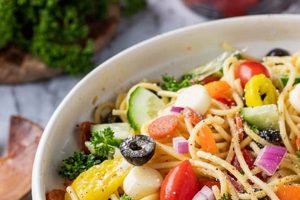
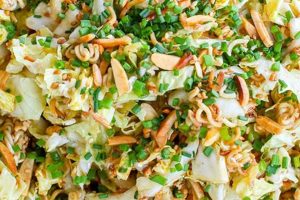
A chilled pasta salad typically features cooked noodles, often elbow macaroni, dressed in a creamy ranch-based sauce. This sauce generally incorporates mayonnaise, sour cream, and buttermilk, flavored with herbs and spices commonly found in ranch dressing mixes, such as dill, parsley, chives, garlic powder, and onion powder. Additional ingredients frequently include vegetables like chopped celery, carrots, bell peppers, and red onion, enhancing both texture and flavor. Variations might include proteins like shredded chicken, bacon, or ham, and cheeses such as cheddar or Colby jack.
This dish offers a convenient and satisfying meal, particularly suited for potlucks, picnics, and casual gatherings. Its popularity stems from its customizable nature, allowing for ingredient substitutions and additions to cater to individual preferences. The cool, creamy dressing provides a refreshing counterpoint to the starchy noodles and crisp vegetables, making it a welcome addition to warmer weather menus. Historically, the increasing popularity of convenience foods and ready-made dressing mixes in the mid-20th century likely contributed to the rise of such dishes.
Further exploration will delve into variations of this versatile salad, including specific ingredient combinations, preparation techniques, and tips for successful presentation and storage. Detailed recipes will be provided, accommodating a range of dietary needs and preferences.
Tips for a Perfect Ranch Noodle Salad
Achieving a well-balanced and flavorful ranch noodle salad requires attention to detail throughout the preparation process. These tips offer guidance for optimal results.
Tip 1: Noodle Selection and Cooking: Opt for noodles that hold their shape well after cooking, such as elbow macaroni, rotini, or tri-color pasta. Cook noodles al dente to prevent a mushy texture in the final salad.
Tip 2: Dressing Consistency: Adjust the dressing consistency by adding more mayonnaise or sour cream for a creamier texture, or additional buttermilk for a thinner dressing. Taste and adjust seasonings as needed.
Tip 3: Vegetable Incorporation: Crisp vegetables like celery, carrots, and bell peppers offer textural contrast. Ensure vegetables are finely chopped for even distribution throughout the salad.
Tip 4: Protein and Cheese Enhancements: Consider incorporating cooked chicken, bacon, ham, or cheeses like cheddar, Colby jack, or crumbled feta for added flavor and protein.
Tip 5: Chilling Time: Allow the salad to chill for at least two hours before serving. This allows the flavors to meld and the noodles to absorb the dressing.
Tip 6: Storage Practices: Store leftover salad in an airtight container in the refrigerator for up to three days. Note that the texture may soften slightly over time.
Tip 7: Presentation: Garnish the salad with fresh herbs, a sprinkle of paprika, or additional cheese before serving for an enhanced visual appeal.
Following these guidelines ensures a delicious and visually appealing ranch noodle salad. Attention to these details elevates this simple dish, making it a standout option for any occasion.
By incorporating these tips, one can create a ranch noodle salad tailored to individual preferences, guaranteeing a delightful culinary experience.
1. Ingredients

Ingredient selection significantly influences the final flavor profile and overall quality of a ranch noodle salad. Careful consideration of each component contributes to a balanced and enjoyable culinary experience. The following facets explore the essential ingredients and their roles in creating a successful dish.
- Noodles:
The foundation of the salad, noodles provide texture and absorb the dressing. Elbow macaroni, rotini, and other sturdy shapes hold their form well. Overcooked noodles result in a mushy texture, while undercooked noodles lack palatability. The choice of noodle shape influences the overall aesthetic appeal.
- Dressing:
Ranch dressing, often a combination of mayonnaise, sour cream, and buttermilk seasoned with herbs and spices, provides the characteristic creamy, tangy flavor. The quality of these ingredients directly impacts the dressing’s richness and flavor complexity. Variations can include using fresh herbs, adjusting the ratio of mayonnaise to sour cream, or incorporating additional spices.
- Vegetables:
Vegetables introduce contrasting textures and flavors. Common additions include chopped celery, carrots, bell peppers, and red onion, offering both crunch and visual appeal. Fresh, crisp vegetables are essential for optimal texture and flavor. The selection of vegetables can be tailored to individual preferences and seasonal availability.
- Optional Additions:
Protein and cheese often complement the base ingredients, adding depth and complexity. Cooked chicken, bacon, ham, and various cheeses, such as cheddar, Colby jack, or feta, are popular choices. These additions contribute to the nutritional value and create a more substantial meal. The choice of protein or cheese can significantly influence the overall flavor profile.
The interplay of these ingredients determines the ultimate success of the ranch noodle salad. Harmonious combinations of textures and flavors create a balanced and satisfying dish. Consideration of individual preferences and ingredient quality ensures a consistently positive culinary outcome.
2. Preparation

Proper preparation techniques are crucial for a successful ranch noodle salad. These techniques ensure optimal texture, flavor development, and overall quality. Following established procedures contributes to a consistently satisfying culinary outcome. The following facets outline the critical steps involved in preparing this dish.
- Noodle Cooking:
Cooking noodles al dente is essential. Overcooking leads to a mushy texture, while undercooking results in an unpleasant firmness. Following package directions while monitoring for the desired texture ensures properly cooked noodles. This step establishes the foundation of the salad.
- Dressing Preparation:
Thorough combining of dressing ingredients ensures even flavor distribution. Whisking together mayonnaise, sour cream, buttermilk, and seasonings creates a smooth, emulsified dressing. The consistency should be adjusted to preference; a thinner dressing coats the noodles lightly, while a thicker dressing clings more heavily.
- Ingredient Incorporation:
The timing of ingredient incorporation impacts the final texture and flavor. Adding vegetables and other components after the noodles have cooled prevents them from wilting or becoming soggy. Gentle mixing prevents damage to delicate ingredients. This step ensures a balanced distribution of flavors and textures.
- Chilling Time:
Chilling the salad allows the flavors to meld and the noodles to absorb the dressing. A minimum of two hours in the refrigerator intensifies the flavors and creates a more cohesive dish. This step is crucial for optimal flavor development and overall enjoyment.
Careful attention to these preparation steps ensures a well-balanced and flavorful ranch noodle salad. Each step contributes to the final product, highlighting the importance of proper technique in achieving a successful culinary outcome. Consistent execution of these techniques results in a consistently satisfying dish.
3. Variations
The adaptability of the ranch noodle salad recipe provides a platform for culinary creativity. Variations allow for personalized flavor profiles and cater to diverse dietary preferences and ingredient availability. Exploring these variations expands the potential of this dish, transforming it from a simple staple into a customizable culinary canvas. The following facets illustrate the diverse possibilities within this adaptable recipe.
- Vegetable Adaptations:
The inclusion of different vegetables alters the salad’s texture, flavor, and nutritional value. Substituting or adding vegetables such as chopped broccoli, cucumbers, bell peppers of varying colors, or cherry tomatoes introduces new dimensions. Seasonal vegetables offer fresh, vibrant flavors and align with local availability. These adaptations allow for personalized flavor combinations and cater to individual preferences.
- Protein Enhancements:
Incorporating protein transforms the salad into a more substantial meal. Grilled chicken or shrimp, crispy bacon, or cubed ham offer diverse flavor profiles and textural contrasts. Plant-based proteins like chickpeas or edamame provide vegetarian options. These additions elevate the nutritional value and create a more complete and satisfying dish.
- Flavor Modifications:
Adjusting the dressing or adding spices and herbs significantly impacts the overall flavor profile. Incorporating different herbs, such as dill, chives, or cilantro, creates distinct flavor nuances. Spice additions, like smoked paprika or cayenne pepper, introduce complexity and depth. These modifications allow for customized flavor experiences tailored to individual palates.
- Dietary Considerations:
Adapting the recipe to accommodate dietary restrictions expands accessibility. Using gluten-free noodles caters to gluten-sensitive individuals. Substituting dairy-free mayonnaise and sour cream creates a vegan-friendly version. These modifications ensure inclusivity and allow individuals with dietary restrictions to enjoy this versatile dish. Careful ingredient selection ensures adherence to specific dietary guidelines.
These variations highlight the inherent flexibility of the ranch noodle salad recipe. By exploring these adaptations, individuals can create customized versions that cater to specific preferences, dietary needs, and ingredient availability. This adaptability ensures the continued relevance and enjoyment of this classic dish, allowing it to remain a versatile and appealing culinary option.
4. Presentation
Presentation elevates the ranch noodle salad from a simple dish to a visually appealing culinary experience. Consideration of visual elements enhances enjoyment and reflects the care taken in preparation. Thoughtful presentation adds a layer of sophistication, transforming a casual meal into a more refined offering. The following facets explore the key components of effective presentation for this versatile dish.
- Serving Dish Selection:
The choice of serving dish significantly impacts the visual appeal. A clear glass bowl showcases the vibrant colors of the salad components, while a rustic wooden bowl adds a touch of casual charm. The size and shape of the bowl should complement the volume of the salad, avoiding overcrowding or excessive empty space. A well-chosen serving dish enhances the overall aesthetic and sets the tone for the dining experience.
- Garnishing Techniques:
Strategic garnishing adds visual interest and highlights key flavors. A sprinkle of fresh herbs, such as chopped parsley, chives, or dill, complements the ranch dressing and adds a pop of color. A dusting of paprika or a sprinkle of black pepper adds visual contrast and subtle flavor enhancement. Garnishes should be used sparingly to avoid overpowering the main components of the salad. Thoughtful garnishing elevates the visual presentation and enhances the perceived freshness of the dish.
- Plating Strategies:
Individual portions can be plated for a more formal presentation. Using a scoop or tongs ensures consistent portion sizes and avoids damaging delicate ingredients. Adding a small garnish to each individual serving adds a personalized touch. For larger gatherings, a layered presentation in a trifle bowl can create a visually striking centerpiece. Strategic plating enhances the overall dining experience and adds an element of elegance to the presentation.
- Contextual Considerations:
The presentation should align with the occasion. For a casual picnic or potluck, a simple, practical presentation in a large bowl suffices. For a more formal setting, individual plating and elegant garnishes are appropriate. Consideration of the dining context ensures that the presentation complements the overall ambiance and enhances the enjoyment of the meal.
Effective presentation enhances the perceived value and enjoyment of the ranch noodle salad. By considering these elements, one transforms a simple dish into a visually appealing and satisfying culinary experience. Attention to detail in presentation demonstrates care and consideration, elevating the overall dining experience. These facets highlight the importance of visual appeal in complementing the flavors and textures of this versatile dish.
5. Storage
Proper storage is crucial for maintaining the quality and safety of ranch noodle salad. This dish, often containing mayonnaise and dairy-based ingredients, is susceptible to bacterial growth if left at room temperature for extended periods. Consequently, appropriate storage practices are essential for preserving its freshness and preventing foodborne illnesses. Refrigeration at temperatures below 40F (4C) is paramount. Storing the salad in an airtight container minimizes exposure to air and contaminants, further extending its shelf life.
Failure to adhere to proper storage guidelines can lead to spoilage, characterized by off-odors, sliminess, and changes in texture. Consuming spoiled ranch noodle salad poses health risks, including food poisoning. For instance, leaving the salad out at a picnic or barbecue for several hours in warm weather increases the likelihood of bacterial proliferation. Conversely, prompt refrigeration after preparation significantly reduces this risk. Practical application of this understanding involves transferring leftover salad to a sealed container and refrigerating it immediately after serving. This practice safeguards against spoilage and preserves the salad’s quality for subsequent consumption, typically up to three to five days.
In summary, effective storage is integral to the overall success of a ranch noodle salad recipe. Appropriate refrigeration in airtight containers minimizes the risk of spoilage and preserves the dish’s quality for several days. Neglecting these practices jeopardizes both flavor and food safety. Understanding and implementing these storage guidelines ensures a safe and enjoyable culinary experience.
6. Customization

Customization is integral to the enduring appeal of the ranch noodle salad recipe. Its inherent flexibility allows adaptation to individual preferences, dietary needs, and available ingredients. This facet explores the diverse ways customization enhances the versatility of this classic dish, transforming it from a standard recipe into a personalized culinary creation. Understanding these customization options unlocks the full potential of the ranch noodle salad, ensuring a consistently satisfying and adaptable culinary experience.
- Ingredient Swaps:
Ingredient substitutions offer a primary avenue for customization. Disliking a particular vegetable? Substitute it with a preferred alternative. For instance, bell peppers can be replaced with cucumbers, or celery with chopped broccoli. This flexibility extends to the dressing as well; Greek yogurt can stand in for sour cream for a lighter, tangier flavor. Such substitutions allow for personalized flavor profiles while accommodating dietary restrictions or ingredient availability. This adaptability ensures the recipe remains accessible and appealing to a wider range of individuals.
- Flavor Adjustments:
Flavor profiles can be tailored through the addition of herbs, spices, and other flavoring agents. Fresh dill, chives, or parsley introduce herbal notes, while garlic powder, onion powder, or smoked paprika add depth and complexity. A dash of hot sauce introduces a spicy kick, while a squeeze of lemon juice provides brightness. These adjustments allow for a nuanced approach to flavor, catering to specific palates and desired taste outcomes. This level of control empowers individuals to create a dish that truly reflects their culinary preferences.
- Textural Variations:
Texture plays a significant role in the overall enjoyment of the salad. Adding toasted nuts or croutons introduces a satisfying crunch, while incorporating chopped water chestnuts or jicama offers a refreshing crispness. These textural variations create a more dynamic and engaging sensory experience, moving beyond the basic combination of noodles and creamy dressing. Such additions elevate the dish, transforming it from a simple side to a more complex and satisfying meal.
- Dietary Adaptations:
Dietary considerations can be seamlessly integrated through customization. Gluten-free pasta easily substitutes for traditional wheat-based noodles, catering to gluten sensitivities. Vegan mayonnaise and sour cream create a plant-based version of the dressing. These adaptations ensure the recipe remains inclusive and accessible to individuals with specific dietary requirements, broadening its appeal and demonstrating its versatility. Careful ingredient selection ensures adherence to dietary guidelines without compromising flavor or satisfaction.
The ability to customize the ranch noodle salad recipe significantly contributes to its enduring popularity. By embracing these options, individuals can create a dish tailored to their specific needs and preferences, transforming a classic recipe into a personalized culinary expression. This adaptability ensures the ranch noodle salad remains a versatile and satisfying dish for a wide range of individuals and occasions.
Frequently Asked Questions
This section addresses common inquiries regarding ranch noodle salad preparation, storage, and variations. Clarity on these points ensures successful outcomes and maximizes enjoyment of this versatile dish.
Question 1: What type of noodles is best suited for this salad?
Noodles that hold their shape well after cooking are ideal. Elbow macaroni, rotini, and tri-color pasta are recommended. Avoid long, thin noodles, which tend to become tangled and difficult to manage.
Question 2: Can the dressing be made in advance?
The dressing can be prepared up to two days in advance and stored in an airtight container in the refrigerator. This allows the flavors to meld and intensifies the overall taste.
Question 3: How long can the salad be stored?
Properly stored in an airtight container in the refrigerator, the salad can be safely consumed for up to three to five days. However, optimal texture and flavor are best within the first two days. Discard any salad showing signs of spoilage, such as off-odors or sliminess.
Question 4: Can frozen vegetables be used?
While fresh vegetables are generally recommended for optimal texture and flavor, frozen vegetables can be substituted. Thaw and drain them thoroughly before incorporating them into the salad to prevent excess moisture.
Question 5: How can the salad be made healthier?
Using Greek yogurt in place of sour cream reduces fat content. Incorporating a wider variety of vegetables increases nutritional value. Adding lean protein, such as grilled chicken or chickpeas, enhances the protein content and creates a more balanced meal.
Question 6: Can this salad be served warm?
While traditionally served cold, variations incorporating warm ingredients, such as grilled chicken or sauteed vegetables, can be incorporated. However, the classic version emphasizes the refreshing qualities of a chilled salad.
Addressing these common questions provides a comprehensive understanding of ranch noodle salad preparation and storage. This information equips individuals with the knowledge necessary to create a successful and enjoyable culinary experience. Understanding these key points maximizes the potential of this versatile dish, allowing for customization and ensuring consistent quality.
The following section offers a collection of curated ranch noodle salad recipes, catering to diverse tastes and preferences.
Conclusion
Exploration of the ranch noodle salad recipe reveals its adaptability and enduring appeal. From ingredient selection and preparation techniques to variations and presentation strategies, the dish offers a platform for culinary creativity. Emphasis on proper storage practices underscores the importance of food safety in maximizing enjoyment. The versatility of this recipe allows adaptation to diverse dietary needs and preferences, ensuring its continued relevance in contemporary cuisine.
The ranch noodle salad recipe represents more than a simple dish; it embodies the potential for culinary exploration and personalized expression within the framework of a classic preparation. Its adaptability ensures its continued presence on tables for generations to come, offering a canvas for both novice cooks and seasoned chefs to explore flavors, textures, and presentation styles. Continued experimentation and adaptation promise further evolution of this versatile dish.