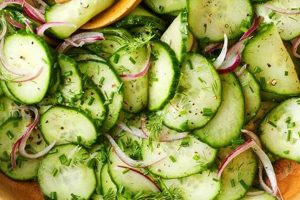
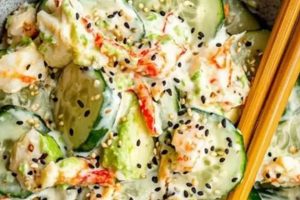
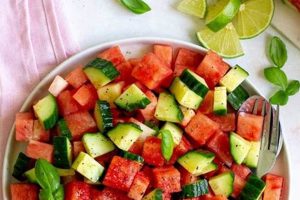
Refreshing and vibrant, these salads typically feature thinly sliced cucumbers dressed in a spicy, tangy, and often sweet sauce. Common ingredients include gochugaru (Korean chili flakes), rice vinegar, sesame oil, garlic, ginger, and sometimes a touch of sugar or fish sauce. Variations may incorporate onions, scallions, or other vegetables, adding complexity to the flavor profile. A simple cucumber salad might be a quick banchan (side dish), while more elaborate versions can stand alone as a light meal.
This style of salad offers a delightful balance of flavors and textures, providing a cooling counterpoint to richer Korean dishes. The crisp cucumbers offer a refreshing crunch, while the sauce delivers a potent blend of umami, spice, and sweetness. Historically, cucumbers, native to the Indian subcontinent, became a staple in Korean cuisine, adapted and incorporated into various preparations, reflecting the country’s agricultural practices and culinary preferences. These salads are not only flavorful but also contribute valuable nutrients, with cucumbers being a good source of hydration and vitamins.
Further exploration will delve into specific recipe variations, highlighting ingredient choices, preparation techniques, and suggested pairings to enhance the culinary experience. The following sections will provide a detailed guide to creating authentic and delicious cucumber salads, catering to different palates and skill levels.
Tips for Exceptional Korean Cucumber Salad
Achieving optimal flavor and texture in Korean cucumber salads relies on a few key techniques. Attention to detail in ingredient selection and preparation contributes significantly to the overall culinary experience.
Tip 1: Salt the Cucumbers: Salting the cucumbers draws out excess moisture, resulting in a crispier texture and preventing a watery salad. After slicing, sprinkle cucumbers with salt and let them sit for 10-15 minutes before rinsing and patting dry.
Tip 2: Thinly and Evenly Slice: Uniformly thin slices ensure even coating of the sauce and contribute to a pleasant mouthfeel. A mandoline slicer can be helpful for achieving consistent thickness.
Tip 3: Balance the Flavors: The hallmark of a great Korean cucumber salad lies in the balance of sweet, spicy, sour, and savory. Adjust the quantities of gochugaru, vinegar, sugar, and other seasonings to achieve the desired flavor profile.
Tip 4: Use Quality Gochugaru: Korean chili flakes (gochugaru) contribute both color and flavor. Opting for a high-quality gochugaru will significantly enhance the overall taste and vibrancy of the salad.
Tip 5: Don’t Overdress: Add the dressing gradually, tasting as you go, to avoid over-dressing the salad. The cucumbers should be lightly coated, retaining their crispness.
Tip 6: Chill Before Serving: Chilling the salad for at least 30 minutes allows the flavors to meld and enhances the refreshing quality of the dish.
Tip 7: Garnish Thoughtfully: A sprinkle of sesame seeds, toasted seaweed flakes, or thinly sliced scallions can elevate the presentation and add subtle flavor nuances.
By following these tips, one can create a Korean cucumber salad that exemplifies the balance of flavors and textures characteristic of this vibrant cuisine. Careful preparation and attention to detail ensure a truly satisfying culinary experience.
The following section will provide a selection of specific recipes, demonstrating the versatility of this dish and offering a range of options to suit individual preferences.
1. Ingredients

Ingredients form the foundation of Korean cucumber salad recipes, directly influencing the final dish’s flavor profile, texture, and nutritional value. Careful selection and preparation of these components are crucial for achieving the desired balance of spicy, sweet, sour, and savory notes characteristic of this cuisine. The quality and freshness of ingredients also play a significant role in the overall culinary experience.
For example, the choice of gochugaru (Korean chili flakes) impacts the level of spice and depth of flavor. Using finer flakes results in a smoother, more integrated heat, while coarser flakes provide a more textured, robust spiciness. Similarly, the type of vinegar usedrice vinegar, apple cider vinegar, or a combinationaffects the overall tanginess. The use of sesame oil contributes a nutty aroma and richness, while garlic and ginger add pungent and aromatic complexity. Freshness of the cucumbers themselves is paramount; firm, crisp cucumbers are essential for achieving the desired texture. Additional ingredients, such as onions, scallions, or seaweed, can further enhance the complexity and nutritional value of the salad.
Understanding the role of each ingredient allows for informed substitutions and adjustments to cater to individual preferences and dietary needs. Mastering the interplay of these components is essential for creating a truly authentic and satisfying Korean cucumber salad. This knowledge empowers culinary exploration and ensures a consistently delicious outcome. Subsequent sections will delve into specific ingredient combinations and their impact on the final dish, providing practical guidance for achieving culinary excellence.
2. Preparation Techniques

Preparation techniques are integral to successful Korean cucumber salad recipes, significantly influencing the final dish’s texture, flavor, and overall appeal. These techniques, ranging from basic knife skills to specific methods of ingredient preparation, contribute to the characteristic crispness, balanced flavors, and vibrant presentation of this popular side dish. Understanding and applying these techniques correctly ensures a satisfying culinary experience.
- Salting and Draining:
Salting the thinly sliced cucumbers draws out excess moisture, resulting in a crispier texture and preventing a watery salad. This crucial step enhances the overall mouthfeel and allows the dressing to adhere more effectively. Typically, cucumbers are sprinkled with salt and left to rest for 10-15 minutes before being thoroughly rinsed and gently patted dry. This process concentrates the cucumber flavor and ensures a satisfying crunch.
- Slicing Technique:
The way cucumbers are sliced affects both the aesthetic appeal and the eating experience. Thin, even slices ensure consistent flavor distribution and contribute to a pleasant texture. While a sharp knife can achieve satisfactory results, using a mandoline slicer allows for greater precision and uniformity, especially for larger batches. The thickness of the slices can be adjusted based on personal preference, with thinner slices generally preferred for salads.
- Balancing Flavors:
Achieving the desired balance of sweet, spicy, sour, and savory flavors requires careful attention to ingredient proportions and the order in which they are combined. The gochugaru (Korean chili flakes) is typically added gradually, allowing for adjustments to the level of spice. Similarly, the amount of vinegar, sugar, and other seasonings are adjusted to create a harmonious blend that complements the fresh cucumber flavor. Tasting and adjusting throughout the process ensures a well-balanced final product.
- Chilling and Marinating:
Chilling the salad after combining the ingredients allows the flavors to meld and intensify, resulting in a more complex and satisfying taste. This chilling period, typically at least 30 minutes, also enhances the refreshing quality of the dish. While not strictly a marinating process, the cucumbers absorb the flavors of the dressing during this time, creating a cohesive and well-integrated flavor profile.
These preparation techniques, though seemingly simple, play a critical role in elevating Korean cucumber salad from a basic dish to a culinary delight. Mastering these techniques ensures consistent results and allows for creative variations while preserving the essential characteristics of this refreshing and flavorful salad. By understanding the impact of each step, one can appreciate the artistry and precision involved in creating an authentic and delicious Korean cucumber salad.
3. Flavor Profiles
Flavor profiles are fundamental to Korean cucumber salad recipes, defining the sensory experience and distinguishing these salads from other cucumber preparations. The hallmark of these profiles lies in the dynamic interplay of contrasting yet complementary tastes: spicy, sweet, sour, and savory. This balance, achieved through specific ingredient combinations and proportions, creates a complex and refreshing culinary experience.
The “spicy” element typically derives from gochugaru (Korean chili flakes), contributing a depth of flavor beyond mere heat. The level of spiciness can be adjusted to suit individual preferences, ranging from a mild tingle to a fiery kick. Sweetness often comes from sugar or a touch of gochujang (Korean chili paste), balancing the spiciness and adding a subtle roundness. Sourness, provided by rice vinegar or other vinegars, offers a bright, acidic counterpoint, enhancing the other flavors and contributing to the overall freshness. Savory notes are introduced through ingredients like garlic, ginger, sesame oil, and sometimes fish sauce or soy sauce, grounding the other flavors and adding umami richness.
For example, a classic Oi Muchim (spicy cucumber salad) showcases this balance perfectly. The heat of the gochugaru is tempered by the sweetness of a little sugar, while the rice vinegar provides a refreshing tang. The addition of garlic and sesame oil adds savory depth, creating a harmonious flavor profile that is both stimulating and refreshing. Variations might incorporate additional ingredients like sesame seeds, scallions, or dried seaweed, further enhancing the complexity of the profile. Understanding these flavor dynamics allows for informed adjustments to recipes, enabling customization based on individual preferences and ingredient availability. Ultimately, mastering these flavor profiles is key to crafting truly authentic and delicious Korean cucumber salads.
4. Cultural Context
Korean cucumber salads, deeply rooted in Korean culinary traditions, offer a glimpse into the country’s cultural nuances. More than just a side dish, these salads reflect historical influences, culinary philosophies, and social customs, adding another layer of appreciation for their presence on the Korean table.
- Banchan (Side Dishes):
Korean cuisine emphasizes a balance of flavors and textures, often achieved through an array of banchan accompanying the main meal. Cucumber salads, with their refreshing and piquant qualities, play a crucial role in this culinary tapestry, providing a counterpoint to richer, heavier dishes. Their presence signifies not only culinary diversity but also generosity and hospitality.
- Fermentation and Preservation:
Historically, preserving seasonal vegetables was essential in Korean cuisine. While not all cucumber salads are fermented, the tradition of pickling and preserving influences the flavors and techniques used. The emphasis on preserving fresh produce reflects a resourcefulness and respect for ingredients deeply ingrained in Korean culture.
- Balance and Harmony (Um & Yang):
Korean cuisine often reflects the philosophy of balance and harmony, seen in the combination of contrasting flavors and temperatures. Cucumber salads exemplify this principle, balancing spicy, sweet, sour, and savory elements. This pursuit of balance extends beyond the culinary realm, reflecting a broader cultural emphasis on harmony and equilibrium.
- Everyday Meals and Special Occasions:
From simple everyday meals to celebratory feasts, cucumber salads hold a consistent presence in Korean dining. Their versatility allows for adaptation and incorporation into various settings, reflecting their integral role in Korean culinary culture. Whether served as a refreshing side or a component of a larger dish, they contribute a vibrant and flavorful element to the dining experience.
Understanding the cultural context surrounding Korean cucumber salad recipes enhances appreciation for their significance beyond mere sustenance. These salads embody the principles of balance, resourcefulness, and hospitality deeply embedded within Korean culture, enriching the culinary experience and offering a deeper connection to tradition.
5. Serving Suggestions

Serving suggestions for Korean cucumber salad recipes enhance the dining experience by considering complementary dishes, optimal temperatures, and presentation aesthetics. Thoughtful serving elevates this simple salad from a side dish to a well-integrated component of a larger meal, highlighting its versatility and refreshing qualities.
- Complementary Dishes:
Korean cucumber salad’s refreshing, spicy, and tangy profile makes it an ideal accompaniment to richer, heavier dishes. Grilled meats, such as bulgogi (marinated beef) or galbi (short ribs), benefit from the salad’s contrasting flavors and textures. Similarly, the salad complements the savory flavors of bibimbap (mixed rice with vegetables and meat) and japchae (glass noodles with vegetables and meat). Its bright, acidic notes cut through the richness of these dishes, creating a balanced and satisfying meal.
- Temperature:
Serving Korean cucumber salad chilled enhances its refreshing qualities. The cool, crisp cucumbers provide a welcome contrast to warm or spicy main courses. Chilling also allows the flavors of the dressing to meld and intensify, contributing to a more complex and satisfying sensory experience. Ideally, the salad is prepared and chilled for at least 30 minutes before serving.
- Presentation:
While often served as a simple banchan (side dish) in a small bowl, the presentation can be elevated with a few thoughtful touches. Garnishing with sesame seeds, toasted seaweed flakes, or a sprinkle of gochugaru adds visual appeal and subtle flavor nuances. Serving the salad on a bed of lettuce or alongside other colorful banchan creates a visually appealing and appetizing spread.
- Portioning:
Portioning considers the context of the meal. As a banchan, smaller portions are appropriate, allowing for a variety of flavors and textures on the table. When served as a lighter meal or a component of a larger salad, portion sizes can be adjusted accordingly. Understanding portioning ensures a balanced and satisfying dining experience.
These serving suggestions, when applied thoughtfully, elevate Korean cucumber salad recipes from simple accompaniments to integral components of a well-rounded meal. Considering complementary flavors, temperatures, and presentation enhances the dining experience, highlighting the versatility and refreshing nature of this vibrant dish.
6. Variations
Variations within Korean cucumber salad recipes demonstrate the adaptability of this dish while maintaining its core characteristics. These variations arise from regional differences, seasonal ingredient availability, and individual preferences, resulting in a diverse range of flavor profiles and textures. Understanding these variations provides insights into the dynamic nature of Korean cuisine and allows for creative exploration within a traditional framework.
A primary area of variation lies in the choice of seasonings. While gochugaru (Korean chili flakes), garlic, and sesame oil are staples, the addition of ingredients like fish sauce, gochujang (Korean chili paste), or doenjang (fermented soybean paste) introduces distinct umami notes and regional nuances. For example, a Jeolla-do style cucumber salad might incorporate a touch of fermented seafood, reflecting the coastal influence on the region’s cuisine. Similarly, the use of different vinegars, such as apple cider vinegar or black vinegar, alters the sourness profile, contributing to subtle yet distinct flavor variations.
Incorporating additional vegetables expands the flavor and textural complexity. Onions, scallions, carrots, and seaweed are common additions, each contributing unique characteristics to the final dish. For instance, adding julienned carrots introduces sweetness and a contrasting crunch, while seaweed provides a savory, umami element. These additions not only enhance the nutritional value but also reflect seasonal availability and regional preferences. Spicy cucumber salads with dried Pollack ( Hwangtae Oi Muchim) is a popular variation made with dried pollack and offers a more intense flavor. The variations extend beyond ingredients to encompass techniques. Some recipes call for lightly bruising the cucumbers before marinating, which enhances flavor absorption and creates a softer texture. Others incorporate a quick blanching step, resulting in a slightly wilted cucumber with a more subdued crunch. These subtle yet significant variations demonstrate the adaptability of Korean cucumber salads, showcasing the versatility and creativity within this seemingly simple dish. Recognizing these variations enhances appreciation for the dynamic nature of Korean cuisine and provides a framework for personalized adaptations.
Exploring these variations not only broadens culinary horizons but also reinforces the core principles of balance and harmony that underpin Korean cuisine. Understanding the interplay of ingredients and techniques across different variations empowers culinary experimentation while maintaining the essential characteristics of this refreshing and flavorful dish. The adaptability of Korean cucumber salad recipes underscores the ongoing evolution of culinary traditions, reflecting the dynamic interplay of regional influences, ingredient availability, and individual creativity within a well-established framework.
7. Nutritional Benefits
Nutritional benefits are an integral aspect of Korean cucumber salad recipes, contributing to their value beyond mere culinary enjoyment. These salads, primarily composed of fresh cucumbers and a variety of seasonings, offer a range of vitamins, minerals, and antioxidants with potential health-promoting properties. Understanding these nutritional contributions enhances appreciation for these dishes and encourages informed dietary choices.
Cucumbers, the foundational ingredient, are low in calories and rich in water content, contributing to hydration and promoting a sense of fullness. They are a good source of vitamin K, essential for blood clotting and bone health, and vitamin C, a potent antioxidant supporting immune function. Cucumbers also contain smaller amounts of other essential nutrients, including potassium, manganese, and vitamin A. The addition of other vegetables, such as scallions or carrots, further enhances the nutritional profile of the salad. Scallions provide vitamin K, folate, and vitamin A, while carrots are an excellent source of beta-carotene, a precursor to vitamin A, which plays a crucial role in vision and immune function. Garlic, a common seasoning in these salads, is known for its potential cardiovascular benefits due to its sulfur-containing compounds. Ginger, another frequent addition, possesses anti-inflammatory properties that may contribute to overall well-being. The use of sesame oil introduces healthy fats, including polyunsaturated and monounsaturated fats, which support heart health and contribute to satiety.
While the nutritional composition of Korean cucumber salad varies depending on specific ingredients and preparation methods, the inherent nutritional value of its components contributes to a healthy and balanced diet. Incorporating these salads regularly can contribute to increased vegetable intake, improved hydration, and potential health benefits associated with the vitamins, minerals, and antioxidants present in the ingredients. However, consideration should be given to sodium content, particularly in variations containing fish sauce or other high-sodium seasonings. Adjusting ingredient proportions or choosing low-sodium alternatives can help manage overall sodium intake while still enjoying the flavor and nutritional benefits of these refreshing salads. Understanding the nutritional aspects of these recipes empowers individuals to make informed dietary choices, maximizing both the culinary and health benefits associated with Korean cucumber salad.
Frequently Asked Questions
This section addresses common inquiries regarding Korean cucumber salad recipes, providing concise and informative responses to facilitate understanding and successful preparation.
Question 1: What is the purpose of salting cucumbers before making the salad?
Salting draws out excess moisture, resulting in a crispier texture and preventing a watery salad. It also concentrates the cucumber flavor.
Question 2: Can other types of vinegar be substituted for rice vinegar?
While rice vinegar provides the authentic flavor profile, apple cider vinegar or white vinegar can be used as substitutes, though the flavor will be slightly different. Adjustments to sugar levels may be necessary.
Question 3: How long can Korean cucumber salad be stored?
Properly stored in an airtight container in the refrigerator, it can last for 2-3 days. However, the texture will soften over time.
Question 4: What is gochugaru and where can it be purchased?
Gochugaru is Korean chili powder, a staple ingredient contributing flavor and color. It can be found in Asian grocery stores or online retailers.
Question 5: Can the spiciness level be adjusted?
The amount of gochugaru directly controls the spiciness. Start with a smaller amount and gradually increase to achieve the desired heat level.
Question 6: Are there non-spicy variations of Korean cucumber salad?
Yes, omitting the gochugaru creates a milder version. Other seasonings, such as sesame oil, garlic, and ginger, still contribute significant flavor.
Addressing these frequently asked questions provides a foundation for understanding key aspects of preparing Korean cucumber salad. Experimentation within the provided guidelines encourages personalized adaptations and successful culinary outcomes.
Further exploration of specific regional variations and advanced techniques will enhance culinary expertise and provide a deeper appreciation for the versatility of this dish.
Korean Cucumber Salad Recipes
Korean cucumber salad recipes offer a vibrant and refreshing culinary experience, showcasing a harmonious blend of spicy, sweet, sour, and savory flavors. From the careful selection of ingredients to the precise execution of preparation techniques, each step contributes to the final dish’s distinctive character. The cultural context, serving suggestions, and potential variations provide a deeper understanding of this seemingly simple yet multifaceted dish, highlighting its significance within Korean cuisine and beyond. Nutritional benefits further enhance its value, adding a layer of health-conscious appreciation.
Exploration of these recipes provides a gateway to understanding the delicate balance of flavors and textures characteristic of Korean culinary traditions. Continued experimentation and adaptation within this established framework promise further culinary discoveries, enriching gastronomic experiences and fostering a deeper appreciation for the art of Korean cuisine. The refreshing simplicity and complex flavor profiles of Korean cucumber salads invite culinary exploration and offer a delightful addition to any meal.