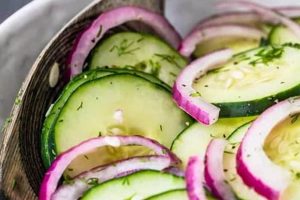
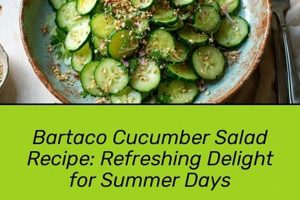
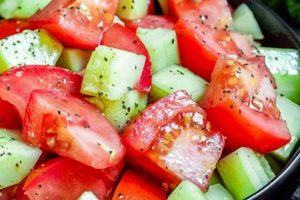
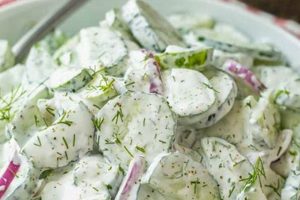
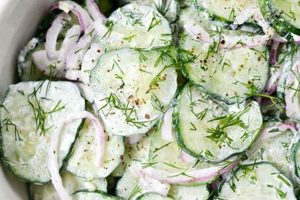
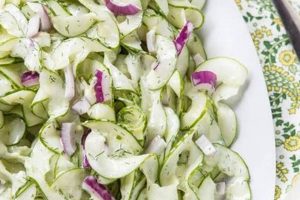
A refreshing and vibrant dish, this type of salad typically combines halved or quartered cherry tomatoes and thinly sliced cucumbers. Often, a simple vinaigrette, sometimes including red onion, fresh herbs (such as dill, mint, or parsley), and crumbled feta cheese, enhances the natural flavors of the vegetables. Variations may incorporate other ingredients like bell peppers, avocado, or different cheeses.
Such salads offer a light and healthy meal option, ideal for warm weather or as a side dish. The high water content of cucumbers and tomatoes contributes to hydration, while these vegetables also provide essential vitamins and minerals. This style of salad has likely evolved alongside the increasing availability and popularity of cherry tomatoes, offering a convenient and flavorful alternative to traditional sliced tomato salads.
Further exploration of this culinary concept can involve examining specific recipes, variations based on regional preferences, nutritional information, and tips for selecting the freshest ingredients.
Tips for a Perfect Cherry Tomato and Cucumber Salad
Achieving optimal flavor and texture in a simple salad requires attention to detail. The following tips will elevate this classic combination.
Tip 1: Ingredient Selection: Opt for ripe, firm cherry tomatoes and cucumbers. Look for vibrant color and avoid those with blemishes or soft spots. Fresh herbs should be fragrant and unwilted.
Tip 2: Consistent Sizing: Uniformly sized pieces ensure even flavor distribution and a visually appealing presentation. Halve or quarter cherry tomatoes depending on their size and slice cucumbers into similarly thin rounds or half-moons.
Tip 3: Salting Cucumbers: Salting cucumbers prior to adding them to the salad draws out excess moisture, preventing a watery final product. Lightly salt sliced cucumbers and let them sit for 10-15 minutes before patting dry.
Tip 4: Vinaigrette Emulsification: A properly emulsified vinaigrette clings to the vegetables, enhancing flavor. Whisk the oil and vinegar vigorously until combined, or use a blender for a smoother, more stable emulsion.
Tip 5: Timing is Key: Dress the salad just before serving to prevent the vegetables from becoming soggy. This preserves the crispness of the cucumbers and the integrity of the tomatoes.
Tip 6: Herb Integration: Add delicate herbs like parsley or dill just before serving to maintain their fresh flavor and appearance. Heartier herbs like mint or oregano can be added earlier.
Tip 7: Chilling for Optimal Flavor (Optional): While not essential, chilling the salad for a short time can enhance the refreshing qualities, especially during warmer months. Avoid over-chilling, which can dull the flavors.
By following these guidelines, one can create a visually appealing and flavorful salad that highlights the freshness and simplicity of the ingredients.
These tips provide a solid foundation for creating variations and experimenting with additional ingredients to personalize this versatile salad.
1. Fresh, Ripe Ingredients

The foundation of a successful cherry tomato cucumber salad rests upon the quality of its primary components. Fresh, ripe ingredients are essential for maximizing flavor, texture, and overall enjoyment. Subpar produce will yield a lackluster result, regardless of other efforts.
- Tomato Selection
Ripe cherry tomatoes should exhibit vibrant color, a slight give when gently squeezed, and a sweet aroma. Avoid tomatoes with blemishes, soft spots, or a dull appearance. Different varieties, such as Sungold, Sweet 100, or Black Cherry, offer unique flavor profiles for experimentation.
- Cucumber Quality
Cucumbers should be firm and free from wrinkles or soft spots. A deep green color signifies freshness. Smaller cucumbers tend to have fewer seeds and a less bitter flavor. English cucumbers, known for their thin skin and minimal seeds, are a popular choice for salads.
- Herbaceous Elements
Fresh herbs contribute significantly to the overall flavor profile. Dill, mint, parsley, and chives are common additions. Select herbs that appear vibrant and unwilted, with a fragrant aroma. Avoid those with yellowing or browning leaves.
- Supporting Ingredients
Other components, such as red onion, feta cheese, or avocado, should also be chosen with freshness in mind. Red onions should be firm and crisp. Feta, if used, should be stored properly to prevent drying. Avocados should yield slightly to gentle pressure when ripe.
Prioritizing fresh, ripe ingredients elevates the simple cherry tomato cucumber salad from ordinary to extraordinary. The vibrant flavors and crisp textures achieved through careful ingredient selection contribute to a more satisfying and enjoyable culinary experience. Selecting produce at peak ripeness ensures optimal flavor and nutritional value.
2. Proper Slicing Techniques
Proper slicing techniques are essential for optimizing both the aesthetic appeal and flavor profile of a cherry tomato cucumber salad. Uniformity in size and shape ensures even distribution of the vinaigrette and a pleasing presentation, while appropriate cutting methods maintain the integrity and texture of the ingredients. Neglecting these techniques can lead to uneven marinating, textural inconsistencies, and a less visually appealing final product.
- Tomato Handling
Cherry tomatoes should be halved or quartered depending on their size. Larger tomatoes benefit from quartering to ensure a consistent size with smaller ones and to prevent them from overpowering other ingredients. Cutting tomatoes with a sharp knife minimizes bruising and preserves their delicate texture.
- Cucumber Preparation
Thinly sliced cucumbers ensure a pleasant texture and maximize surface area for absorbing the vinaigrette. Uniform slices contribute to a visually appealing presentation. Slicing cucumbers into rounds, half-moons, or ribbons adds variety and visual interest. Avoid overly thick slices, which can be cumbersome and less flavorful.
- Red Onion Considerations
If incorporating red onion, thin slices or finely diced pieces are recommended. Thin slices minimize the pungent flavor of raw onion, while finely diced pieces distribute the flavor more evenly throughout the salad. Soaking sliced red onion in cold water for a short time can further mellow its intensity.
- Herb Integration
Herbs should be chopped or torn into appropriately sized pieces depending on their variety and intended use. Delicate herbs like parsley and dill can be roughly chopped or torn, while heartier herbs like mint or oregano may benefit from finer chopping. Chopping herbs just before serving preserves their freshness and flavor.
Attention to proper slicing techniques elevates the cherry tomato cucumber salad from a simple dish to a carefully constructed culinary creation. The precision and care applied to each ingredient contribute to a more balanced, visually appealing, and enjoyable salad. Consistent sizing ensures optimal flavor distribution and enhances the overall sensory experience.
3. Balanced Vinaigrette

A balanced vinaigrette is crucial for a successful cherry tomato cucumber salad. It provides the acidic element that complements the sweetness of the tomatoes and the mildness of the cucumbers, tying the flavors together. A poorly constructed vinaigrette can easily overpower the delicate flavors of the vegetables or create an unpleasant clash of tastes. A harmonious vinaigrette enhances the overall freshness and appeal of the salad.
- Acidity
The primary role of acidity in a vinaigrette is to brighten the flavors of the salad and provide a counterpoint to the other ingredients. Vinegar is the most common source of acidity, with options ranging from white wine vinegar and red wine vinegar to apple cider vinegar and balsamic vinegar. Lemon or lime juice can also be used. The specific type of acid chosen influences the overall flavor profile. For example, a light and tangy white wine vinegar complements the freshness of the vegetables, while a richer balsamic vinegar adds a touch of sweetness and depth. The level of acidity should be carefully calibrated to avoid overpowering the delicate flavors of the tomatoes and cucumbers.
- Oil
Oil provides the richness and texture to the vinaigrette, coating the vegetables and carrying the flavors of the other ingredients. Common choices include extra virgin olive oil, avocado oil, and grapeseed oil. The type of oil influences the flavor and mouthfeel of the vinaigrette. Extra virgin olive oil offers a robust, fruity flavor, while avocado oil has a milder, creamier taste. The ratio of oil to vinegar determines the richness and intensity of the dressing. A typical ratio is 3:1 oil to vinegar, but this can be adjusted to personal preference.
- Sweetness
A touch of sweetness can balance the acidity and add complexity to the vinaigrette. A small amount of honey, maple syrup, or agave nectar can be incorporated. The sweetness should be subtle and not overpower the other flavors. Alternatively, a sweeter vinegar like balsamic can contribute both acidity and sweetness to the dressing. Balancing sweetness with acidity is crucial to prevent the vinaigrette from becoming cloying.
- Seasoning
Proper seasoning is essential for enhancing the flavors of the vinaigrette and the salad as a whole. Salt and freshly ground black pepper are fundamental, balancing the other flavors and highlighting the freshness of the ingredients. Other seasonings, such as garlic powder, onion powder, or dried herbs, can be added to create more complex flavor profiles. However, it’s important to use these sparingly to avoid overpowering the delicate flavors of the vegetables. The amount of seasoning should be adjusted to taste, taking into consideration the other ingredients in the salad and the overall desired flavor profile.
A well-balanced vinaigrette is the key to a successful cherry tomato cucumber salad. By carefully considering the acidity, oil, sweetness, and seasoning, one can create a dressing that complements the fresh flavors of the vegetables and elevates the salad to a new level of culinary delight. The interplay of these elements creates a harmonious blend that enhances the overall sensory experience.
4. Optimal Seasoning
Optimal seasoning is paramount in a cherry tomato cucumber salad recipe. It elevates the inherent flavors of the fresh ingredients without masking their delicate nuances. Proper seasoning transforms a simple combination of vegetables into a vibrant, palate-pleasing dish. This exploration delves into the critical components of optimal seasoning and their impact on the final product.
- Salt
Salt is the cornerstone of seasoning, enhancing the natural sweetness of the tomatoes and cucumbers. It also draws out moisture, contributing to a more vibrant texture. The type of salt matters: coarse kosher salt or sea salt offers superior flavor and texture compared to standard table salt. The quantity should be carefully calibrated to avoid over-salting, which can obscure the delicate flavors of the vegetables. Salting the cucumbers separately before adding them to the salad draws out excess moisture and prevents a watery final product.
- Black Pepper
Freshly ground black pepper adds a subtle layer of complexity and spice. Pre-ground pepper lacks the same aromatic intensity and can impart a bitter taste. The amount of pepper used should complement, not overpower, the other flavors in the salad. A few twists of a pepper mill generally suffice.
- Acidity Enhancement
While not strictly a seasoning, a touch of acid, often in the form of a squeeze of lemon or lime juice, further brightens the salad. It balances the flavors and adds a refreshing tang. This is particularly effective when the vinaigrette lacks sufficient acidity. A small amount of acid can significantly impact the overall flavor profile.
- Herbaceous Infusion (Optional)
Fresh herbs, while contributing to flavor, also act as a form of seasoning. Finely chopped chives, dill, or mint can elevate the salad with their aromatic properties. Dried herbs can be used but should be added sparingly due to their concentrated flavor. The choice of herbs depends on the desired flavor profile and should complement the other ingredients.
Careful consideration of these seasoning elements elevates the cherry tomato cucumber salad. The interplay of salt, pepper, acid, and herbs creates a symphony of flavors that enhances the natural freshness of the ingredients. Optimal seasoning is the critical step that transforms a simple salad into a truly exceptional culinary experience.
5. Complementary Herbs
The judicious selection of herbs significantly impacts the flavor profile of a cherry tomato cucumber salad. Complementary herbs elevate the inherent flavors of the primary ingredients, adding depth and complexity. Understanding the nuances of various herbs and their interplay with tomatoes and cucumbers allows for a more sophisticated and flavorful culinary outcome.
- Fresh Herbs vs. Dried Herbs
Fresh herbs offer brighter, more nuanced flavors compared to their dried counterparts. Their delicate aromas and vibrant textures enhance the overall sensory experience. While dried herbs offer convenience, they tend to possess a more concentrated, sometimes bitter, flavor profile. When using dried herbs, a smaller quantity is recommended. Fresh herbs should be added just before serving to maximize their impact, while dried herbs can be incorporated earlier in the preparation process.
- Traditional Choices
Dill, mint, parsley, and chives are classic choices for cherry tomato cucumber salads. Dill offers a slightly tangy, almost anise-like flavor that pairs well with cucumbers. Mint provides a refreshing coolness. Parsley contributes a clean, slightly peppery taste, while chives offer a subtle onion flavor. These traditional herbs enhance the fresh, summery character of the salad. The quantity of each herb should be balanced to prevent any single flavor from dominating.
- Exploring Beyond the Familiar
Beyond traditional options, herbs like basil, oregano, tarragon, and cilantro can add unique dimensions to the salad. Basil introduces a sweet, slightly peppery note. Oregano offers a robust, earthy flavor. Tarragon contributes a subtle licorice-like aroma. Cilantro provides a bright, citrusy flavor. Experimenting with these less common herbs can create unique and exciting flavor combinations. The choice of herbs depends on personal preference and desired flavor profile.
- Balancing Flavors
The key to successful herb integration lies in balancing flavors. The herbs should complement, not overpower, the delicate flavors of the tomatoes and cucumbers. Start with small amounts and adjust according to taste. Consider the other ingredients in the salad, such as the type of vinaigrette or additional vegetables, when selecting herbs. The goal is to create a harmonious blend of flavors that enhances the overall sensory experience.
The thoughtful incorporation of complementary herbs elevates the cherry tomato cucumber salad from a simple dish to a more complex and nuanced culinary creation. Understanding the interplay of flavors and textures allows for a more sophisticated approach to herb selection, resulting in a truly exceptional and refreshing salad. The choice of herbs can significantly impact the overall character of the dish, transforming it from a light and refreshing summer salad to a more robust and savory offering.
6. Serving Temperature
Serving temperature significantly influences the sensory experience of a cherry tomato cucumber salad. Temperature affects both the perceived flavors and the textural qualities of the ingredients. A carefully considered serving temperature enhances the overall enjoyment of this simple yet nuanced dish. Overlooking this element can diminish the potential of even the freshest, most carefully prepared salad.
Chilling the salad enhances the refreshing qualities of the cucumbers and tomatoes, particularly beneficial during warmer months. However, excessive chilling dulls the delicate flavors and can negatively impact the texture of the tomatoes, rendering them mealy. Conversely, serving the salad at room temperature allows the full spectrum of flavors to develop, highlighting the sweetness of the tomatoes and the subtle nuances of the herbs. Room temperature also preserves the crispness of the cucumbers. A slightly chilled salad, achieved by refrigerating the combined ingredients for a short periodtypically 15-30 minutesoffers a balance between refreshing coolness and optimal flavor expression. This approach preserves the crispness of the vegetables while allowing the flavors to fully develop. For instance, a salad featuring delicate herbs like dill or mint benefits from this gentle chilling, as it enhances their aromatic qualities without compromising their delicate texture.
The ideal serving temperature depends on the specific ingredients and desired outcome. A salad incorporating bolder flavors, such as feta cheese or red onion, may tolerate more chilling without significant flavor loss. Ultimately, understanding the influence of temperature allows for informed decisions regarding chilling times, maximizing the sensory pleasure derived from this versatile and refreshing dish. Careful consideration of serving temperature ensures that the culmination of carefully selected ingredients and precise preparation techniques results in a truly satisfying culinary experience.
7. Creative Variations
The fundamental simplicity of a cherry tomato cucumber salad provides a versatile canvas for creative exploration. Variations on this classic recipe expand its culinary potential, offering diverse flavor profiles and textural experiences. Exploring these variations transforms a familiar dish into a continually evolving culinary adventure.
- Ingredient Additions
Expanding beyond the core ingredients opens a world of possibilities. Adding crumbled feta cheese and Kalamata olives introduces a Mediterranean flair. Avocado contributes creaminess and healthy fats. Sweetcorn kernels offer a burst of sweetness and contrasting texture. Toasted nuts or seeds, such as sunflower or pumpkin seeds, provide a satisfying crunch. Incorporating different cheeses, like goat cheese or crumbled blue cheese, introduces distinct flavor profiles. Roasted red peppers or artichoke hearts add depth and complexity. The possibilities are vast, limited only by culinary imagination.
- Vinaigrette Versatility
The vinaigrette serves as another avenue for creative expression. Experimenting with different types of vinegar, such as balsamic, red wine, or apple cider vinegar, dramatically alters the flavor profile. Infusing the vinaigrette with herbs, spices, or garlic adds complexity. A touch of honey or maple syrup introduces a subtle sweetness. Swapping olive oil for avocado or grapeseed oil changes the texture and flavor. A creamy dressing, such as a buttermilk or tahini-based dressing, offers a richer, more decadent experience. The vinaigrette is a powerful tool for customizing the salad to individual preferences.
- Textural Contrasts
Introducing textural contrasts elevates the sensory experience. Toasted croutons or crumbled pita chips provide a satisfying crunch. Adding cooked grains, such as quinoa or couscous, creates a more substantial salad. Roasted chickpeas offer a protein boost and a nutty flavor. The interplay of textures adds depth and interest to each bite. Considering texture alongside flavor creates a more dynamic and satisfying culinary experience.
- Presentation and Plating
Visual presentation enhances the enjoyment of any dish. Arranging the salad components thoughtfully elevates its aesthetic appeal. Creating layers of ingredients showcases their individual colors and textures. Using a variety of cutting techniques, such as slicing cucumbers into ribbons or dicing tomatoes into smaller pieces, adds visual interest. Garnishing with fresh herbs or edible flowers provides a final touch of elegance. Consideration of plating transforms a simple salad into a visually stunning culinary creation.
These creative variations demonstrate the adaptability of the cherry tomato cucumber salad. By exploring different ingredients, vinaigrettes, textures, and presentations, this seemingly simple dish transforms into a culinary playground for endless experimentation. The versatility of this salad allows it to adapt to various occasions, from a light lunch to a sophisticated side dish. Embracing creative variations ensures a continuously evolving and exciting culinary experience.
Frequently Asked Questions
This section addresses common inquiries regarding cherry tomato cucumber salads, providing clear and concise information to optimize preparation and enjoyment.
Question 1: How can excess moisture in the salad be prevented?
Salting the sliced cucumbers before adding them to the salad draws out excess water. Place the cucumber slices in a colander, sprinkle with salt, and let them sit for 15-20 minutes. Pat them dry with a paper towel before combining with the other ingredients. This process preserves the crispness of the cucumbers and prevents a watery salad.
Question 2: What are the best tomato varieties to use?
While various cherry tomato varieties work well, some offer superior flavor and texture. Sungold, Sweet 100, and Black Cherry tomatoes are recommended for their sweetness and vibrant color. Consider the overall flavor profile desired when selecting a variety.
Question 3: Can this salad be made ahead of time?
While the salad is best served fresh, it can be prepared a few hours in advance. Store the sliced vegetables and vinaigrette separately and combine them just before serving. This prevents the vegetables from becoming soggy and maintains optimal texture and flavor.
Question 4: How can the flavor of raw red onion be mellowed?
Soaking thinly sliced red onion in cold water for 10-15 minutes reduces its pungent flavor. This process mellows the onion’s intensity without compromising its crisp texture, making it a more palatable addition to the salad.
Question 5: What are suitable alternatives to olive oil in the vinaigrette?
Avocado oil and grapeseed oil provide neutral flavors and work well as alternatives to olive oil. These oils complement the delicate flavors of the vegetables without overpowering them. Select an oil based on personal preference and desired flavor profile.
Question 6: How can nutritional value be maximized?
Including a variety of colorful vegetables, such as bell peppers or spinach, increases the nutritional content. Adding protein-rich ingredients, like chickpeas or grilled chicken, creates a more balanced and satisfying meal. Nutritional yeast can be sprinkled on top for a boost of B vitamins.
Addressing these common questions provides a comprehensive understanding of key elements contributing to a successful cherry tomato cucumber salad. Careful consideration of these aspects ensures a flavorful, refreshing, and enjoyable culinary experience.
Further exploration of this topic might include specific recipe variations, detailed nutritional information, or cultural adaptations of this versatile salad.
Cherry Tomato Cucumber Salad Recipe
This exploration has delved into the multifaceted aspects of crafting a superior cherry tomato cucumber salad. From ingredient selection and proper slicing techniques to vinaigrette composition and optimal seasoning, each element contributes significantly to the final product. The importance of complementary herbs, appropriate serving temperature, and creative variations has been highlighted, demonstrating the versatility and adaptability of this seemingly simple dish. Understanding these nuances elevates the salad from a basic combination of ingredients to a carefully constructed culinary creation.
The potential for customization within this classic recipe framework is vast. Continued experimentation with flavors, textures, and presentations offers a pathway to culinary discovery. This exploration serves as a foundation for further development and personalization, encouraging a deeper appreciation for the art of crafting a truly exceptional cherry tomato cucumber salad.