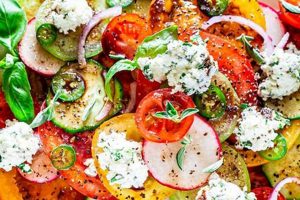
This refreshing dish typically combines cubed watermelon and sliced tomatoes, often with complementary ingredients such as feta cheese, mint, red onion, and a simple vinaigrette. Variations may include other fruits, vegetables, herbs, or proteins to create diverse flavor profiles. A simple version might involve balsamic glaze, olive oil, and a sprinkle of salt and pepper, while more complex recipes could incorporate ingredients like cucumbers, black olives, or grilled halloumi.
The juxtaposition of sweet watermelon and savory tomato offers a unique culinary experience, appealing to those seeking lighter, healthier meal options, particularly during warmer months. The high water content of both main ingredients contributes to hydration, while the inherent vitamins and antioxidants provide nutritional value. Historically, the combination of fruits and vegetables in salads has been a staple in various cuisines worldwide, showcasing seasonal produce and highlighting regional flavors. The increasing popularity of this specific combination reflects a growing interest in fresh, vibrant, and easy-to-prepare dishes.
Further exploration will delve into specific recipe variations, nutritional information, and tips for selecting and preparing the perfect summer salad. Discussions will also include adaptable serving suggestions, ranging from light lunches and side dishes to elegant appetizers for entertaining.
Tips for a Perfect Summer Salad
Achieving optimal flavor and texture requires attention to detail in ingredient selection and preparation. The following tips offer guidance for creating a delightful culinary experience.
Tip 1: Selecting Ripe Produce: Opt for a deep red, seedless watermelon with a sweet aroma. Tomatoes should be plump and yield slightly to gentle pressure, indicating ripeness.
Tip 2: Balancing Flavors: Consider the interplay of sweet, salty, and acidic elements. Feta cheese or goat cheese provide saltiness, while a squeeze of lime or a balsamic glaze adds acidity.
Tip 3: Enhancing Texture: Incorporate ingredients with contrasting textures. Toasted nuts or seeds add crunch, while fresh herbs like mint or basil provide a soft counterpoint.
Tip 4: Proper Chilling: Chill the watermelon and other ingredients separately before combining to prevent the salad from becoming watery. Dress the salad just before serving.
Tip 5: Knife Skills: Consistent sizes of watermelon and tomato pieces ensure even flavor distribution and an aesthetically pleasing presentation.
Tip 6: Creative Variations: Experiment with additions such as thinly sliced red onion, cucumber, or jalapeno for a touch of heat.
Tip 7: Mindful Seasoning: Season lightly with salt and freshly ground black pepper, allowing the natural flavors of the ingredients to shine.
Attention to these details elevates a simple combination of ingredients into a memorable dish, showcasing the versatility and freshness of seasonal produce.
By following these guidelines, one can consistently create a vibrant and flavorful dish ideal for warm-weather enjoyment.
1. Ingredient Quality

Ingredient quality significantly impacts the overall success of a tomato and watermelon salad. The inherent sweetness of ripe watermelon and the nuanced acidity of flavorful tomatoes form the foundation of this dish. Subpar ingredients, such as bland, mealy tomatoes or underripe watermelon, diminish the intended flavor profile. For instance, a watermelon lacking sweetness necessitates excessive added sugar in the dressing, potentially upsetting the balance of the dish. Similarly, using out-of-season tomatoes often results in a watery, less vibrant salad. The quality of supporting ingredients, such as the freshness of herbs and the sharpness of the cheese, also contributes to the final result.
Prioritizing high-quality ingredients elevates this simple salad from ordinary to exceptional. Vine-ripened tomatoes offer a depth of flavor unmatched by those harvested prematurely. A watermelon selected for peak ripeness provides optimal sweetness and juiciness. Freshly picked herbs contribute vibrant aromas and flavors, further enhancing the sensory experience. Investing in premium olive oil and balsamic vinegar ensures a well-balanced and flavorful vinaigrette. These seemingly small choices collectively contribute to a superior culinary outcome.
Ultimately, the quality of ingredients directly correlates with the overall enjoyment of the dish. Selecting peak-season produce and using high-quality supporting components allows the natural flavors to shine. While convenience may tempt some to compromise on ingredient quality, the resulting disparity in flavor underscores the importance of this crucial element. By prioritizing quality, one ensures a truly delightful and refreshing culinary experience.
2. Flavor Balance

Flavor balance constitutes a critical element within a successful tomato and watermelon salad recipe. The inherent sweetness of ripe watermelon requires careful consideration of counterbalancing elements. The natural acidity of tomatoes provides a foundation, but often necessitates further enhancement. Salty components, such as feta cheese, crumbled goat cheese, or a sprinkle of sea salt, play a crucial role in tempering the sweetness and enhancing the overall flavor profile. A touch of acidity, often introduced through a vinaigrette incorporating lime juice, balsamic vinegar, or red wine vinegar, brightens the palate and prevents the salad from becoming cloyingly sweet. The interplay of these contrasting flavor profilessweet, salty, and acidiccreates a harmonious and complex taste experience. A simple watermelon and tomato salad dressed solely with olive oil, while showcasing the natural flavors of the primary ingredients, might lack complexity without the addition of these balancing elements. For example, a salad featuring watermelon, tomato, feta cheese, and a balsamic vinaigrette demonstrates successful flavor balancing.
Further complexity can be achieved by incorporating bitter or savory notes. Fresh herbs, such as mint or basil, add a refreshing layer of flavor while also offering a subtle bitterness that further enhances the balance. Toasted nuts or seeds contribute both textural contrast and subtle nutty or earthy flavors, adding another dimension to the salad. Even a hint of spice, from a pinch of chili flakes or a few slivers of jalapeo, can elevate the flavor profile. The careful integration of these diverse flavors transforms a simple salad into a multi-dimensional culinary experience. For instance, a salad with watermelon, tomato, feta, mint, toasted pine nuts, and a lime vinaigrette illustrates a more complex flavor balance. Understanding these nuances allows for greater control over the final outcome, enabling the creation of a dish that satisfies the palate and showcases the versatility of these ingredients.
Achieving optimal flavor balance depends on careful ingredient selection and a keen understanding of flavor interactions. The goal is not to mask the inherent sweetness of the watermelon or the subtle acidity of the tomatoes, but rather to enhance and complement these flavors through strategic incorporation of other elements. The interplay of sweet, salty, acidic, bitter, and savory components creates a symphony of flavors that elevates the simple combination of watermelon and tomato into a truly memorable dish. Overlooking flavor balance can result in a one-dimensional salad, while mastery of this principle leads to a nuanced and satisfying culinary creation.
3. Textural Contrast

Textural contrast plays a vital role in elevating a tomato and watermelon salad from simply refreshing to truly engaging. The inherent textures of the primary ingredientsthe juicy, yielding watermelon and the slightly firmer, more substantial tomatoprovide a pleasant foundation. However, relying solely on these two textures results in a somewhat one-dimensional sensory experience. Introducing contrasting textures elevates the dish by adding complexity and interest. Consider the crisp snap of toasted pumpkin seeds against the soft sweetness of watermelon, or the creamy smoothness of feta cheese juxtaposed with the juicy burst of a cherry tomato. These textural variations engage the palate on multiple levels, creating a more dynamic and satisfying culinary experience. A salad comprised solely of watermelon, tomatoes, and a simple vinaigrette, while refreshing, would lack the textural depth provided by additions such as toasted nuts, crumbled cheese, or crispy onions.
Several ingredients offer opportunities to introduce textural contrast. Crunchy elements, like toasted nuts (almonds, pecans, or pine nuts), seeds (pumpkin, sunflower, or sesame), or croutons, provide a satisfying counterpoint to the softer textures of the watermelon and tomato. Crumbled cheeses, such as feta, goat, or ricotta salata, introduce a creamy element that further enhances the textural complexity. Crispy fried onions or shallots offer a sharp, brittle texture that contrasts beautifully with the juicy components. Even the addition of thinly sliced red onion or finely chopped cucumber contributes a subtle crispness. Consider a salad featuring watermelon, tomato, feta cheese, toasted pine nuts, and thinly sliced red onion: the interplay of juicy, creamy, crunchy, and crisp textures creates a far more engaging experience than a salad lacking these contrasting elements.
Understanding the importance of textural contrast allows for strategic ingredient selection and preparation techniques to maximize the sensory experience of the salad. While the primary ingredients provide a base, the thoughtful incorporation of contrasting textures elevates the dish to a new level. This principle, applicable across diverse culinary creations, highlights how seemingly minor details significantly impact overall enjoyment. Neglecting textural contrast results in a less stimulating experience, whereas attention to this detail transforms a simple salad into a truly memorable dish. The practical application of this understanding empowers one to create a more dynamic and satisfying culinary experience.
4. Presentation

Presentation significantly influences the perceived appeal and enjoyment of a tomato and watermelon salad. While flavor and texture remain paramount, visual appeal enhances the dining experience. A thoughtfully presented salad entices the appetite and elevates the dish beyond mere sustenance. Consider the difference between a haphazardly tossed salad and one artfully arranged: the former may be equally delicious, but the latter conveys care and attention to detail, creating a more positive overall impression. A simple arrangement of alternating watermelon and tomato wedges, garnished with a sprinkle of feta and fresh mint, demonstrates a basic yet effective presentation. More elaborate presentations might involve layering ingredients, using a cookie cutter to shape the watermelon, or incorporating edible flowers.
Several factors contribute to effective presentation. Color plays a key role; the vibrant red of watermelon and tomatoes naturally lends itself to visually appealing arrangements. Contrasting colors, from green herbs, white cheese, or purple onions, further enhance the visual appeal. The arrangement of ingredients also matters. A monotonous presentation, even with high-quality ingredients, appears less appealing than a thoughtfully arranged salad. Consider the size and shape of ingredients; uniformly sized pieces create a more harmonious look. The choice of serving dish also contributes to the overall presentation. A simple white plate provides a clean backdrop that allows the vibrant colors of the salad to shine, while a rustic wooden bowl adds a different aesthetic dimension. A salad served in a chipped or stained bowl, regardless of the ingredients, diminishes the perceived quality of the dish. Practical considerations, such as the occasion and the number of servings, also influence presentation choices. Individual portions offer greater control over aesthetics, while a large platter, appropriate for a buffet or family-style meal, presents different opportunities for creative arrangements.
Attention to presentation elevates the dining experience, transforming a simple salad into a visually appealing culinary creation. While not a substitute for flavor and texture, presentation significantly impacts perception and enjoyment. Understanding the principles of visual appeal empowers one to create dishes that delight both the palate and the eye. This awareness extends beyond tomato and watermelon salads, influencing the presentation of diverse culinary creations, from appetizers to desserts. Ultimately, thoughtful presentation enhances the overall dining experience, demonstrating care and attention to detail that elevate even the simplest of dishes.
5. Seasonality

Seasonality significantly impacts the flavor and quality of a tomato and watermelon salad. Peak season for both ingredients typically coincides with summer months, resulting in optimal sweetness and juiciness. Utilizing produce harvested during its natural ripening period yields superior flavor compared to out-of-season alternatives often grown in less ideal conditions or harvested prematurely. A winter tomato, for example, frequently lacks the sweetness and vibrant flavor of a summer-ripened counterpart. Similarly, a watermelon harvested before its peak sweetness requires additional sweetening elements in the salad dressing, potentially compromising the balance of flavors. This principle extends to other common salad components; fresh herbs like mint and basil also exhibit more pronounced flavors during their respective growing seasons.
Choosing seasonal ingredients offers several advantages. Flavor benefits aside, seasonal produce generally boasts higher nutritional value. Shorter transit times from farm to table contribute to nutrient retention, maximizing the health benefits of these ingredients. Furthermore, supporting local farmers and reducing the environmental impact associated with long-distance transportation represent additional advantages of prioritizing seasonal consumption. Creating a tomato and watermelon salad in the winter necessitates sourcing ingredients from distant locations, potentially increasing the carbon footprint and diminishing the overall quality of the dish. Conversely, preparing the salad during the summer allows for utilization of locally sourced, peak-season produce, maximizing flavor and minimizing environmental impact.
Understanding the relationship between seasonality and ingredient quality allows for informed decisions regarding recipe planning and preparation. Prioritizing seasonal produce ensures optimal flavor, nutritional value, and environmental responsibility. While advancements in agricultural technology allow for year-round availability of certain produce, recognizing the inherent advantages of seasonality remains crucial for maximizing culinary outcomes and promoting sustainable practices. Adapting recipes to incorporate seasonal variations demonstrates culinary awareness and a commitment to quality. The simple tomato and watermelon salad, when prepared with peak-season ingredients, exemplifies the profound impact of seasonality on culinary excellence.
6. Recipe Variations
Recipe variations represent a crucial aspect of the tomato and watermelon salad, enabling adaptability to diverse palates and dietary needs. The foundational combination of watermelon and tomato provides a versatile canvas for culinary exploration. Variations arise through additions and substitutions, impacting flavor profiles, textures, and nutritional content. For instance, incorporating feta cheese introduces a salty, creamy element, while substituting a vegan alternative like cashew cheese caters to dairy-free diets. Similarly, adding ingredients like mint, basil, or jalapeo alters the flavor profile, offering nuances ranging from refreshing herbaceousness to a spicy kick. These variations demonstrate the inherent adaptability of the core recipe, allowing for customization based on individual preferences, ingredient availability, and desired nutritional outcomes.
Specific examples illustrate the breadth of potential variations. A savory iteration might incorporate grilled halloumi, black olives, and a red onion vinaigrette. A sweeter rendition could include berries, crumbled goat cheese, and a honey-lime dressing. These examples demonstrate how variations transform the basic concept into unique culinary experiences, expanding its appeal beyond a single flavor profile. Furthermore, variations accommodate dietary restrictions. Gluten-free adaptations require careful selection of croutons or omitting them altogether. Vegan versions utilize plant-based cheese substitutes and ensure dressings avoid animal-derived ingredients. These adaptations ensure inclusivity and demonstrate the recipe’s adaptability to diverse dietary requirements.
Understanding the potential for recipe variations unlocks the full culinary potential of the tomato and watermelon salad. It transcends a single, static recipe, transforming it into a dynamic framework for culinary creativity. This adaptability ensures continued interest and allows the dish to remain relevant across various seasons, occasions, and dietary preferences. The ability to modify the recipe based on available ingredients, desired flavor profiles, and specific dietary needs ensures its enduring appeal and solidifies its place as a versatile and refreshing culinary option.
Frequently Asked Questions
This section addresses common inquiries regarding tomato and watermelon salad recipes, providing concise and informative responses.
Question 1: Can different types of watermelon be used?
While various watermelon varieties work, seedless varieties generally offer greater convenience. Specific varieties, such as yellow or orange-fleshed watermelons, offer subtle flavor variations and visual interest.
Question 2: What can be substituted for feta cheese?
Alternatives to feta include goat cheese, ricotta salata, or vegan options like cashew cheese. Consider flavor profiles and dietary restrictions when selecting substitutes.
Question 3: How long can the salad be stored?
Optimal flavor and texture are achieved when consumed immediately. Refrigeration for short periods is acceptable, but avoid prolonged storage as the watermelon releases water, potentially diluting the flavors.
Question 4: Can this salad be served as a main course?
While typically served as a side dish or appetizer, adding protein such as grilled chicken, shrimp, or chickpeas transforms the salad into a satisfying main course.
Question 5: What dressings complement this salad best?
Light, acidic dressings, like a simple vinaigrette with lime juice or balsamic vinegar, typically complement the sweetness of the watermelon and the acidity of the tomatoes. Avoid heavy, creamy dressings that might overpower the delicate flavors.
Question 6: How can one prevent the salad from becoming watery?
Chill ingredients thoroughly before combining. Dress the salad immediately before serving to minimize excess moisture. Salting the watermelon and allowing it to drain before combining also reduces water content.
Addressing these common inquiries facilitates successful preparation and enjoyment of this refreshing salad. Careful consideration of these points ensures optimal flavor, texture, and presentation.
Additional information regarding specific recipe variations and nutritional details can be found in the following sections.
Tomato and Watermelon Salad Recipe
Exploration of this vibrant dish reveals a compelling interplay of flavor, texture, and visual appeal. Careful ingredient selection, emphasizing ripe, seasonal produce, forms the foundation for a successful outcome. Balancing the sweetness of watermelon with the acidity of tomatoes, enhanced by complementary ingredients like feta cheese, fresh herbs, and a well-balanced vinaigrette, creates a harmonious flavor profile. Attention to textural contrast, achieved through additions such as toasted nuts or seeds, elevates the sensory experience. Thoughtful presentation further enhances enjoyment, transforming a simple combination of ingredients into a visually appealing culinary creation. Adaptability through recipe variations ensures broad appeal, accommodating diverse palates and dietary needs.
The enduring appeal of this salad lies in its simplicity, adaptability, and refreshing nature. Its prominence in summer menus reflects a growing appreciation for fresh, seasonal cuisine. Continued exploration of flavor combinations and creative presentations promises further evolution of this versatile dish, solidifying its position as a culinary staple.