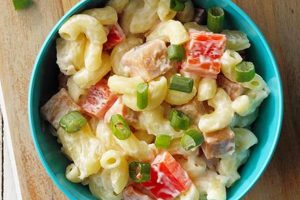
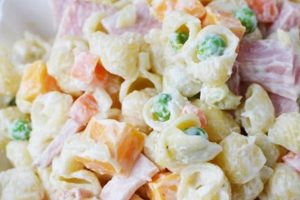
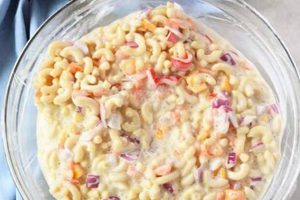
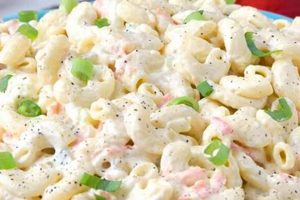
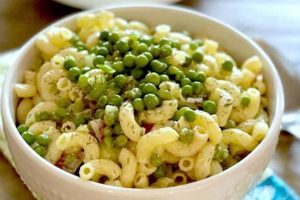
Easy-to-prepare pasta salads featuring cooked elbow macaroni, combined with mayonnaise-based dressings and a variety of other ingredients, offer a versatile and convenient dish. These salads often incorporate vegetables like celery, onion, and peppers, alongside additions such as hard-boiled eggs, pickles, or cheeses. A classic example combines cooked macaroni, mayonnaise, celery, onion, sweet pickle relish, hard-boiled eggs, mustard, salt, and pepper.
These dishes represent an economical and satisfying option for potlucks, picnics, and quick meals. Their adaptable nature allows for variations in ingredients to cater to individual preferences and dietary needs. Historically, pasta salads gained popularity in the mid-20th century as refrigeration became more common, enabling safe storage of mayonnaise-based dishes. This accessibility contributed to their widespread adoption as a convenient and flavorful side or main dish.
The following sections will explore variations on this culinary theme, including specific recipes, tips for ingredient selection and preparation, and suggestions for creative presentation.
Tips for Preparing Delicious Macaroni Salad
Creating a successful macaroni salad involves attention to detail in ingredient selection and preparation. These tips offer guidance for achieving optimal flavor and texture.
Tip 1: Cook Macaroni Al Dente: Overcooked macaroni results in a mushy salad. Cook pasta until firm to the bite, then rinse under cold water to stop the cooking process and maintain desirable texture.
Tip 2: Chill Ingredients Thoroughly: Using chilled ingredients, especially mayonnaise and vegetables, helps maintain food safety and prevents the salad from becoming watery.
Tip 3: Balance Flavors: Achieve a well-rounded flavor profile by incorporating a balance of sweet, sour, salty, and savory elements. Sweet pickle relish, vinegar, salt, and mustard contribute to this balance.
Tip 4: Customize with Add-ins: Flexibility in ingredient selection allows for personalized variations. Consider incorporating chopped vegetables, cheeses, proteins like tuna or ham, or herbs for added flavor and texture.
Tip 5: Dress Gradually: Add dressing incrementally, mixing gently to coat the macaroni evenly. This prevents overdressing and ensures the salad maintains its structure.
Tip 6: Season to Taste: Adjust seasonings like salt, pepper, and mustard to achieve the desired flavor profile after the salad has chilled and the flavors have melded.
Tip 7: Chill Before Serving: Allowing the salad to chill for at least 30 minutes before serving allows the flavors to meld and enhances the overall taste and texture.
By following these tips, one can consistently create flavorful and satisfying macaroni salads suitable for various occasions.
These guidelines provide a solid foundation for crafting exceptional macaroni salads. The concluding section offers further insights and resources for recipe exploration.
1. Ingredient Quality

Ingredient quality significantly impacts the overall flavor and enjoyment of simple macaroni salad recipes. While these recipes are often praised for their ease and affordability, using high-quality ingredients elevates the dish from simple to exceptional. The following facets illustrate the crucial role ingredient quality plays:
- Mayonnaise Selection
Mayonnaise serves as the foundation of most macaroni salads. Opting for a high-quality mayonnaise, preferably one made with real eggs and oil, creates a richer, creamier texture and a more nuanced flavor compared to lower-quality alternatives. This choice significantly influences the salad’s overall taste and mouthfeel.
- Freshness of Produce
Crisp, fresh vegetables enhance both the flavor and visual appeal of macaroni salad. Using recently purchased produce, particularly celery, onions, and bell peppers, provides optimal crunch and brighter flavors. Wilted or older vegetables can detract from the salad’s overall quality.
- Pasta Choice
While elbow macaroni is traditional, experimenting with different pasta shapes can introduce interesting textures and visual elements. Choosing high-quality pasta ensures it holds its shape well during cooking and contributes to a pleasant, firm texture in the final salad.
- Complementary Ingredients
Beyond the core ingredients, additions such as hard-boiled eggs, pickles, or cheeses should also be chosen with quality in mind. Freshly boiled eggs, crisp pickles, and flavorful cheeses contribute more depth and complexity to the salad. Using high-quality add-ins enhances the overall balance and satisfaction derived from the dish.
By focusing on ingredient quality, even the simplest macaroni salad recipe can become a truly satisfying and delicious culinary experience. The seemingly minor differences between ingredient choices contribute significantly to the overall flavor, texture, and enjoyment of the dish. Investing in quality ingredients ensures a flavorful, visually appealing, and ultimately more enjoyable macaroni salad.
2. Dressing Consistency
Dressing consistency represents a critical factor in successful simple macaroni salad recipes. The balance between too thick and too thin directly impacts flavor distribution, ingredient cohesion, and overall enjoyment. A properly balanced dressing clings evenly to the pasta and other components, ensuring each bite delivers a harmonious blend of flavors. This section explores the multifaceted nature of dressing consistency and its influence on the final product.
- Emulsification Stability
A stable emulsion prevents the dressing from separating into its constituent partsoil and water. A broken emulsion results in a watery salad with uneven flavor distribution. Achieving a stable emulsion often involves gradual incorporation of ingredients and consistent whisking or blending. For example, slowly adding vinegar to mayonnaise while whisking vigorously helps create a homogenous, stable dressing that effectively binds the salad ingredients.
- Viscosity and Coating Ability
Viscosity refers to the dressing’s thickness or resistance to flow. An overly thick dressing may clump and fail to coat the pasta evenly. Conversely, a thin dressing will run off, leaving the salad dry and flavorless. The ideal viscosity allows the dressing to adhere lightly yet thoroughly, ensuring every piece of macaroni and incorporated vegetable is adequately coated. This contributes to a balanced and flavorful experience with each bite.
- Ingredient Incorporation and Flavor Distribution
The consistency of the dressing affects how well other ingredients, such as seasonings and vegetables, are incorporated and distributed throughout the salad. A properly balanced dressing acts as a medium, carrying these flavors evenly throughout the dish. If the dressing is too thick, these additions may not disperse properly, leading to pockets of intense flavor or blandness. A balanced consistency ensures uniform flavor distribution and a more enjoyable culinary experience.
- Visual Appeal and Texture
Dressing consistency influences not only the taste but also the visual appeal and overall texture of the salad. A well-emulsified dressing with appropriate viscosity creates a glossy, appealing sheen and binds the ingredients together without being gloppy. This contributes to a visually attractive dish with a pleasant, cohesive texture. A watery or separated dressing detracts from the aesthetic and can make the salad less appetizing.
Achieving the correct dressing consistency ensures the success of simple macaroni salad recipes. It’s the crucial link between individual ingredients and a cohesive, flavorful final product. By understanding the facets of emulsification, viscosity, ingredient incorporation, and visual appeal, one can create a macaroni salad that is not only delicious but also visually satisfying and texturally pleasing.
3. Flavor Balance

Flavor balance represents a cornerstone of successful simple macaroni salad recipes. Achieving a harmonious blend of tastes elevates this dish beyond basic sustenance to a satisfying culinary experience. The interplay of different flavor profilestangy, sweet, salty, and savorycreates depth and complexity. Understanding how to balance these elements is crucial for crafting a truly delicious macaroni salad.
- Tanginess: Acidity’s Role
Tanginess, derived from ingredients like vinegar or pickle relish, provides a crucial counterpoint to the richness of mayonnaise. It brightens the flavor profile, preventing the salad from becoming overly heavy or cloying. The level of tanginess should be balanced carefully; too much can make the salad overly acidic, while too little can leave it bland. For instance, using apple cider vinegar offers a milder tang compared to white vinegar, allowing for nuanced flavor adjustments.
- Sweetness: A Balancing Act
Sweetness, often introduced through sweet pickle relish or a touch of sugar, adds another layer of complexity to macaroni salad. It complements the tanginess and helps round out the overall flavor profile. The key is moderation; excessive sweetness can overpower other flavors. A small amount of finely diced sweet onion can also contribute a subtle sweetness, enhancing the balance without being overpowering.
- Saltiness: Enhancing Overall Taste
Salt acts as a flavor enhancer, bringing out the subtleties of other ingredients. Proper salting is essential for a well-rounded flavor profile, but over-salting can easily ruin the dish. It’s often best to start with a smaller amount of salt and adjust to taste after the salad has chilled, as chilling can intensify flavors. Using ingredients like salty cheeses or cured meats can contribute to the overall saltiness and should be considered when adjusting salt levels.
- Savory Notes: Adding Depth
Savory elements, often introduced through ingredients like mustard, celery, or onion, add depth and complexity to macaroni salad. These ingredients provide a grounding counterpoint to the sweeter and tangier components, preventing the salad from becoming one-dimensional. Freshly ground black pepper can also enhance savory notes, adding a subtle spiciness that further enriches the flavor profile.
By carefully balancing these four flavor componentstanginess, sweetness, saltiness, and savory notesone can create simple macaroni salad recipes that are far from simplistic in taste. The interplay of these elements creates a dynamic and satisfying culinary experience that elevates the dish beyond its humble ingredients. A well-balanced flavor profile is the hallmark of a truly delicious macaroni salad.
4. Pasta Texture
Pasta texture significantly influences the overall enjoyment of simple macaroni salad recipes. The desired texture is al dentefirm to the bite, yet fully cooked. This texture provides a pleasant chewiness that contrasts with the creamy dressing and other ingredients. Overcooked pasta, conversely, results in a mushy, less appealing salad. The absorption of the dressing also changes with pasta texture; overcooked pasta absorbs excessive dressing, leading to a drier, less flavorful salad, while undercooked pasta fails to absorb enough, creating a watery, less cohesive dish. For example, if classic elbow macaroni is cooked beyond al dente, it loses its distinct shape and becomes less enjoyable to eat within the context of a salad, negatively impacting the overall culinary experience.
Achieving the ideal pasta texture requires careful attention to cooking time and proper handling. Following package directions is a starting point, but adjusting cooking time based on personal preference and stovetop variations may be necessary. Immediately rinsing cooked pasta under cold water halts the cooking process, preventing further softening and helping to maintain the desired al dente texture. This also removes excess starch, preventing the pasta from sticking together and contributing to a more desirable final product. For instance, if preparing a macaroni salad with a lighter vinaigrette-style dressing rather than a mayonnaise-based one, rinsing the pasta becomes even more crucial to prevent a sticky, unappetizing texture.
Pasta texture optimization enhances simple macaroni salads. The ideal al dente bite contributes significantly to overall enjoyment, balanced flavor, and desirable texture. Careful attention to cooking time and the rinsing process ensures a successful, satisfying dish. Failure to achieve proper pasta texture negatively affects the salad’s overall quality, making it a crucial element for successful preparation, regardless of other ingredient variations. The interplay of pasta texture with dressing absorption and flavor balance underscores its critical role in the final product.
5. Chill Time

Chill time plays a crucial role in the development of flavor and texture in simple macaroni salad recipes. Flavor melding occurs during refrigeration as ingredients interact, resulting in a more cohesive and complex flavor profile. Chilling allows the pasta to absorb the dressing more fully, enhancing its flavor and preventing a watery consistency. Texture also benefits from chilling; the salad firms up, making it easier to serve and creating a more satisfying mouthfeel. For example, a macaroni salad containing chopped onions and celery benefits significantly from chilling, as it allows the pungent onion flavors to mellow and blend harmoniously with the other ingredients, while the celery maintains desirable crispness. Without sufficient chill time, these individual flavors might remain distinct and potentially overpowering.
The duration of chill time influences the final product. A minimum of 30 minutes allows for basic flavor melding and some firming. Longer chilling, ideally 2-4 hours, allows flavors to deepen and textures to fully develop. Over-chilling, however, can lead to certain vegetables becoming overly soft or losing their vibrancy. Practical applications of this understanding include planning preparation timelines to ensure adequate chill time before serving, especially for events like potlucks or picnics. In scenarios with limited refrigeration access, ingredient selection should be adjusted to favor components less sensitive to temperature fluctuations, potentially omitting highly perishable items or utilizing a lighter, less mayonnaise-based dressing.
Optimal chill time enhances flavor development and texture in simple macaroni salad recipes. Understanding the impact of chill time allows for strategic planning and ingredient selection, ensuring a successful and enjoyable culinary outcome. Balancing chill time with ingredient sensitivity and practical considerations, such as available refrigeration, ensures that the final product achieves its full flavor potential and desired textural characteristics. This understanding contributes significantly to a positive culinary experience, highlighting the importance of chill time as an essential component of these recipes.
Frequently Asked Questions
This section addresses common inquiries regarding the preparation and enjoyment of macaroni salad, offering concise and informative responses.
Question 1: How long can macaroni salad be stored safely?
Macaroni salad, particularly when mayonnaise-based, should be refrigerated and consumed within 3-5 days. Spoilage occurs more rapidly at higher temperatures.
Question 2: Can different types of pasta be used?
While elbow macaroni is traditional, other small pasta shapes like rotini, shells, or ditalini work well. Larger shapes may require cutting for optimal salad incorporation.
Question 3: How can one prevent macaroni salad from becoming watery?
Ensuring pasta is cooked al dente and cooled thoroughly before combining with dressing helps prevent excess water absorption. Using chilled ingredients also minimizes water release.
Question 4: What are some suitable variations for vegetarian macaroni salad?
Incorporating ingredients like chickpeas, black beans, or chopped vegetables such as bell peppers, cucumbers, and tomatoes provides protein and flavor in vegetarian variations. Hard-boiled eggs can also contribute protein and richness.
Question 5: Can macaroni salad be frozen?
Freezing is not recommended, as mayonnaise-based dressings separate upon thawing, resulting in an undesirable texture. Freezing pasta separately is an option; however, dressing should be added after thawing and prior to serving.
Question 6: How can one adjust the flavor profile?
Flavor adjustments can be made by incorporating different vinegars, mustards, herbs, spices, or additional vegetables. Balancing tanginess, sweetness, saltiness, and savory elements is key to a well-rounded flavor profile.
Addressing these frequently asked questions assists in successful macaroni salad preparation and storage. Informed choices regarding ingredients, preparation techniques, and storage practices contribute to a positive culinary experience.
The subsequent section offers further resources and recipe inspiration for exploring the versatility of macaroni salad.
Simple Macaroni Salad Recipes
Exploration of simple macaroni salad recipes reveals a dish offering both simplicity and adaptability. Emphasis on ingredient quality, dressing consistency, flavor balance, pasta texture, and chill time demonstrates the potential for culinary excellence even within this straightforward dish. From classic preparations to innovative variations, adherence to these core principles ensures a satisfying and enjoyable result.
Macaroni salad’s enduring popularity stems from its adaptable nature and capacity for personalization. Continued exploration of flavor profiles and ingredient combinations promises further evolution of this culinary staple. Attention to detail and appreciation for the interplay of key elements elevates simple macaroni salad recipes from basic fare to memorable culinary creations.