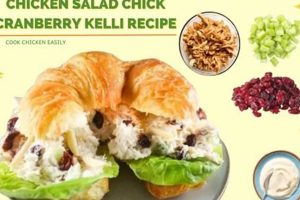
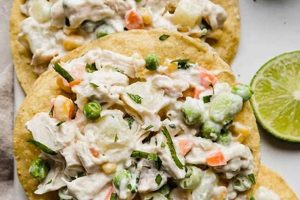
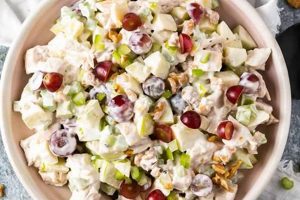
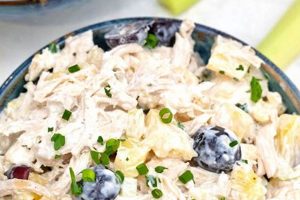
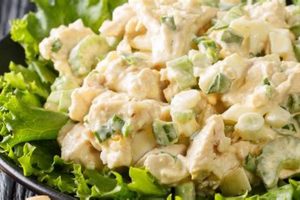
A delicate balance of shredded chicken, mayonnaise, and seasonings nestled within a buttery, flaky croissant offers a versatile culinary experience. This combination can range from simple, everyday fare to elegant appetizers, depending on the chosen ingredients and preparation methods. Imagine diced celery and onion for a classic approach, or dried cranberries and pecans for a touch of sweetness and crunch. The possibilities are nearly endless.
This easily customizable dish provides a convenient and satisfying meal option. Its portability makes it ideal for picnics, lunches, and quick dinners. Historically, chicken salad gained popularity in the mid-19th century, initially served as a more elaborate salad course. The croissant, a Viennese pastry, adds a touch of sophistication and elevates the dish beyond a simple sandwich. This combination allows for a textural contrast that enhances the overall enjoyment.
Further exploration will cover variations in ingredients, techniques for achieving optimal flavor and texture, and creative serving suggestions for different occasions. From classic recipes to innovative twists, the following sections offer a comprehensive guide to crafting the perfect culinary experience.
Tips for an Exceptional Chicken Salad Croissant
Elevating this seemingly simple dish requires attention to detail. The following tips offer guidance on achieving optimal flavor and texture.
Tip 1: Chicken Selection: Opting for high-quality chicken, whether roasted, poached, or grilled, significantly impacts the final result. Consider using leftover roasted chicken for enhanced depth of flavor.
Tip 2: Mayonnaise Matters: The quality and type of mayonnaise influence the overall richness and creaminess. Experimenting with different brands or homemade versions can add a unique touch.
Tip 3: Balancing Add-ins: A careful balance of complementary ingredients, such as celery, grapes, nuts, or dried fruits, enhances the flavor profile and adds textural complexity. Avoid overwhelming the chicken salad with excessive additions.
Tip 4: Seasoning Strategically: Freshly ground black pepper, a touch of Dijon mustard, and a pinch of salt are essential seasonings. Herbs like tarragon or chives can elevate the flavor profile.
Tip 5: Croissant Quality: Fresh, high-quality croissants are crucial. Choose croissants with a light, airy texture and a rich, buttery flavor that complements the chicken salad.
Tip 6: Proper Chilling: Chilling the chicken salad allows the flavors to meld and enhances the final taste. However, avoid over-chilling, which can dull the flavors.
Tip 7: Assembly Technique: Slicing the croissant horizontally and layering the chicken salad evenly ensures an enjoyable eating experience. Consider adding a layer of lettuce or tomato for added freshness.
By following these tips, one can transform a simple chicken salad croissant into a truly memorable culinary experience, maximizing flavor and achieving the perfect balance of textures.
The following section will provide a selection of variations on this classic combination, demonstrating its versatility and adaptability to diverse palates.
1. High-quality Ingredients

Ingredient quality directly impacts the overall sensory experience of a chicken salad croissant. Utilizing superior components elevates this seemingly simple dish from ordinary to exceptional. The following facets illustrate the significance of ingredient selection.
- Chicken
Chicken forms the foundation of this dish. Selecting premium chicken, whether free-range or organic, contributes significantly to the flavor and texture. Freshly roasted or poached chicken offers a superior taste compared to pre-cooked or processed options. The texture of the chicken should be moist and tender, not dry or stringy.
- Croissant
The croissant plays a crucial role in the overall experience. A freshly baked, buttery croissant with a light, airy texture enhances the enjoyment. Avoid stale or dry croissants, as they detract from the overall quality. The croissant’s flavor should complement, not overpower, the chicken salad.
- Mayonnaise
Mayonnaise binds the chicken salad and contributes to its richness and creaminess. Opting for high-quality mayonnaise, preferably made with real eggs and oil, enhances the flavor profile. Consider using artisanal or homemade mayonnaise for a unique touch. The mayonnaise should be smooth and creamy, not overly tangy or sweet.
- Produce and Add-ins
Fresh, crisp produce like celery, onions, and grapes adds textural complexity and brightens the flavor profile. If using dried fruits or nuts, ensure they are of high quality and contribute complementary flavors. Wilted or stale produce detracts from the overall freshness and appeal. The add-ins should complement the chicken salad, not overpower it.
By prioritizing high-quality ingredients in each of these categories, one ensures a superior culinary experience. The synergistic effect of premium components elevates the chicken salad croissant from a simple meal to a truly delightful gastronomic experience.
2. Proper Chicken Preparation

Proper chicken preparation is paramount in crafting a delectable chicken salad croissant. The method employed significantly impacts the final flavor, texture, and overall quality of the dish. Understanding and executing these techniques elevates the culinary experience from satisfactory to exceptional.
- Cooking Method
The chosen cooking method significantly influences the chicken’s flavor profile and texture. Roasting imparts a rich, savory depth, while poaching yields a more delicate, moist result. Grilling introduces smoky notes, but requires careful attention to prevent dryness. Each method contributes unique characteristics, influencing the final character of the chicken salad. Overcooked, dry chicken results in a less desirable, crumbly texture within the croissant.
- Seasoning
Seasoning the chicken during cooking enhances its inherent flavor. Simple seasonings like salt, pepper, and herbs can significantly elevate the taste. More complex spice blends or marinades can introduce nuanced flavor dimensions, complementing the other ingredients in the chicken salad. However, over-seasoning can overpower the delicate flavors of the croissant and other components.
- Temperature and Timing
Achieving the correct internal temperature ensures food safety and optimal texture. Overcooking results in dry, stringy chicken, while undercooking presents health risks. Precise timing and temperature control, whether roasting, poaching, or grilling, contribute to a succulent, flavorful outcome. A meat thermometer provides accurate temperature readings, ensuring a safe and palatable final product.
- Cooling and Shredding
Allowing the cooked chicken to cool completely before shredding prevents the mayonnaise from separating and creating a greasy texture in the salad. The shredding method itself influences the final texture. Hand-shredding yields larger, more textured pieces, while using a food processor creates a finer consistency. The chosen method should align with personal preference and the desired texture of the final dish.
By mastering these facets of chicken preparation, one ensures a flavorful, texturally appealing chicken salad that harmonizes perfectly with the buttery croissant. Attention to these details transforms a simple dish into a truly exceptional culinary creation, enhancing the overall dining experience.
3. Balanced Flavor Profile
A balanced flavor profile is crucial for a successful chicken salad croissant recipe. This balance prevents any single flavor from dominating, ensuring a harmonious and enjoyable culinary experience. The interplay of savory, sweet, acidic, and creamy elements creates complexity and depth. Consider the interplay of savory chicken, creamy mayonnaise, tart grapes or pickles, and crunchy celery or nuts. This balance prevents the richness of the mayonnaise from becoming overwhelming or the chicken from tasting bland. A well-balanced flavor profile elevates the dish beyond a simple combination of ingredients, transforming it into a cohesive and satisfying culinary creation.
Achieving this balance requires careful consideration of each ingredient’s contribution. The inherent savoriness of the chicken provides a foundation upon which other flavors are built. The mayonnaise contributes richness and creaminess, while acidic elements, like lemon juice or pickles, cut through the richness and add brightness. Sweet components, such as dried cranberries or grapes, provide a subtle counterpoint to the savory and acidic notes. Textural elements, such as crunchy nuts or celery, introduce another layer of complexity. For example, a chicken salad with excessive mayonnaise might lack brightness, while one with too much lemon juice might taste overly tart. The goal is to create a symphony of flavors, where each component complements the others, creating a harmonious and enjoyable whole.
Understanding the importance of a balanced flavor profile empowers culinary creativity and control. It allows for informed choices regarding ingredient selection, proportions, and seasoning adjustments. Successfully balancing these elements results in a chicken salad croissant that is not only delicious but also nuanced and memorable. This balance is the key to transforming a simple combination of ingredients into a sophisticated and satisfying dish. Challenges may arise from variations in ingredient quality or personal preferences, necessitating adjustments to achieve the desired harmony. Ultimately, a balanced flavor profile is the hallmark of a well-executed chicken salad croissant recipe.
4. Freshly Baked Croissants

Freshly baked croissants contribute significantly to the overall quality of a chicken salad croissant. The croissant’s texture and flavor directly influence the sensory experience. A freshly baked croissant offers a delicate, flaky texture that contrasts pleasantly with the creamy chicken salad. Its buttery aroma and subtle sweetness complement the savory filling, creating a harmonious balance. Conversely, a stale croissant can detract from the dish, resulting in a dry, crumbly texture and a less appealing flavor profile. The interplay of textures and flavors between the fresh croissant and the chicken salad elevates the dish beyond a simple sandwich. For instance, a croissant with a crisp exterior and airy interior provides a satisfying textural contrast to the soft chicken salad. This contrast enhances the eating experience, making each bite more enjoyable.
The structural integrity of a freshly baked croissant also plays a crucial role. A croissant with good structure holds the chicken salad without collapsing or becoming soggy. This allows for easier handling and consumption. Furthermore, a fresh croissant offers a more visually appealing presentation, enhancing the overall dining experience. Consider a catering scenario: freshly baked croissants filled with chicken salad present a more elegant and appetizing option compared to those made with stale or pre-made croissants. This attention to detail demonstrates a commitment to quality and enhances the perceived value of the offering.
In summary, the choice between a freshly baked croissant and a less-than-optimal alternative significantly impacts the overall enjoyment of a chicken salad croissant. The fresh croissant’s textural and flavor contributions, along with its structural integrity, elevate this simple dish to a higher culinary plane. Understanding this connection allows for informed decisions that prioritize quality and enhance the overall dining experience. This seemingly minor detail can significantly impact customer satisfaction in commercial settings or elevate a simple lunch to a more enjoyable meal. Challenges can include sourcing fresh, high-quality croissants consistently, particularly in high-volume settings. However, the resulting improvement in quality justifies the effort.
5. Appropriate Chilling Time

Appropriate chilling time plays a crucial role in the final quality of a chicken salad croissant. Chilling allows the flavors of the chicken salad to meld and deepen, resulting in a more cohesive and nuanced flavor profile. This process allows the seasonings and other ingredients to fully integrate with the chicken and mayonnaise, creating a more harmonious blend. For example, allowing the chicken salad to chill for at least 30 minutes before assembling the croissants allows the flavors of herbs, spices, and other add-ins to permeate the chicken, resulting in a more complex and satisfying taste. Conversely, insufficient chilling can result in a bland or disjointed flavor profile, where individual ingredients stand out rather than blending harmoniously.
Beyond flavor development, appropriate chilling also impacts the texture and structural integrity of the croissant. Chilling the chicken salad helps to firm the mixture, preventing it from becoming overly runny or soggy inside the croissant. This is particularly important in warmer climates or when using croissants with a delicate texture. A chilled chicken salad is less likely to seep into the croissant’s layers, maintaining its structural integrity and preventing a soggy mess. Consider a picnic scenario: a pre-made chicken salad croissant with appropriately chilled filling will hold its shape and texture better than one assembled immediately before consumption, especially in warm weather.
In conclusion, appropriate chilling time is an essential, yet often overlooked, element in crafting a superior chicken salad croissant. The impact on flavor development and structural integrity significantly influences the overall culinary experience. While specific chilling times may vary depending on the recipe and ambient temperature, understanding the importance of this step allows for informed decisions that optimize both flavor and texture. Challenges can include time constraints, especially in high-volume production settings, but the resulting improvement in quality justifies the allocation of adequate chilling time. Prioritizing this step ensures a more enjoyable and satisfying culinary outcome.
6. Thoughtful Assembly Method
Thoughtful assembly elevates the chicken salad croissant from a simple combination of ingredients to a carefully constructed culinary experience. A considered approach to assembly maximizes the enjoyment of the dish by enhancing both its aesthetic appeal and structural integrity. This involves careful attention to layering, portioning, and presentation, ensuring a harmonious balance of flavors, textures, and visual appeal.
- Croissant Preparation
Proper croissant preparation is the foundation of successful assembly. Slicing the croissant horizontally, rather than vertically, creates a stable base for the filling and prevents spillage. Lightly toasting the cut surfaces can add a pleasant textural contrast and prevent the croissant from becoming soggy from the chicken salad. The depth of the cut influences the filling capacity and the overall balance of bread to filling.
- Filling Distribution
Even distribution of the chicken salad ensures consistent flavor and prevents structural imbalances. Overfilling can lead to a messy eating experience and compromise the croissant’s integrity, while underfilling can result in a dry or unsatisfying bite. Using a spatula or piping bag allows for precise placement and a more visually appealing presentation. Consider catering scenarios where consistent portioning is essential for both presentation and cost control.
- Ingredient Layering
Strategic ingredient layering can enhance both flavor and texture. Adding a layer of lettuce or tomato introduces a fresh element and a contrasting texture. Placing a barrier, such as a thin layer of butter lettuce, between the croissant and the chicken salad can prevent sogginess. The order of layering can also influence the perceived flavors, with certain ingredients benefiting from closer proximity to the palate.
- Presentation
Visual appeal enhances the overall dining experience. Simple garnishes, such as a sprinkle of paprika or a sprig of fresh herbs, can elevate the presentation without overpowering the dish. The choice of serving platter or individual plates also contributes to the aesthetic appeal. Consider the difference between a casually plated croissant for a quick lunch and a carefully arranged presentation for a catered event. The presentation reflects the care taken in preparation and influences the perceived value of the dish.
A thoughtful assembly method maximizes the potential of the chicken salad croissant, transforming it from a simple sandwich into a carefully crafted culinary creation. Attention to these details enhances the sensory experience, demonstrating a commitment to quality and elevating the enjoyment of this classic combination. While seemingly minor, these considerations significantly impact the overall perception and satisfaction derived from the chicken salad croissant, highlighting the importance of a considered approach to assembly. This attention to detail distinguishes a thoughtfully prepared croissant from a hastily assembled one, showcasing the difference between mere sustenance and a truly enjoyable culinary experience.
7. Creative Ingredient Combinations
Creative ingredient combinations offer a pathway to elevate the chicken salad croissant beyond a standard recipe, transforming it into a personalized culinary expression. This exploration of innovative ingredient pairings unlocks the potential for diverse flavor profiles and textural experiences. The inherent versatility of chicken salad provides a canvas for culinary experimentation. Classic combinations, while dependable, can sometimes lack excitement. Introducing unexpected ingredients can invigorate the palate and create a more memorable dining experience. Consider the interplay of sweet and savory elements: incorporating dried cranberries or chopped apples introduces a subtle sweetness that complements the savory chicken and creamy mayonnaise. Similarly, the addition of toasted nuts or seeds provides textural contrast and nuanced flavor dimensions. The interplay of these elements transforms a familiar dish into something unique and exciting.
Specific examples illustrate the transformative power of creative ingredient combinations. A curry-infused chicken salad, featuring golden raisins, toasted almonds, and a hint of mango chutney, offers a complex and aromatic experience. Alternatively, a Southwestern-inspired version, incorporating black beans, corn, cilantro, and a touch of chipotle pepper, introduces a vibrant and spicy dimension. These examples demonstrate how carefully chosen ingredient combinations can transport the chicken salad croissant beyond its traditional boundaries, offering a journey for the palate. Furthermore, seasonal variations present opportunities for culinary exploration. Utilizing fresh, locally sourced ingredients, such as ripe peaches in the summer or roasted butternut squash in the fall, allows for dynamic and seasonally relevant flavor profiles.
Understanding the impact of creative ingredient combinations empowers culinary innovation and personalization. It allows one to move beyond established recipes and explore new flavor territories. The ability to adapt and modify a classic dish based on personal preferences or available ingredients offers a sense of culinary ownership and creativity. Challenges may include balancing flavors and textures to ensure a harmonious outcome, but the potential rewards, in terms of flavor complexity and sensory satisfaction, justify the effort. Ultimately, creative ingredient combinations unlock the full potential of the chicken salad croissant, transforming it from a simple staple into a culinary adventure.
Frequently Asked Questions
This section addresses common inquiries regarding the preparation and enjoyment of chicken salad croissants, offering practical guidance and clarifying potential uncertainties.
Question 1: What is the best type of chicken to use for chicken salad?
Rotisserie chicken offers convenience and flavor, while poached or baked chicken breasts provide a leaner option. The choice depends on individual preferences and dietary considerations.
Question 2: How long can chicken salad be stored in the refrigerator?
Chicken salad should be stored in an airtight container and refrigerated for no more than three to five days to ensure optimal freshness and safety.
Question 3: Can chicken salad croissants be made ahead of time?
While the chicken salad can be prepared in advance, assembling the croissants shortly before serving is recommended to prevent the pastry from becoming soggy. Storing the components separately maximizes freshness and texture.
Question 4: How can one prevent a soggy croissant?
Lightly toasting the croissant halves before adding the chicken salad creates a barrier and helps maintain structural integrity. Using a thicker spread, like butter lettuce, between the croissant and filling also helps prevent sogginess.
Question 5: What are some healthy variations of chicken salad for croissants?
Substituting Greek yogurt for mayonnaise, incorporating more vegetables, and using leaner chicken contribute to a healthier version. Adding ingredients like chopped apples, grapes, or nuts enhances nutritional value and flavor complexity.
Question 6: Can different types of bread be used instead of croissants?
While croissants offer a classic pairing, other bread varieties, such as baguettes, rolls, or wraps, can be substituted. The choice of bread influences the overall flavor and textural experience.
Addressing these frequently asked questions provides a deeper understanding of chicken salad croissants, empowering informed choices and maximizing culinary success. Careful consideration of these points ensures a more enjoyable and satisfying experience.
The following section will provide a collection of curated recipes, offering diverse interpretations of this culinary classic and inspiring culinary exploration.
Chicken Salad on Croissant Recipe
Exploration of the chicken salad on croissant recipe reveals a dish offering significant culinary potential. From ingredient selection and preparation techniques to assembly methods and flavor balancing, each step contributes to the final product. High-quality ingredients, proper chicken preparation, a balanced flavor profile, fresh croissants, appropriate chilling, thoughtful assembly, and creative ingredient combinations elevate this seemingly simple dish to a higher culinary plane. Attention to these details yields a more nuanced and satisfying experience, transforming a basic combination into a memorable culinary creation.
The potential for customization and adaptation allows for personalized interpretations tailored to individual preferences and dietary considerations. Continued exploration of flavor profiles, ingredient combinations, and presentation styles offers a pathway to further culinary innovation. Ultimately, the chicken salad on croissant recipe represents more than a simple meal; it embodies a versatile culinary concept with endless possibilities for creative expression and gastronomic enjoyment.