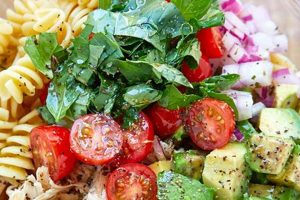
A composed salad featuring chopped chicken breast alongside other key ingredients such as bacon, hard-boiled eggs, tomatoes, avocado, blue cheese, and a vinaigrette dressing, this dish offers a balanced and flavorful meal option. Variations exist, incorporating ingredients like chives, romaine lettuce, or different cheeses, but the core components remain relatively consistent across interpretations. An example would include grilled chicken breast diced and arranged over crisp romaine lettuce with crumbled bacon, quartered hard-boiled eggs, diced tomatoes, avocado slices, and crumbled blue cheese, all drizzled with a red wine vinaigrette.
This specific combination provides a good source of protein, healthy fats, and vitamins. Its popularity stems from both its nutritional value and the satisfying blend of textures and tastes. Historically attributed to the Brown Derby restaurant in Hollywood, this dish has evolved from a late-night improvisation to a widely recognized culinary staple. Its enduring appeal lies in its adaptability and customizable nature, allowing for ingredient substitutions based on dietary needs or personal preferences.
The following sections will delve into specific variations on this classic dish, exploring ingredient selection, preparation techniques, and dressing options to guide the creation of a delicious and personalized culinary experience.
Tips for a Superior Cobb Salad
Achieving a truly exceptional Cobb salad involves attention to detail and an understanding of the interplay between ingredients. The following tips offer guidance for optimizing flavor and presentation.
Tip 1: Ingredient Quality is Paramount: The success of this dish hinges on the freshness and quality of its components. Opt for ripe, flavorful tomatoes, crisp lettuce, high-quality bacon, and fresh, properly-handled chicken.
Tip 2: Precise Chicken Preparation: Chicken can be grilled, roasted, or poached. Ensure it is cooked thoroughly but remains moist and tender. Dicing the chicken into uniform pieces ensures even distribution throughout the salad.
Tip 3: Crisp Bacon Enhances Texture: Bacon should be cooked until crisp but not burnt. Crumbling it facilitates even distribution and adds a satisfying crunch.
Tip 4: Perfectly Cooked Eggs are Essential: Hard-boiled eggs should be cooked to a firm yet creamy consistency. Overcooked yolks can become dry and crumbly. Quartering or slicing ensures easy handling and visual appeal.
Tip 5: Avocado Selection and Handling: Choose ripe but firm avocados. Slice them just before serving to prevent browning. Lemon juice can help maintain freshness.
Tip 6: The Importance of the Vinaigrette: A well-balanced vinaigrette is crucial. Classic options include red wine vinaigrette or buttermilk dressing. The dressing should complement, not overpower, the other flavors.
Tip 7: Strategic Ingredient Arrangement: Arranging the ingredients in distinct rows rather than tossing them together showcases the individual components and enhances visual appeal.
By adhering to these guidelines, one can elevate a simple salad into a culinary masterpiece. Attention to these details results in a visually appealing and flavorful dining experience.
These practical tips provide a foundation for creating a truly satisfying culinary experience. The following section will offer concluding thoughts and encourage further exploration of this versatile and flavorful dish.
1. Grilled Chicken Breast
Grilled chicken breast serves as a cornerstone of many contemporary cobb salad recipes. Its inclusion offers a lean protein source, contributing to the salad’s nutritional value while complementing the other key ingredients. Grilling imparts a smoky char and enhances the chicken’s inherent flavor, adding depth and complexity to the overall dish. This contrasts with other protein options, such as poached or roasted chicken, which offer different flavor profiles. The Maillard reaction, triggered by the grilling process, creates a distinctive crust and contributes to the appealing visual presentation of the salad.
The choice of grilling as a cooking method impacts not only the chicken’s taste but also its texture. Grilled chicken breast, when properly prepared, offers a satisfying firmness that contrasts with the other ingredients’ textures, such as the creamy avocado, crisp bacon, and crunchy lettuce. This interplay of textures is a defining characteristic of a well-made cobb salad. For instance, a cobb salad featuring dry, overcooked chicken would lack the textural balance that contributes to the dish’s overall appeal. Conversely, succulent, properly grilled chicken enhances the dining experience.
In summary, grilled chicken breast contributes significantly to both the nutritional and sensory aspects of the cobb salad. Its inclusion reflects a preference for a lean protein source with a distinctive flavor profile and textural contribution. Understanding the impact of grilling on chicken breast allows for optimized preparation techniques, ultimately enhancing the overall culinary experience offered by this classic American salad.
2. Crisp Bacon

Crisp bacon plays a crucial role in a cobb salad recipe with chicken, contributing significantly to both texture and flavor. The rendering of fat during cooking results in a crisp texture that contrasts with other elements, such as the tender chicken, creamy avocado, and fresh vegetables. This textural counterpoint is essential for a balanced and enjoyable sensory experience. The bacon’s rendered fat also infuses the salad with a subtle smoky flavor, enhancing the overall complexity of the dish. Consider a cobb salad prepared with limp, undercooked bacon; the absence of the characteristic crispness would diminish the salad’s textural appeal and result in a less satisfying culinary experience.
Beyond texture and flavor, the crispness of bacon contributes to the structural integrity of the salad. Its rigid structure prevents the other ingredients from becoming overly compressed, maintaining an appealing presentation. Imagine a cobb salad left to sit for an extended period; if the bacon were not crisp, it would likely become soggy and lose its structural contribution. The crispness of the bacon helps maintain the salad’s visual appeal and prevents it from becoming a dense, unappetizing mass. Furthermore, the Maillard reaction during bacon cooking produces a complex array of flavor compounds that enhance the overall savory profile of the salad. These compounds interact with the flavors of the chicken, blue cheese, and vinaigrette, creating a synergistic effect that elevates the dish beyond a simple sum of its parts.
In conclusion, the crispness of bacon in a cobb salad with chicken is not merely a desirable characteristic but a fundamental component that influences the dish’s success. Its contribution extends beyond simple textural contrast to encompass flavor enhancement, structural integrity, and overall sensory appeal. Understanding the role of crisp bacon allows for informed cooking techniques and ingredient selection, ultimately leading to a more satisfying and well-balanced culinary experience.
3. Hard-boiled eggs
Hard-boiled eggs constitute an essential component of a classic cobb salad, offering nutritional value and contributing to the dish’s characteristic textural and flavor profile. Their inclusion provides a source of protein and essential nutrients, complementing the other ingredients. The firm, yet yielding texture of the egg white contrasts with the creamy yolk, adding a distinct textural element to the salad’s overall composition. This textural interplay is crucial for a balanced sensory experience; imagine a cobb salad without the textural contrast offered by the hard-boiled egg the dish would lack a key dimension. The subtle, slightly sulfurous flavor of the yolk interacts with other ingredients, particularly the vinaigrette and blue cheese, creating a complex flavor profile that enhances the overall culinary experience. For example, a Dijon-based vinaigrette, paired with the hard-boiled egg and blue cheese, contributes a nuanced tanginess that would be absent without the egg’s presence.
Beyond their individual contribution, hard-boiled eggs play a vital role in the overall balance and structure of the cobb salad. Their firm texture helps maintain the salad’s structural integrity, preventing it from becoming overly compressed or soggy. This structural contribution is especially important when the salad is prepared in advance. Consider a cobb salad prepared without hard-boiled eggs the absence of their structural support might lead to a less appealing presentation over time, as the other ingredients could compact and lose their individual definition. The egg’s visual appeal, particularly when quartered or sliced and arranged meticulously atop the other ingredients, further enhances the presentation of the salad. This visual aspect contributes to the overall dining experience, demonstrating the attention to detail in the salad’s construction.
In conclusion, hard-boiled eggs are not merely an ingredient in a cobb salad recipe with chicken; they are an integral component that contributes significantly to its nutritional value, textural complexity, flavor profile, and structural integrity. Their presence elevates the dish from a simple combination of ingredients to a well-balanced and satisfying culinary creation. Understanding the multifaceted role of hard-boiled eggs in a cobb salad allows for informed ingredient selection and preparation techniques, ultimately resulting in an optimized and more enjoyable dining experience. One can observe the impact of omitting hard-boiled eggs; the salad, while still palatable, would lack the nuanced textural and flavor dimensions that contribute to its classic appeal. This underscores the essential role hard-boiled eggs play in creating a truly authentic and satisfying cobb salad.
4. Ripe tomatoes
Ripe tomatoes contribute essential flavor and textural components to a cobb salad with chicken. Their inherent sweetness and slight acidity balance the richness of the chicken, bacon, and blue cheese. The juicy flesh of a ripe tomato offers a textural counterpoint to the crisp lettuce, crunchy bacon, and tender chicken. A cobb salad prepared with underripe, mealy tomatoes would lack the necessary sweetness and juiciness, resulting in a less balanced flavor profile and a compromised textural experience. Conversely, overripe tomatoes might contribute excessive moisture, potentially leading to a soggy salad. For instance, a salad featuring heirloom tomatoes, known for their vibrant colors and diverse flavor profiles, offers a more complex and nuanced flavor experience compared to one using standard supermarket tomatoes. The specific varietal choice can significantly influence the overall gustatory impression.
The structural integrity of the salad also benefits from the inclusion of properly ripened tomatoes. Their firmness, when ripe but not overripe, helps maintain the salad’s overall structure, preventing it from collapsing into a dense mass. Furthermore, the visual appeal of ripe tomatoes, with their vibrant colors and appealing texture, enhances the presentation of the cobb salad. Imagine a cobb salad prepared for a restaurant setting; the use of visually appealing, perfectly ripe tomatoes contributes significantly to the dish’s perceived value and overall aesthetic. This visual element plays a crucial role in elevating the dining experience. The careful selection of tomatoes demonstrates attention to detail and a commitment to quality ingredients, reflecting positively on the overall culinary execution.
In summary, the inclusion of ripe tomatoes in a cobb salad with chicken is essential for achieving the desired balance of flavors, textures, and visual appeal. Their contribution extends beyond mere ingredients to become integral components that influence the overall dining experience. Understanding the impact of tomato ripeness on the final product allows for informed ingredient selection, ultimately contributing to a more satisfying and well-balanced culinary creation. Challenges associated with tomato selection, such as seasonal availability and varietal variations in flavor profiles, can be addressed through careful sourcing and informed substitution choices. The judicious selection and preparation of ripe tomatoes directly impact the overall success of a cobb salad recipe with chicken, solidifying their role as a key component of this classic dish.
5. Fresh Avocado
Fresh avocado contributes significantly to the sensory experience of a cobb salad recipe featuring chicken. Its creamy texture provides a marked contrast to the crisp lettuce, crunchy bacon, and tender chicken, enhancing the interplay of textures that define a well-composed salad. The avocado’s rich, buttery flavor complements the savory elements of the chicken and bacon, while also providing a backdrop for the tangy blue cheese and acidic vinaigrette. A cobb salad lacking fresh avocado would sacrifice this crucial textural and flavor dimension, resulting in a less nuanced and satisfying dish. Consider, for example, a cobb salad where the avocado is overripe or browned; the compromised texture and off-flavors would detract significantly from the overall culinary experience. Conversely, a perfectly ripe avocado, with its smooth, buttery texture and clean flavor, elevates the salad to a higher level of culinary sophistication.
Beyond its sensory contributions, avocado offers nutritional benefits that align with the health-conscious aspects often associated with salads. It provides healthy monounsaturated fats, fiber, and essential vitamins and minerals. This nutritional profile complements the lean protein from the chicken and contributes to the salad’s overall healthfulness. In practical terms, the inclusion of avocado can increase satiety, making the cobb salad a more satisfying and complete meal. This can be observed in situations where individuals seeking a lighter yet fulfilling meal opt for a cobb salad specifically because of the inclusion of avocado. The absence of avocado might necessitate the addition of other, potentially less healthy, ingredients to achieve the same level of satiety.
In conclusion, fresh avocado is not merely an optional addition to a cobb salad recipe with chicken; it is a key component that contributes significantly to its textural complexity, flavor profile, and nutritional value. Its presence elevates the dish from a simple combination of ingredients to a well-balanced and satisfying culinary experience. Understanding the importance of fresh avocado in this context enables informed ingredient selection and preparation, ultimately resulting in a more enjoyable and healthful meal. Challenges associated with avocado selection, such as variability in ripeness and potential for browning, can be mitigated through careful purchasing and proper storage techniques, ensuring that the avocado contributes optimally to the overall quality of the cobb salad.
6. Crumbled Blue Cheese
Crumbled blue cheese provides a pungent, salty, and tangy counterpoint to the other ingredients in a cobb salad with chicken. Its distinctive flavor profile, derived from the Penicillium cultures used in its production, adds a layer of complexity that enhances the overall culinary experience. The creamy texture of the cheese, when crumbled, contrasts with the crisp lettuce, crunchy bacon, and tender chicken, contributing to the desirable interplay of textures that characterize a well-made cobb salad. Omitting blue cheese, or substituting it with a milder cheese like feta or goat cheese, would result in a noticeably different flavor profile, lacking the characteristic sharpness and tang. For example, a cobb salad served in a fine dining establishment often features high-quality Roquefort blue cheese, its complex flavor profile elevating the dish beyond a simple casual meal. Conversely, a more budget-conscious version might utilize a less expensive blue cheese, potentially impacting the overall flavor balance.
The sharp flavor of blue cheese also plays a crucial role in balancing the richness of the other ingredients. It cuts through the fattiness of the bacon and avocado, preventing the salad from becoming overly heavy. This balancing effect is crucial for maintaining the refreshing quality expected of a salad, while still delivering a satisfying and flavorful meal. Consider a cobb salad where the blue cheese is overly salty or has an excessively strong ammonia flavor; this imbalance could overpower the other delicate flavors and detract from the overall enjoyment of the dish. The careful selection and proper portioning of blue cheese are essential for achieving the desired balance.
In summary, crumbled blue cheese contributes a crucial dimension of flavor and texture to a cobb salad with chicken. Its sharp, tangy notes and creamy texture interact synergistically with the other ingredients, creating a balanced and complex flavor profile. Understanding the role of blue cheese in the overall composition of the salad enables informed ingredient selection and portioning, ultimately leading to a more refined and satisfying culinary experience. The potential challenges associated with blue cheese, such as variations in quality and intensity of flavor, underscore the importance of careful selection and mindful integration into the salad.
7. Vinaigrette Dressing
Vinaigrette dressing plays a crucial role in a cobb salad recipe with chicken, acting as a unifying element that harmonizes the diverse flavors and textures. Its acidity, derived from vinegar or citrus juice, provides a counterpoint to the richness of the chicken, bacon, and avocado. The vinaigrette also contributes brightness and freshness, balancing the heavier elements and preventing the salad from feeling overly dense. A cobb salad lacking a properly balanced vinaigrette might feel disjointed, with the individual ingredients competing rather than complementing each other. Consider, for instance, a cobb salad dressed with a heavy, creamy dressing; the overall effect would likely be overly rich and mask the individual flavors of the components. Conversely, a light and tangy vinaigrette enhances the flavors of the chicken, bacon, blue cheese, and vegetables, creating a cohesive and refreshing culinary experience. Specific vinaigrette choices, such as a classic red wine vinaigrette or a lighter lemon-herb vinaigrette, can further enhance the salad’s flavor profile, catering to individual preferences and dietary considerations.
The emulsified nature of a vinaigrette, where oil and vinegar are combined into a stable mixture, contributes to the salad’s textural appeal. The vinaigrette coats the ingredients lightly, adding a subtle sheen and preventing them from drying out. This coating also aids in distributing flavor evenly throughout the salad, ensuring that each bite offers a balanced combination of tastes and textures. For example, a vinaigrette prepared with high-quality extra virgin olive oil adds a subtle fruity and peppery note to the salad, further enhancing the complexity of the flavor profile. A poorly emulsified vinaigrette, on the other hand, might leave the salad oily and unappetizing. The stability of the emulsion is crucial for maintaining the desired texture and flavor distribution.
In conclusion, vinaigrette dressing is an essential component of a successful cobb salad with chicken. Its acidity, flavor profile, and emulsified nature contribute significantly to the overall balance, texture, and enjoyment of the dish. The careful selection and preparation of the vinaigrette, considering the specific ingredients in the salad and individual preferences, can elevate the cobb salad from a simple combination of ingredients to a truly satisfying and well-balanced culinary creation. Challenges associated with vinaigrette preparation, such as achieving a stable emulsion and balancing acidity, can be addressed through proper techniques and ingredient selection, ensuring that the vinaigrette complements rather than detracts from the overall dining experience. The impact of the vinaigrette on the overall perception of the salad underscores its essential role in this classic American dish.
Frequently Asked Questions
This section addresses common inquiries regarding the preparation and enjoyment of cobb salad with chicken.
Question 1: What is the best way to prevent avocados from browning in a cobb salad?
Browning can be minimized by slicing avocados immediately before serving. Alternatively, coating exposed avocado surfaces with lemon or lime juice can help delay oxidation.
Question 2: Can other types of chicken be used besides grilled chicken breast?
Roasted, poached, or pan-fried chicken can be substituted. However, grilling imparts a distinct smoky flavor that complements the other ingredients. The chosen cooking method will influence the final flavor and texture of the salad.
Question 3: Is it necessary to use blue cheese, or can other cheeses be substituted?
While blue cheese is traditional, substitutions like Gorgonzola, Roquefort, or even feta cheese can be made based on individual preferences. However, the flavor profile of the salad will be altered accordingly. The intensity of the chosen cheese should be considered in relation to the other ingredients.
Question 4: What is the best type of lettuce for a cobb salad?
Crisp romaine lettuce is often preferred for its structural integrity and neutral flavor. Other options include butter lettuce, iceberg lettuce, or a mixed green blend. The choice of lettuce can impact both the texture and visual appeal of the salad.
Question 5: Can cobb salad be prepared in advance?
While some components, such as the chicken, bacon, and hard-boiled eggs, can be prepared ahead of time, it is generally recommended to assemble the salad just before serving to maintain optimal freshness and prevent the ingredients from becoming soggy.
Question 6: What are some healthy variations of a traditional cobb salad recipe with chicken?
Healthier variations can include using a lighter vinaigrette, reducing the amount of bacon, or substituting turkey bacon for traditional pork bacon. Additionally, increasing the proportion of vegetables can enhance the nutritional value of the salad. These modifications allow for adjustments based on individual dietary needs and preferences.
Understanding the nuances of ingredient selection and preparation can elevate the cobb salad experience. Experimentation with different variations allows for personalized culinary exploration.
This concludes the frequently asked questions section. The following section will provide a summary of key takeaways and offer concluding thoughts.
Conclusion
This exploration of the components and construction of a cobb salad emphasizes the importance of ingredient quality and preparation techniques in achieving a balanced and flavorful dish. Careful consideration of each element, from the crisp bacon and tender chicken to the ripe tomatoes and creamy avocado, contributes to a synergistic culinary experience. The proper selection and application of a complementary vinaigrette further enhances the interplay of flavors and textures. Attention to detail in each step, from ingredient sourcing to final assembly, distinguishes a truly exceptional cobb salad.
The enduring popularity of this classic American salad reflects its adaptability and capacity for personalization. Continued exploration of variations, informed by an understanding of core principles, offers opportunities for culinary creativity and personalized enjoyment. Refinement of techniques and thoughtful ingredient selection allows for a deeper appreciation of the nuanced interplay of flavors and textures that define a well-executed cobb salad.