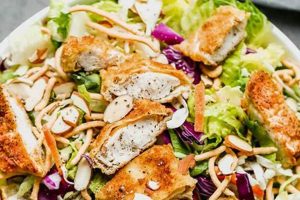
Dishes featuring cooked pasta, combined with diced or shredded chicken and various other ingredients, constitute a popular and versatile meal option. These ingredients can include vegetables like bell peppers, onions, and celery; cheeses such as cheddar, feta, or Parmesan; and a binding agent, typically mayonnaise or a vinaigrette-based dressing. A simple example might include rotini pasta, grilled chicken breast, chopped celery, red onion, and a mayonnaise-based dressing seasoned with dill and black pepper.
Such dishes offer several advantages. They are generally quick and easy to prepare, making them ideal for weeknight meals or casual gatherings. They can be served chilled, making them particularly appealing in warmer weather. Furthermore, their adaptable nature allows for a wide array of variations to suit diverse palates and dietary needs. The historical roots of these combined dishes are less distinct than other culinary traditions, likely emerging alongside the increasing popularity of both commercially available mayonnaise and readily accessible pasta in the 20th century.
Exploration of specific ingredient combinations, preparation methods, and nutritional information will further illuminate the versatility and appeal of this culinary category.
Tips for Creating Exceptional Chicken Pasta Salad
Achieving a flavorful and well-balanced chicken pasta salad requires attention to several key elements. The following tips offer guidance for optimizing ingredient selection, preparation techniques, and overall presentation.
Tip 1: Cook Pasta Properly. Pasta should be cooked al dente for optimal texture within the salad. Overcooked pasta can become mushy and unappetizing. Rinsing the cooked pasta with cold water after draining helps stop the cooking process and keeps it from sticking together.
Tip 2: Select High-Quality Chicken. Using pre-cooked rotisserie chicken offers convenience, while grilling or baking fresh chicken breasts allows for greater control over seasoning and flavor. Ensure chicken is thoroughly cooked and cooled before adding it to the salad.
Tip 3: Incorporate Varied Vegetables. A variety of vegetables adds color, texture, and nutritional value. Consider incorporating crisp vegetables like bell peppers, cucumbers, and celery, alongside more robust options like cherry tomatoes or blanched broccoli.
Tip 4: Enhance with Flavorful Cheese. Cheese adds depth and richness. Crumbled feta, cubed cheddar, or shredded Parmesan are excellent choices. The cheese should complement the other flavors in the salad.
Tip 5: Choose the Right Dressing. The dressing serves as the unifying element, binding the ingredients together. Mayonnaise-based dressings offer a creamy texture, while vinaigrette-based dressings provide a lighter, tangier option. The chosen dressing should complement the chicken and other ingredients.
Tip 6: Season Thoughtfully. Fresh herbs, such as dill, parsley, or chives, can elevate the flavor profile. Dried herbs and spices, including garlic powder, onion powder, and paprika, can also contribute depth. Seasoning should be added gradually and tasted throughout the preparation process.
Tip 7: Chill Thoroughly Before Serving. Chilling allows the flavors to meld and enhances the overall dining experience. Ideally, the salad should be chilled for at least 30 minutes before serving.
By following these guidelines, one can consistently produce a delicious and satisfying chicken pasta salad. Attention to these details ensures a well-balanced dish that appeals to both the eye and the palate.
Consideration of individual dietary preferences and creative adaptations of these core principles further enhances the versatility of this popular dish.
1. Pasta Variety
Pasta selection significantly influences the final character of a pasta salad with chicken. The pasta’s shape, size, and texture interact with the other ingredients and the dressing, impacting both the overall taste and the aesthetic presentation. Understanding these nuances allows for informed choices that best complement the desired flavor profile and create a well-balanced dish.
- Shape and Texture
Different pasta shapes offer varied textural experiences and dressing adhesion capabilities. Small, tubular shapes like ditalini or elbow macaroni readily absorb the dressing, creating a richly flavored, cohesive salad. Larger, more complex shapes such as rotini, fusilli, or farfalle capture ingredients within their curves and crevices. Their varied textures add visual interest and prevent the salad from becoming monotonous.
- Size and Density
The size and density of the pasta also play a crucial role. Smaller pasta shapes are well-suited for salads with finely chopped ingredients and lighter dressings, while larger, denser pasta can stand up to heartier ingredients and thicker dressings. Overly large pasta may overwhelm the other components, while excessively small pasta can become lost within the mixture.
- Gluten Content and Cooking Properties
Gluten content affects the pasta’s cooking properties and final texture. Traditional durum wheat pasta offers a firm bite, while gluten-free alternatives may have a softer texture. Careful attention to cooking times prevents overcooking, which results in a mushy texture undesirable in a salad setting. Understanding the specific cooking characteristics of the chosen pasta ensures an optimal outcome.
- Flavor Pairing
While pasta itself has a relatively neutral flavor, its texture and ability to absorb flavors interact with the other ingredients. For salads with bold flavors, a robust pasta shape can provide a counterpoint. For salads with delicate flavors, a smaller, less intrusive pasta shape allows the other ingredients to shine. Thoughtful pasta selection enhances the overall balance and harmony of flavors.
Careful consideration of pasta variety elevates a simple chicken pasta salad from basic to exceptional. Selecting the appropriate pasta shape, size, and texture, combined with an understanding of its cooking properties and flavor interactions, contributes significantly to the overall enjoyment of the dish. The interplay of these factors ultimately determines the salad’s success, transforming a collection of ingredients into a harmonious and satisfying culinary experience.
2. Chicken Preparation

Chicken preparation methods significantly influence the overall flavor profile and textural experience of pasta salad. Different techniques impart distinct characteristics to the chicken, affecting how it interacts with other ingredients and the chosen dressing. Consideration of these nuances allows for a more deliberate and nuanced approach to recipe development, ensuring a balanced and satisfying final product.
Several factors contribute to the impact of chicken preparation. Grilling imparts a smoky char and enhances the chicken’s inherent savoriness, creating a robust flavor that complements bolder dressings and ingredients. Roasting yields tender, juicy meat with subtle caramelization, suitable for a wider range of flavor combinations. Poaching produces a clean, neutral-flavored chicken that readily absorbs the flavors of the dressing and other ingredients, ideal for lighter, brighter salads. Shredding or dicing the chicken after cooking affects its texture and distribution within the salad, influencing both mouthfeel and visual appeal. For instance, shredded grilled chicken adds a smoky depth and textural complexity, while diced poached chicken offers a more delicate presence. Conversely, using pre-cooked rotisserie chicken prioritizes convenience, but may limit control over seasoning and overall flavor development.
The interplay between chicken preparation and other recipe components is crucial. A strongly flavored grilled chicken might overwhelm a delicate vinaigrette, while a subtly flavored poached chicken may benefit from a more assertive dressing. Understanding these relationships enables informed choices regarding ingredient combinations and flavor balancing. Careful consideration of chicken preparation techniques, therefore, elevates the pasta salad from a simple combination of ingredients to a carefully orchestrated culinary experience. This deliberate approach maximizes flavor development, textural contrast, and overall enjoyment of the dish.
3. Vegetable Selection

Vegetable selection significantly impacts the flavor, texture, nutritional value, and visual appeal of pasta salad with chicken. Thoughtful consideration of vegetable characteristics allows for the creation of a balanced and satisfying dish. The choice of vegetables influences not only the sensory experience but also the overall nutritional profile of the salad.
Crisp vegetables, such as bell peppers, celery, and cucumbers, contribute a refreshing crunch and a light, watery contrast to the richer elements of the salad. These vegetables offer textural diversity and contribute essential vitamins and minerals. Incorporating a variety of colors, like red bell peppers, green cucumbers, and orange carrots, enhances visual appeal. Roasted or grilled vegetables, such as zucchini, bell peppers, or red onions, offer a deeper, more complex flavor profile. The caramelization process during roasting or grilling adds a subtle sweetness and enhances the vegetables’ inherent flavors. Blanched vegetables, such as broccoli or green beans, provide a tender-crisp texture and retain their vibrant green color, contributing both visual and textural interest. The blanching process also helps to preserve nutrients.
Balancing textures and flavors within the salad is crucial. Combining crisp, raw vegetables with roasted or blanched vegetables creates a dynamic textural experience. The interplay of flavors, from the sweetness of roasted red peppers to the subtle bitterness of blanched broccoli, adds depth and complexity to the overall taste. Furthermore, vegetable selection offers opportunities to cater to specific dietary needs and preferences. Incorporating a variety of vegetables ensures a wider range of nutrients and caters to diverse palates. Ultimately, careful vegetable selection elevates the pasta salad with chicken, transforming it from a basic dish into a vibrant and nutritious meal.
4. Dressing Choice
Dressing choice profoundly influences the overall flavor profile and sensory experience of pasta salad with chicken. The dressing acts as a unifying element, binding the individual components together and contributing significantly to the final taste, texture, and overall appeal. A well-chosen dressing complements the other ingredients, enhancing their individual characteristics while creating a cohesive and harmonious dish. Conversely, an inappropriate dressing can overwhelm or clash with the other flavors, resulting in a less satisfying outcome.
Several factors contribute to the impact of dressing choice. Creamy dressings, typically mayonnaise-based, provide a rich, smooth texture and a tangy flavor that complements the savory chicken and the often-included vegetables. Variations within this category, such as dressings incorporating buttermilk, sour cream, or herbs, offer further nuance and complexity. Vinaigrettes, composed of oil and vinegar, offer a lighter, brighter alternative. Their acidity provides a refreshing counterpoint to the richness of the chicken and can enhance the flavors of fresh vegetables. The specific type of oil and vinegar used, along as any added herbs or spices, further contribute to the overall flavor profile. For example, a lemon vinaigrette adds a citrusy brightness, while a balsamic vinaigrette contributes a deeper, more complex sweetness.
The interplay between the dressing and the other ingredients is crucial. A robust, creamy dressing might overwhelm delicate flavors, while a light vinaigrette may not provide sufficient richness to balance stronger flavors. Consider the specific ingredients within the pasta salad when selecting a dressing. For a salad with grilled chicken and roasted vegetables, a balsamic vinaigrette or a herbed mayonnaise dressing might provide a suitable complement. For a salad with poached chicken and fresh vegetables, a lighter lemon vinaigrette or a yogurt-based dressing might be a more appropriate choice. The ultimate goal is to achieve balance and harmony, where the dressing enhances rather than masks the flavors of the other components. Careful consideration of dressing choice, therefore, elevates the pasta salad with chicken, transforming it from a mere combination of ingredients into a thoughtfully composed and thoroughly enjoyable culinary creation.
5. Flavor Enhancements

Flavor enhancements play a crucial role in elevating pasta salad with chicken beyond a simple combination of ingredients. These additions introduce complexity, depth, and balance, transforming the dish into a more nuanced and satisfying culinary experience. Strategic incorporation of herbs, spices, cheeses, and other flavor-enhancing elements allows for customization and personalization, catering to individual preferences and creating a more memorable meal.
Fresh herbs, such as dill, parsley, chives, and basil, contribute brightness and freshness. Their aromatic qualities enhance the overall sensory experience, while their individual flavor profiles complement the chicken and vegetables. Dried herbs and spices, including oregano, thyme, garlic powder, and paprika, offer concentrated flavors and longer shelf life. Their judicious use adds depth and complexity, particularly beneficial in balancing richer dressings or heartier ingredients. Cheeses, ranging from sharp cheddar and tangy feta to salty Parmesan and creamy goat cheese, introduce contrasting textures and savory notes. Their careful selection can amplify existing flavors or introduce complementary elements. Other flavor enhancers, such as toasted nuts, sun-dried tomatoes, or marinated artichoke hearts, contribute textural variety and distinct flavor profiles, further enriching the overall composition.
Consider the interplay between flavor enhancers and other recipe components. For example, the brightness of fresh dill complements the richness of a creamy dressing, while the earthiness of dried oregano enhances the savoriness of grilled chicken. The saltiness of feta cheese provides a counterpoint to the sweetness of roasted vegetables, and the crunch of toasted almonds adds textural interest. Understanding these relationships allows for strategic flavor pairings, resulting in a well-balanced and harmonious final product. Failure to consider these nuances can result in a dish where flavors clash or where individual components become lost. Therefore, careful selection and application of flavor enhancers are essential for creating a pasta salad with chicken that is not only delicious but also demonstrates culinary intentionality and expertise.
6. Chilling Time
Chilling time represents a crucial step in optimizing pasta salad with chicken recipes. This period of refrigeration allows distinct flavors to meld, creating a more cohesive and harmonious final product. Temperature reduction also firms the pasta, enhancing its textural appeal within the salad. Beyond flavor development and textural improvement, chilling inhibits bacterial growth, a critical food safety consideration, particularly given the perishable nature of chicken and mayonnaise-based dressings.
The impact of chilling time becomes evident when comparing a freshly made pasta salad to one that has been refrigerated for several hours. A freshly made salad may exhibit disparate flavors, with individual ingredients asserting themselves rather than blending harmoniously. The pasta may also present a softer texture, less resilient to the other components. After chilling, however, the flavors meld, creating a more unified and balanced taste. The pasta firms, providing a more pleasing textural contrast against the other ingredients. This transformation underscores the importance of chilling as a deliberate step in the recipe process, rather than a mere afterthought.
Practical application of this understanding necessitates planning and time management. Recipes should explicitly state the recommended chilling time, allowing individuals to incorporate this crucial step into their meal preparation schedules. Food safety guidelines recommend chilling perishable foods, including chicken and mayonnaise-based salads, within two hours of preparation. Adhering to these guidelines minimizes bacterial growth and ensures food safety. Understanding the impact of chilling time empowers individuals to consistently produce higher-quality, safer, and more flavorful pasta salads with chicken. This seemingly simple step elevates the dish from a basic combination of ingredients to a carefully considered culinary creation.
Frequently Asked Questions
This section addresses common inquiries regarding pasta salad with chicken preparation, storage, and variations. Clarity on these points ensures optimal results and promotes food safety.
Question 1: What type of pasta is best suited for chicken pasta salad?
Shapes that hold dressing well and offer textural variety, such as rotini, farfalle, or penne, are generally preferred. Shorter shapes like ditalini or elbow macaroni also work well.
Question 2: What is the safest way to handle cooked chicken in pasta salad?
Ensure chicken is cooked to an internal temperature of 165F (74C). Cool the chicken completely before adding it to the salad to prevent bacterial growth. Refrigerate the salad promptly after preparation.
Question 3: How long can chicken pasta salad be stored safely?
Refrigerated chicken pasta salad should be consumed within three to five days. Discard any salad left at room temperature for more than two hours.
Question 4: Can chicken pasta salad be frozen?
Freezing is generally not recommended. Mayonnaise-based dressings can separate upon thawing, resulting in an undesirable texture. Freezing also affects the texture of certain vegetables.
Question 5: How can one adapt chicken pasta salad for different dietary needs?
Gluten-free pasta can be substituted for traditional pasta. Dairy-free mayonnaise or yogurt alternatives can be used for dressings. Adjustments to ingredients, such as using lower-sodium options or avoiding certain allergens, further accommodate specific dietary requirements.
Question 6: How can one prevent pasta salad from becoming dry?
Ensure the pasta is cooked al dente. Adding a sufficient amount of dressing coats the pasta and other ingredients, preventing dryness. If the salad appears dry after refrigeration, additional dressing can be added before serving.
Adhering to safe food handling practices and understanding the principles of flavor and texture optimization ensures a satisfying and enjoyable culinary experience.
Further exploration of specific recipe variations and creative adaptations can enhance culinary skills and broaden culinary horizons.
Pasta Salad with Chicken Recipes
Exploration of pasta salad with chicken recipes reveals a versatile dish adaptable to various tastes and dietary needs. Careful selection of pasta shape, chicken preparation method, vegetable incorporation, dressing choice, and flavor enhancements contributes significantly to the final product. Proper chilling is essential for both food safety and optimal flavor development. Understanding these elements allows for informed choices, transforming a simple combination of ingredients into a well-balanced and satisfying meal.
Continued exploration of flavor profiles, ingredient combinations, and culinary techniques promises further enhancement of this popular dish. Emphasis on fresh, high-quality ingredients and adherence to safe food handling practices ensures both enjoyable and healthy culinary experiences. The adaptability of pasta salad with chicken recipes positions it as a continually evolving culinary canvas, offering endless opportunities for creative expression and personalized enjoyment.