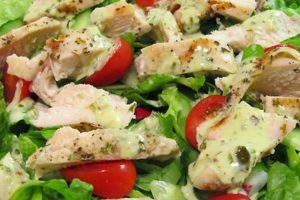
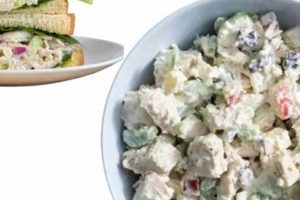
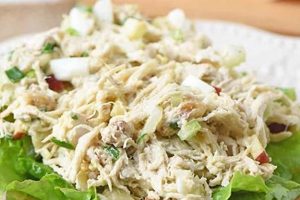
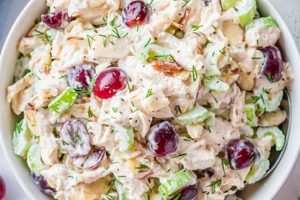
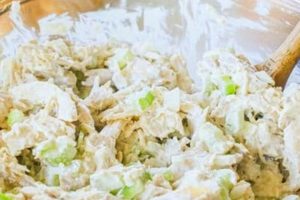
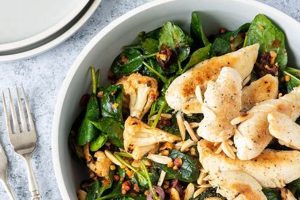
A professionally developed formulation for this popular dish typically involves cooked chicken, mayonnaise, and various additional ingredients. Celery, onion, grapes, nuts, and seasonings are common additions, creating a balanced flavor profile and textural complexity. Variations may include fruit, herbs, or different types of mayonnaise to create unique signature offerings. These formulations are often carefully calibrated for consistency, cost-effectiveness, and appeal to a broad customer base.
Standardized preparation methods ensure consistent quality and taste across multiple locations or franchisees. A well-executed version of this dish can be a profitable menu item, attracting customers seeking a familiar yet satisfying option. Historically, chicken salad’s popularity in restaurants has been linked to its perceived lightness, versatility, and suitability for various meal occasions, from light lunches to catered events. Its adaptability allows chefs to incorporate seasonal ingredients and cater to diverse dietary preferences.
This exploration will delve into key aspects of creating successful variations of this classic, covering topics such as ingredient selection, preparation techniques, presentation strategies, and menu integration.
Tips for Exceptional Chicken Salad
Optimizing a chicken salad recipe for restaurant service requires attention to detail and an understanding of customer preferences. The following tips offer guidance for creating a dish that is both delicious and operationally efficient.
Tip 1: Chicken Selection: Choosing the right chicken significantly impacts the final product. Roasted or poached chicken breast offers a clean flavor and tender texture. Consider using a combination of white and dark meat for a richer flavor profile.
Tip 2: Mayonnaise Matters: High-quality mayonnaise is crucial. Experiment with different brands or consider making mayonnaise in-house for ultimate control over flavor and consistency. The ratio of mayonnaise to chicken should be carefully balanced to achieve the desired creaminess without making the salad overly rich.
Tip 3: Textural Variety: Incorporating ingredients that provide textural contrast enhances the eating experience. Finely diced celery and onion offer a crisp counterpoint to the soft chicken, while nuts or seeds add a satisfying crunch.
Tip 4: Flavor Balancing: Fresh herbs, such as tarragon or chives, can elevate the flavor profile. A touch of acidity, from lemon juice or vinegar, brightens the overall taste. Seasoning should be carefully calibrated to avoid overpowering the delicate chicken flavor.
Tip 5: Portion Control and Presentation: Consistent portioning ensures cost control and customer satisfaction. Consider presentation options beyond a simple scoop. Serving the salad on a bed of lettuce, in a croissant, or as a sandwich filling can add value and visual appeal.
Tip 6: Food Safety Considerations: Proper handling and storage of chicken salad are essential. Maintain appropriate refrigeration temperatures throughout the preparation and service process to prevent bacterial growth.
Tip 7: Menu Integration: Think strategically about how chicken salad fits into the overall menu. Offer variations to cater to different tastes, such as a curried chicken salad or a version with dried cranberries and walnuts.
By focusing on these key areas, culinary professionals can develop a chicken salad offering that distinguishes their establishment and delivers a consistently satisfying dining experience.
This guidance provides a foundation for creating exceptional chicken salad. The next section will explore advanced techniques for recipe customization and menu development.
1. Ingredient Quality

Ingredient quality significantly impacts the overall taste, texture, and perceived value of a restaurant chicken salad recipe. Superior ingredients elevate the dish from ordinary to exceptional, justifying higher price points and fostering customer loyalty. This section explores key facets of ingredient quality relevant to crafting a successful chicken salad.
- Chicken:
The chicken itself forms the foundation of the salad. Using fresh, high-quality chicken breast results in a tender, flavorful product. Free-range or organic chicken can further enhance the taste and appeal to health-conscious consumers. Pre-cooked, diced chicken offers convenience but may compromise texture and flavor compared to freshly prepared chicken. The choice directly impacts the salad’s final quality.
- Mayonnaise:
Mayonnaise contributes significantly to the salad’s richness, texture, and overall flavor profile. Using a premium mayonnaise made with high-quality oils and eggs creates a smoother, more flavorful salad. House-made mayonnaise offers maximum control over ingredients and allows for customization, such as incorporating flavored oils or vinegars. Choosing a lower-quality mayonnaise can negatively affect the final product’s taste and texture.
- Produce:
Fresh, crisp produce like celery, onions, and grapes adds textural complexity and flavor dimension. Using seasonal produce at its peak ripeness ensures optimal flavor and vibrancy. Wilted or subpar produce can detract from the salad’s overall appeal and compromise its freshness. Proper storage and handling of produce are crucial for maintaining quality.
- Seasonings and Additives:
Seasonings and additives play a crucial role in balancing flavors and enhancing the overall profile of the chicken salad. Freshly ground spices, high-quality herbs, and carefully selected nuts or dried fruits can elevate the dish. Using stale spices or low-quality additives can negatively impact the flavor profile. Balancing the flavors of the various components ensures a harmonious and satisfying final product.
The cumulative effect of using high-quality ingredients in a restaurant chicken salad recipe translates directly to a superior dining experience. This attention to detail can distinguish an establishment, justifying a higher price point and fostering positive customer perceptions. Investing in superior ingredients demonstrates a commitment to quality that resonates with discerning diners.
2. Precise Formulation
Precise formulation is paramount in a restaurant setting, ensuring consistency, predictability, and efficient resource management. A well-defined recipe, specifying ingredient quantities, preparation methods, and portion sizes, allows for consistent replication of the dish across multiple servings and different staff members. This consistency builds customer loyalty through predictable quality and facilitates standardized costing and inventory control. A precisely formulated recipe directly influences profitability by minimizing waste and maximizing efficiency. For example, specifying the exact amount of mayonnaise per serving prevents overuse and keeps food costs in check, while clear instructions on dicing vegetables ensure uniformity in presentation and portioning.
Consider a scenario where two chefs prepare the same dish without a standardized recipe. Variations in ingredient proportions, preparation techniques, and seasoning can lead to inconsistent results. One version might be overly creamy while the other is bland. Such inconsistencies erode customer trust and make cost analysis challenging. In contrast, a precise formulation acts as a blueprint, ensuring every plate leaving the kitchen meets established quality standards. This standardization extends beyond taste and texture to encompass presentation, portion size, and even nutritional content, which is increasingly important for health-conscious consumers. Precise formulation also allows for efficient scaling of production, whether for daily service or catering large events.
In conclusion, precise formulation plays a crucial role in the success of a restaurant chicken salad offering. It is the cornerstone of consistency, efficiency, and cost control, contributing directly to profitability and customer satisfaction. Developing and adhering to a standardized recipe mitigates variations, ensures predictable quality, and enables informed business decisions related to pricing, inventory, and resource allocation. This meticulous approach to recipe development distinguishes professional food service operations from casual home cooking.
3. Efficient Preparation

Efficient preparation is crucial for a successful restaurant chicken salad recipe, impacting profitability, consistency, and customer satisfaction. Streamlined processes minimize labor costs, reduce food waste, and ensure timely service. This section explores key facets of efficient preparation within the context of a professional food service environment.
- Mise en Place:
The French term “mise en place,” meaning “everything in its place,” refers to the organized preparation of ingredients before cooking begins. For chicken salad, this includes pre-cooking and dicing the chicken, chopping vegetables, and measuring out seasonings. Having all ingredients readily available streamlines the assembly process, reduces errors, and ensures consistent results. A well-organized mise en place significantly speeds up production during peak service hours and contributes to a calmer, more efficient kitchen environment. For instance, pre-portioning ingredients into individual containers for each batch of salad eliminates repetitive measuring and reduces the risk of cross-contamination.
- Batch Preparation:
Preparing chicken salad in batches, rather than individually, significantly increases efficiency. Large batches can be made during off-peak hours, reducing workload during busy periods. Proper storage of pre-made batches is essential for maintaining food safety and quality. Clearly labeled and dated containers facilitate inventory management and minimize waste due to spoilage. This method is particularly effective for high-volume operations, allowing staff to focus on other tasks during service, such as order fulfillment and customer interaction. Batch preparation also contributes to consistency across multiple servings, ensuring every customer receives a uniform product.
- Standardized Procedures:
Documented, step-by-step procedures ensure consistent results regardless of who prepares the dish. These procedures should encompass everything from ingredient preparation to final plating. Standardized procedures reduce training time for new staff and minimize variations in the final product. For example, a detailed procedure might specify the exact size to dice vegetables or the precise method for incorporating ingredients to achieve optimal consistency. This level of detail ensures predictability and facilitates quality control, regardless of staff experience levels.
- Equipment Selection:
Choosing the right equipment further enhances efficiency. Food processors streamline chopping and mixing tasks, while portioning scoops ensure consistent serving sizes. Investing in appropriate equipment minimizes manual labor and reduces preparation time. For example, using a food processor to dice vegetables is significantly faster and more consistent than hand-chopping. Similarly, calibrated scoops ensure accurate portioning, reducing waste and maintaining predictable food costs. Appropriate equipment selection depends on the scale of the operation and the anticipated volume of chicken salad production.
Efficient preparation methods are essential for optimizing a restaurant chicken salad recipe. By implementing these strategies, establishments can streamline operations, minimize waste, and ensure consistent quality. These efficiencies contribute directly to profitability by reducing labor costs and maximizing resource utilization, ultimately enhancing customer satisfaction through timely service and predictable product quality.
4. Appealing Presentation

Appealing presentation elevates a restaurant chicken salad recipe from a simple dish to a memorable dining experience. Visual appeal significantly influences customer perception, impacting satisfaction and perceived value. Thoughtful plating enhances the dish’s sensory appeal, encouraging consumption and contributing to a positive overall impression.
- Plating Techniques:
Strategic plating techniques significantly enhance the visual appeal. Instead of simply scooping the salad onto a plate, consider using a plating ring for a more structured presentation. A bed of fresh greens adds color and texture, while artful garnishes, such as a sprig of fresh herbs or a sprinkle of paprika, provide visual interest. The choice of plate itself also contributes to the overall aesthetic; a clean, white plate provides a neutral backdrop that allows the colors of the salad to stand out.
- Garnishes and Accompaniments:
Carefully chosen garnishes and accompaniments further enhance the presentation. A sprinkle of toasted nuts or seeds adds textural contrast and visual appeal. Slices of crisp cucumber or wedges of ripe tomato provide complementary colors and flavors. Crackers or crostini offer a textural counterpoint and a convenient vehicle for enjoying the salad. Consider the overall color palette and flavor profile when selecting garnishes to ensure a harmonious and balanced presentation.
- Portion Size and Shape:
Appropriate portion size and shape contribute to a visually appealing plate. Overly large portions can appear overwhelming, while too-small portions may suggest poor value. A uniformly shaped portion, whether a neatly formed scoop or a precisely cut sandwich, conveys professionalism and attention to detail. Consider the context of the meal; a smaller, more refined portion might be appropriate for a luncheon setting, while a larger portion might be expected for a main course salad.
- Container Choice:
The choice of serving container also impacts presentation. For dine-in service, classic plates or bowls are appropriate. For takeout or catering, consider using attractive, disposable containers that maintain the salad’s integrity and presentation during transport. Clear containers allow the vibrant colors of the salad to be visible, enhancing its appeal. Ensure the container is appropriately sized to prevent spillage and maintain a neat appearance.
Appealing presentation enhances the perceived value and overall enjoyment of a restaurant chicken salad recipe. By considering these elements of visual appeal, establishments can create a more satisfying dining experience, contributing to positive customer perceptions and potentially increasing repeat business. A well-presented dish signals attention to detail and elevates the perceived quality of the entire meal.
5. Profitable Pricing

Profitable pricing is crucial for the sustainability of any restaurant dish, including chicken salad. It represents the delicate balance between covering costs and maximizing profit without deterring customers. A well-calculated price considers ingredient costs, preparation time, overhead, and perceived value. This section explores key facets of profitable pricing within the context of a restaurant chicken salad recipe.
- Cost Analysis:
Accurate cost analysis forms the foundation of profitable pricing. This involves calculating the cost of each ingredient, factoring in portion sizes and potential waste. Labor costs associated with preparation, including staff time and associated overhead, must also be considered. Understanding these costs allows for setting a base price that ensures profitability. For example, if the total cost of ingredients and labor for a single serving of chicken salad is $2.50, the selling price must exceed this amount to generate profit.
- Market Research:
Market research plays a vital role in determining a competitive and acceptable price point. Analyzing competitor pricing for similar dishes provides a benchmark. Customer perception of value influences willingness to pay; a premium chicken salad using high-quality ingredients might justify a higher price than a basic version. Understanding local market dynamics and customer preferences informs pricing decisions. If competitors offer similar salads for $8, pricing significantly higher requires justification through perceived quality or unique features.
- Pricing Strategies:
Various pricing strategies can be employed to optimize profitability. Value pricing focuses on offering a competitive price for a perceived high-quality product. Premium pricing targets a specific market segment willing to pay more for superior ingredients or unique preparations. Bundling chicken salad with other items, such as a drink or a side dish, can increase overall sales and profitability. Promotional pricing, such as offering discounts during off-peak hours, can stimulate demand and improve sales volume.
- Menu Psychology:
Menu psychology leverages psychological principles to influence customer choices. Techniques like anchoring, where a high-priced item influences the perception of other prices, can be employed. Presenting the chicken salad alongside lower-priced options can make it appear more reasonably priced. Descriptive menu language highlighting premium ingredients or preparation methods can further justify a higher price point. Effective menu design guides customer attention and influences purchasing decisions.
Profitable pricing for a restaurant chicken salad recipe requires a comprehensive understanding of costs, market dynamics, and customer psychology. A strategically chosen price not only ensures profitability but also contributes to customer satisfaction and perceived value. Balancing these factors contributes to the long-term success and sustainability of a restaurant’s menu offerings.
Frequently Asked Questions
This section addresses common inquiries regarding the development and execution of successful chicken salad recipes within a professional food service environment.
Question 1: What is the ideal chicken-to-mayonnaise ratio for restaurant chicken salad?
The ideal ratio depends on the desired consistency and target audience. A common starting point is a 2:1 ratio of cooked chicken to mayonnaise, but this can be adjusted based on specific recipe requirements. A higher ratio of chicken results in a chunkier salad, while more mayonnaise yields a creamier texture.
Question 2: How can food safety be ensured when preparing large batches of chicken salad?
Maintaining proper refrigeration temperatures throughout the entire process, from ingredient storage to service, is critical. Chicken should be cooked to a safe internal temperature, and the salad should be chilled promptly after preparation. Adhering to established food safety guidelines minimizes the risk of bacterial growth.
Question 3: What are some effective strategies for controlling costs without compromising quality?
Utilizing less expensive cuts of chicken, such as thighs, can reduce ingredient costs. Buying ingredients in bulk and optimizing portion control also contribute to cost savings. However, cost-saving measures should not compromise the overall quality or flavor of the salad.
Question 4: How can a restaurant differentiate its chicken salad from competitors?
Incorporating unique ingredients, such as dried fruits, nuts, or specialty cheeses, can create a signature flavor profile. Offering variations, like curried chicken salad or a version with roasted red peppers, caters to diverse tastes. Creative presentation and high-quality ingredients also differentiate a product.
Question 5: What are some common mistakes to avoid when making chicken salad for a restaurant?
Overusing mayonnaise can result in a bland, overly rich salad. Inconsistent chopping of ingredients leads to uneven texture and presentation. Neglecting proper seasoning can result in a lackluster flavor profile. Failing to consider target audience preferences can limit appeal.
Question 6: How can a restaurant adapt its chicken salad recipe to accommodate dietary restrictions?
Offering variations using alternative ingredients can address dietary needs. For example, using a vegan mayonnaise and omitting traditional chicken creates a plant-based version. Gluten-free options can be achieved by using gluten-free bread or crackers for serving. Clearly labeling ingredients and preparation methods ensures transparency and caters to specific dietary requirements.
Understanding these key considerations contributes to the successful execution of a profitable and appealing chicken salad offering in a restaurant setting. Careful attention to ingredient selection, preparation methods, and pricing ensures customer satisfaction and business success.
The following section will provide example recipes illustrating these principles in practice.
Restaurant Chicken Salad Recipe
Successfully integrating a chicken salad offering into a restaurant menu requires a multifaceted approach. From ingredient selection and precise formulation to efficient preparation, appealing presentation, and profitable pricing, each element contributes to the dish’s overall success. Careful consideration of these factors ensures consistent quality, operational efficiency, and customer satisfaction. Furthermore, adapting recipes to accommodate dietary restrictions and evolving consumer preferences expands market reach and enhances brand reputation. This comprehensive approach transforms a seemingly simple dish into a versatile and profitable menu item.
Ultimately, a well-executed formulation distinguishes an establishment, fostering customer loyalty and contributing to long-term business success. Continual refinement based on customer feedback and market trends ensures ongoing relevance and profitability within the competitive culinary landscape. The potential for innovation within this classic dish remains vast, offering opportunities for culinary creativity and business growth.