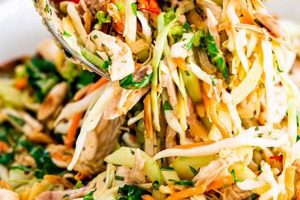
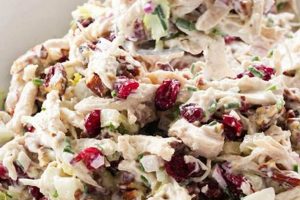
A dish combining cooked chicken, rice, and various other ingredients, typically including vegetables, mayonnaise, and seasonings, constitutes this culinary creation. A classic example incorporates diced cooked chicken, long-grain rice, celery, onion, mayonnaise, mustard, salt, and pepper. Variations can include grapes, nuts, dried fruits, or different herbs and spices, offering a wide range of flavor profiles.
This type of dish offers a versatile, nutritious, and often budget-friendly meal option. Its adaptability allows for customization based on dietary needs and preferences, incorporating different protein sources, grains, and vegetables. Historically, similar preparations have existed across various cultures, utilizing readily available ingredients to create satisfying and complete meals. The convenience of preparing components in advance makes it suitable for picnics, potlucks, and quick lunches or dinners.
Further exploration will delve into specific ingredient selections, preparation techniques, variations, and nutritional information related to this versatile dish. This includes considerations for dietary restrictions, presentation suggestions, and storage recommendations.
Tips for a Superior Preparation
Optimizing ingredient selection and preparation techniques enhances the final product, ensuring a flavorful and satisfying culinary experience.
Tip 1: Rice Selection and Cooking: Opting for long-grain rice, like basmati or jasmine, yields a fluffy texture, preventing a sticky or mushy salad. Rinsing the rice before cooking removes excess starch, further contributing to a desirable consistency.
Tip 2: Chicken Preparation: Utilizing leftover roasted or poached chicken streamlines the process. Alternatively, poaching or grilling chicken specifically for the salad infuses additional flavor. Dicing the chicken into uniform pieces ensures even distribution throughout the salad.
Tip 3: Enhancing Flavor with Aromatics: Incorporating finely diced celery, onion, and fresh herbs, such as parsley or chives, elevates the flavor profile. Sauting these aromatics briefly before adding them to the salad imparts a deeper, richer taste.
Tip 4: Balancing the Dressing: Achieving a harmonious balance of creamy and tangy elements in the dressing is crucial. Combining mayonnaise with a touch of Dijon mustard, lemon juice, or vinegar enhances the overall flavor and prevents an overly rich taste.
Tip 5: Incorporating Textural Variety: Adding chopped nuts, such as almonds or pecans, or dried fruits, like cranberries or raisins, introduces textural contrast and complements the other ingredients. Consider toasted nuts for enhanced flavor.
Tip 6: Seasoning Appropriately: Seasoning with salt and pepper is essential, but exploring other spices like paprika, garlic powder, or onion powder can further enhance the flavor complexity.
Tip 7: Chilling for Optimal Flavor: Allowing the salad to chill in the refrigerator for at least 30 minutes before serving allows the flavors to meld and enhances the overall taste experience.
By following these recommendations, one can achieve a flavorful, well-balanced, and texturally appealing culinary creation.
The following section will offer variations and adaptations to cater to diverse dietary preferences and ingredient availability.
1. Chicken (cooked, diced)

Cooked, diced chicken forms the foundational protein component of a chicken and rice salad recipe. Its preparation, distinct from raw or shredded chicken, significantly influences the dish’s overall texture and flavor profile. Dicing ensures even distribution throughout the salad, facilitating a balanced mouthful in each bite. Furthermore, pre-cooking the chicken allows for deeper flavor development, especially if methods like roasting or grilling are employed. This pre-cooking also eliminates food safety concerns associated with using raw poultry. For example, roasted chicken contributes a smoky depth, while poached chicken offers a cleaner, milder taste. The choice of cooking method directly impacts the final salad’s character.
The size of the dice also merits consideration. Larger pieces provide a more substantial bite, while smaller pieces integrate more seamlessly with other ingredients. This choice depends on the desired texture and the size of accompanying components. For instance, a salad with larger chunks of vegetables might benefit from similarly sized chicken pieces, whereas a finer dice complements a salad with delicate herbs and finely chopped vegetables. Overcooked, dry chicken detracts from the final product, highlighting the importance of proper cooking techniques to maintain moisture and tenderness.
In summary, the specified state of the chicken cooked and diced is not arbitrary. It reflects a deliberate choice impacting the sensory experience and practical aspects of the dish. Understanding the nuances of chicken preparation contributes significantly to a successful chicken and rice salad recipe. Improperly prepared chicken can result in a dry, bland, or unevenly textured salad, underscoring the importance of this seemingly simple ingredient. This attention to detail elevates the final product from a basic mixture to a carefully constructed culinary creation.
2. Rice (cooked, cooled)
Cooked, cooled rice forms the foundational carbohydrate component of a successful chicken and rice salad recipe. Its preparation, distinct from raw or warm rice, significantly influences the dish’s final texture, flavor absorption, and food safety. The specific requirement of “cooked, cooled” rice highlights its crucial role in achieving the desired outcome.
- Texture and Consistency
Using cooked and cooled rice prevents a mushy or sticky salad. Cooling allows the rice grains to firm up and maintain their individual integrity when mixed with other ingredients. Warm rice, on the other hand, tends to clump and absorb excess moisture, leading to an undesirable texture. This is particularly important in a chicken and rice salad where maintaining a distinct grain structure contributes to a more pleasant mouthfeel.
- Flavor Absorption
Cooled rice absorbs flavors more effectively than warm rice. When the rice is cooled, its starch molecules settle, creating a structure that readily absorbs the flavors of the dressing and other ingredients. This allows the rice to become a flavor carrier, enhancing the overall taste experience of the salad. Using warm rice can dilute the dressing and create a less flavorful dish.
- Food Safety
Cooling the rice before incorporating it into the salad adheres to food safety practices. Warm rice, particularly when combined with other ingredients like mayonnaise, creates an environment conducive to bacterial growth. Cooling the rice rapidly after cooking minimizes this risk, ensuring a safe and enjoyable culinary experience. This crucial step safeguards against potential foodborne illnesses.
- Variety and Versatility
Different rice varieties offer unique characteristics that influence the final salad. Long-grain rice, such as basmati or jasmine, generally works well due to its separate grains and fluffy texture. However, shorter-grain varieties like Arborio can also be used, yielding a creamier, stickier result. The choice of rice depends on personal preference and the desired texture of the final product.
The seemingly simple instruction “cooked, cooled” underscores the significance of proper rice preparation in a chicken and rice salad recipe. These considerations, often overlooked, significantly impact the final dish’s quality, affecting its taste, texture, and safety. Choosing the right rice variety and employing the correct cooking and cooling techniques contribute significantly to a successful and enjoyable culinary outcome.
3. Vegetables (fresh, chopped)

Fresh, chopped vegetables constitute an essential component of a successful chicken and rice salad recipe, contributing crucial textural contrast, flavor complexity, and nutritional value. Their inclusion elevates the dish beyond a simple combination of chicken and rice, transforming it into a balanced and vibrant culinary creation. Understanding the role and selection of these vegetables is paramount to achieving a desirable outcome.
- Textural Contrast
Chopped vegetables introduce a variety of textures, counterbalancing the softness of the chicken and rice. Crisp vegetables like celery, bell peppers, and carrots provide a satisfying crunch, while softer options like chopped cucumbers or tomatoes offer a juicy burst. This interplay of textures prevents a monotonous mouthfeel, making the salad more engaging and enjoyable.
- Flavor Complexity
Fresh vegetables contribute a wide range of flavors that complement and enhance the chicken and rice. Onions add a pungent bite, while bell peppers introduce a subtle sweetness. Herbs like parsley, dill, or chives provide a fresh, herbaceous note. The careful selection and combination of vegetables allow for a customized flavor profile, catering to individual preferences and creating a more nuanced dish.
- Nutritional Enhancement
Incorporating fresh vegetables significantly increases the nutritional value of the chicken and rice salad. Vegetables are rich in vitamins, minerals, and dietary fiber, contributing essential nutrients often lacking in the base ingredients. This addition transforms the salad into a more wholesome and balanced meal, offering health benefits alongside culinary satisfaction.
- Visual Appeal
The vibrant colors of fresh vegetables enhance the visual appeal of the chicken and rice salad. The bright greens of celery and herbs, the reds of tomatoes and bell peppers, and the oranges of carrots create a visually stimulating dish, making it more appetizing and enjoyable. This aesthetic element further elevates the dining experience.
The inclusion of “fresh, chopped” vegetables within the chicken and rice salad context signifies more than just a simple addition. It represents a deliberate choice that enhances the sensory experience, nutritional value, and overall appeal of the dish. Careful consideration of vegetable selection, based on desired textures, flavors, and colors, transforms a basic chicken and rice combination into a well-rounded and satisfying culinary creation.
4. Dressing (creamy, flavorful)
Dressing constitutes a pivotal component within a chicken and rice salad recipe, significantly influencing the final product’s overall palatability and cohesion. Characterized as “creamy, flavorful,” the dressing contributes essential moisture, binds the ingredients, and imparts a unifying taste experience. Without a suitable dressing, the dish risks dryness, blandness, and a disjointed character. A creamy texture, often achieved through mayonnaise, yogurt, or sour cream bases, provides a luscious mouthfeel that complements the chicken and rice. Flavorful elements, derived from herbs, spices, citrus, or other seasonings, elevate the dish beyond simple sustenance, creating a more complex and satisfying sensory experience.
Consider the contrast between a chicken and rice salad dressed solely with plain mayonnaise versus one incorporating a vibrant blend of mayonnaise, Dijon mustard, fresh herbs, and lemon juice. The former might exhibit a bland, one-dimensional taste, while the latter offers a more nuanced and balanced flavor profile. The interplay between creamy and flavorful elements within the dressing is crucial. An overly rich dressing can overwhelm the other ingredients, while a dressing lacking flavor fails to unify the dish. Achieving this balance ensures the dressing complements rather than masks the flavors of the chicken, rice, and vegetables.
Understanding the dressing’s role extends beyond mere flavor enhancement. It serves a practical function, binding the disparate elements into a cohesive whole. The dressing coats the individual ingredients, preventing them from drying out and creating a more unified culinary experience. Furthermore, the emulsification inherent in many creamy dressings stabilizes the mixture, preventing separation and maintaining a desirable consistency. Challenges can arise from improper dressing selection or preparation. A dressing too thin may render the salad watery, while a dressing too thick can create a heavy, unappetizing result. Careful consideration of ingredient ratios and emulsion stability is essential for a successful outcome. Ultimately, the dressing acts as the unifying force within a chicken and rice salad, transforming a collection of individual components into a harmonious and flavorful dish.
5. Seasoning (balanced, complementary)
Seasoning represents a critical factor in the overall success of a chicken and rice salad recipe. Describing seasoning as “balanced, complementary” underscores its importance in enhancing and unifying the diverse flavors within the dish. It is not merely an afterthought but a deliberate act of culinary refinement. Effective seasoning elevates the salad from a simple combination of ingredients to a cohesive and flavorful experience.
- Salt and Pepper: The Foundation
Salt and freshly ground black pepper constitute the fundamental seasoning elements in virtually any culinary creation, and chicken and rice salad is no exception. Salt enhances the inherent flavors of the ingredients, while pepper adds a subtle bite and complexity. However, the key lies in achieving balance. Too much salt can overpower the dish, while too little leaves it bland. The amount of pepper should complement the other flavors without dominating the palate. Proper seasoning with salt and pepper provides a neutral backdrop upon which other flavors can flourish.
- Herbs and Spices: Enhancing Complexity
Herbs and spices contribute layers of flavor that elevate the chicken and rice salad beyond the basic. Fresh herbs like parsley, dill, chives, or mint provide brightness and freshness. Dried spices such as paprika, garlic powder, onion powder, or cumin offer deeper, more robust notes. The selection should complement the other ingredients and the overall flavor profile desired. For example, a Mediterranean-inspired salad might benefit from oregano and lemon zest, while a Southwestern variation might incorporate chili powder and cumin.
- Acidity: Balancing Richness
A touch of acidity plays a vital role in balancing the richness of the chicken and rice, particularly if the dressing is mayonnaise-based. Lemon juice, vinegar, or a splash of white wine can brighten the flavors and prevent the salad from feeling heavy. The acidity also helps to cut through the creamy texture of the dressing, creating a more refreshing and balanced palate experience. The type of acid used should complement the other flavors. For instance, lemon juice pairs well with dill and parsley, while red wine vinegar might complement a salad with roasted red peppers.
- Aromatic Vegetables: Layering Flavors
Incorporating aromatic vegetables like finely diced onions, shallots, or garlic adds another layer of flavor complexity. These ingredients, often sauted briefly to enhance their sweetness, contribute depth and aroma to the salad. They provide a subtle savory backbone that complements the other ingredients without overpowering them. The quantity and type of aromatic vegetables should be carefully considered to achieve a balanced and harmonious flavor profile.
The concept of “balanced, complementary” seasoning extends beyond simply adding flavor. It involves a thoughtful approach to combining different elements to create a cohesive and harmonious taste experience. The interplay of salt, pepper, herbs, spices, acidity, and aromatic vegetables elevates the chicken and rice salad from a simple dish to a nuanced culinary creation. Each element plays a specific role in enhancing and balancing the overall flavor profile, resulting in a more satisfying and enjoyable meal.
6. Method (mixing, chilling)

Method, encompassing mixing and chilling, represents a crucial stage in crafting a successful chicken and rice salad recipe. This stage significantly influences the final product’s texture, flavor development, and food safety. Mixing ensures even distribution of ingredients and dressing, preventing localized concentrations of flavor or texture. Chilling, a frequently overlooked yet essential step, allows flavors to meld and textures to settle, resulting in a more cohesive and palatable dish.
Consider the impact of inadequate mixing. Uneven distribution of dressing can lead to pockets of dryness or excessive richness, detracting from the overall experience. Similarly, insufficient chilling prevents the flavors of the various components, such as the chicken, vegetables, and dressing, from harmonizing. A freshly mixed salad often presents a disjointed flavor profile, whereas a properly chilled salad offers a more integrated and balanced taste. For instance, allowing the salad to chill for at least 30 minutes allows the rice to absorb the dressing’s flavors fully, resulting in a more flavorful and cohesive dish. Furthermore, chilling enhances the crispness of fresh vegetables, contributing to a more texturally appealing salad.
The chilling process also offers food safety benefits, particularly when using mayonnaise-based dressings. Lowering the temperature inhibits bacterial growth, reducing the risk of foodborne illnesses. This is particularly important when preparing the salad in advance for picnics or potlucks. Therefore, understanding the methodspecifically, the importance of thorough mixing and adequate chillingproves essential for achieving a flavorful, safe, and texturally pleasing chicken and rice salad. Overlooking these seemingly simple steps can compromise the final product, highlighting the practical significance of this understanding within the broader context of the recipe.
Frequently Asked Questions
This section addresses common inquiries regarding chicken and rice salad recipes, providing clear and concise information to ensure optimal preparation and enjoyment.
Question 1: What type of rice is best suited for this dish?
Long-grain rice varieties, such as basmati or jasmine, are generally preferred due to their separate grains and fluffy texture when cooked. These characteristics prevent the salad from becoming overly sticky or mushy.
Question 2: Can brown rice be used as a healthier alternative?
Brown rice can be substituted, offering increased nutritional value due to its higher fiber content. However, it requires a longer cooking time and may result in a slightly chewier texture in the final salad.
Question 3: What methods exist for ensuring the chicken remains moist in the salad?
Using leftover roasted or poached chicken often yields the most flavorful and moist results. If cooking chicken specifically for the salad, poaching or grilling are recommended methods. Avoid overcooking, as this can lead to dry, less palatable chicken.
Question 4: How long can chicken and rice salad be safely stored in the refrigerator?
Properly stored in an airtight container, chicken and rice salad typically remains safe to consume for up to three to four days in the refrigerator. However, it is crucial to ensure the salad was thoroughly chilled before storage.
Question 5: What are common alternatives to mayonnaise-based dressings?
For those seeking alternatives to mayonnaise, Greek yogurt or a vinaigrette dressing made with olive oil, lemon juice, and herbs offer lighter options. These alternatives can also accommodate specific dietary restrictions or preferences.
Question 6: How can one adapt the recipe to accommodate various dietary restrictions?
This recipe offers significant adaptability. Vegetarian versions can substitute chickpeas or tofu for chicken. Gluten-free adaptations require ensuring all ingredients, including the dressing and seasonings, are certified gluten-free. Dairy-free versions can utilize plant-based mayonnaise alternatives or a vinaigrette dressing.
Addressing these frequently asked questions provides a deeper understanding of the nuances involved in preparing a successful chicken and rice salad, contributing to a more informed and satisfying culinary experience.
The following section will provide specific recipe variations to inspire culinary creativity and cater to a range of tastes and preferences.
Chicken and Rice Salad Recipe
This exploration has provided a comprehensive overview of the elements contributing to a successful chicken and rice salad recipe. From the foundational componentscooked, diced chicken and cooled riceto the textural and flavorful additions of fresh, chopped vegetables and a balanced, complementary seasoning profile, each element plays a crucial role in the final product. Understanding the importance of method, encompassing thorough mixing and adequate chilling, further ensures both palatability and food safety. Addressing frequently asked questions offers practical guidance for navigating common recipe variations and adaptations.
This dish represents more than a simple combination of ingredients; it offers a versatile canvas for culinary expression. The adaptability of chicken and rice salad allows for endless variations, catering to individual preferences and dietary needs. Continued exploration of flavor combinations, ingredient substitutions, and presentation styles promises a consistently rewarding culinary experience. Ultimately, the enduring appeal of this dish lies in its simplicity, adaptability, and potential for creating a truly satisfying meal.