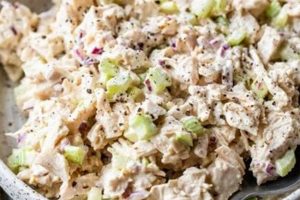
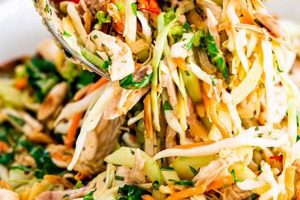
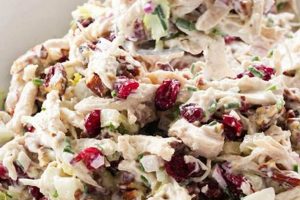
A refreshing twist on a classic dish, this culinary creation combines cooked chicken, typically shredded or diced, with a mayonnaise-based dressing. The addition of sweet cherries introduces a unique flavor profile, balancing the savory elements with a touch of fruity sweetness and pleasant tartness. Variations may include other ingredients such as nuts, celery, grapes, or herbs to complement the chicken and cherries. A simple preparation often served chilled on bread, crackers, lettuce cups, or as a standalone salad.
The blend of protein-rich chicken and the antioxidants present in cherries offers a nutritious meal option. The versatility of this dish allows for customization to individual preferences and dietary needs. Historically, fruit and meat combinations have been prevalent in various cuisines, and the incorporation of cherries in a traditionally savory salad reflects this culinary tradition. The dishs adaptability makes it suitable for picnics, potlucks, quick lunches, or light dinners.
Further exploration will delve into specific ingredient combinations, preparation techniques, and serving suggestions for optimizing this dish’s flavor and presentation. Nutritional information and variations catering to specific dietary restrictions will also be addressed.
Tips for a Superior Chicken Salad with Cherries
Optimizing flavor and texture requires attention to detail. The following tips provide guidance for creating a truly exceptional dish.
Tip 1: Chicken Selection: Roasting a whole chicken or using leftover roasted chicken yields optimal flavor. Poached or grilled chicken breasts provide a leaner alternative. Canned chicken should be avoided due to its texture and potential for added sodium.
Tip 2: Cherry Preparation: Fresh, sweet cherries, pitted and halved or quartered, offer the best flavor and texture. Frozen cherries can be substituted but should be thoroughly thawed and drained before use.
Tip 3: Mayonnaise Base: High-quality mayonnaise forms the foundation of the dressing. Greek yogurt can be incorporated to add tang and reduce fat content. Experimenting with flavored mayonnaises, such as lemon or dill, can introduce complexity.
Tip 4: Complementary Ingredients: Toasted pecans or walnuts add crunch and depth. Finely diced celery or red onion provide contrasting textures. Fresh herbs like tarragon or chives enhance the overall flavor profile.
Tip 5: Balancing Sweetness and Tartness: A touch of acidity balances the sweetness of the cherries. A squeeze of lemon juice or a splash of apple cider vinegar achieves this balance.
Tip 6: Chill Time: Allowing the salad to chill for at least 30 minutes allows the flavors to meld and enhances the overall experience.
Tip 7: Serving Suggestions: Serve the salad on croissants, crackers, or in lettuce cups for a lighter presentation. A bed of mixed greens provides a refreshing counterpoint.
By following these guidelines, one can elevate this dish from simple to exceptional. Attention to ingredient quality and preparation methods ensures a flavorful and satisfying culinary experience.
The following section will offer variations on this theme, exploring different flavor combinations and catering to specific dietary needs.
1. Chicken (cooked, diced)

Cooked, diced chicken forms the foundational protein component of chicken salad with cherries. The cooking method and dicing technique significantly influence the final dish’s texture and flavor profile. Overcooked chicken results in a dry, stringy salad, while undercooked chicken presents food safety concerns. Dicing the chicken into uniform pieces ensures even distribution throughout the salad and provides a consistent bite. Roasting or poaching the chicken enhances its inherent flavor, while boiling can leach flavor and create a blander result. The choice between white and dark meat also affects the richness and moisture content of the salad.
Consider the impact of different cooking methods. Roasted chicken imparts a depth of flavor due to the Maillard reaction, resulting in a richer, more complex salad. Poached chicken offers a cleaner, leaner protein base, allowing the other ingredients, like the cherries, to shine. The size of the dice also impacts the eating experience. A smaller dice creates a smoother texture, while a larger dice provides more substantial mouthfeel. For example, a finely diced chicken works well in a salad served as a spread, while a coarser chop suits a salad served on bread or crackers.
Properly cooked and diced chicken is essential for achieving the desired flavor and texture in chicken salad with cherries. Attention to detail in this initial stage lays the groundwork for a successful dish. Balancing the chicken’s preparation with the other ingredients’ characteristics, such as the sweetness of the cherries and the creaminess of the mayonnaise, results in a harmonious blend of flavors and textures. Neglecting this foundational element can compromise the overall quality and enjoyment of the final product.
2. Cherries (fresh, pitted)

Fresh, pitted cherries contribute a crucial dimension to chicken salad, transforming a conventional dish into a vibrant culinary experience. The inherent sweetness of ripe cherries provides a counterpoint to the savory chicken and creamy mayonnaise. Tartness, often present in cherry varieties, adds complexity, preventing excessive sweetness and creating a balanced flavor profile. Texture also plays a significant role. The firm, fleshy texture of fresh cherries contrasts with the softer textures of the chicken and dressing, adding a pleasant chewiness to each bite. The use of fresh cherries, as opposed to canned or dried varieties, ensures a burst of juicy flavor that enhances the overall freshness of the salad.
Consider the difference between using Bing cherries, known for their sweetness, and Morello cherries, known for their tartness. Bing cherries contribute a pronounced sweetness that pairs well with milder chicken preparations, while Morello cherries provide a tart counterpoint that balances richer, more savory flavors. The pitting process is critical. Cherry pits introduce an undesirable bitterness and pose a choking hazard. Halving or quartering the pitted cherries further enhances their integration into the salad, ensuring even distribution of flavor and preventing large pieces from disrupting the overall texture. Recipes often call for specific cherry varieties to achieve a desired flavor balance. Understanding the interplay of these flavors allows for informed ingredient selection and recipe adaptation.
The choice and preparation of cherries significantly impacts the sensory experience of chicken salad with cherries. Freshness, sweetness, tartness, and texture all contribute to the final product. Strategic selection and meticulous pitting elevate this ingredient from a simple addition to a defining component of the dish. Overlooking the importance of fresh, pitted cherries can lead to a less nuanced and potentially disappointing culinary outcome.
3. Mayonnaise (quality binder)
Mayonnaise serves as the unifying element in chicken salad with cherries, binding the diverse ingredients into a cohesive whole. Its quality directly influences the final product’s flavor, texture, and overall appeal. Beyond its emulsifying properties, mayonnaise contributes richness, creaminess, and a subtle tang that complements both the savory chicken and the sweet-tart cherries. Choosing the right mayonnaise is crucial for achieving the desired balance and consistency.
- Emulsification and Texture
Mayonnaise’s emulsifying properties, derived from the combination of oil and egg yolks, create a stable mixture that prevents the salad from becoming watery or separating. This emulsification ensures a smooth, creamy texture that coats the chicken and cherries, distributing flavor evenly throughout the salad. A high-quality mayonnaise maintains its emulsion even when chilled, crucial for a chicken salad typically served cold. A broken emulsion results in an oily, unappetizing texture.
- Flavor Enhancement
Mayonnaise contributes a rich, subtly tangy flavor that complements the other ingredients. The richness enhances the savory notes of the chicken, while the tang provides a counterpoint to the sweetness of the cherries. The quality of the oil and eggs used in the mayonnaise significantly impact its flavor profile. For instance, a mayonnaise made with extra virgin olive oil will have a more pronounced flavor compared to one made with a neutral oil like canola. This flavor profile interacts with the other ingredients, impacting the overall taste experience.
- Moisture and Mouthfeel
Mayonnaise adds moisture to the chicken salad, preventing dryness and contributing to a pleasant mouthfeel. This moisture is especially important when using lean chicken breast, which can become dry when cooked. The amount of mayonnaise used influences the salad’s overall consistency, ranging from a light and fluffy texture to a denser, creamier one. The balance of moisture affects the perceived freshness and enjoyment of the salad.
- Versatility and Customization
Mayonnaise provides a versatile base for customization. Different types of mayonnaise, such as flavored varieties or those made with different oils, can be used to create unique flavor profiles. Incorporating additional ingredients into the mayonnaise, such as herbs, spices, or citrus zest, further expands the possibilities for flavor complexity. For example, a lemon-dill mayonnaise complements the cherry flavor profile, while a chipotle mayonnaise adds a smoky dimension.
The choice of mayonnaise significantly impacts the final quality of chicken salad with cherries. A high-quality mayonnaise, with its stable emulsion, balanced flavor, and ability to enhance moisture and mouthfeel, elevates the dish from a simple combination of ingredients to a harmonious blend of textures and tastes. Understanding the role of mayonnaise as a binder, flavor enhancer, and textural component allows for informed decision-making and contributes to a more satisfying culinary experience.
4. Seasoning (salt, pepper)
Seasoning, primarily with salt and pepper, plays a critical role in the overall success of a chicken salad recipe with cherries. Salt enhances the inherent flavors of the chicken and other ingredients, while pepper adds a subtle layer of complexity and depth. The interplay of these two seasonings elevates the dish beyond a simple combination of ingredients, creating a more nuanced and satisfying flavor profile. Improper seasoning can result in a bland or unbalanced salad, diminishing the impact of the high-quality ingredients. Over-salting can overpower the delicate sweetness of the cherries, while insufficient seasoning renders the chicken and other components tasteless. The balance of salt and pepper must be carefully calibrated to complement the other flavors present, particularly the sweetness of the cherries and the richness of the mayonnaise.
Consider the impact of salt on the chicken itself. Salt not only enhances the chicken’s flavor but also helps to retain moisture, preventing dryness and contributing to a more tender texture. Pepper, depending on the type used, can introduce notes of spice, heat, or earthiness, adding depth and complexity to the overall flavor profile. Freshly ground black pepper offers a more vibrant and pronounced flavor compared to pre-ground pepper. A pinch of white pepper can add a subtle heat without altering the salad’s color. The quantity of salt and pepper used depends on several factors, including the saltiness of the chicken itself (if pre-cooked) and the desired level of seasoning intensity. A general guideline is to season gradually, tasting and adjusting as needed until the desired balance is achieved. Recipes often provide a starting point, but personal preference ultimately dictates the final seasoning.
Precise seasoning is essential for maximizing the flavor potential of chicken salad with cherries. Salt and pepper act synergistically to enhance the inherent flavors of the ingredients and create a harmonious balance. Careful attention to seasoning, including the type and quantity of salt and pepper used, elevates the dish from simple to exceptional. Neglecting this fundamental step can compromise the overall quality and enjoyment of the final product, regardless of the quality of the other ingredients. Mastering the art of seasoning allows for a deeper appreciation of the interplay of flavors and transforms a simple chicken salad into a truly memorable culinary experience.
5. Optional additions (nuts, celery)
Optional additions, such as nuts and celery, provide opportunities to enhance the textural and flavor complexity of chicken salad with cherries. These additions, while not essential to the core recipe, contribute nuanced dimensions that elevate the dish beyond its basic components. Strategic incorporation of these elements allows for customization based on individual preferences and desired flavor profiles. Careful consideration of these optional additions ensures a balanced and harmonious final product.
- Textural Contrast
Nuts, such as pecans, walnuts, or almonds, introduce a satisfying crunch that contrasts with the softer textures of the chicken and mayonnaise. This textural variation enhances the overall eating experience, providing a more dynamic and engaging mouthfeel. Toasting the nuts before adding them to the salad intensifies their flavor and further enhances their crispness. The choice of nut influences the overall flavor profile. Pecans offer a buttery richness, walnuts a slightly earthy note, and almonds a delicate sweetness. The size of the nut pieces also contributes to the textural experience; coarsely chopped nuts provide a more pronounced crunch, while finely chopped nuts offer a gentler contrast.
- Flavor Complexity
Celery adds a fresh, slightly vegetal flavor that complements the sweetness of the cherries and the savory chicken. Its crisp texture provides another layer of textural contrast. The quantity of celery used influences its impact on the overall flavor profile. A small amount adds a subtle freshness, while a larger quantity contributes a more pronounced vegetal note. Dicing the celery finely ensures even distribution and prevents large pieces from overpowering the other flavors.
- Nutritional Enhancement
Nuts contribute healthy fats, protein, and fiber, enhancing the nutritional value of the salad. Celery provides vitamins and minerals, adding to the dish’s nutritional density. These additions align with health-conscious dietary choices while simultaneously enhancing the flavor and textural complexity of the salad. The combination of nuts and celery provides a balanced nutritional boost without compromising the overall flavor profile.
- Balancing Flavors
The slight bitterness of some nuts, such as walnuts, can balance the sweetness of the cherries, preventing an overly sweet flavor profile. The freshness of celery can also provide a counterpoint to the richness of the mayonnaise. The careful selection and proportion of these optional additions allow for a more nuanced and balanced flavor profile, catering to individual preferences and dietary considerations.
The inclusion of optional ingredients like nuts and celery transforms chicken salad with cherries from a simple dish into a customizable culinary creation. By understanding the interplay of textures, flavors, and nutritional contributions, one can tailor the salad to specific preferences and achieve a more satisfying and balanced final product. These additions, while optional, provide opportunities to elevate the dish and demonstrate an attention to detail that distinguishes a thoughtfully crafted chicken salad from a basic preparation.
6. Serving style (bread, lettuce)
Serving style significantly impacts the overall culinary experience of chicken salad with cherries. The chosen vessel, whether bread, lettuce cups, or crackers, influences not only the presentation but also the perceived flavors and textures of the salad. The serving style should complement the characteristics of the salad itself, enhancing its strengths and mitigating potential weaknesses. A thoughtful serving style elevates the dish from a simple scoop of salad to a carefully composed culinary creation.
Bread offers a classic and versatile option. A sturdy, crusty bread, such as a baguette or sourdough, provides a robust counterpoint to the creamy salad, preventing the bread from becoming soggy. Croissants offer a richer, more indulgent experience, their buttery flakiness complementing the sweetness of the cherries. The choice of bread influences the overall flavor profile and textural experience. For example, a multigrain bread adds nutty undertones, while a rye bread introduces a subtle tang. Lettuce cups, such as butter lettuce or romaine hearts, offer a lighter, more refreshing alternative. They provide a crisp, cool counterpoint to the richness of the mayonnaise and the sweetness of the cherries. This serving style aligns with health-conscious preferences, reducing carbohydrate intake without sacrificing flavor. Crackers, particularly those with a buttery or nutty flavor profile, provide a convenient and complementary option for smaller portions or appetizers. Their crisp texture contrasts pleasantly with the creamy salad. The size and shape of the crackers also contribute to the presentation. For instance, round crackers provide a more elegant canvas for a carefully arranged spoonful of salad.
Consider the practical implications of serving style. For a picnic or outdoor gathering, sandwiches made with sturdy bread offer portability and convenience. Lettuce cups provide a lighter, more refreshing option for a summer luncheon. Crackers, arranged on a platter, create an elegant appetizer for a more formal occasion. Understanding the interplay between serving style and the characteristics of the chicken salad allows for informed decision-making and ensures a more satisfying and enjoyable dining experience. The chosen serving style should not merely contain the salad but should enhance its presentation, complement its flavors, and contribute to the overall culinary narrative.
Frequently Asked Questions
This section addresses common inquiries regarding chicken salad enhanced with cherries, providing concise and informative responses.
Question 1: Can frozen cherries be used in this recipe?
Frozen cherries can be substituted for fresh, but they must be thoroughly thawed and drained to prevent excess moisture from affecting the salad’s consistency. Flavor intensity may be slightly diminished compared to fresh cherries.
Question 2: How long can this salad be stored in the refrigerator?
Properly stored in an airtight container, chicken salad with cherries should be consumed within three to five days. Spoilage indicators include off-odors, discoloration, or a slimy texture.
Question 3: What type of chicken is best suited for this recipe?
Roasted or poached chicken provides optimal flavor. While canned chicken can be used, it often results in a less desirable texture and may contain higher sodium levels. The choice between white and dark meat depends on individual preferences regarding flavor and richness.
Question 4: Can this recipe be adapted for specific dietary restrictions, such as gluten-free or low-fat?
Gluten-free adaptations involve choosing gluten-free bread or crackers for serving or enjoying the salad on lettuce cups. For a lower-fat version, Greek yogurt can partially or fully replace mayonnaise.
Question 5: How can the sweetness of the salad be adjusted?
The sweetness can be balanced by incorporating a tart element, such as a squeeze of lemon juice or a splash of apple cider vinegar. Choosing tart cherry varieties, like Morello cherries, also contributes to a less sweet profile.
Question 6: What are some alternative ingredients for individuals with nut allergies?
Sunflower seeds or pumpkin seeds offer a comparable crunch and nutritional value without the allergenic properties of nuts. Chopped grapes or diced apple can also contribute textural and flavor complexity.
Careful consideration of these frequently asked questions ensures optimal preparation and enjoyment of chicken salad featuring cherries. Attention to detail, ingredient selection, and storage practices contribute to a successful and satisfying culinary outcome.
The following section provides a complete recipe, incorporating the elements discussed above.
Chicken Salad Recipe with Cherries
Exploration of this dish reveals a nuanced interplay of flavors, textures, and culinary techniques. From the careful selection of chicken and the strategic incorporation of fresh cherries to the balancing act of mayonnaise and seasonings, each component contributes to the final product. Optional additions, such as nuts and celery, offer further avenues for customization, while serving style considerations elevate the presentation and overall dining experience. Proper preparation, storage, and an understanding of potential adaptations for dietary restrictions ensure consistent quality and enjoyment.
Chicken salad with cherries transcends a simple combination of ingredients; it represents a culinary synthesis that rewards careful attention to detail. This exploration underscores the potential for elevating familiar dishes through thoughtful ingredient selection, precise preparation, and creative presentation. Culinary innovation often lies not in the invention of entirely new dishes but in the nuanced refinement of existing ones, transforming the commonplace into an exceptional culinary experience.