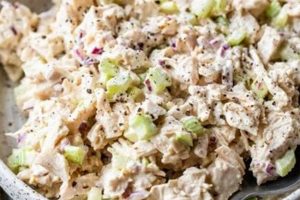
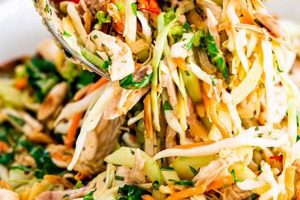
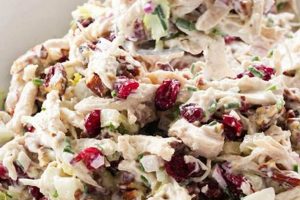
This dish offers a plant-based alternative to traditional chicken salad, substituting chickpeas for poultry. It typically involves mashed or coarsely chopped chickpeas combined with mayonnaise, celery, onion, and various seasonings. Variations can include grapes, dried cranberries, apples, walnuts, or curry powder, offering a range of flavor profiles. A simple version might consist of chickpeas, mayonnaise, celery, red onion, Dijon mustard, and salt and pepper.
The rising popularity of this dish reflects increased interest in vegetarian and vegan diets, along with a focus on healthier eating habits. Chickpeas are a valuable source of protein and fiber, offering a nutritious substitute for meat. This preparation also caters to those seeking budget-friendly meal options, as chickpeas are generally less expensive than chicken. Furthermore, the adaptability of the recipe allows for creative ingredient combinations and flavor customization to suit individual preferences.
The following sections will explore different preparation methods, ingredient variations, nutritional information, and serving suggestions for this versatile and healthful dish.
Tips for Chickpea Salad Preparation
Optimal preparation enhances flavor and texture. These tips offer guidance for creating a superior dish.
Tip 1: Chickpea Preparation: Properly preparing the chickpeas is crucial. Canned chickpeas should be rinsed and drained thoroughly. For a smoother texture, the chickpeas can be partially or fully mashed with a fork or potato masher. Leaving some chickpeas whole provides textural variety.
Tip 2: Mayonnaise Selection: The choice of mayonnaise significantly impacts flavor. Traditional mayonnaise delivers a classic taste, while vegan mayonnaise offers a plant-based alternative. Greek yogurt can be substituted for a lighter, tangier option.
Tip 3: Flavor Enhancement: Fresh herbs and spices elevate the dish. Dill, parsley, chives, and cilantro complement the chickpeas. Curry powder, paprika, or garlic powder introduce additional complexity.
Tip 4: Texture Variation: Adding textural elements creates a more engaging experience. Finely diced celery and red onion provide a satisfying crunch. Chopped walnuts, pecans, or sunflower seeds offer another layer of texture and flavor.
Tip 5: Ingredient Incorporation: Gentle folding ensures even distribution of ingredients without overmixing. Overmixing can result in a mushy texture.
Tip 6: Chilling and Serving: Chilling the salad for at least 30 minutes allows the flavors to meld. Serve the salad chilled on bread, crackers, lettuce wraps, or as a filling for sandwiches or wraps.
Tip 7: Customization: Adapting the recipe to individual preferences is encouraged. Adding dried cranberries, chopped apples, or grapes introduces sweetness and texture. A squeeze of lemon juice provides brightness.
Attention to these details elevates the final product, delivering a flavorful and satisfying culinary experience.
By following these guidelines, one can confidently prepare a delicious and nutritious chickpea salad.
1. Chickpea Preparation

Chickpea preparation significantly influences the final quality of chickpea chicken salad. The texture and flavor of the chickpeas, determined by the preparation method, directly impact the overall dish. Using dried chickpeas requires pre-soaking and cooking to achieve the desired tenderness. Overcooked chickpeas can result in a mushy salad, while undercooked chickpeas create an unpleasant firmness. Canned chickpeas offer convenience, but require thorough rinsing and draining to remove excess sodium and canning liquid. The choice between mashed, partially mashed, or whole chickpeas also contributes to textural variation within the salad. This stage of the recipe establishes the foundation for the final product.
Consider two scenarios: one using properly prepared chickpeas and another using poorly prepared ones. In the first scenario, carefully cooked or thoroughly rinsed canned chickpeas maintain their shape and provide a pleasant, slightly firm bite. When combined with other ingredients, they contribute to a well-balanced and flavorful salad. In contrast, using overcooked or inadequately rinsed chickpeas results in a mushy, less appealing texture and a potentially diluted flavor profile. This comparison highlights the direct impact of chickpea preparation on the overall quality and enjoyment of the dish. The success of the recipe hinges on this crucial initial step.
Proper chickpea preparation is therefore essential for a successful chickpea chicken salad. This fundamental step establishes the textural and flavor baseline for the entire dish. Whether using dried or canned chickpeas, careful attention to detail ensures a final product that is both palatable and enjoyable. Neglecting this stage can compromise the overall quality and diminish the culinary experience. Mastering chickpea preparation provides a solid foundation for creating a delicious and satisfying salad.
2. Flavor Balance

Flavor balance is paramount in a successful chickpea chicken salad recipe. This balance refers to the harmonious interplay of different taste profilesprimarily savory, acidic, and sweetcreating a cohesive and enjoyable culinary experience. The inherent mildness of chickpeas provides a neutral canvas, necessitating careful consideration of complementary flavors. Without proper balance, the salad can be bland or, conversely, overwhelmed by a single dominant taste. The interplay of these elements determines the overall palatability of the dish.
Consider the role of acidity. A squeeze of lemon juice or a touch of apple cider vinegar brightens the flavor profile, cutting through the richness of the mayonnaise and adding a refreshing tang. This acidity also complements the savory notes of the chickpeas and any added spices. Conversely, excessive acidity can create an overly tart salad. Similarly, incorporating a touch of sweetness, perhaps through chopped grapes or dried cranberries, adds depth and complexity. However, an overabundance of sweetness can result in an unbalanced, cloying flavor. The careful calibration of these elementssavory, acidic, and sweetis essential.
Achieving flavor balance requires a nuanced approach, adjusting ingredients and seasonings to create a harmonious profile. A well-balanced chickpea chicken salad exhibits a complex interplay of flavors, where no single element dominates. This balance elevates the dish from simply palatable to truly enjoyable. The absence of this careful consideration can result in a less satisfying culinary experience. Therefore, flavor balance represents a critical component of a successful chickpea chicken salad recipe, impacting the overall enjoyment and appreciation of the dish.
3. Texture Variations

Textural variation significantly contributes to the overall enjoyment of chickpea chicken salad. A monotonous texture, regardless of flavor, can result in a less satisfying culinary experience. The interplay of contrasting textures adds complexity and interest, elevating the dish beyond simple sustenance. This dynamic interplay stimulates the palate and enhances the perception of flavor. Chickpea chicken salad offers a unique opportunity to explore this interplay through a variety of ingredients and preparation techniques.
Consider the contrast between the creamy base, typically mayonnaise or a similar binder, and the inherent texture of the chickpeas themselves. Chickpeas can be fully mashed for a smoother, more homogeneous texture, or coarsely mashed, leaving some larger pieces for a more varied mouthfeel. Incorporating diced vegetables, such as celery and onion, introduces a crisp, contrasting element. These additions not only provide textural diversity but also contribute flavor and nutritional value. Further textural complexity can be achieved by adding nuts or seeds, providing a satisfying crunch. Each element contributes to a layered textural profile, enhancing the overall enjoyment.
The strategic inclusion of these varying textures transforms the chickpea chicken salad from a simple mixture of ingredients into a more dynamic and engaging culinary experience. This attention to texture demonstrates a thoughtful approach to recipe development and contributes significantly to the overall appeal of the dish. Failure to consider textural variation can result in a less satisfying, even bland, final product, regardless of how well-balanced the flavors may be. Therefore, textural variation plays a crucial role in a successful chickpea chicken salad recipe, impacting not only the enjoyment but also the perceived quality of the dish.
4. Ingredient Quality

Ingredient quality significantly impacts the final flavor, texture, and overall enjoyment of chickpea chicken salad. Selecting high-quality ingredients elevates this simple dish, transforming it from a basic meal into a culinary experience. Subpar ingredients, conversely, can result in a bland or even unpleasant outcome. The following facets explore the crucial role of ingredient quality in creating a superior chickpea chicken salad.
- Chickpeas:
Whether using dried or canned chickpeas, quality matters. Dried chickpeas should be uniform in size and free from debris. They should yield a creamy texture when cooked. Canned chickpeas should be firm, not mushy, and packed in water without excess additives. High-quality chickpeas provide the foundation for a flavorful and texturally satisfying salad.
- Mayonnaise:
Mayonnaise serves as the binder and contributes significantly to the overall flavor profile. High-quality mayonnaise, whether traditional or vegan, offers a rich, creamy texture and a balanced flavor that complements the other ingredients. Choosing a low-quality mayonnaise can result in a greasy or overly acidic salad, detracting from the overall experience.
- Produce:
Fresh, crisp produce, such as celery, onion, and any other added vegetables or fruits, contributes both texture and flavor. Wilted or bruised produce can negatively impact the salad’s overall appeal and introduce off-flavors. Selecting vibrant, fresh produce ensures a crisp, flavorful, and visually appealing salad.
- Herbs and Spices:
Fresh herbs and high-quality spices enhance the flavor profile of the chickpea chicken salad. Freshly chopped herbs offer a brighter, more vibrant flavor compared to dried alternatives. Similarly, high-quality spices contribute depth and complexity. Using stale or low-quality herbs and spices can result in a bland or muted flavor profile.
The cumulative effect of using high-quality ingredients in a chickpea chicken salad recipe results in a superior culinary experience. The nuanced flavors and textures derived from fresh, carefully selected components elevate the dish beyond a simple combination of ingredients. This attention to quality demonstrates a commitment to culinary excellence, resulting in a more satisfying and enjoyable meal. Conversely, compromising on ingredient quality can detract from the potential of the dish, resulting in a less satisfying outcome.
5. Serving Suggestions
Serving suggestions enhance the versatility and enjoyment of chickpea chicken salad, transforming it from a simple mixture into a multifaceted culinary component. Consideration of presentation not only elevates the dining experience but also offers opportunities to explore diverse flavor and texture combinations. The following suggestions provide a framework for incorporating chickpea chicken salad into a variety of meals and snacks.
- Classic Sandwiches and Wraps:
Chickpea chicken salad functions seamlessly as a sandwich or wrap filling. The creamy texture spreads easily, while the blend of flavors complements both bread and tortillas. Whole-wheat bread, croissants, or lettuce wraps offer healthy and flavorful options. Adding crisp lettuce, sliced tomato, or sprouts provides textural contrast and enhances nutritional value. This classic presentation offers a convenient and satisfying meal.
- Salads and Bowls:
Incorporating chickpea chicken salad into a green salad or grain bowl adds protein and flavor. The salad provides a substantial element, transforming a light salad into a more complete meal. Quinoa, brown rice, or farro offer complementary grains, while a variety of fresh vegetables enhance both the nutritional and flavor profiles. This approach offers a lighter yet fulfilling meal option.
- Appetizers and Snacks:
Chickpea chicken salad serves as a versatile base for appetizers and snacks. Served with crackers, pita chips, or crudits, it provides a flavorful and protein-rich alternative to traditional dips. Stuffed into celery sticks or avocado halves, it creates visually appealing and satisfying bite-sized snacks. This adaptability makes it an ideal option for casual gatherings or quick meals.
- Open-Faced Sandwiches and Tartines:
Presenting chickpea chicken salad on open-faced sandwiches or tartines allows for creative ingredient combinations and visual appeal. Toasted multigrain bread or crusty baguette slices provide a sturdy base. Topping the salad with sliced cucumbers, avocado, or microgreens elevates the presentation and adds fresh, complementary flavors. This approach offers a sophisticated and visually appealing presentation.
These serving suggestions demonstrate the versatility of chickpea chicken salad, highlighting its adaptability as a core ingredient in various culinary contexts. Whether served as a classic sandwich filling or incorporated into a more complex dish, the flavorful and texturally satisfying nature of chickpea chicken salad allows for creative exploration and customization. Careful consideration of these serving suggestions enhances the enjoyment and appreciation of this versatile dish.
Frequently Asked Questions
This section addresses common inquiries regarding chickpea chicken salad recipes, providing clear and concise information to facilitate successful preparation and enjoyment.
Question 1: What is the ideal texture for chickpea chicken salad?
The ideal texture is subjective, but generally, a balance between creamy and chunky is preferred. This can be achieved by partially mashing the chickpeas, leaving some whole for textural contrast.
Question 2: Can dried chickpeas be used instead of canned?
Dried chickpeas can be used, but require pre-soaking and cooking. Ensure they are cooked until tender but not mushy. Canned chickpeas offer convenience but require thorough rinsing.
Question 3: How long can chickpea chicken salad be stored?
Properly stored in an airtight container in the refrigerator, it can last for 3-5 days. Consume within this timeframe for optimal quality and food safety.
Question 4: What are suitable alternatives to mayonnaise?
Greek yogurt or mashed avocado provide healthier alternatives to mayonnaise, offering a lighter, tangier flavor profile. Vegan mayonnaise provides a suitable plant-based option.
Question 5: How can the flavor profile be customized?
Flavor customization is achieved through various additions. Incorporating curry powder creates an Indian-inspired dish. Adding grapes or dried cranberries introduces sweetness, while diced jalapenos provide heat.
Question 6: Is chickpea chicken salad a healthy meal option?
Generally considered a healthy option, this salad is a good source of protein and fiber. Nutritional content varies based on specific ingredients. Using low-fat mayonnaise or Greek yogurt further enhances the health benefits.
Understanding these key aspects allows for greater flexibility and control over the final product, leading to a more satisfying culinary outcome. Careful consideration of these factors contributes to the creation of a personalized and enjoyable chickpea chicken salad.
The following section delves further into variations on the classic recipe, exploring options for different dietary needs and preferences.
Conclusion
Exploration of this culinary concept reveals its adaptability and nutritional value. From ingredient selection and preparation techniques to flavor balancing and serving suggestions, the versatility of chickpea chicken salad allows for creative expression in the kitchen. Emphasis on ingredient quality, proper chickpea preparation, and mindful flavor balancing contributes significantly to the overall enjoyment of the dish. The recipe’s adaptability to various dietary needs and preferences further underscores its value as a meal option.
This exploration underscores the potential of plant-based cuisine to deliver both flavor and nutrition. The continued evolution of culinary practices emphasizes the importance of exploring versatile, adaptable, and healthful recipes like chickpea chicken salad. This dish represents not only a satisfying meal option but also a testament to the ongoing innovation within the culinary landscape.