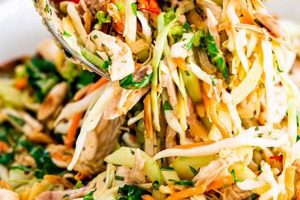
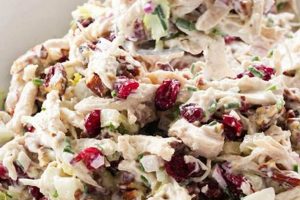
Methods for preparing a dish of cooked, shredded chicken combined with mayonnaise and other ingredients, such as celery, onion, and seasonings, offer a wide range of variations. These preparations can incorporate diverse flavors and textures through the inclusion of fruits, nuts, herbs, and spices. Examples include classic versions with simple ingredients, curried variations with grapes and almonds, and those featuring bolder flavors like buffalo or barbecue.
Versatile and adaptable, these preparations provide a convenient and nutritious meal option. Historically, chicken salad emerged as a popular dish in the mid-19th century, evolving from earlier, simpler composed salads. Its enduring appeal stems from its affordability, ease of preparation, and customizable nature, making it suitable for picnics, quick lunches, or more formal occasions. The dish also offers a good source of protein and can be modified to accommodate various dietary needs and preferences.
This exploration will delve into a variety of approaches, from traditional methods to more innovative and contemporary variations. Specific techniques, ingredient selection, and tips for achieving optimal flavor and texture will be examined.
Tips for Exceptional Chicken Salad
Achieving a superior chicken salad involves attention to detail and thoughtful ingredient selection. The following tips offer guidance for creating a dish that stands out in terms of flavor, texture, and overall appeal.
Tip 1: Utilize high-quality chicken. Whether using roasted, poached, or baked chicken, the quality of the meat significantly impacts the final result. Opting for free-range or organic chicken enhances both flavor and texture.
Tip 2: Mindful chopping enhances texture. Uniformly chopping ingredients, such as celery and onion, ensures a pleasant consistency and prevents overwhelming any single flavor. Consider a finer dice for a smoother texture or a coarser chop for added crunch.
Tip 3: Seasoning beyond the basics. While salt and pepper are essential, exploring other seasonings elevates the flavor profile. Fresh herbs like dill, tarragon, or chives add brightness, while spices such as paprika or curry powder introduce depth and complexity.
Tip 4: Balance mayonnaise with complementary ingredients. Mayonnaise serves as the binder, but its richness can be balanced with acidic elements like lemon juice or apple cider vinegar. Greek yogurt or sour cream can also be incorporated for a lighter, tangier result.
Tip 5: Incorporate textural variety. Adding ingredients like chopped nuts, grapes, dried cranberries, or toasted seeds introduces textural contrast and enhances the overall sensory experience.
Tip 6: Chill thoroughly before serving. Chilling allows the flavors to meld and enhances the salad’s refreshing qualities. Aim for at least 30 minutes of refrigeration before serving.
Tip 7: Proper storage maintains freshness. Store leftover chicken salad in an airtight container in the refrigerator for up to three days. Avoid freezing, as this can compromise the texture.
By adhering to these tips, one can consistently produce chicken salad that is both flavorful and satisfying. Attention to detail, from ingredient selection to proper chilling, elevates this simple dish to a culinary delight.
In conclusion, these guidelines provide a foundation for crafting a truly exceptional chicken salad experience.
1. Chicken (cooked, shredded)
Cooked, shredded chicken constitutes the foundational element of chicken salad. The choice of cooking method and shredding technique significantly influences the final dish’s texture and flavor. Poaching yields a moist, tender result, while roasting imparts a deeper, more savory flavor. Shredding, as opposed to dicing, creates a finer texture that readily absorbs the dressing and other ingredients. Over-processing the chicken can result in a dry, stringy texture, diminishing the overall quality. Conversely, coarsely shredded chicken offers a more substantial bite. The quality of the chicken itselfwhether free-range, organic, or conventionally raisedalso plays a crucial role in the final flavor profile.
The connection between the preparation of the chicken and the success of the chicken salad is undeniable. For example, using overcooked, dry chicken will result in a dry, unappealing salad, regardless of the other ingredients. Conversely, succulent, properly shredded chicken contributes significantly to a flavorful, enjoyable experience. This understanding allows for informed decisions regarding cooking methods and shredding techniques, maximizing the potential for a superior chicken salad. Employing bone-in, skin-on chicken pieces during cooking, followed by removal of the skin and bones prior to shredding, contributes richer flavor and moisture compared to using boneless, skinless breasts alone.
In conclusion, the preparation of the chicken represents a critical step in creating a successful chicken salad. Careful consideration of cooking methods, shredding techniques, and the quality of the chicken itself ensures a flavorful and texturally satisfying result. This foundational element sets the stage for the harmonious integration of other ingredients and ultimately determines the overall quality of the dish.
2. Mayonnaise (or alternative)

Mayonnaise functions as the unifying element in chicken salad, binding the ingredients and contributing a creamy texture and rich flavor. The type and quantity of mayonnaise significantly influence the overall character of the dish. Traditional mayonnaise, composed primarily of oil, egg yolks, and vinegar or lemon juice, provides a classic flavor profile. However, variations such as low-fat mayonnaise, plain yogurt, or Greek yogurt can be substituted to create a lighter, tangier result. The choice of mayonnaise also impacts the nutritional content of the salad, with lower-fat alternatives reducing overall calorie and fat content. For instance, using a full-fat mayonnaise yields a richer, more decadent salad, while Greek yogurt creates a lighter, brighter flavor profile. Overuse of mayonnaise can result in an overly rich and heavy salad, whereas too little can lead to a dry, crumbly texture. Finding the appropriate balance is crucial for achieving a harmonious blend of flavors and textures.
The relationship between mayonnaise and other ingredients within the salad warrants consideration. The acidity of certain add-ins, such as pickles or capers, can interact with the mayonnaise, potentially altering its consistency or flavor over time. Furthermore, the fat content of the mayonnaise can influence the perception of other flavors within the salad. A higher fat content can mask subtle nuances, while a lower fat content allows other flavors to shine through. Consider a chicken salad featuring roasted red peppers and aioli; the richness of the aioli complements the sweetness of the peppers, creating a balanced flavor profile. Conversely, a chicken salad incorporating fresh herbs and a light vinaigrette benefits from the subtler dressing, allowing the herbaceous notes to take center stage.
Understanding the role of mayonnaise, or its alternatives, enables informed decision-making during recipe development and preparation. Careful consideration of the type and quantity of mayonnaise, along with its interaction with other ingredients, contributes significantly to the overall success of the chicken salad. This knowledge empowers culinary experimentation and facilitates the creation of a dish tailored to specific preferences and dietary needs. Ultimately, mastering this element allows one to achieve a harmonious balance of flavor, texture, and nutritional value within the chicken salad.
3. Seasoning (salt, pepper, etc.)

Seasoning plays a crucial role in elevating chicken salad beyond a simple combination of ingredients. The judicious use of salt, pepper, and other seasonings enhances the inherent flavors of the chicken and other components, creating a more complex and satisfying culinary experience. Beyond these fundamental seasonings, a wide array of spices, herbs, and other flavor enhancers can transform the character of the salad, offering diverse taste profiles ranging from classic to innovative.
- Balancing Basic Seasoning
Salt and pepper serve as the foundation of seasoning in virtually all culinary applications, and chicken salad is no exception. Proper salting enhances the flavors of the other ingredients, while pepper adds a subtle warmth and complexity. However, over-salting can easily overwhelm the delicate flavors of the chicken and other components, while insufficient seasoning can result in a bland and unappetizing dish. Achieving the optimal balance requires careful consideration of the salt content of other ingredients, such as mayonnaise or pickles, and adjustments accordingly.
- Elevating with Herbs and Spices
Fresh herbs, such as dill, chives, parsley, and tarragon, introduce vibrant, aromatic notes to chicken salad. Dried herbs can also be used, although they typically require smaller quantities due to their concentrated flavor. Spices like paprika, curry powder, or cumin add warmth and depth, while a pinch of cayenne pepper introduces a subtle heat. The choice of herbs and spices depends on the desired flavor profile and can be tailored to complement other ingredients within the salad. For example, dill pairs well with lemon and capers, while curry powder complements grapes and almonds.
- Enhancing with Acidity
A touch of acidity brightens the flavors of chicken salad and balances the richness of the mayonnaise. Lemon juice, vinegar, or pickle relish provide a tangy counterpoint to the savory elements, creating a more dynamic and refreshing flavor profile. The type and quantity of acid used should be carefully considered, as excessive acidity can overpower the other flavors. A squeeze of fresh lemon juice can add a vibrant citrus note, while a teaspoon of apple cider vinegar provides a subtle tartness.
- The Power of Umami
Incorporating umami-rich ingredients adds depth and complexity to chicken salad. A dash of Worcestershire sauce, a spoonful of Dijon mustard, or a sprinkle of nutritional yeast contribute savory, umami notes that enhance the overall flavor profile. These ingredients work synergistically with other seasonings, creating a more nuanced and satisfying culinary experience. For example, a combination of Dijon mustard and tarragon creates a classic French-inspired flavor profile, while Worcestershire sauce adds a savory depth that complements smoked paprika.
The interplay of these seasoning elements transforms chicken salad from a simple mixture into a culinary creation. The careful balance of salt, pepper, herbs, spices, acidity, and umami creates a symphony of flavors that elevates the dish and tantalizes the palate. Understanding the nuances of seasoning allows for endless variations and the opportunity to craft a chicken salad perfectly tailored to individual preferences.
4. Vegetables (celery, onion, etc.)
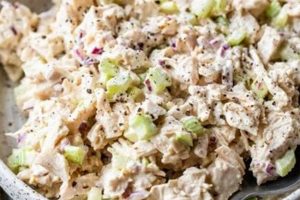
Vegetables contribute crucial textural and flavor dimensions to chicken salad. Their presence extends beyond mere fillers; they provide complexity and balance to the richness of the mayonnaise and chicken. The crispness of celery, the pungency of onions, and the sweetness of bell peppers, for instance, offer contrasting yet complementary sensations. Consider a classic chicken salad: finely diced celery provides a refreshing crunch, while minced red onion adds a subtle sharpness that cuts through the richness of the mayonnaise. Omitting these elements would result in a denser, less dynamic texture and a less nuanced flavor profile. The choice of vegetables influences not only the taste and texture but also the nutritional value, adding vitamins, minerals, and fiber to the dish.
The selection and preparation of vegetables significantly impact the final product. Finely dicing vegetables ensures even distribution throughout the salad and prevents any single ingredient from overpowering the others. Overly large pieces can disrupt the balance and create an uneven texture. Furthermore, the freshness and quality of the vegetables directly affect the overall flavor and appeal of the salad. Wilted or bruised vegetables can impart off-flavors and detract from the overall dining experience. For example, using crisp, fresh celery results in a bright, refreshing crunch, whereas using limp celery can lead to a watery, less appealing texture. Blanching certain vegetables, like green beans or broccoli, can enhance their color and tenderness while maintaining their nutritional value. Roasting vegetables, such as bell peppers or zucchini, intensifies their sweetness and adds a smoky depth of flavor.
Understanding the role of vegetables in chicken salad allows for informed choices regarding selection, preparation, and incorporation. They contribute essential textural and flavor components, elevating the dish beyond a simple combination of ingredients. Careful consideration of these elements ensures a well-balanced, flavorful, and nutritious chicken salad that satisfies both the palate and the pursuit of a wholesome meal. This knowledge allows for culinary creativity and customization, enabling the creation of chicken salad variations tailored to individual preferences and dietary needs.
5. Add-ins (fruits, nuts, etc.)
Add-ins represent a pivotal opportunity to personalize and elevate chicken salad recipes. These supplementary ingredients introduce layers of flavor, texture, and visual appeal, transforming a basic chicken salad into a more complex and satisfying culinary creation. From the sweetness of dried fruits to the crunch of nuts and the savory notes of certain spices, add-ins provide a canvas for culinary exploration and customization.
- Fruits: A Touch of Sweetness and Acidity
Incorporating fruits into chicken salad introduces a contrasting sweetness and acidity that balances the richness of the mayonnaise and the savory notes of the chicken. Grapes, sliced apples, dried cranberries, or chopped mandarin oranges contribute varying levels of sweetness and tartness, adding depth and complexity to the flavor profile. For instance, the sweetness of grapes complements the savory notes of curry powder, while the tartness of cranberries contrasts with the richness of pecans. The choice of fruit should consider the overall flavor profile desired and the other ingredients present in the recipe.
- Nuts: Textural Contrast and Earthy Flavors
Nuts provide a satisfying crunch and introduce earthy, nutty flavors that enhance the overall sensory experience. Chopped walnuts, pecans, almonds, or toasted slivered almonds offer varying degrees of texture and flavor intensity. The addition of nuts not only enhances the textural complexity but also contributes healthy fats and protein to the dish. Toasted nuts offer a more pronounced flavor and enhanced crunch compared to their raw counterparts. Consider the pairing of pecans with cranberries for a classic combination or the use of toasted almonds with curry powder for a more exotic flavor profile.
- Seeds: Nutritional Boost and Subtle Crunch
Seeds, such as sunflower seeds, pumpkin seeds, or sesame seeds, offer a subtle crunch and a nutritional boost, adding healthy fats, fiber, and minerals to the chicken salad. While their flavor contribution is often subtle, their textural presence enhances the overall enjoyment of the dish. Toasted sesame seeds can be incorporated into an Asian-inspired chicken salad, while sunflower seeds provide a mild nuttiness that complements dried cranberries and apples.
- Spices and Herbs: Aromatic Complexity and Depth
While often considered part of the seasoning process, certain spices and herbs can also function as add-ins, contributing distinct flavors and aromas. Chopped fresh herbs like dill, parsley, or chives add brightness and freshness, while spices like curry powder or smoked paprika introduce warmth and depth. A sprinkle of smoked paprika can transform a simple chicken salad into a smoky, savory delight, while fresh dill complements the flavors of lemon and capers. The choice of spices and herbs depends on the desired flavor profile and should harmonize with other ingredients.
The strategic incorporation of add-ins elevates chicken salad from a basic dish to a culinary creation. These supplementary ingredients provide a platform for creativity and customization, enabling the development of unique flavor combinations and textural experiences. By understanding the interplay of flavors and textures, one can craft a chicken salad that is both satisfying and memorable. The thoughtful selection of add-ins expands the possibilities of chicken salad recipes, catering to a diverse range of palates and culinary preferences.
6. Bread/crackers (serving options)

The choice of serving vessel for chicken salad significantly impacts the overall dining experience. Bread and crackers, the most common accompaniments, offer distinct textural and flavor profiles that complement or contrast with the salad itself. This seemingly simple decision influences not only the ease of consumption but also the perceived flavor and satisfaction derived from the meal. A croissant’s buttery richness, for instance, complements a classic chicken salad, while crisp crackers provide a textural counterpoint to a creamier variation. Serving the same chicken salad on multi-grain bread introduces nutty undertones, demonstrating how the serving choice alters the overall sensory experience. Ignoring this element can result in a disconnect between the salad and its delivery, diminishing the potential for a truly satisfying meal.
The structural integrity of the chosen vessel is paramount. A delicate lettuce wrap, while visually appealing, may prove impractical for a densely packed chicken salad, leading to structural failure and a messy dining experience. Conversely, a sturdy baguette slice offers a robust foundation for a heartier chicken salad, ensuring ease of handling and consumption. Consider a curried chicken salad with grapes and almonds; serving this on a flaky croissant enhances the sweetness and nuttiness, while a seeded cracker provides a contrasting textural element and balances the richness. The selection process involves considering the salad’s moisture content, texture, and flavor profile to ensure a harmonious pairing with the chosen bread or cracker. This informed approach elevates the chicken salad from a simple dish to a well-considered culinary creation. Practical implications extend beyond individual preferences, impacting catering choices and menu planning for various occasions.
Selecting appropriate bread or crackers is integral to a successful chicken salad experience. The interplay of textures and flavors between the salad and its vessel contributes significantly to the overall enjoyment of the dish. This seemingly minor detail can elevate a simple meal to a more sophisticated and satisfying culinary experience. Challenges arise when the chosen vessel fails to complement the salad, resulting in a disjointed and potentially messy experience. Therefore, understanding the nuances of pairing chicken salad with complementary bread or crackers allows for a more thoughtful and enjoyable dining experience, demonstrating a nuanced understanding of culinary principles and practical application.
Frequently Asked Questions about Chicken Salad Preparation
This section addresses common inquiries regarding chicken salad preparation, offering practical guidance and clarifying potential points of confusion. Understanding these aspects ensures consistent, high-quality results and facilitates culinary exploration.
Question 1: What is the best way to cook chicken for chicken salad?
Several methods yield excellent results, each imparting distinct characteristics. Poaching produces moist, tender chicken, while roasting develops deeper, more intense flavors. Baking offers a balance between moisture and flavor development. The choice depends on individual preferences and the overall flavor profile desired.
Question 2: Can chicken salad be made ahead of time?
Chicken salad can be prepared up to three days in advance. Storing it in an airtight container in the refrigerator allows the flavors to meld. However, adding certain ingredients, such as crunchy vegetables or nuts, immediately before serving is recommended to maintain optimal texture.
Question 3: How can one prevent chicken salad from becoming too watery?
Excess moisture can stem from watery vegetables or over-processing the chicken. Ensuring vegetables are dry before incorporating them and avoiding over-mixing the salad helps maintain the desired consistency. Using higher-quality mayonnaise can also contribute to a firmer texture.
Question 4: What are some healthy alternatives to mayonnaise in chicken salad?
Plain yogurt or Greek yogurt offer lighter, tangier alternatives to mayonnaise, reducing overall fat and calorie content. Avocado can also be used to create a creamy, healthy dressing with a unique flavor profile.
Question 5: How can one add more flavor to chicken salad beyond basic seasonings?
Fresh herbs, spices, and other flavor enhancers elevate chicken salad beyond the basics. Incorporating ingredients such as chopped fresh dill, curry powder, smoked paprika, or a touch of Dijon mustard adds depth and complexity to the flavor profile.
Question 6: What are some creative variations on traditional chicken salad recipes?
Traditional recipes offer a solid foundation for exploration. Consider incorporating ingredients like dried cranberries and pecans for a festive twist, or curry powder, grapes, and almonds for an Indian-inspired variation. Experimenting with different herbs, spices, and add-ins allows for endless customization and culinary discovery.
Addressing these common queries provides a comprehensive understanding of chicken salad preparation. This knowledge equips individuals with the tools and insights necessary to create flavorful, satisfying, and customized versions of this versatile dish. Mastery of these fundamental aspects fosters confidence in the kitchen and encourages culinary creativity.
This concludes the frequently asked questions section. The following segment will delve into specific recipe variations and offer step-by-step instructions for creating diverse and delicious chicken salads.
Conclusion
Exploration of chicken salad preparation methods reveals a dish offering remarkable versatility and culinary potential. From the careful selection of ingredients to the nuanced interplay of flavors and textures, each step contributes to the final product’s success. The quality of the chicken, the choice of mayonnaise or alternatives, the judicious use of seasonings, the incorporation of vegetables and add-ins, and the selection of appropriate bread or crackers all play crucial roles in crafting a truly exceptional chicken salad. Understanding these elements empowers culinary creativity and enables customization to suit individual preferences and dietary needs.
Chicken salad transcends its humble origins as a simple luncheon staple. Its adaptability allows for continuous reinvention and exploration, offering endless possibilities for flavor combinations and culinary innovation. By embracing the foundational principles outlined herein, one can confidently embark on a journey of culinary discovery, transforming simple ingredients into a dish that delights the senses and satisfies the palate. The potential for creativity within the realm of chicken salad remains vast, inviting further exploration and the continued evolution of this timeless classic.