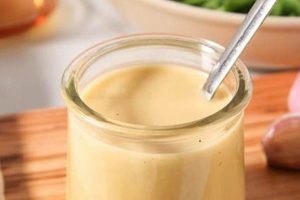
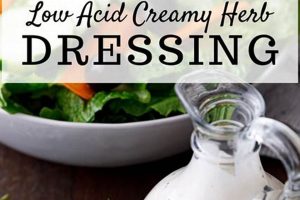
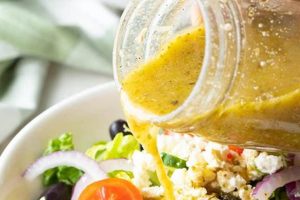
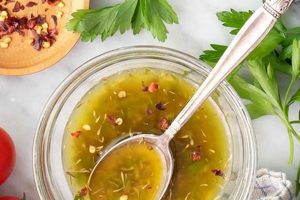
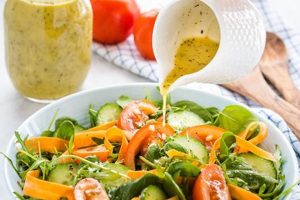
A blend of honey, Dijon mustard, and other ingredients like oil, vinegar, and seasonings creates a versatile emulsion used to coat and enhance salad greens and other vegetables. A typical preparation might involve whisking together equal parts honey and Dijon mustard, then slowly drizzling in oil while continuing to whisk until the mixture thickens. Vinegar and seasonings are then added to taste, offering a balance of sweet, tangy, and savory flavors.
This type of dressing offers several culinary advantages. Its emulsified nature allows it to cling well to ingredients, ensuring even distribution of flavor. The combination of honey and Dijon mustard provides a complex flavor profile that complements a wide variety of salads, from simple greens to more robust compositions incorporating fruits, nuts, or cheeses. Furthermore, the inherent sweetness of honey makes it an appealing alternative to dressings relying solely on refined sugars. Historically, honey has served as a sweetener in culinary traditions worldwide, while Dijon mustard, originating in France, lends a pungent depth characteristic of its specific processing and ingredients.
This exploration of honey-mustard dressings will delve into variations on the basic formula, offering insights into ingredient selection, preparation techniques, and suitable pairings. Further discussion will cover nutritional aspects and potential modifications for dietary restrictions.
Tips for Crafting Exceptional Honey Dijon Salad Dressing
Achieving a well-balanced and flavorful honey Dijon dressing requires attention to detail and an understanding of the interplay between ingredients. The following tips offer guidance for optimizing preparation techniques and flavor profiles.
Tip 1: Emulsification is Key: Proper emulsification prevents separation and ensures a creamy, consistent texture. Whisking oil into the honey-mustard mixture drop by drop, especially initially, creates a stable emulsion. A blender or food processor can also be utilized for a smoother result.
Tip 2: Balance Sweetness and Acidity: The ratio of honey to vinegar significantly influences the final flavor. Taste and adjust accordingly, aiming for a harmonious balance. Different vinegars, such as apple cider, white wine, or champagne vinegar, offer unique flavor nuances.
Tip 3: Explore Flavor Enhancements: Fresh or dried herbs, spices, and aromatics can elevate the complexity of the dressing. Consider incorporating minced garlic, shallots, dill, thyme, or a pinch of cayenne pepper.
Tip 4: Quality Ingredients Matter: Opt for high-quality honey and Dijon mustard. Raw, unfiltered honey offers distinct flavor profiles, while robust Dijon mustards provide a more pronounced tang.
Tip 5: Adjust Consistency: The desired consistency can be adjusted by altering the amount of oil. For a thinner dressing, use less oil; for a thicker dressing, incorporate more.
Tip 6: Taste and Adapt: Palates vary, so tasting and adjusting seasonings throughout the preparation process is crucial for achieving optimal flavor.
Tip 7: Proper Storage: Store leftover dressing in an airtight container in the refrigerator for up to one week. Allow the dressing to come to room temperature before serving to enhance its flavor and viscosity.
By adhering to these guidelines, one can consistently create a honey Dijon salad dressing that elevates any salad. Understanding the interplay of ingredients and employing proper techniques allows for customization and nuanced flavor development.
This exploration of honey Dijon dressing concludes with a collection of recipes showcasing its versatility and adaptability to diverse culinary applications.
1. Ingredients

Ingredients form the foundation of any honey Dijon salad dressing recipe. The careful selection and combination of components directly impact the final flavor profile, texture, and overall quality. A typical recipe includes honey, Dijon mustard, oil, vinegar, and seasonings. Each ingredient contributes specific properties: honey provides sweetness, Dijon mustard offers tanginess and complexity, oil creates a smooth texture, vinegar adds acidity, and seasonings enhance overall flavor. The interplay of these ingredients defines the dressing’s character.
Consider the impact of ingredient choices. Using raw, unfiltered honey versus processed honey introduces distinct flavor nuances. Similarly, the pungency of Dijon mustard varies, influencing the final product’s intensity. The type of oil also plays a role: extra virgin olive oil lends a robust flavor, while a neutral oil like grapeseed oil allows the other ingredients to shine. Even the choice of vinegar, whether apple cider, white wine, or balsamic, contributes a unique acidic note. Seasonings, ranging from salt and pepper to fresh herbs or spices, further customize the flavor profile. For example, using strong Dijon mustard with a mild honey will yield a more tangy dressing, while using mild Dijon mustard with a bold flavored honey will showcase the honey more. Understanding these interactions allows for tailored flavor experiences.
Mastery of a honey Dijon salad dressing recipe hinges on a thorough understanding of its constituent ingredients. Recognizing the impact of individual components allows for informed choices based on desired flavor outcomes. This knowledge empowers culinary experimentation and the creation of dressings perfectly suited to individual preferences and dietary needs. Successfully balancing the flavors within a honey Dijon dressing, therefore, requires an understanding of each ingredient and its interaction with the others.
2. Proportions
Proportions within a honey Dijon salad dressing recipe dictate the balance of flavors, influencing the final taste profile. The ratio of key ingredientshoney, Dijon mustard, oil, and vinegardetermines whether the dressing leans towards sweet, tangy, or savory. Understanding the interplay of these proportions is crucial for achieving desired outcomes and ensuring a harmonious blend of flavors.
- Honey-to-Dijon Ratio
The foundational balance within a honey Dijon dressing hinges on the relationship between honey and Dijon mustard. A 1:1 ratio creates a balanced profile, allowing both sweetness and tanginess to shine. Increasing the honey creates a sweeter dressing, while increasing the Dijon emphasizes the pungent, sharp notes of the mustard. This ratio forms the base upon which other ingredients build.
- Oil Proportion
Oil contributes to the dressing’s texture and mouthfeel. A higher proportion of oil results in a thinner, more pourable dressing. Less oil yields a thicker, more viscous consistency. The amount of oil also influences how intensely the other flavors are perceived, as oil coats the palate and can mute other tastes.
- Vinegar’s Balancing Act
Vinegar provides necessary acidity to balance the sweetness of honey and the pungency of Dijon. Too much vinegar can make the dressing overly sharp, while too little can leave it unbalanced and cloying. The type of vinegar also influences the overall flavor profile; apple cider vinegar offers a mild sweetness, while white wine vinegar provides a crisper, more acidic note.
- Seasoning Influence
While seasonings are typically added in smaller quantities, their impact should not be underestimated. Salt enhances flavors and balances sweetness, while pepper adds complexity. Other seasonings, like garlic, herbs, or spices, further contribute to the overall flavor profile and allow for customization based on preference and desired outcome. For instance, adding a pinch of cayenne pepper adds heat, while garlic powder adds depth.
Manipulating these proportions allows for extensive customization within a honey Dijon salad dressing recipe. A deep understanding of how each ingredient contributes to the final product empowers culinary creativity and enables the creation of dressings perfectly suited to individual preferences. Whether a sweeter, more tangy, or more savory profile is desired, careful attention to proportions is key. It is this delicate balance that ultimately determines whether a honey Dijon dressing elevates a simple salad into a flavorful culinary experience.
3. Emulsification Technique

Emulsification is crucial to a successful honey Dijon salad dressing recipe. This process combines two immiscible liquidsoil and the water-based honey-mustard mixtureinto a stable, homogenous suspension. Without proper emulsification, the dressing separates, resulting in an oily layer on top and a watery layer beneath, compromising both texture and flavor delivery. The technique employed directly impacts the dressing’s stability, consistency, and mouthfeel.
Typically, emulsification in a honey Dijon dressing is achieved through gradual incorporation of oil into the honey-mustard base while whisking vigorously. The shearing force of the whisk breaks down the oil into tiny droplets, which become coated and suspended within the water-based mixture. This creates an emulsion stabilized by the emulsifying properties of the Dijon mustard itself. Alternative methods, like using a blender or food processor, offer greater efficiency and smoother results, particularly for larger volumes. However, over-processing can sometimes lead to a thicker, more paste-like consistency, so care should be taken. For example, adding oil too quickly while whisking by hand often fails to create a stable emulsion, demonstrating the importance of a gradual process. Using a blender offers faster emulsification but risks over-thickening if blended excessively.
Practical applications of this understanding include achieving desired consistencies and flavor experiences. A stable emulsion ensures even flavor distribution throughout the dressing and allows it to cling effectively to salad ingredients. Furthermore, the size of the oil droplets influences the mouthfeel; smaller droplets contribute to a creamier texture, while larger droplets create a coarser texture. Controlling the emulsification process empowers culinary control over these aspects. Challenges may arise when incorporating additional ingredients, such as finely chopped herbs or garlic, which can disrupt the emulsion’s stability. Careful technique and attention to ingredient order are therefore necessary. Ultimately, mastery of emulsification techniques is essential for crafting a honey Dijon salad dressing that not only pleases the palate but also offers a visually appealing and texturally satisfying experience.
4. Flavor Balancing

Flavor balancing is paramount in a honey Dijon salad dressing recipe. The interplay of sweet, tangy, savory, and acidic notes determines the dressing’s overall character and its suitability for various salads. Achieving a harmonious balance ensures that no single flavor dominates, resulting in a complex and enjoyable culinary experience. Understanding how different ingredients contribute to the overall flavor profile allows for precise adjustments and customization.
- Sweetness from Honey
Honey provides the foundational sweetness of the dressing. Different varieties of honey offer unique flavor profiles, ranging from delicate floral notes to robust, almost caramel-like nuances. The intensity of the honey’s sweetness influences the overall balance and must be considered in relation to other ingredients. For instance, a dark, strong honey might require less overall volume compared to a lighter, milder honey to achieve the desired sweetness level. The choice of honey can also influence the dressing’s color and viscosity.
- Tanginess from Dijon Mustard
Dijon mustard contributes a characteristic tang and complexity derived from its production process and the inclusion of spices and white wine. The pungency of Dijon varies, impacting the dressing’s overall sharpness. Balancing this tanginess against the sweetness of the honey is crucial. A milder Dijon may require a higher proportion to achieve the desired effect, whereas a more robust Dijon might overpower the other flavors if used excessively. The interplay between honey and Dijon forms the core flavor dynamic of the dressing.
- Acidity from Vinegar
Vinegar introduces acidity, which brightens the dressing and balances the sweetness. The type of vinegar chosenapple cider, white wine, red wine, or balsamic, for exampleintroduces unique flavor nuances. Apple cider vinegar lends a subtle sweetness, while white wine vinegar offers a sharper, cleaner acidity. The proportion of vinegar must be carefully considered to avoid an overly acidic or overly sweet final product. Balancing acidity with sweetness is essential for a well-rounded flavor profile.
- Savory Notes and Seasonings
Additional seasonings further enhance the complexity and depth of flavor. Salt enhances sweetness and balances other flavors. Pepper adds a subtle spice. Other ingredients, such as garlic, shallots, fresh or dried herbs, or a pinch of cayenne pepper, provide additional layers of complexity. For example, fresh dill complements the tanginess of Dijon, while garlic adds a savory depth. These additions should be used judiciously to avoid overpowering the core honey-mustard balance.
Mastering flavor balancing in a honey Dijon salad dressing recipe requires a nuanced understanding of how each ingredient contributes to the overall profile. Careful adjustments to proportions and thoughtful ingredient selection allow for the creation of a dressing that is not only flavorful but also complements the specific ingredients of the salad itself. The delicate interplay of these flavors transforms a simple mixture of ingredients into a cohesive and satisfying culinary creation. A well-balanced honey Dijon dressing enhances, rather than masks, the flavors of the salad, creating a harmonious and enjoyable dining experience.
5. Storage

Proper storage is essential for maintaining the quality and extending the shelf life of honey Dijon salad dressing. Because the dressing contains perishable ingredients like honey and Dijon mustard, specific storage practices are necessary to prevent spoilage, maintain optimal flavor, and ensure food safety. Neglecting proper storage can lead to undesirable outcomes, including bacterial growth, flavor degradation, and textural changes.
Storing honey Dijon dressing in an airtight container in the refrigerator is crucial. An airtight container prevents oxidation and exposure to airborne contaminants, preserving the dressing’s flavor and preventing the growth of microorganisms. Refrigeration slows down enzymatic activity and microbial growth, further extending the dressing’s shelf life. Ideally, the dressing should be stored at a temperature between 34F and 40F (1C and 4C). Exposure to higher temperatures can accelerate spoilage. For instance, leaving the dressing at room temperature for extended periods, especially in warmer climates, can promote bacterial growth and compromise its quality. Refrigeration helps mitigate this risk. The shelf life of homemade honey Dijon dressing, even when properly stored, is typically one to two weeks. Commercially produced dressings may have a longer shelf life due to added preservatives and stabilizers. Regardless of the type, checking for visible signs of spoilage, such as mold growth or off-odors, before consumption remains essential.
Effective storage practices are an integral component of any honey Dijon salad dressing recipe. Proper storage ensures that the dressing maintains its quality and remains safe for consumption. Understanding the factors that contribute to spoilage and implementing appropriate storage techniques maximizes the dressing’s shelf life and preserves its intended flavor profile. Failure to adhere to these guidelines can lead to compromised quality, potentially impacting both taste and food safety. Through informed storage practices, individuals can maximize the enjoyment and longevity of their homemade or store-bought honey Dijon salad dressing.
Frequently Asked Questions
This section addresses common inquiries regarding honey Dijon salad dressing, providing concise and informative responses to clarify potential uncertainties and misconceptions.
Question 1: How long can honey Dijon dressing be stored?
When stored correctly in an airtight container in the refrigerator, honey Dijon dressing typically lasts for one to two weeks. Always check for signs of spoilage, such as mold or off-odors, before consuming.
Question 2: Can honey Dijon dressing be frozen?
Freezing is not generally recommended. Freezing can alter the texture and consistency of the dressing, leading to separation and a less desirable mouthfeel upon thawing.
Question 3: What type of oil is best for honey Dijon dressing?
Neutral oils like grapeseed or canola oil allow the other flavors to shine. Extra virgin olive oil can be used for a more robust flavor, but may overpower the delicate balance of the dressing.
Question 4: Can the sweetness of the dressing be adjusted?
The sweetness can be adjusted by altering the honey-to-Dijon ratio. More honey results in a sweeter dressing; more Dijon creates a more tangy profile. Taste and adjust accordingly.
Question 5: What types of salads pair well with honey Dijon dressing?
Honey Dijon complements a wide range of salads, including leafy greens, roasted vegetables, grain salads, and salads featuring fruits and nuts. Its versatility makes it a suitable choice for diverse flavor combinations.
Question 6: Can honey Dijon dressing be used for other culinary applications?
Beyond salads, honey Dijon serves as a marinade for chicken or fish, a sandwich spread, or a dipping sauce for vegetables. Its flavor profile lends itself to various culinary applications.
Understanding these common inquiries allows for a more informed approach to preparing, storing, and utilizing honey Dijon salad dressing. These insights empower culinary experimentation and the creation of dressings tailored to individual preferences.
The subsequent section provides a collection of recipes demonstrating the versatility of honey Dijon in various culinary contexts.
Conclusion
Exploration of honey Dijon salad dressing recipes reveals a foundational culinary concept adaptable to diverse tastes and applications. Emphasis on ingredient quality, precise proportions, and proper emulsification techniques yields optimal flavor and textural complexity. Balancing sweetness, tanginess, acidity, and savory notes is paramount. Proper storage safeguards quality and extends shelf life. Understanding these elements empowers informed culinary choices and personalized flavor experiences.
Honey Dijon salad dressing, more than a simple condiment, embodies culinary potential waiting to be unlocked. Experimentation with ingredient variations and flavor combinations expands culinary horizons. Continued exploration promises further enhancement and refinement of this versatile dressing, enriching culinary traditions and individual palates alike.