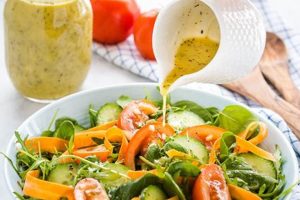
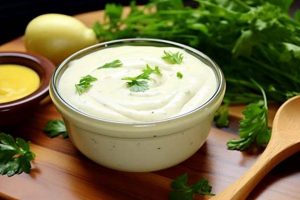
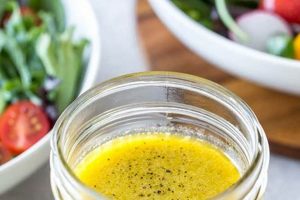
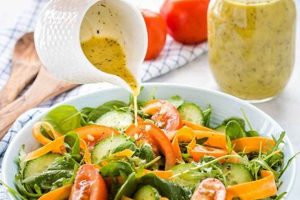
A vibrant, tangy emulsion of oil and vinegar flavored with sherry, this type of dressing typically incorporates additional seasonings such as Dijon mustard, herbs, garlic, or shallots. A classic example utilizes extra virgin olive oil, sherry vinegar, Dijon mustard, minced shallot, fresh thyme, salt, and pepper.
This style of dressing offers a complex flavor profile that complements a wide array of salads, from simple greens to those featuring roasted vegetables, nuts, or cheeses. The sherry vinegar provides a bright acidity balanced by the richness of the oil, while the added aromatics contribute depth and complexity. Its versatility and relatively simple preparation make it a popular choice for both home cooks and professional chefs. Historically, vinegar-based dressings have been used for centuries, with variations incorporating regional ingredients and flavors.
The following sections will explore variations on this classic dressing, offering detailed instructions and guidance on ingredient selection, preparation techniques, and ideal pairings.
Tips for Crafting the Perfect Sherry Vinaigrette
Achieving a well-balanced and flavorful sherry vinaigrette requires attention to detail and an understanding of the interplay between ingredients. These tips offer guidance for creating a dressing that elevates any salad.
Tip 1: Vinegar Selection: Opt for high-quality sherry vinegar. Look for varieties aged in oak barrels, which impart a richer, more nuanced flavor.
Tip 2: Oil Choice: Extra virgin olive oil is a classic choice, offering a robust flavor that complements the sherry vinegar. However, lighter oils like grapeseed or avocado oil can be used for a more delicate flavor profile.
Tip 3: Emulsification: A stable emulsion prevents the dressing from separating. Whisk the vinegar and oil vigorously or use a blender to create a smooth, creamy texture.
Tip 4: Seasoning: Dijon mustard acts as an emulsifier and adds a subtle tang. Salt and freshly ground black pepper are essential for balancing the flavors.
Tip 5: Aromatic Enhancements: Finely minced shallots or garlic add depth and complexity. Fresh herbs, such as thyme, oregano, or chives, provide a vibrant, aromatic touch.
Tip 6: Balancing Flavors: Taste and adjust the seasoning as needed. A touch of honey or maple syrup can balance excessive acidity, while a pinch of red pepper flakes adds a subtle heat.
Tip 7: Storage: Store leftover dressing in an airtight container in the refrigerator for up to a week. Shake well before serving as some separation may occur.
By following these guidelines, one can create a sherry vinaigrette that enhances the flavors of any salad, from simple greens to more complex compositions.
These techniques, combined with an understanding of ingredient selection, pave the way for a truly exceptional culinary experience.
1. High-quality sherry vinegar

The foundation of a superior sherry vinaigrette rests upon the selection of high-quality sherry vinegar. This ingredient provides the defining acidic backbone of the dressing, influencing its overall character and complexity. Understanding the nuances of sherry vinegar is crucial for achieving a well-balanced and flavorful vinaigrette.
- Acidity and Sweetness
Sherry vinegar offers a unique balance of acidity and subtle sweetness derived from the oxidation process of sherry wines. The interplay of these contrasting elements is essential for creating a vinaigrette that is neither overly sharp nor cloying. Different aging processes influence the final acidity levels, offering a spectrum of flavor profiles. A vinaigrette made with a younger, less complex vinegar might be overly sharp, whereas a well-aged vinegar provides a smoother, more rounded acidity.
- Flavor Complexity
The solera system, a fractional blending method used in sherry production, contributes to the complexity of sherry vinegar. This process layers flavors developed over time, resulting in a depth and richness unmatched by other vinegars. Nutty, caramel, and woody notes can be present, depending on the age and type of sherry vinegar used. These nuanced flavors add depth to the vinaigrette, elevating it beyond a simple acidic element.
- Impact on the Emulsion
The quality of the vinegar affects the stability and texture of the vinaigrette emulsion. A high-quality sherry vinegar, with its balanced acidity and richness, contributes to a smoother, more stable emulsion, preventing the oil and vinegar from separating readily. A poorly-made vinegar might hinder the emulsion process, leading to a thin and unstable dressing.
- Pairing with Other Ingredients
The flavor profile of the sherry vinegar should harmonize with other ingredients in the vinaigrette and the salad itself. For instance, a nutty sherry vinegar complements salads with roasted nuts or cheeses, while a lighter vinegar pairs well with delicate greens and vegetables. Careful consideration of these pairings ensures a cohesive and balanced final dish.
Ultimately, the selection of high-quality sherry vinegar is paramount in crafting a truly exceptional sherry vinaigrette. The complexity, balance, and depth it contributes elevate the dressing from a simple mixture to a nuanced component that enhances the entire culinary experience. The interplay of acidity, sweetness, and nuanced flavors from the vinegar provides a sophisticated counterpoint to other ingredients, ensuring a well-rounded and memorable salad.
2. Appropriate oil selection
Oil selection significantly impacts the final flavor profile and texture of a sherry vinaigrette. The oil acts as a carrier for the other ingredients, influencing how the flavors meld and the overall mouthfeel of the dressing. Careful consideration of the oil’s characteristicsflavor intensity, viscosity, and how it interacts with the sherry vinegar’s acidityis crucial. For instance, a robust extra virgin olive oil, with its peppery and fruity notes, creates a more assertive vinaigrette, well-suited for heartier salads with ingredients like roasted vegetables or grilled meats. Conversely, a delicate grapeseed oil, with its neutral flavor and light texture, allows the nuances of the sherry vinegar to shine through, making it an ideal choice for salads featuring fresh greens and delicate herbs.
The ratio of oil to vinegar also plays a crucial role in the final emulsion. A higher proportion of oil results in a richer, more viscous dressing, while a higher vinegar ratio yields a lighter, tangier vinaigrette. Understanding this balance allows for tailoring the dressing to complement specific salad ingredients. A salad with ingredients that have a high water content, such as tomatoes or cucumbers, might benefit from a vinaigrette with a higher oil content to prevent the dressing from becoming overly diluted. Likewise, a salad featuring cheese or nuts could be enhanced by a slightly more acidic vinaigrette to cut through the richness of these ingredients. Using an oil with a high smoke point is not a concern in vinaigrettes, as they are not subjected to high heat.
Selecting the appropriate oil is integral to achieving a balanced and flavorful sherry vinaigrette. The interplay between the oil and vinegar, along with other ingredients, determines the overall sensory experience. Understanding the characteristics of different oils and how they interact within the vinaigrette empowers one to create a dressing perfectly tailored to complement any salad. This informed approach elevates the vinaigrette from a simple condiment to an essential component that enhances the overall culinary composition.
3. Emulsification technique

Emulsification is fundamental to a successful sherry vinaigrette, transforming individual ingredientsoil, vinegar, and seasoningsinto a cohesive, flavorful dressing. A stable emulsion prevents separation, ensuring a consistent texture and balanced flavor distribution in every bite. The technique employed directly influences the vinaigrette’s stability, texture, and how the flavors interact on the palate.
- Temporary Emulsions
Temporary emulsions, created through vigorous whisking, are the most common method for homemade vinaigrettes. Whisking disperses the vinegar into tiny droplets within the oil, creating a cloudy, unified mixture. However, this type of emulsion is inherently unstable and will eventually separate. While suitable for immediate use, a temporary emulsion may require re-whisking before serving if left to stand. This method relies on the physical action of whisking to create and maintain the emulsion.
- Permanent Emulsions
Permanent emulsions, achieved through the addition of an emulsifying agent like Dijon mustard or egg yolk, offer greater stability. The emulsifier contains molecules with both hydrophilic (water-loving) and lipophilic (fat-loving) ends, which bind to both the vinegar and oil, creating a more durable and homogenous mixture. This prevents separation, ensuring a consistently smooth texture even after prolonged storage. The choice and quantity of emulsifier influence the final texture and flavor.
- Blender Emulsification
Using a blender creates a very stable, almost creamy emulsion. The high-speed action of the blender breaks down the oil and vinegar into incredibly small droplets, resulting in a tighter, more homogenous mixture than whisking alone. This method is particularly effective for incorporating flavor-enhancing ingredients like garlic or shallots, as the blender effectively purees them into the dressing. The resulting vinaigrette is thicker and more resistant to separation.
- Factors Affecting Stability
Several factors beyond technique affect emulsion stability. Temperature, the ratio of oil to vinegar, and the acidity of the vinegar all play a role. A higher proportion of oil typically creates a more stable emulsion. Room temperature ingredients emulsify more readily than cold ones. Additionally, a well-balanced acidity level in the vinegar contributes to a more harmonious and lasting emulsion. Extreme temperatures can destabilize the emulsion, as can an imbalance in the oil-to-vinegar ratio.
The chosen emulsification technique significantly influences the sensory experience of a sherry vinaigrette. Whether a temporary emulsion achieved through vigorous whisking or a more stable version created with a blender or emulsifying agent, the resulting texture and flavor delivery are directly affected by the method employed. Understanding these techniques allows for control over the final product, ensuring a sherry vinaigrette perfectly suited to individual preferences and salad pairings.
4. Complementary Seasonings
Complementary seasonings represent a crucial element within a sherry vinaigrette salad dressing recipe, significantly influencing the final flavor profile and overall balance. These seasonings move beyond mere additions; they act as integral components that interact dynamically with the core ingredientssherry vinegar and oilto create a more complex and nuanced taste experience. The selection and application of seasonings directly impact the dressing’s character, transforming it from a simple emulsion into a carefully crafted culinary creation. For instance, the pungent bite of Dijon mustard not only acts as an emulsifier but also adds a subtle tang that complements the sherry vinegar’s inherent sweetness. Similarly, the inclusion of finely minced garlic or shallot introduces a savory depth, while fresh herbs like thyme or oregano contribute an aromatic lift, intertwining with the vinegar’s complexity.
The interplay between seasonings and the base ingredients creates a synergistic effect. The acidity of the sherry vinegar provides a backdrop against which other flavors can shine, while the oil acts as a carrier, distributing these flavors throughout the dressing. The specific seasonings chosen can either enhance or contrast the sherry vinegar’s characteristics, creating a spectrum of possibilities. A classic combination involves Dijon mustard, minced shallot, and fresh thyme. The mustard’s pungency complements the vinegar’s sharpness, the shallot adds a savory sweetness, and the thyme provides an herbal counterpoint. Alternatively, a spicier vinaigrette can be achieved by incorporating red pepper flakes, creating a contrasting layer of heat against the vinegar’s tang. These examples demonstrate how thoughtfully chosen seasonings can significantly elevate a sherry vinaigrette, adding depth, complexity, and balance.
Understanding the role and impact of complementary seasonings is essential for crafting a well-rounded sherry vinaigrette. Careful consideration of flavor pairings and the desired final profile allows for a tailored approach, ensuring the seasonings enhance rather than overpower the other ingredients. This understanding enables the creation of vinaigrettes suited to a diverse range of salads and palates, transforming a simple dressing into a sophisticated culinary element.
5. Proper Balance of Flavors

A properly balanced sherry vinaigrette hinges on a harmonious interplay of key flavor components: acidity, sweetness, saltiness, and aromatics. Achieving this balance is paramount, as it elevates the dressing beyond a simple condiment to a crucial element that enhances the overall dining experience. Each component plays a distinct role, and their careful orchestration determines the final character and complexity of the vinaigrette.
- Acidity
Acidity, primarily derived from the sherry vinegar, provides the foundational structure of the vinaigrette. It offers brightness and cuts through the richness of other ingredients in the salad, such as oils, cheeses, or nuts. The level of acidity must be carefully calibrated; excessive sharpness can be overwhelming, while insufficient acidity results in a bland, uninspiring dressing. The type of sherry vinegar used influences the acidity level, with aged varieties often offering a more mellow tang compared to younger ones.
- Sweetness
Sweetness acts as a counterpoint to acidity, softening the sharp edges and adding depth. This sweetness can come from various sources, including a naturally sweet sherry vinegar, a touch of honey or maple syrup, or even the subtle sweetness of finely minced shallots. The level of sweetness should complement the acidity without becoming cloying. A well-balanced vinaigrette allows both the acidity and sweetness to be perceptible without either dominating.
- Saltiness
Salt is a crucial element that enhances and unifies the other flavors in the vinaigrette. It amplifies the perception of sweetness and tempers excessive acidity. The correct amount of salt allows the other flavors to shine without making the dressing taste overtly salty. Sea salt or kosher salt are generally preferred for their clean flavor and ease of control during seasoning.
- Aromatics
Aromatics, such as garlic, shallots, or herbs, contribute complexity and depth to the vinaigrette. These ingredients introduce nuanced flavors that intertwine with the acidity, sweetness, and saltiness, creating a more layered and engaging sensory experience. The choice of aromatics should complement the other ingredients in both the dressing and the salad itself. For example, a vinaigrette for a salad with grilled chicken might benefit from the savory notes of rosemary or thyme, while a salad with fresh berries might be enhanced by the delicate aroma of mint or basil.
The proper balance of these four elementsacidity, sweetness, saltiness, and aromaticsis the defining characteristic of a successful sherry vinaigrette. Their harmonious interplay creates a dressing that not only complements the salad ingredients but also elevates the overall dish, offering a complex and satisfying flavor profile. Achieving this balance requires careful consideration of ingredient selection, proportions, and the interplay of flavors, transforming a simple mixture of oil and vinegar into a nuanced culinary creation.
Frequently Asked Questions
The following addresses common inquiries regarding sherry vinaigrette preparation and usage.
Question 1: What distinguishes sherry vinegar from other vinegars, and why is it preferred in this recipe?
Sherry vinegar, produced from sherry wines, possesses a unique balance of acidity and subtle sweetness derived from the solera aging process. This nuanced flavor profile complements the richness of the oil and other seasonings, creating a more complex vinaigrette than other vinegars would provide. The aging process imparts notes of nuttiness and caramel, further enhancing the dressing’s depth.
Question 2: Can alternative oils be substituted for extra virgin olive oil?
While extra virgin olive oil is traditional, other oils, such as grapeseed or avocado oil, can be substituted. However, the choice of oil influences the final flavor and texture. Lighter oils create a more delicate vinaigrette, while more robust oils contribute a stronger flavor profile. Consider the salad’s other ingredients when selecting an oil.
Question 3: How can one ensure a stable emulsion that prevents separation?
Vigorous whisking or the use of a blender creates a temporary emulsion. For increased stability, incorporate an emulsifying agent, such as Dijon mustard or a small amount of egg yolk. These agents bind the oil and vinegar, creating a more homogenous and lasting emulsion.
Question 4: What adjustments can be made to balance the vinaigrette’s flavor if it becomes too acidic?
If the vinaigrette tastes excessively acidic, a small amount of honey or maple syrup can be added to balance the sharpness. Taste and adjust incrementally until the desired balance is achieved. Alternatively, reducing the proportion of vinegar in the recipe can also mitigate excessive acidity.
Question 5: How long can prepared sherry vinaigrette be stored, and what are the proper storage methods?
Store leftover vinaigrette in an airtight container in the refrigerator for up to one week. Some separation may occur during storage; shake well before serving to re-emulsify. Discard the dressing if any signs of spoilage, such as mold growth or off-odors, are observed.
Question 6: Beyond salads, what other culinary applications can this vinaigrette be used for?
Sherry vinaigrette’s versatility extends beyond salads. It can be used as a marinade for chicken or fish, a glaze for roasted vegetables, or a sauce for grilled meats. Its complex flavor profile enhances a variety of dishes, adding a bright, tangy counterpoint to richer ingredients.
Understanding these aspects ensures consistent, high-quality results when preparing and utilizing sherry vinaigrette.
The following section provides a sample recipe for a classic sherry vinaigrette.
Conclusion
Exploration of this subject has revealed the multifaceted nature of crafting a successful sherry vinaigrette. Careful selection of high-quality sherry vinegar establishes a foundational layer of flavor, while the choice of oil influences the overall texture and mouthfeel. Proper emulsification techniques ensure a harmonious blend of ingredients, while the judicious use of complementary seasonings adds depth and complexity. Ultimately, a well-balanced vinaigrette hinges on the harmonious interplay of acidity, sweetness, saltiness, and aromatics.
Mastery of this culinary staple offers a pathway to enhancing a wide array of dishes. The versatility of sherry vinaigrette extends beyond salads, providing a foundation for marinades, glazes, and sauces. Continued exploration and experimentation with various flavor combinations unlock the full potential of this classic dressing, allowing for personalized adaptations and innovative culinary applications.