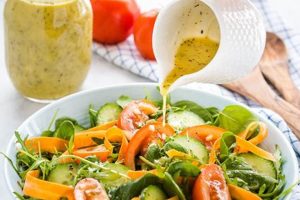
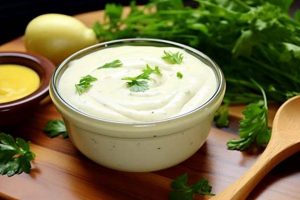
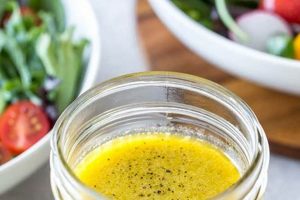
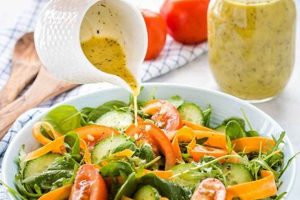
A blend of dried herbs and spices typically including oregano, basil, thyme, rosemary, and sometimes marjoram, parsley, sage, and garlic powder forms the foundation of a vibrant and flavorful vinaigrette. This mixture, when combined with oil, vinegar, and optional additions like lemon juice, Dijon mustard, or honey, creates a versatile dressing suitable for a wide array of salads and vegetables. A simple example includes whisking together olive oil, red wine vinegar, the herb blend, and a pinch of salt and pepper.
The convenience and adaptability of this type of dressing contribute to its popularity. It offers a quick and easy way to elevate fresh produce, transforming simple greens into a flavorful dish. Furthermore, the dried herbs provide a longer shelf life than fresh herbs, making it a practical pantry staple. The blend’s Mediterranean origins lend an inherent depth of flavor, reflecting centuries of culinary tradition. Its versatility extends beyond salads, serving as a marinade for meats, a flavor enhancer for roasted vegetables, or a topping for pasta dishes.
This exploration will further delve into various recipes, ranging from basic vinaigrette to creamy variations. It will also cover ingredient substitutions and complementary food pairings to enhance culinary creativity and maximize enjoyment of this versatile dressing.
Tips for Crafting Exceptional Vinaigrettes with Dried Herb Blends
Optimizing the use of dried herbs in vinaigrettes requires attention to detail. These tips offer guidance for achieving superior flavor and texture.
Tip 1: Bloom the Herbs: Briefly warming the dried herbs in a small amount of warm oil helps release their aromatic compounds and intensifies their flavor. This can be achieved by gently heating the oil and herbs in a pan for a minute or two before incorporating them into the dressing.
Tip 2: Balance Acidity: Achieving the right balance between oil and vinegar is crucial. A general guideline is a 3:1 ratio of oil to vinegar, but this can be adjusted to personal preference. A touch of sweetness, such as honey or maple syrup, can further enhance the balance.
Tip 3: Emulsify Thoroughly: Proper emulsification creates a smooth and creamy texture, preventing the dressing from separating. Whisking vigorously or using a blender can help achieve a stable emulsion.
Tip 4: Season Gradually: Start with a small amount of salt and pepper and adjust to taste after the dressing has emulsified. Over-salting can easily mask the delicate flavors of the herbs.
Tip 5: Consider Fresh Additions: While dried herbs provide the base, incorporating fresh herbs like parsley, chives, or basil can add brightness and complexity.
Tip 6: Experiment with Ingredients: Don’t be afraid to experiment with different types of oil and vinegar. Walnut oil, balsamic vinegar, or champagne vinegar can add unique nuances to the dressing.
Tip 7: Proper Storage: Store leftover dressing in an airtight container in the refrigerator for up to one week. Allow the dressing to come to room temperature before serving to enhance the flavors.
By following these guidelines, one can elevate simple ingredients into a delicious and nuanced dressing, transforming ordinary salads into culinary delights.
These techniques highlight the versatility and adaptability of dried herb blends, providing a foundation for crafting dressings perfectly suited to individual tastes and culinary creations.
1. High-quality olive oil

High-quality olive oil serves as a foundational element in Italian seasoning salad dressings, significantly influencing the final flavor profile. Its selection should be considered carefully, as it interacts directly with the herbs and other ingredients.
- Flavor Profile:
Extra virgin olive oil, the highest quality grade, possesses a distinct fruity and peppery flavor that complements the herbal notes of the Italian seasoning blend. Lower quality oils may lack this complexity or even introduce undesirable flavors that detract from the overall taste of the dressing. For instance, a robust Tuscan olive oil lends a peppery bite, while a delicate Ligurian oil offers a milder, fruitier taste.
- Acidity and Chemical Composition:
Olive oil’s acidity level, indicated as a percentage of oleic acid, affects its taste and shelf life. High-quality extra virgin olive oil typically has an acidity level below 0.8%. This low acidity contributes to a smoother, less bitter flavor and greater stability, which prevents the dressing from becoming rancid quickly. The presence of antioxidants and other beneficial compounds in higher quality oils further enhances flavor and stability.
- Impact on Emulsification:
The viscosity and chemical structure of high-quality olive oil play a crucial role in creating a stable emulsion with the vinegar and other ingredients in the dressing. A stable emulsion prevents separation and ensures a smooth, consistent texture. The quality of the oil directly impacts the emulsion’s stability and the overall mouthfeel of the dressing.
- Overall Culinary Experience:
Ultimately, the choice of olive oil elevates the entire culinary experience. High-quality olive oil not only contributes its inherent flavor but also acts as a carrier for the other ingredients, allowing the herbs and spices to fully express themselves. The result is a more complex and satisfying dressing that enhances the flavors of the salad itself.
Investing in high-quality olive oil demonstrably enhances the flavor, texture, and overall quality of an Italian seasoning salad dressing. The interplay between the oil’s characteristics and the other ingredients contributes significantly to the final culinary outcome. A discerning selection of olive oil, therefore, proves essential for crafting truly exceptional dressings.
2. Balanced Vinegar Acidity

Balanced vinegar acidity plays a crucial role in the overall flavor profile of an Italian seasoning salad dressing. The acidity not only provides a tangy counterpoint to the richness of the olive oil but also interacts with the herbs and spices, enhancing their individual flavors and creating a harmonious blend. Understanding the nuances of vinegar selection and its impact on the final product is essential for crafting a well-balanced and flavorful dressing.
- Types of Vinegar:
Different vinegars possess varying levels of acidity and unique flavor profiles. Common choices for Italian dressing include red wine vinegar, white wine vinegar, balsamic vinegar, and apple cider vinegar. Red wine vinegar offers a robust, slightly fruity acidity, while white wine vinegar provides a lighter, crisper tang. Balsamic vinegar, with its sweet and complex notes, adds depth, whereas apple cider vinegar contributes a subtly sweet and tart flavor. The specific vinegar chosen influences the overall taste and complements different flavor profiles within the salad.
- Acidity Levels and Balance:
The acidity level of the vinegar directly impacts the balance of the dressing. Too much acidity can make the dressing overly sharp, while too little can result in a bland and unappealing flavor. The standard ratio of oil to vinegar in most dressings is 3:1, but this can be adjusted to personal preference and the specific vinegar used. A milder vinegar may require a higher proportion in the dressing, while a more acidic vinegar may need less. Careful consideration of the vinegar’s acidity level is crucial for achieving a harmonious balance.
- Interaction with Herbs and Spices:
Vinegar acts as a solvent, extracting and enhancing the flavors of the herbs and spices in the Italian seasoning blend. The acidity helps to “bloom” the dried herbs, releasing their aromatic compounds and creating a more complex flavor profile. Different vinegars interact differently with the herbs, highlighting certain notes and creating unique flavor combinations. For example, the fruity notes of red wine vinegar pair well with oregano and basil, while the sweetness of balsamic vinegar complements thyme and rosemary.
- Impact on Emulsification:
Vinegar plays a key role in the emulsification process, helping to bind the oil and water-based ingredients together. The acidity of the vinegar influences the stability of the emulsion, ensuring that the dressing remains smooth and creamy without separating. A properly balanced acidity level contributes to a more stable and visually appealing dressing.
The careful selection and balanced use of vinegar are essential for creating a successful Italian seasoning salad dressing. The interplay between the vinegar’s acidity, the flavors of the herbs and spices, and the emulsification process all contribute to the final product’s overall quality and taste. By understanding these elements, one can create a dressing that perfectly complements the salad and enhances the dining experience. Further experimentation with different vinegar types and acidity levels allows for customization and the development of unique flavor profiles.
3. Freshly Ground Black Pepper

Freshly ground black pepper contributes a vital layer of complexity to Italian seasoning salad dressing, extending beyond mere heat. Its aromatic oils and nuanced flavors interact synergistically with the herbs and other components, enhancing the overall sensory experience. Understanding the role of freshly ground black pepper elevates the dressing from simple to sophisticated.
- Flavor Enhancement:
Unlike pre-ground pepper, which loses its volatile oils and pungent aroma over time, freshly ground pepper delivers a burst of flavor. The immediate release of piperine, the compound responsible for pepper’s characteristic bite, adds a vibrant note that complements the herbal blend. This heightened pungency elevates the other flavors in the dressing, creating a more dynamic taste profile.
- Aromatic Complexity:
Freshly ground black pepper offers a wider range of aromatic compounds compared to its pre-ground counterpart. These volatile oils contribute to the overall olfactory experience, adding depth and complexity to the dressing’s aroma. The interplay between these aromatic compounds and the herbs in the Italian seasoning creates a more nuanced and engaging sensory experience.
- Textural Contribution:
The coarse texture of freshly ground pepper adds a subtle textural element to the dressing. This slight grittiness contrasts with the smoothness of the oil and vinegar, providing a more interesting mouthfeel. The textural contrast enhances the overall sensory experience, adding another dimension to the enjoyment of the dressing.
- Balancing Agent:
The subtle heat of freshly ground black pepper balances the other flavors in the dressing. It acts as a counterpoint to the sweetness of any added sugar or the acidity of the vinegar, creating a more harmonious and well-rounded flavor profile. This balance prevents any single flavor from dominating and allows the complexity of the herbs and other ingredients to shine through.
Incorporating freshly ground black pepper into an Italian seasoning salad dressing elevates its flavor profile beyond the sum of its parts. The interplay between the pepper’s pungency, aromatic complexity, and textural contribution creates a more nuanced and satisfying culinary experience. The seemingly simple addition of freshly ground pepper demonstrates the significant impact that attention to detail can have on the final product.
4. Appropriate Herb Ratio

The success of an Italian seasoning salad dressing hinges significantly on the appropriate herb ratio within the blend. This balance dictates the overall flavor profile, ensuring that no single herb dominates and that the combined effect creates a harmonious and complex taste. The interplay between individual herbs contributes to the characteristic flavor associated with Italian cuisine. An imbalance can lead to a dressing that is overly pungent, too sweet, or lacking in depth. For example, an excess of oregano can overpower the more delicate flavors of basil and thyme, resulting in a bitter or medicinal taste. Conversely, too little oregano might render the blend lacking in its characteristic savory note. A well-balanced ratio allows each herb to contribute its unique flavor characteristics while creating a synergistic blend.
Achieving the optimal herb ratio involves understanding the individual characteristics of each component. Oregano, often considered the backbone of Italian seasoning, provides a robust, slightly bitter flavor. Basil contributes a sweeter, peppery note, while thyme offers earthy, lemony undertones. Rosemary adds a piney aroma and flavor, and marjoram contributes a milder, sweeter element. The interplay between these flavors creates the complex profile that defines Italian seasoning. For instance, a classic blend might include a higher proportion of oregano and basil, balanced by smaller amounts of thyme, rosemary, and marjoram. The precise ratio can be adjusted to personal preference, but maintaining a balance ensures complexity and avoids overpowering any single flavor.
Understanding and implementing the appropriate herb ratio is crucial for achieving the desired flavor profile in an Italian seasoning salad dressing. This precision contributes significantly to the overall culinary experience, transforming a simple vinaigrette into a nuanced and flavorful complement to a variety of dishes. Successfully balancing these flavors not only enhances the immediate taste but also reflects a deeper understanding and appreciation of the culinary arts. The practical application of this knowledge allows for consistent and delicious results, demonstrating the importance of precision in achieving culinary excellence.
5. Effective Emulsification

Effective emulsification is crucial for creating a successful Italian seasoning salad dressing. It determines the texture, stability, and overall sensory experience of the dressing. A proper emulsion binds the oil and vinegar, preventing separation and ensuring a smooth, creamy consistency. This process transforms individual ingredients into a cohesive and palatable condiment. Without effective emulsification, the dressing will separate, resulting in an oily texture and uneven distribution of flavor.
- Stability and Texture:
Emulsification creates a stable mixture where tiny droplets of one liquid (vinegar) are dispersed evenly throughout another (oil). This prevents the two liquids from separating, ensuring a consistent texture and flavor distribution throughout the dressing. A stable emulsion contributes to a smooth, creamy mouthfeel, enhancing the overall sensory experience. Conversely, a poorly emulsified dressing will appear watery and oily, leading to an unpleasant texture.
- Flavor Distribution:
Effective emulsification ensures that the flavors of the herbs, spices, and other ingredients are evenly distributed throughout the dressing. The emulsified droplets of vinegar carry these flavors throughout the oil, coating the salad ingredients uniformly. This homogenous mixture allows for a balanced and consistent flavor experience with each bite. Without proper emulsification, the flavors can become concentrated in certain areas, leading to an uneven and less enjoyable taste.
- Visual Appeal:
A well-emulsified dressing exhibits a smooth, creamy, and opaque appearance, enhancing the visual appeal of the salad. The uniform distribution of ingredients creates a visually appealing consistency that complements the salad’s presentation. A separated dressing, on the other hand, appears unappetizing with distinct layers of oil and vinegar, detracting from the overall visual appeal of the dish.
- Enhanced Culinary Experience:
Effective emulsification contributes significantly to the overall culinary experience. It enhances the flavor delivery, improves the texture, and elevates the visual presentation of the salad. A properly emulsified Italian seasoning salad dressing complements the flavors of the other ingredients, creating a harmonious and enjoyable dining experience.
In the context of an Italian seasoning salad dressing, effective emulsification is essential for creating a high-quality final product. It directly impacts the dressing’s texture, flavor distribution, visual appeal, and overall enjoyment. Mastering this technique elevates the dressing from a simple mixture of ingredients to a carefully crafted culinary creation. The understanding and application of emulsification principles significantly contribute to a more satisfying and flavorful dining experience.
6. Optional Dijon Mustard
Dijon mustard, while optional, offers a significant contribution to Italian seasoning salad dressing, acting as both an emulsifier and a flavor enhancer. Its inclusion introduces a nuanced complexity, elevating the dressing beyond a simple vinaigrette. Understanding its role provides a deeper appreciation for its impact on the final product.
- Emulsification and Texture:
Dijon mustard contains lecithin, a natural emulsifier that helps bind oil and vinegar, creating a stable and homogenous mixture. This prevents separation and ensures a smooth, creamy texture, enhancing the dressing’s mouthfeel and visual appeal. The mustard acts as a bridge between the two immiscible liquids, creating a more cohesive and visually appealing dressing.
- Flavor Complexity:
The sharp, tangy flavor of Dijon mustard complements the herbaceous notes of the Italian seasoning, adding depth and complexity. Its subtle pungency balances the sweetness of any added sugar and the acidity of the vinegar, creating a more well-rounded flavor profile. The mustard’s unique flavor profile interacts synergistically with the herbs and spices, creating a more nuanced and balanced taste.
- Balancing Agent:
Dijon mustard acts as a balancing agent within the dressing. Its tanginess complements the richness of the olive oil and the sweetness of any additional ingredients, such as honey or maple syrup. This balancing effect prevents any single flavor from dominating, creating a more harmonious flavor profile. This balancing act is particularly noticeable when using strongly flavored vinegars like balsamic vinegar, as the mustard helps to mellow the overall taste.
- Versatility and Adaptability:
The inclusion of Dijon mustard allows for greater versatility in the dressing’s application. It complements a wider range of salads and vegetables, adding a nuanced flavor dimension that enhances the overall culinary experience. Its adaptable nature makes it a valuable addition to various flavor profiles, ranging from light and refreshing to robust and savory. For example, a small amount of Dijon enhances the flavor of a simple green salad, while a larger amount can create a more robust dressing for heartier vegetables like roasted potatoes or grilled asparagus.
While optional, Dijon mustard demonstrably improves the texture, flavor profile, and versatility of Italian seasoning salad dressing. Its multifaceted contributions enhance the sensory experience, transforming a simple vinaigrette into a more refined and complex culinary creation. Its inclusion, even in small amounts, exemplifies the significant impact seemingly minor additions can have on a dish’s overall quality and enjoyment.
7. Proper Storage Techniques

Proper storage techniques are essential for maintaining the quality and extending the shelf life of Italian seasoning salad dressing. Improper storage can lead to flavor degradation, oxidation of the oil, and growth of microorganisms, compromising both taste and safety. The efficacy of preservation methods directly correlates with the longevity and overall quality of the dressing. For example, storing the dressing in a clear container exposed to direct sunlight accelerates oxidation, leading to a rancid flavor and diminished nutritional value. Conversely, storing the dressing in an opaque, airtight container in a cool, dark place significantly extends its shelf life and preserves its fresh flavor.
Several factors influence the effectiveness of storage techniques. Temperature plays a critical role; refrigeration significantly slows down the rate of oxidation and microbial growth. Exposure to air accelerates oxidation and can introduce contaminants, making airtight containers crucial. Light, especially ultraviolet light, can degrade the quality of the oil and herbs, impacting flavor and color. Therefore, storing the dressing in opaque containers or in a dark location is advisable. Practical application of these principles ensures the dressing retains its optimal flavor and quality for an extended period. For instance, transferring leftover dressing to a smaller, airtight container minimizes air exposure, further extending its shelf life. Regularly checking for signs of spoilage, such as off-odors or mold growth, is also crucial.
Effective storage practices are integral to maximizing the quality and longevity of Italian seasoning salad dressing. Understanding the impact of temperature, light, and air exposure allows for informed decisions regarding storage methods. Adhering to these principles ensures the dressing remains a flavorful and safe addition to culinary creations for an extended period. Neglecting these practices can lead to quality deterioration and potential health risks, underscoring the practical significance of proper storage techniques within the broader context of culinary arts and food safety.
Frequently Asked Questions
This section addresses common inquiries regarding the preparation, storage, and utilization of Italian seasoning salad dressing.
Question 1: What is the ideal ratio of oil to vinegar in an Italian seasoning salad dressing?
A standard 3:1 ratio of oil to vinegar generally provides a balanced flavor profile. However, this ratio can be adjusted based on personal preference and the specific type of vinegar used. Milder vinegars may require a higher proportion, while more acidic vinegars may necessitate less.
Question 2: Can other herbs be added to the Italian seasoning blend?
While traditional Italian seasoning blends typically include oregano, basil, thyme, rosemary, and sometimes marjoram, parsley, sage, and garlic powder, other herbs can be incorporated to create unique flavor profiles. Experimentation with herbs such as chives, tarragon, or savory can add depth and complexity.
Question 3: How long can Italian seasoning salad dressing be stored?
When stored properly in an airtight container in the refrigerator, Italian seasoning salad dressing typically remains fresh for up to one week. Always inspect the dressing for any signs of spoilage, such as mold growth or off-odors, before consumption.
Question 4: Can Italian seasoning salad dressing be used as a marinade?
The versatility of Italian seasoning salad dressing extends beyond salads. It serves as an excellent marinade for meats, poultry, and vegetables, imparting its herbaceous flavors while tenderizing the ingredients.
Question 5: What types of salads pair well with Italian seasoning dressing?
Italian seasoning salad dressing complements a wide variety of salads, from simple green salads to more complex compositions featuring roasted vegetables, grilled meats, or cheeses. Its robust flavor profile enhances the taste of fresh produce while harmonizing with other ingredients.
Question 6: How can one achieve a stable emulsion when making the dressing?
Vigorous whisking or the use of a blender or food processor can help create a stable emulsion, ensuring the oil and vinegar remain properly combined. The addition of an emulsifying agent, such as Dijon mustard or honey, can further enhance stability.
Understanding these key aspects contributes significantly to creating a flavorful and versatile Italian seasoning salad dressing tailored to individual preferences. Careful consideration of ingredients, ratios, and storage techniques ensures optimal results.
This concludes the frequently asked questions section. The following sections will delve into specific recipe variations and further explore the culinary applications of this versatile dressing.
Italian Seasoning Salad Dressing Recipe
This exploration has provided a comprehensive overview of crafting and utilizing Italian seasoning salad dressing. Key aspects, including the importance of high-quality olive oil, balanced vinegar acidity, freshly ground black pepper, appropriate herb ratios, effective emulsification, the optional inclusion of Dijon mustard, and proper storage techniques, have been thoroughly examined. Understanding these elements allows for informed decision-making regarding ingredient selection, preparation methods, and preservation strategies. The versatility of this dressing, extending beyond salads to marinades and other culinary applications, has also been highlighted.
Ultimately, the creation of Italian seasoning salad dressing represents a nuanced interplay of ingredients and techniques. Attention to detail, from sourcing quality components to mastering emulsification, significantly impacts the final product. This exploration encourages informed experimentation and adaptation to individual preferences, fostering culinary creativity and a deeper appreciation for the art of crafting flavorful and versatile dressings. Continued exploration and refinement of technique promise further enhancement of culinary endeavors.