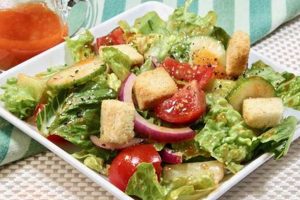
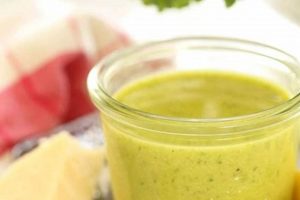
A blend of oil and an acidic element, often emulsified, forms the foundation of most dressings used to enhance the flavor and texture of salads. Balsamic vinegar, a dark, intensely flavored vinegar originating from Modena, Italy, provides a unique sweet and tangy complexity when used as the acidic component. Recipes incorporating this ingredient vary widely, encompassing simple blends with olive oil to more complex versions incorporating Dijon mustard, honey, garlic, herbs, and spices. A simple example involves whisking together balsamic vinegar, extra virgin olive oil, salt, and pepper.
The use of balsamic vinegar offers several advantages in dressings. Its rich flavor profile adds depth and complexity to otherwise simple salads, while its sweetness balances the acidity. Furthermore, balsamic vinegar contributes to the appealing visual presentation of a salad with its dark, glossy hue. Historically, balsamic vinegar was a prized condiment reserved for the Italian aristocracy. Today, its widespread availability allows home cooks to elevate everyday salads with a touch of culinary sophistication.
The subsequent sections will delve into specific formulations, exploring the diverse ways balsamic vinegar can be utilized to create a range of dressings, from light and tangy to rich and creamy. Practical tips and techniques for emulsification and storage will also be addressed.
Tips for Crafting Balsamic Vinaigrettes
Creating a successful balsamic vinaigrette involves understanding the interplay of ingredients and techniques. The following tips offer guidance for achieving optimal flavor and texture.
Tip 1: Balance Sweetness and Acidity: The inherent sweetness of balsamic vinegar allows for customization. For a tangier vinaigrette, less sweet balsamic varieties or a higher proportion of oil can be used. Conversely, a touch of honey or maple syrup can enhance sweetness.
Tip 2: Emulsify Effectively: A stable emulsion prevents the vinaigrette from separating. Whisking vigorously while slowly drizzling the oil into the vinegar, or using a blender or food processor, creates a cohesive texture.
Tip 3: Explore Flavor Combinations: Balsamic vinegar pairs well with a variety of ingredients. Dijon mustard adds creaminess and a subtle sharpness, while minced garlic or shallots provide pungent notes. Fresh or dried herbs, such as oregano, thyme, or rosemary, introduce aromatic complexity.
Tip 4: Consider Oil Choices: Extra virgin olive oil provides a robust flavor that complements balsamic vinegar. However, other oils, like avocado or grapeseed oil, offer lighter, more neutral profiles that allow the balsamic notes to shine.
Tip 5: Season Judiciously: Salt and freshly ground black pepper are essential for enhancing the overall flavor profile. Start with a small amount and adjust to taste, keeping in mind the saltiness of certain add-ins like cheeses.
Tip 6: Taste and Adjust: Palates vary, and the ideal balance of flavors is subjective. Tasting throughout the preparation process allows for adjustments in sweetness, acidity, and seasoning.
Tip 7: Proper Storage: Store leftover vinaigrette in an airtight container in the refrigerator for up to one week. Allow it to come to room temperature before serving to enhance its flavor and viscosity.
By following these guidelines, one can consistently produce flavorful and well-balanced balsamic vinaigrettes that elevate any salad.
In conclusion, these insights into crafting balsamic vinaigrettes empower culinary exploration and ensure consistently delicious results.
1. Balsamic Vinegar Quality
Balsamic vinegar quality significantly impacts the resulting flavor profile of a vinaigrette. The nuanced characteristics of the vinegar, from sweetness and acidity to depth and complexity, directly influence the final dressing. Understanding the various grades and production methods helps in selecting the appropriate balsamic vinegar for specific recipe goals.
- Aging and Density
Traditional balsamic vinegar undergoes a lengthy aging process in wooden barrels, resulting in a concentrated, syrupy consistency and complex flavor profile. This type yields a richer, more intense vinaigrette compared to younger, less viscous vinegars. The density contributes to a desirable texture in the dressing, clinging more effectively to salad ingredients.
- Sweetness and Acidity Balance
The balance between sweet and tart notes varies among balsamic vinegars. Some possess a pronounced sweetness, while others lean towards a sharper acidity. This balance dictates the overall flavor profile of the vinaigrette and its compatibility with other ingredients. A sweeter balsamic may require less added sweetener in the recipe, while a more acidic vinegar might necessitate adjustments to achieve a balanced dressing.
- Ingredient Integrity
Authentic, high-quality balsamic vinegars are made from cooked grape must, with no added sugars, colorings, or thickeners. These additions can mask the true flavor of the vinegar and detract from the overall quality of the vinaigrette. Scrutinizing ingredient lists ensures the use of pure, unadulterated balsamic vinegar for optimal flavor.
- Production Methods
The production method, including the type of wood used for aging barrels and the duration of the aging process, imparts distinct characteristics to the vinegar. These nuances translate into subtle flavor variations in the final vinaigrette. Understanding these production methods allows for informed decisions when selecting a balsamic vinegar to achieve specific flavor profiles.
Selecting a high-quality balsamic vinegar, considering factors like aging, sweetness, ingredient integrity, and production methods, ensures a superior vinaigrette. These elements contribute not only to the flavor but also the texture and overall balance of the dressing, elevating a simple salad to a culinary experience. A well-chosen balsamic vinegar provides depth and complexity, enhancing the flavors of the other salad components.
2. Oil Selection

Oil selection plays a crucial role in determining the overall character of a balsamic vinaigrette. The oil’s flavor profile, texture, and chemical properties interact with the balsamic vinegar, influencing the final taste, consistency, and stability of the dressing. A careful choice of oil can either complement or contrast the balsamic’s sweetness and acidity, leading to a wide range of flavor possibilities.
- Flavor Profile
Different oils possess distinct flavor profiles that can either harmonize or contrast with balsamic vinegar. Robust extra virgin olive oil provides a peppery, fruity counterpoint to the vinegar’s sweetness, creating a classic pairing. Conversely, milder oils like grapeseed or avocado oil allow the balsamic’s nuanced flavors to take center stage, offering a cleaner, brighter taste. Nut oils, such as walnut or hazelnut, introduce their own unique characteristics, adding a layer of complexity to the vinaigrette.
- Texture and Viscosity
The oil’s viscosity affects the mouthfeel and emulsification properties of the vinaigrette. Lighter oils contribute to a thinner, more delicate dressing, while denser oils create a richer, more substantial texture. The viscosity also influences how well the oil emulsifies with the vinegar, impacting the stability and shelf life of the dressing. A thicker oil might require more vigorous whisking or blending to achieve a stable emulsion.
- Acidity and Balance
The oil’s inherent acidity, while generally subtle compared to vinegar, plays a role in balancing the overall acidity of the vinaigrette. Certain oils, like extra virgin olive oil, have a slightly higher acidity than others, subtly influencing the final balance of flavors. This interaction necessitates careful consideration of both the oil and vinegar’s acidity levels to achieve the desired outcome.
- Health Considerations
The nutritional profile and health benefits of different oils also factor into the selection process. Olive oil, rich in monounsaturated fats, is often favored for its heart-healthy properties. Other oils, such as flaxseed or avocado oil, offer different fatty acid compositions and potential health advantages. Choosing an oil aligned with dietary preferences and health goals enhances the overall nutritional value of the salad.
The careful consideration of these factors ensures the selected oil harmonizes with the balsamic vinegar, creating a well-balanced and flavorful vinaigrette. The oil’s flavor profile, texture, acidity, and health benefits all contribute to the final culinary experience, demonstrating the integral role of oil selection in crafting a successful balsamic vinaigrette.
3. Emulsification Technique

Emulsification, the process of combining two immiscible liquids like oil and vinegar into a stable mixture, is paramount in crafting a successful balsamic vinaigrette. The technique employed dictates the texture, stability, and overall sensory experience of the dressing. A properly emulsified vinaigrette exhibits a cohesive texture, clinging evenly to salad ingredients rather than separating into distinct layers. This section explores the critical aspects of emulsification within the context of balsamic vinaigrette preparation.
- Temporary Emulsification (Whisking)
Whisking vigorously while slowly drizzling oil into vinegar creates a temporary emulsion. The mechanical action breaks the oil into tiny droplets that disperse throughout the vinegar. Surface tension prevents immediate coalescence, resulting in a temporarily homogenous mixture. While simple and effective for immediate use, this type of emulsion is inherently unstable and will eventually separate. The vinaigrette requires re-whisking before each use. This method suits situations where the dressing will be consumed immediately after preparation.
- Semi-Permanent Emulsification (Blender/Food Processor)
Using a blender or food processor generates a more stable emulsion. The high-speed blades create smaller oil droplets, leading to a smoother, more homogenous texture and increased stability compared to whisking. While separation may still occur over time, it happens more slowly, allowing for short-term storage. This technique proves advantageous when preparing vinaigrettes in advance for later consumption, minimizing the need for frequent re-emulsification.
- Permanent Emulsification (Emulsifiers)
Adding an emulsifying agent, such as Dijon mustard, egg yolk, or honey, creates a permanent emulsion. These agents contain molecules with both hydrophilic (water-loving) and hydrophobic (oil-loving) ends. These molecules position themselves at the oil-vinegar interface, reducing surface tension and preventing the droplets from coalescing. This results in a stable, homogenous mixture that resists separation even after prolonged storage. Incorporating emulsifiers is ideal for preparing larger batches or for dressings requiring extended shelf life.
- Factors Affecting Emulsification
Several factors influence the success of emulsification. Temperature plays a significant role, as warmer ingredients emulsify more readily. The ratio of oil to vinegar also impacts stability, with a higher oil content generally leading to a thicker, more stable emulsion. The intensity and duration of mixing also affect the size of the oil droplets and the overall stability of the mixture. Understanding these factors allows for greater control over the emulsification process and the final characteristics of the vinaigrette.
The choice of emulsification technique directly impacts the final quality and stability of a balsamic vinaigrette. Whether a temporary emulsion achieved through whisking, a semi-permanent blend using a food processor, or a permanent emulsion facilitated by an emulsifying agent, understanding these techniques and the factors influencing their effectiveness allows for tailored preparation based on individual needs and desired outcomes. A well-emulsified vinaigrette contributes not only to a pleasing texture but also enhances the distribution of flavors, ensuring a consistent and satisfying sensory experience.
4. Sweetener (optional)
Balsamic vinegar, while inherently tangy, possesses a notable degree of sweetness. The level of sweetness varies depending on the vinegar’s age and production method. In a balsamic vinaigrette recipe, the decision to incorporate an additional sweetener depends on the desired balance of flavors and the specific balsamic vinegar employed. Sweeteners can further enhance the complexity of the dressing, counterbalancing acidity and rounding out the overall flavor profile.
- Balancing Acidity
Sweeteners play a key role in modulating the perceived acidity of a balsamic vinaigrette. Highly acidic balsamic vinegars may benefit from the addition of a sweetener to temper the sharpness and create a more harmonious balance. The sweetener’s role becomes particularly crucial when using less aged balsamic vinegars, which often exhibit higher acidity levels compared to their aged counterparts. The addition of a sweetener creates a smoother, more palatable dressing.
- Enhancing Complexity
Beyond simple sweetness, certain sweeteners contribute unique flavor nuances to a balsamic vinaigrette. Honey, for example, imparts floral and subtly caramelized notes, while maple syrup adds a distinct woody sweetness. These nuances interact with the balsamic vinegar’s existing flavors, creating a more complex and layered taste experience. The choice of sweetener thus becomes a tool for fine-tuning the overall flavor profile.
- Sweetener Choices and Considerations
The selection of a sweetener extends beyond sugar and encompasses options like honey, maple syrup, agave nectar, or even a touch of fruit juice. Each option brings distinct flavor characteristics and sweetness levels. Considerations include the sweetener’s viscosity, which can affect the dressing’s texture, and its overall compatibility with other ingredients. The chosen sweetener should harmonize with the balsamic vinegar and other components of the recipe.
- Impact on Emulsification and Texture
Sweeteners, particularly those with higher viscosity like honey or maple syrup, can influence the emulsification process and the final texture of the vinaigrette. Their presence can contribute to a thicker, more stable emulsion, helping bind the oil and vinegar together more effectively. However, excessive sweetener may lead to an overly viscous dressing. Careful consideration of the sweetener’s properties and its impact on emulsion stability is essential for achieving the desired consistency.
The judicious use of sweeteners in a balsamic vinaigrette recipe allows for precise control over the balance of flavors, texture, and overall sensory experience. The decision to incorporate a sweetener, and the specific type chosen, depends on the individual’s palate and the desired outcome. A well-balanced vinaigrette, where sweetness and acidity harmonize, elevates the flavors of the salad ingredients, creating a cohesive and satisfying culinary experience.
5. Flavor Enhancements
Flavor enhancements play a pivotal role in elevating balsamic vinaigrette recipes beyond simple oil-and-vinegar combinations. These additions introduce complexity, depth, and nuance, transforming the vinaigrette into a more sophisticated and versatile culinary tool. The careful selection and application of flavor enhancers allows for customization, catering to specific taste preferences and complementing a wide array of salad ingredients.
Several categories of flavor enhancers contribute distinct characteristics to balsamic vinaigrettes. Aromatic alliums, such as minced garlic, shallots, or chives, introduce pungent notes that accentuate the balsamic’s sweetness. Fresh or dried herbs, ranging from classic oregano and thyme to more assertive rosemary or tarragon, provide herbaceous complexity. Spices, including black pepper, red pepper flakes, or a pinch of smoked paprika, introduce warmth and depth. Mustard, particularly Dijon, contributes a creamy texture and subtle tang, further enhancing the emulsion’s stability. Incorporating ingredients like sun-dried tomatoes, roasted peppers, or crumbled cheeses adds umami richness and textural interest.
Consider a balsamic vinaigrette enhanced with minced garlic and fresh thyme, paired with a Caprese salad. The garlic’s pungency complements the tomatoes and mozzarella, while the thyme’s herbaceous notes harmonize with the basil. Alternatively, a vinaigrette featuring Dijon mustard, honey, and black pepper, drizzled over a salad of roasted vegetables and feta cheese, offers a balanced interplay of sweet, savory, and spicy flavors. These examples illustrate the practical significance of flavor enhancements in creating vinaigrettes tailored to specific salads and culinary objectives.
Understanding the interplay of flavors and textures is crucial for successful flavor enhancement. The chosen additions should complement the balsamic vinegar’s inherent qualities and harmonize with the other salad components. Overuse can lead to muddled flavors, while a judicious approach allows each element to shine. Experimentation with different combinations unlocks a wide spectrum of flavor profiles, transforming a basic balsamic vinaigrette into a versatile and dynamic culinary asset.
6. Proper Storage

Proper storage is crucial for maintaining the quality and safety of balsamic vinaigrette. Exposure to air, light, and fluctuating temperatures can degrade the oil, impacting flavor and potentially leading to rancidity. Furthermore, improper storage can encourage microbial growth, presenting health risks. Refrigeration in an airtight container, ideally a dark glass bottle to minimize light exposure, is essential. This practice limits oxidation and microbial activity, preserving the vinaigrette’s flavor and extending its shelf life. For example, a vinaigrette stored at room temperature might develop off-flavors within a few days, while the same vinaigrette stored correctly in the refrigerator can remain palatable for a week or more. The efficacy of emulsification also influences storage stability; a well-emulsified vinaigrette resists separation more effectively during refrigeration.
Practical applications of proper storage extend beyond simply preserving flavor. Consider a meal prepping scenario where balsamic vinaigrette is made in advance. Correct storage ensures the dressing remains flavorful and safe to consume throughout the week. Similarly, in a restaurant setting, proper storage practices are critical for maintaining consistent quality and adhering to food safety standards. Failure to store balsamic vinaigrette correctly can lead to economic losses due to spoilage and potential health consequences for consumers. The acidity of balsamic vinegar provides some inherent antimicrobial properties, but this does not negate the need for proper refrigeration, particularly in vinaigrettes containing other perishable ingredients like fresh herbs or garlic.
In conclusion, proper storage of balsamic vinaigrette directly impacts both quality and safety. Refrigeration in an airtight, dark container minimizes oxidative processes, microbial growth, and emulsion separation, preserving flavor and extending shelf life. This understanding is crucial for home cooks, meal preppers, and food service professionals alike. Consistent application of proper storage techniques ensures the consistent delivery of high-quality, flavorful, and safe balsamic vinaigrette.
Frequently Asked Questions
This section addresses common inquiries regarding balsamic vinaigrette preparation and utilization.
Question 1: How long can balsamic vinaigrette be stored?
Properly stored balsamic vinaigrette, refrigerated in an airtight container, typically remains palatable for one to two weeks. Factors influencing shelf life include the quality of ingredients, the presence of emulsifiers, and storage temperature consistency. Discarding the vinaigrette upon any sign of spoilage, such as off-odors or mold growth, is crucial.
Question 2: What is the ideal balsamic vinegar to oil ratio?
A standard starting point is a 1:3 ratio of balsamic vinegar to oil. Individual preferences and the specific balsamic vinegar’s acidity can necessitate adjustments. A sweeter balsamic vinegar may allow for a higher proportion, while a more acidic vinegar might require a lower proportion to achieve a balanced flavor profile.
Question 3: Can balsamic vinaigrette be used for marinades?
Balsamic vinaigrette functions effectively as a marinade due to its acidity and complex flavor profile. The vinegar’s acidity tenderizes meats, while the other ingredients contribute nuanced flavors. Marinating times should be adjusted based on the protein’s density and the desired level of flavor penetration.
Question 4: What types of salads pair best with balsamic vinaigrette?
Balsamic vinaigrette complements a wide range of salads, including those featuring leafy greens, roasted vegetables, grilled meats, cheeses, and fruits. The vinaigrette’s sweetness and acidity balance well with diverse flavors and textures. Consider flavor affinities when pairing with specific ingredients; for instance, a balsamic vinaigrette with fig complements a salad with goat cheese and walnuts.
Question 5: How can one achieve a stable emulsion when making balsamic vinaigrette?
A stable emulsion requires gradual incorporation of oil into the vinegar while whisking vigorously. Using a blender or food processor creates a more stable emulsion due to higher shear forces. Incorporating an emulsifying agent, such as Dijon mustard or honey, further enhances stability and prevents separation during storage.
Question 6: How does aging impact the flavor profile of balsamic vinegar in a vinaigrette?
Aged balsamic vinegars contribute a complex sweetness and a syrupy consistency to vinaigrettes. Younger balsamic vinegars tend to be sharper and less viscous. The aging process mellows the acidity and concentrates the flavors, resulting in a richer, more nuanced dressing. The chosen vinegar’s age directly influences the final flavor profile.
Understanding these frequently asked questions provides a foundation for successful balsamic vinaigrette preparation and application, empowering culinary exploration and confident experimentation.
The following section provides a collection of curated balsamic vinaigrette recipes, demonstrating the versatility and adaptability of this classic dressing.
Salad Dressing with Balsamic Vinegar Recipe
Exploration of the multifaceted nature of salad dressing with balsamic vinegar recipes reveals the interplay of key components. Balsamic vinegar quality, oil selection, emulsification techniques, optional sweeteners, and flavor enhancements contribute distinct characteristics to the final product. Proper storage preserves these characteristics, ensuring a consistently high-quality dressing. Understanding these elements empowers informed decision-making in crafting vinaigrettes tailored to specific flavor profiles and culinary applications. From the selection of a robust extra virgin olive oil to the nuanced addition of honey or Dijon mustard, each element plays a crucial role in the final sensory experience.
Mastery of balsamic vinaigrette preparation expands culinary horizons, offering a pathway to creating versatile dressings that elevate a simple salad to a culinary masterpiece. Continued exploration of flavor combinations and ingredient pairings unlocks further potential, enriching the culinary landscape and solidifying the enduring relevance of balsamic vinaigrette in gastronomy.