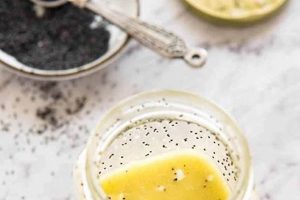
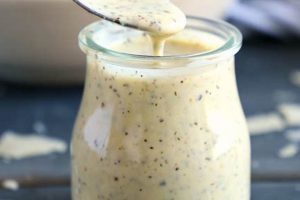
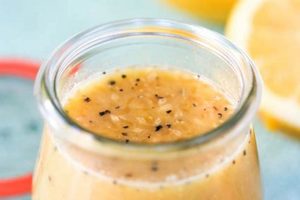
A vibrant and herbaceous blend of fresh basil, tangy lemon juice, and high-quality oil forms the foundation of this classic dressing. Often enhanced with garlic, shallot, and a touch of sweetness, the emulsion delivers a bright, refreshing flavor that complements a variety of salads and dishes. Variations may include the addition of Parmesan cheese, pine nuts, or Dijon mustard for added complexity.
This style of dressing offers a light yet flavorful alternative to heavier, cream-based dressings. Its versatility makes it suitable for delicate greens, robust vegetables, grilled proteins, and even pasta salads. The inherent freshness of the ingredients provides a burst of flavor that enhances the overall dining experience. Historically, basil and lemon have been paired in culinary traditions across the Mediterranean, highlighting the natural synergy of these ingredients.
This exploration will delve into specific ingredient selections, techniques for achieving optimal emulsification, and creative applications of this dressing across diverse culinary landscapes. Further discussion will cover variations on the classic recipe to cater to different dietary preferences and flavor profiles.
Tips for Crafting the Perfect Lemon Basil Salad Dressing
Achieving a balanced and flavorful lemon basil salad dressing requires attention to detail and an understanding of the interplay between ingredients. The following tips offer guidance for creating a dressing that elevates any dish.
Tip 1: Basil Selection: Opt for fresh basil leaves over dried for optimal flavor and aroma. Tender young leaves provide the best results.
Tip 2: Lemon Quality: Freshly squeezed lemon juice is essential. Bottled lemon juice often contains preservatives that can negatively impact the dressing’s taste. Meyer lemons offer a sweeter, less acidic alternative.
Tip 3: Oil Choice: Extra virgin olive oil provides a robust flavor profile that complements the basil and lemon. A lighter olive oil or avocado oil can be used for a milder taste.
Tip 4: Emulsification Technique: A stable emulsion prevents separation and ensures a consistent texture. Whisking the oil slowly into the lemon juice and other ingredients while continuously stirring creates a smooth, cohesive dressing.
Tip 5: Garlic and Shallot Incorporation: Finely minced garlic and shallot enhance the dressing’s savory notes. Roasting the garlic before adding mellows its flavor and adds a subtle sweetness.
Tip 6: Sweetness Level: A touch of honey or maple syrup can balance the acidity of the lemon. Adjust the amount according to personal preference.
Tip 7: Seasoning Adjustment: Sea salt and freshly ground black pepper enhance the overall flavor profile. Taste and adjust seasoning as needed.
Tip 8: Chilling and Resting: Allowing the dressing to chill for at least 30 minutes allows the flavors to meld and deepen.
By adhering to these guidelines, one can consistently create a vibrant and flavorful lemon basil salad dressing that complements a wide range of culinary creations.
The following section will explore variations on the classic recipe, offering inspiration for customization and experimentation.
1. Fresh Ingredients

The quality of a lemon basil salad dressing hinges directly on the freshness of its core components. Fresh basil offers a vibrant, herbaceous aroma and flavor profile absent in dried alternatives. Its delicate leaves, when macerated or muddled, release essential oils that contribute significantly to the dressing’s overall character. Similarly, freshly squeezed lemon juice provides a bright, zesty acidity that bottled varieties, often containing preservatives, cannot replicate. This natural acidity acts as both a flavor enhancer and a preservative. The inherent oils within fresh garlic and shallots, frequently incorporated into the dressing, offer pungent, savory notes that deepen the complexity of the final product. Utilizing fresh, high-quality olive oil further enhances the dressing’s flavor and provides healthy fats.
Consider the impact of using wilted basil or pre-packaged lemon juice. The resulting dressing may exhibit a muted flavor profile, lacking the vibrancy and freshness associated with a superior preparation. Freshly grated Parmesan cheese, when added, contributes a salty, umami richness that complements the other fresh ingredients. Conversely, pre-grated cheese, often containing cellulose as an anti-caking agent, can result in a gritty texture and diminished flavor. The difference between a dressing made with fresh ingredients and one made with subpar components is palpable, affecting both taste and aroma.
Prioritizing fresh ingredients ensures optimal flavor, aroma, and texture in a lemon basil salad dressing. This emphasis translates to a superior culinary experience. Challenges arise when sourcing high-quality, seasonal ingredients. However, the resulting enhancement in flavor justifies the effort. This principle of using fresh, high-quality ingredients extends beyond this specific dressing and represents a fundamental tenet of successful cooking across numerous culinary traditions.
2. Balanced Acidity
Balanced acidity represents a cornerstone of a successful lemon basil salad dressing recipe. The inherent tartness of lemon juice, while desirable, requires careful management to prevent an overly sharp or acidic flavor profile. Achieving this balance involves modulating the lemon juice’s intensity through the strategic incorporation of other ingredients and techniques.
- Sweetness as a Counterpoint
Incorporating sweetness serves as the primary method for counteracting the lemon’s acidity. A touch of honey, maple syrup, or even a pinch of sugar can effectively temper the tartness, creating a more rounded and palatable flavor. The specific sweetener chosen can also introduce subtle nuances to the dressing’s overall character. Honey, for instance, imparts a delicate floral sweetness, while maple syrup offers a richer, more robust flavor profile. The amount of sweetener used should be carefully calibrated to achieve the desired balance, avoiding an excessively sweet dressing.
- The Role of Fat
The inclusion of fat, primarily in the form of olive oil, plays a crucial role in mitigating perceived acidity. Fat molecules coat the palate, softening the impact of the lemon juice’s sharpness. This effect allows the other flavors in the dressing, such as the basil and garlic, to shine through without being overwhelmed by the acidity. Furthermore, the quality of the oil itself can contribute to the overall balance. A robust extra virgin olive oil, with its peppery notes, can further enhance the complexity of the dressing.
- Dilution and Infusion
Diluting the lemon juice with a small amount of water can help manage its intensity without sacrificing its essential brightness. This technique proves particularly useful when working with particularly tart lemons. Additionally, infusing the dressing with other aromatics, such as minced garlic or shallot, can subtly shift the flavor profile, creating a more layered and nuanced experience that moves beyond simple acidity.
- Taste and Adjustment
The final, and perhaps most crucial, step in achieving balanced acidity involves continuous tasting and adjustment. Palates vary, and the ideal balance for one individual may differ from another. Regularly tasting the dressing throughout the preparation process allows for precise control over the final flavor profile. Incremental additions of sweetener, oil, or other ingredients enable fine-tuning until the desired balance is achieved.
Mastering the art of balanced acidity elevates the lemon basil salad dressing from a simple condiment to a nuanced culinary creation. The interplay of sweetness, fat, dilution, and careful tasting creates a harmonious flavor profile that enhances the overall dining experience. This principle of balanced acidity extends beyond this specific dressing, serving as a fundamental concept in culinary arts, applicable to sauces, marinades, and a wide range of dishes where acidity plays a prominent role.
3. Proper Emulsification

Proper emulsification is crucial for a successful lemon basil salad dressing. Emulsification is the process of combining two immiscible liquids, such as oil and water (lemon juice, in this case), into a stable mixture. A properly emulsified dressing exhibits a smooth, creamy texture and resists separation, ensuring a consistent flavor experience in every bite. Without emulsification, the oil and lemon juice would separate, resulting in a greasy, unappetizing dressing. The emulsification process requires mechanical force, typically whisking or blending, to disperse tiny droplets of one liquid (the dispersed phase, usually oil) evenly throughout the other (the continuous phase, the lemon juice and other aqueous ingredients). These droplets are then stabilized by emulsifying agents, which prevent them from coalescing and separating. In a lemon basil dressing, small amounts of naturally occurring lecithin in the shallot or added Dijon mustard (if used) can act as emulsifiers.
The effectiveness of emulsification depends on several factors. Vigorous whisking or blending creates smaller oil droplets, increasing the surface area and promoting stability. The ratio of oil to acidic ingredients also plays a role; a balanced ratio ensures that there are enough emulsifying agents to coat the oil droplets and prevent separation. The order of ingredient addition can also influence emulsion stability. Typically, the emulsifying agents (like a small amount of Dijon or minced shallot) are combined with the aqueous ingredients (lemon juice, water) before the oil is slowly drizzled in while whisking constantly. This method allows for a more gradual and controlled emulsification process, promoting stability. Temperature also plays a role; extreme temperatures can destabilize emulsions. Room temperature ingredients typically emulsify more readily.
A stable emulsion in a lemon basil dressing is essential for both aesthetic appeal and consistent flavor delivery. A separated dressing not only looks unappetizing but also delivers an uneven distribution of flavor. One bite might be overly oily, while the next might be excessively acidic. A properly emulsified dressing, on the other hand, ensures that the flavors of lemon, basil, and other ingredients are evenly distributed throughout, providing a harmonious and enjoyable sensory experience. Failure to achieve proper emulsification can result in a broken dressing, which appears curdled or separated and lacks the desired creamy texture, impacting the overall culinary experience negatively.
4. Flavorful Infusion
Flavorful infusion elevates a basic lemon basil salad dressing from simple to exceptional. It involves strategically incorporating complementary ingredients to create depth and complexity. This process extends beyond merely mixing components; it necessitates understanding how individual flavors interact and contribute to the overall sensory experience. The infusion process can occur both during and after the dressing’s preparation, allowing for a dynamic evolution of taste.
- Aromatic Enhancement
Garlic and shallots represent foundational aromatic additions. Their pungent notes, when macerated in the dressing, meld with the lemon and basil, creating a savory backdrop. Roasting the garlic beforehand mellows its intensity and introduces a subtle sweetness. These aromatics infuse the oil, distributing their flavors throughout the emulsion. Consider how the sharpness of raw garlic contrasts with the mellow sweetness of roasted garlic, offering distinct flavor profiles within the same dressing.
- Herbaceous Nuances
Beyond basil, other herbs can contribute intricate layers of flavor. A hint of mint adds a refreshing coolness, while chives provide a mild oniony note. Experimentation is key; incorporating small amounts of different herbs allows for personalized flavor profiles. For example, a touch of oregano can introduce an earthy, Mediterranean character. The choice of herbs should complement the other ingredients, creating a harmonious balance.
- Spicy Dimensions
A touch of red pepper flakes introduces a gentle heat, adding another dimension to the dressing. The intensity of the spice should be carefully considered, aiming for a pleasant warmth rather than overwhelming heat. Alternatively, a pinch of black pepper provides a subtle bite. The type of pepper used, whether freshly ground or pre-ground, impacts the final flavor profile. Freshly ground pepper offers a more pronounced and nuanced aroma.
- Umami Enrichment
Incorporating grated Parmesan cheese adds a salty, umami richness that complements the bright lemon and herbaceous basil. The cheese’s sharp, savory notes deepen the overall flavor profile, creating a more complex and satisfying experience. Alternatively, nutritional yeast can provide a similar umami boost for vegan or dairy-free versions. The quality of the Parmesan significantly impacts the final flavor. Aged Parmesan offers a more concentrated and complex flavor than younger varieties.
Flavorful infusion elevates the lemon basil salad dressing, transforming it from a simple condiment into a dynamic culinary creation. The strategic incorporation of aromatics, herbs, spices, and umami-rich ingredients allows for endless customization and exploration of flavor profiles. Understanding the interplay of these components enables the creation of dressings tailored to specific dishes and personal preferences, demonstrating the potential for culinary artistry within even the simplest of recipes.
5. Versatile Application

The versatility of lemon basil salad dressing extends beyond its traditional role as a simple salad accompaniment. Its bright, herbaceous flavor profile makes it a surprisingly adaptable ingredient in a variety of culinary applications, extending its usefulness beyond the salad bowl and transforming it into a dynamic component in diverse dishes.
- Marinade for Proteins
The acidity in lemon basil dressing functions as a natural tenderizer for meats, poultry, and fish. The lemon juice breaks down tough muscle fibers, while the basil and other aromatics infuse the protein with flavor. This application works particularly well with grilled or baked dishes, where the marinade caramelizes, adding a depth of flavor. Examples include marinating chicken breasts for grilling, fish fillets for baking, or tofu for pan-frying.
- Sauce for Grilled Vegetables
The bright, fresh flavors of lemon basil dressing complement grilled vegetables beautifully. The dressing can be brushed onto vegetables during grilling or used as a dipping sauce afterward. The char from grilling enhances the sweetness of the vegetables, creating a delightful contrast with the tangy dressing. Examples include grilled zucchini, bell peppers, eggplant, or asparagus.
- Flavor Enhancer for Grain Bowls
Lemon basil dressing can add a vibrant burst of flavor to grain bowls, complementing the earthiness of grains like quinoa or farro. The dressing can be used to dress the grains directly or drizzled over the entire bowl. The acidity brightens the flavors of other components, such as roasted vegetables, beans, or nuts. It also adds a touch of moisture, preventing the bowl from feeling dry.
- Dip for Crudits or Bread
The dressings vibrant flavor and smooth texture make it an excellent dip for raw vegetables or crusty bread. The herbaceous notes of the basil pair well with the crispness of fresh vegetables, while the acidity cuts through the richness of bread. This application offers a refreshing and flavorful alternative to heavier dips.
The adaptable nature of lemon basil dressing highlights its value beyond its traditional use. By understanding its potential as a marinade, sauce, flavor enhancer, and dip, one can maximize its utility in the kitchen. This versatility not only simplifies meal preparation but also encourages culinary creativity, demonstrating the transformative potential of a well-crafted dressing.
Frequently Asked Questions
This section addresses common inquiries regarding lemon basil salad dressing preparation and utilization.
Question 1: How long can lemon basil salad dressing be stored?
Properly stored in an airtight container in the refrigerator, the dressing typically remains fresh for up to five days. Visual inspection and aroma assessment are recommended before consumption. Discard if any signs of spoilage are present.
Question 2: Can bottled lemon juice be substituted for fresh?
While bottled lemon juice can be used in a pinch, it often contains preservatives that can negatively impact the dressing’s flavor profile. Freshly squeezed lemon juice is always preferred for optimal taste and quality.
Question 3: What can be done if the dressing separates?
Separation can occur if the emulsion breaks. Vigorous whisking or blending typically resolves the issue. Adding a small amount of additional emulsifying agent, such as Dijon mustard or a touch of honey, can help stabilize the emulsion.
Question 4: Can other herbs be used in addition to or in place of basil?
Culinary experimentation is encouraged. Other herbs such as mint, chives, or parsley can complement or substitute for basil, offering unique flavor profiles. Adjusting herb quantities based on individual preferences is advisable.
Question 5: How can the dressing’s acidity be adjusted?
If the dressing tastes too tart, a small amount of honey or maple syrup can be added to balance the acidity. Conversely, if the dressing is too sweet, an additional squeeze of lemon juice can restore the desired balance. Tasting and adjusting incrementally is crucial for optimal results.
Question 6: Can the dressing be used for purposes other than salad dressing?
The dressing’s versatility allows its use as a marinade for proteins, a sauce for grilled vegetables, a flavor enhancer for grain bowls, or a dip for crudits. Its bright, herbaceous flavors complement a wide array of dishes. Adapting the consistency as needed for specific applications enhances its utility.
Understanding these key aspects of preparation and storage enhances the likelihood of culinary success. Experimentation is encouraged within the fundamental framework of balanced flavors and proper techniques.
The following section will provide a comprehensive recipe for crafting a classic lemon basil salad dressing.
Lemon Basil Salad Dressing Recipe
This exploration has provided a comprehensive overview of the essential elements that contribute to a successful lemon basil salad dressing recipe. From the importance of fresh, high-quality ingredients to the nuances of balanced acidity and proper emulsification, each step plays a critical role in the final product. The discussion encompassed techniques for flavorful infusion, highlighting the potential for customization and experimentation with various herbs, spices, and aromatics. Furthermore, the versatile applications of this dressing, extending beyond its traditional role in salads, were examined, showcasing its potential as a marinade, sauce, and flavor enhancer across diverse culinary creations.
The creation of a truly exceptional lemon basil salad dressing transcends mere ingredient combination; it embodies a nuanced understanding of flavor interactions, technical proficiency, and an appreciation for culinary artistry. By embracing these principles and techniques, one can elevate a simple dressing into a dynamic and flavorful component of a wide range of dishes. Further exploration and experimentation with individual variations are encouraged, empowering culinary enthusiasts to personalize recipes and discover new dimensions of flavor within this classic preparation.