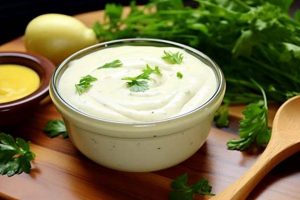
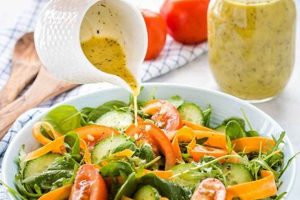
A creamy emulsion based on mayonnaise forms the foundation of a classic condiment for chilled pasta dishes. This versatile base readily accepts a wide variety of ingredients, from tangy vinegars and savory spices to fresh herbs and crunchy vegetables. For instance, a simple version might combine mayonnaise with lemon juice, Dijon mustard, and black pepper, while more complex variations can incorporate ingredients like chopped celery, red onion, or fresh dill.
Such dressings offer a convenient and flavorful way to elevate pasta salads beyond plain noodles. The emulsified nature of the dressing helps coat the pasta evenly, distributing flavor and preventing the salad from becoming dry. Historically, mayonnaise-based dressings gained popularity with the increased availability of commercially produced mayonnaise in the early 20th century, coinciding with the rise of convenience foods and the growing popularity of chilled salads as a refreshing meal option. These dressings continue to be a staple for picnics, potlucks, and quick weeknight meals due to their ease of preparation and ability to complement a diverse range of pasta shapes and additional ingredients.
This exploration will further delve into various elements involved in crafting exceptional pasta salad dressings, encompassing ingredient selection, techniques for achieving optimal emulsion stability, and creative flavor combinations. The following sections will address specific variations suitable for different pasta types and dietary preferences, providing a comprehensive guide for creating flavorful and satisfying pasta salads.
Tips for Crafting Exceptional Mayonnaise-Based Pasta Salad Dressings
Creating a flavorful and well-balanced pasta salad dressing involves careful consideration of ingredients and techniques. The following tips offer guidance for achieving optimal results.
Tip 1: Use High-Quality Mayonnaise. The foundation of the dressing dictates the final flavor profile. Opting for a mayonnaise made with quality oils and minimal additives ensures a richer, more satisfying result.
Tip 2: Balance Tanginess. Acidity is crucial for cutting through the richness of the mayonnaise. Lemon juice, vinegar (white wine, red wine, apple cider), or a combination thereof, provide brightness and complexity.
Tip 3: Incorporate Flavorful Additions. Dijon mustard, minced garlic, finely chopped shallots, or grated horseradish contribute depth and complexity. Experiment with different combinations to achieve desired flavor profiles.
Tip 4: Enhance with Fresh Herbs. Freshly chopped herbs like dill, parsley, chives, or basil elevate the dressing with vibrant flavors and aromas. Add herbs just before serving to maintain their freshness.
Tip 5: Consider Textural Elements. Finely diced celery, red onion, or bell peppers introduce a satisfying crunch. Toasted nuts or seeds can also add interesting textural contrasts.
Tip 6: Season Judiciously. Salt and freshly ground black pepper are essential for enhancing the overall flavor profile. Taste and adjust seasonings throughout the preparation process.
Tip 7: Emulsify Thoroughly. Whisk the ingredients vigorously to create a stable emulsion that evenly coats the pasta. Slow addition of acidic components while whisking promotes a smooth and creamy texture.
Tip 8: Chill Before Serving. Allowing the dressing to chill for at least 30 minutes allows the flavors to meld and enhances the overall experience.
By employing these tips, one can ensure a delicious and well-balanced dressing that complements the pasta and other salad components. Attention to detail in ingredient selection and preparation techniques contributes significantly to the final quality of the dish.
The following section will provide specific recipe examples, illustrating how these tips can be applied in practice to create a range of delectable pasta salad dressings.
1. Quality Mayonnaise

The quality of mayonnaise significantly impacts the overall flavor and texture of a pasta salad dressing. Mayonnaise serves as the foundation, binding other ingredients together and providing the characteristic creamy texture. A high-quality mayonnaise, typically made with egg yolks, oil, vinegar or lemon juice, and seasonings, offers a rich, smooth base that enhances the other flavors in the dressing. Conversely, a lower-quality mayonnaise, often containing added sugars, starches, or other fillers, can result in a bland, gummy, or overly sweet dressing that detracts from the overall culinary experience. For example, a mayonnaise made with extra virgin olive oil lends a subtle fruity and peppery note, while one made with a neutral oil like canola allows other flavors to shine through. The choice of vinegar also plays a role; a white wine vinegar adds a crisp sharpness, while a champagne vinegar contributes a delicate complexity.
The impact extends beyond flavor. High-quality mayonnaise typically exhibits better emulsification properties, creating a stable and cohesive dressing that clings evenly to the pasta. This prevents the dressing from separating or becoming watery, ensuring a more visually appealing and palatable salad. A stable emulsion also contributes to a more satisfying mouthfeel. Furthermore, using a quality mayonnaise allows for greater control over the final flavor profile. Without the interference of added sugars or artificial flavors, the cook can tailor the dressing to complement the other ingredients in the pasta salad, whether it’s fresh vegetables, herbs, proteins, or cheeses. This precision allows for greater culinary creativity and the ability to craft a truly exceptional dish.
In conclusion, selecting a high-quality mayonnaise represents a crucial step in creating a successful pasta salad dressing. Its influence on flavor, texture, and emulsion stability directly correlates with the final quality of the dish. Prioritizing ingredient quality ensures a more flavorful, visually appealing, and enjoyable culinary experience. While cost considerations might tempt one toward less expensive options, the difference in the final product often justifies the investment in a superior mayonnaise. This foundational ingredient sets the stage for a well-balanced and delicious pasta salad.
2. Balanced Acidity

Balanced acidity plays a crucial role in mayonnaise-based pasta salad dressings, contributing significantly to the overall flavor profile and textural stability. Acidity, derived from ingredients like vinegar or citrus juice, counteracts the richness of the mayonnaise, preventing the dressing from becoming cloying. This balance creates a more refreshing and palatable experience. Furthermore, the acidic component activates the emulsifying properties of the egg yolks in mayonnaise, promoting a stable emulsion that resists separation. Without sufficient acidity, the dressing may become thin and watery, failing to cling effectively to the pasta.
Consider, for instance, a dressing made solely with mayonnaise and herbs. While flavorful, the richness of the mayonnaise can quickly overwhelm the palate. Introducing a splash of lemon juice or vinegar brightens the flavors, making each bite more enjoyable. The acidity also enhances the perception of other ingredients, allowing subtle nuances of herbs and spices to shine through. In a practical scenario, a pasta salad served at a picnic on a warm day benefits from the stabilizing effect of acidity in the dressing. A dressing lacking sufficient acid is more likely to separate and become oily under warmer conditions.
In summary, achieving balanced acidity is essential for a successful mayonnaise-based pasta salad dressing. It enhances flavor complexity, improves textural stability, and ensures the dressing remains appealing even under less-than-ideal conditions. Understanding the role of acidity empowers one to create dressings that are not only delicious but also visually appealing and structurally sound, contributing to a more satisfying culinary experience overall.
3. Flavorful Additions
Flavorful additions represent a critical component of mayonnaise-based pasta salad dressings, elevating them from simple to complex and nuanced. These additions, ranging from pungent alliums to savory spices and aromatic herbs, contribute depth, dimension, and character. The careful selection and balance of these ingredients determine the overall flavor profile of the dressing and its compatibility with the other salad components. A fundamental understanding of how different flavors interact within the mayonnaise base allows for the creation of dressings tailored to specific preferences and culinary goals.
Consider the impact of Dijon mustard. Its sharp, tangy notes cut through the richness of the mayonnaise, adding a layer of complexity that enhances the overall flavor profile. Similarly, incorporating minced garlic or finely chopped shallots introduces a pungent savory element that complements the creamy base. The interplay of these flavors creates a balanced and harmonious dressing. Alternatively, the addition of a smoky paprika or a pinch of cayenne pepper can introduce warmth and depth. Even a small amount of a well-chosen spice can significantly impact the final taste. Fresh herbs, such as dill, parsley, chives, or basil, contribute brightness and freshness. Their aromatic qualities further elevate the sensory experience of the pasta salad. These examples illustrate the power of flavorful additions to transform a basic mayonnaise-based dressing into a culinary masterpiece.
Effective use of flavorful additions requires careful consideration of balance and proportion. Overpowering the delicate flavor of fresh herbs with an excessive amount of garlic, for example, can create a disharmony of flavors. The goal is to create a synergistic blend where each ingredient contributes to the overall profile without dominating the others. Achieving this balance ensures a well-rounded and enjoyable culinary experience. Furthermore, the choice of flavorful additions should complement the other ingredients in the pasta salad. A dressing featuring Mediterranean herbs like oregano and thyme pairs well with feta cheese, olives, and sun-dried tomatoes, while a dressing with dill and lemon juice complements smoked salmon and cucumbers. Understanding these flavor pairings allows for the creation of cohesive and well-balanced pasta salads. Ultimately, the thoughtful incorporation of flavorful additions elevates the mayonnaise-based pasta salad dressing from a simple condiment to a key element of a well-crafted dish.
4. Fresh Herbs

Fresh herbs play a vital role in elevating mayonnaise-based pasta salad dressings, contributing brightness, complexity, and aromatic appeal. Their inclusion transforms a basic dressing into a vibrant culinary experience. The volatile oils present in fresh herbs impart distinct flavors and aromas that complement the creamy richness of mayonnaise. These oils, released upon chopping or tearing, infuse the dressing with a freshness that dried herbs cannot replicate. Consider the impact of fresh dill in a pasta salad featuring salmon and cucumbers. The dill’s bright, slightly tangy notes complement the richness of the salmon and the refreshing coolness of the cucumbers, creating a harmonious flavor profile.
Selecting appropriate herbs is crucial for achieving a balanced and flavorful dressing. Chives offer a delicate onion flavor that pairs well with vegetables like peas and carrots. Parsley contributes a clean, slightly peppery taste, enhancing the flavors of ingredients like tomatoes and bell peppers. Basil, with its sweet, anise-like notes, complements Mediterranean-inspired salads containing ingredients such as olives and feta cheese. The choice of herbs should consider the overall flavor profile of the salad, ensuring complementary rather than competing tastes. For instance, a pasta salad with a Southwestern theme benefits from the addition of cilantro, while a classic Italian pasta salad may incorporate oregano or marjoram.
Incorporating fresh herbs effectively requires attention to technique. Adding herbs too early in the preparation process can result in flavor degradation and discoloration due to oxidation. Ideally, fresh herbs should be added just before serving to maintain their vibrancy and maximize their aromatic impact. Gentle tearing or chopping releases the essential oils without bruising the delicate leaves. Over-processing can result in a loss of flavor and a less appealing visual presentation. Understanding the characteristics and optimal usage of fresh herbs allows one to harness their full potential, transforming a simple mayonnaise-based pasta salad dressing into a truly exceptional culinary creation.
5. Textural Contrast
Textural contrast contributes significantly to the overall enjoyment of a mayonnaise-based pasta salad. A successful pasta salad engages multiple senses, not just taste. While flavor provides the foundation, textural variation elevates the eating experience, preventing monotony and adding interest. The creamy, smooth base provided by the mayonnaise benefits from the incorporation of contrasting textures. These contrasting elements create a dynamic interplay within each bite, enhancing the perceived complexity and satisfaction. Consider the addition of finely diced celery or red onion to an otherwise uniformly textured pasta salad. The crisp, snappy vegetables provide a refreshing counterpoint to the soft pasta and creamy dressing. Alternatively, incorporating toasted nuts or seeds, such as slivered almonds or sunflower seeds, introduces a satisfying crunch and nuttiness. Even the pasta itself can contribute to textural variation. Rotini, with its spirals, or farfalle, with its bow-tie shape, offer more surface area for the dressing to cling to, creating textural pockets within the salad.
The practical significance of understanding textural contrast lies in the ability to create a more engaging and satisfying culinary experience. A well-balanced pasta salad offers a variety of textures, preventing the palate from becoming fatigued. This principle applies not only to mayonnaise-based pasta salads but also to a broader range of culinary creations. Consider a creamy soup without croutons or a smooth hummus without a sprinkle of paprika. The absence of textural contrast diminishes the overall enjoyment. Understanding this principle allows one to create dishes that are not merely palatable but truly delightful. This translates to more engaging meals, whether for a casual weeknight dinner or a celebratory gathering. The strategic incorporation of textural elements elevates a simple dish into a more memorable and satisfying culinary creation.
In conclusion, textural contrast plays a crucial, often overlooked role in the success of a mayonnaise-based pasta salad. It elevates the eating experience by engaging multiple senses and preventing monotony. The strategic incorporation of contrasting textures, whether through crisp vegetables, crunchy nuts, or varied pasta shapes, contributes significantly to the overall enjoyment and satisfaction. Applying this understanding to culinary endeavors ensures a more dynamic and engaging interaction with food.
6. Proper Seasoning
Proper seasoning forms the cornerstone of a successful mayonnaise-based pasta salad dressing. It elevates the inherent flavors of the ingredients, creating a harmonious and balanced profile. Salt, the primary seasoning agent, enhances the perception of sweetness and mitigates bitterness, allowing the nuanced flavors of the other components, such as herbs, spices, and vegetables, to shine through. Inadequate seasoning results in a bland, uninspired dressing, while excessive seasoning can overpower the delicate flavors and create an unpleasant experience. The interplay between salt and the other ingredients is crucial. For instance, the acidity of vinegar or lemon juice requires a careful adjustment of salt to achieve a balanced taste. The inherent saltiness of certain ingredients, such as olives or capers, also factors into the overall seasoning strategy. A practical example demonstrates this principle: imagine a pasta salad with fresh dill, lemon juice, and chopped cucumbers. Without sufficient salt, the brightness of the dill and lemon might taste sharp and acidic. Proper seasoning mellows the acidity, allowing the herbal notes of the dill and the refreshing cucumber flavor to emerge fully.
Beyond salt, black pepper contributes complexity and depth. Freshly ground black pepper offers a more robust aroma and flavor compared to pre-ground pepper, enhancing the overall sensory experience. The type of pepper also influences the flavor profile. Black pepper provides a classic, pungent heat, while white pepper offers a milder, earthier flavor. Other seasonings, such as garlic powder, onion powder, or paprika, can further enhance the complexity of the dressing, but these should be used judiciously to avoid overpowering the primary flavors. The practical application of this knowledge lies in the ability to tailor the seasoning to the specific ingredients in the pasta salad. A pasta salad featuring grilled vegetables might benefit from a touch of smoked paprika, while a salad with seafood might be enhanced by a hint of lemon zest. The key is to consider the overall flavor profile and adjust the seasonings accordingly.
In summary, proper seasoning is paramount in achieving a well-balanced and flavorful mayonnaise-based pasta salad dressing. Salt enhances other flavors, while pepper adds depth and complexity. Careful consideration of the interplay between seasonings and other ingredients ensures a harmonious and satisfying culinary outcome. Mastering the art of seasoning elevates a simple pasta salad from ordinary to extraordinary. Challenges arise when balancing the acidity of vinegar or lemon juice with the salt level, as well as accounting for the inherent saltiness of some ingredients. However, through careful tasting and adjustment, a perfectly seasoned dressing enhances the overall dining experience, showcasing the nuanced flavors of each component within the pasta salad.
Frequently Asked Questions
This section addresses common inquiries regarding the preparation and utilization of mayonnaise-based pasta salad dressings.
Question 1: How long can a mayonnaise-based pasta salad dressing be stored?
Properly stored in an airtight container in the refrigerator, a mayonnaise-based dressing typically remains safe to consume for up to three to five days. Discarding the dressing after this period minimizes the risk of bacterial growth.
Question 2: Can alternative oils be used in place of traditional mayonnaise?
While mayonnaise serves as the classic base, alternative oils, such as plain Greek yogurt or avocado oil-based mayonnaise, offer healthier options without significantly compromising the creamy texture. Flavor profiles will vary depending on the substitute employed.
Question 3: How can one prevent a mayonnaise-based dressing from becoming too thick?
If a dressing becomes excessively thick, small amounts of milk or water can be gradually whisked in until the desired consistency is achieved. Over-thinning can be rectified by adding a small amount of additional mayonnaise.
Question 4: What measures can be taken to prevent a pasta salad from becoming dry when using a mayonnaise-based dressing?
Ensuring the pasta is properly coated and adding a small amount of reserved pasta water to the salad can help maintain moisture and prevent dryness. The starchy water helps bind the dressing to the pasta and adds extra moisture.
Question 5: Can mayonnaise-based dressings be used for other types of salads besides pasta salad?
The versatility of mayonnaise-based dressings extends beyond pasta salads. They function well as dressings for potato salad, coleslaw, or as a sandwich spread. Adapting flavor profiles through the addition of specific herbs and spices enhances their suitability for diverse applications.
Question 6: What are some common allergens to consider when preparing a mayonnaise-based dressing?
Mayonnaise typically contains eggs and often incorporates mustard, both common allergens. Informing guests of these ingredients allows them to make informed dietary choices. Substitutions, like egg-free mayonnaise, exist for those with specific dietary restrictions.
Addressing these common questions provides clarity and guidance for achieving optimal results when utilizing mayonnaise-based pasta salad dressings. Awareness of storage guidelines, alternative ingredients, and potential allergens ensures both safety and culinary satisfaction.
The following section will explore various recipe variations, allowing for further customization and exploration of flavor profiles.
Conclusion
Exploration of mayonnaise-based pasta salad dressing formulation reveals the critical interplay of ingredient quality, balanced acidity, flavorful additions, fresh herbs, textural contrast, and proper seasoning. Each element contributes significantly to the overall sensory experience, transforming a simple combination of ingredients into a cohesive and satisfying culinary creation. Understanding the function and impact of each component empowers informed decision-making, enabling customization and adaptation to individual preferences and dietary needs.
Culinary exploration extends beyond established recipes. The foundational principles discussed within this analysis encourage experimentation and creativity, fostering a deeper appreciation for the nuances of flavor and texture. Continual refinement of technique and exploration of novel ingredient combinations promise further evolution and enhancement of mayonnaise-based pasta salad dressings, ensuring their enduring presence within the culinary landscape.