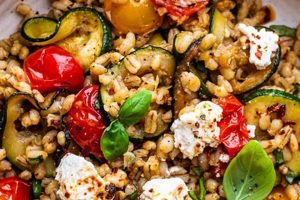
A dish featuring small, rice-shaped pasta combined with the flavors of the Mediterranean region typically includes ingredients such as olives, feta cheese, tomatoes, cucumbers, red onion, and a lemon-herb vinaigrette. Variations might incorporate other vegetables, chickpeas, or grilled chicken or fish.
This type of pasta salad offers a refreshing and healthy meal option. Its vibrant flavors and varied textures make it an appealing choice for warm weather, picnics, or potlucks. The inclusion of fresh vegetables and lean protein sources can contribute to a balanced diet. Furthermore, its adaptability allows for customization based on dietary preferences and seasonal ingredient availability.
This article will explore various aspects of creating this culinary delight, from selecting the finest ingredients to mastering the perfect vinaigrette. It will also delve into variations and offer suggestions for presentation and serving.
Tips for a Perfect Mediterranean Orzo Salad
Creating a truly exceptional dish requires attention to detail. These tips provide guidance for achieving optimal flavor and texture.
Tip 1: Cook Orzo Properly: Orzo should be cooked al dente for the best texture in a salad. Follow package directions, but typically, this involves boiling in salted water until tender but still firm to the bite. Drain well and rinse with cold water to stop the cooking process and prevent sticking.
Tip 2: High-Quality Ingredients: Fresh, ripe vegetables are crucial. Seek out vibrant, flavorful tomatoes, cucumbers, and herbs. Using high-quality olive oil and feta cheese significantly impacts the overall taste.
Tip 3: Balance Flavors: The Mediterranean profile relies on a balance of salty, tangy, and savory elements. Adjust the vinaigrette to achieve the perfect harmony, adding more lemon juice for brightness or herbs for earthiness.
Tip 4: Marinate for Flavor: Allowing the salad to marinate for at least 30 minutes, or even longer, allows the flavors to meld and the orzo to absorb the vinaigrette, resulting in a more cohesive and flavorful dish.
Tip 5: Don’t Overcrowd: Avoid overcrowding the salad bowl, which can make it difficult to toss and serve. Use a large enough bowl to ensure the ingredients are evenly distributed and coated with the dressing.
Tip 6: Add Protein (Optional): Grilled chicken, fish, or chickpeas can elevate this salad to a complete meal. Ensure any added proteins are cooked thoroughly and cooled before adding to the salad.
Tip 7: Serve Chilled: This salad is best served chilled, allowing the flavors to intensify. Refrigerate for at least one hour before serving.
By following these tips, one can ensure a successful and delicious outcome. Attention to these details will elevate the final product, creating a memorable dining experience.
This exploration of tips concludes the core elements of preparing a Mediterranean orzo salad. The following section will offer concluding thoughts and variations for continued culinary exploration.
1. Fresh Ingredients

The emphasis on fresh ingredients is paramount in a Mediterranean orzo salad recipe. This culinary approach prioritizes the natural flavors of ripe produce, contributing significantly to the overall taste and nutritional value. The inherent brightness and vibrancy of fresh vegetables like tomatoes, cucumbers, and bell peppers are essential for capturing the essence of Mediterranean cuisine. Using ingredients at their peak ripeness intensifies their flavor profiles, resulting in a more complex and satisfying salad. For example, a freshly picked, sun-ripened tomato offers a sweetness and juiciness that a store-bought, out-of-season tomato cannot replicate. Similarly, using fresh herbs like mint, dill, and oregano provides a more pronounced aromatic experience compared to dried alternatives.
The impact of ingredient freshness extends beyond flavor. Fresh vegetables retain more nutrients, contributing to the health benefits associated with the Mediterranean diet. Vitamins and antioxidants are often more potent in produce consumed soon after harvest. Furthermore, the use of fresh ingredients promotes a connection to the seasonality of food, encouraging culinary creativity based on what is readily available. This aligns with the traditional Mediterranean approach to cooking, where meals are often centered around the freshest produce of the season. This reliance on fresh ingredients ultimately delivers a more vibrant, flavorful, and nutritious dish.
In conclusion, prioritizing fresh ingredients significantly elevates the Mediterranean orzo salad. It ensures a brighter, more complex flavor profile while maximizing nutritional value. This approach also fosters a deeper appreciation for seasonal eating and connects the dish to its culinary roots. The potential compromises in flavor and nutritional content associated with using less-than-fresh ingredients underscore the importance of prioritizing quality produce in this recipe.
2. Authentic Orzo

Authentic orzo pasta plays a crucial role in a successful Mediterranean orzo salad. The specific characteristics of this pasta shape contribute significantly to the dish’s overall texture and ability to absorb flavors. Understanding these qualities allows for a more informed selection process and ultimately, a more satisfying culinary outcome.
- Shape and Size
Orzo’s small, rice-shaped structure distinguishes it from other pasta varieties. This unique form provides a pleasant textural contrast against the other ingredients in the salad. Its small size also allows it to readily absorb the flavors of the vinaigrette, becoming infused with the herbs, spices, and acidity of the dressing. This absorption capacity is crucial for creating a harmonious and well-balanced flavor profile throughout the dish. Larger pasta shapes would not achieve the same level of flavor saturation.
- Texture and Cooking Properties
Orzo’s composition, typically made from semolina flour, yields a firm yet tender texture when cooked al dente. This firmness prevents the pasta from becoming mushy in the salad, maintaining a pleasant chewiness even when combined with the other ingredients and dressing. Overcooked orzo can result in a sticky, less appealing texture that detracts from the overall experience. Achieving the perfect al dente consistency is therefore critical for a successful Mediterranean orzo salad.
- Flavor Absorption
As previously mentioned, orzo’s ability to absorb flavors is a key attribute. The porous nature of the pasta allows it to soak up the vinaigrette, ensuring that every bite is infused with the desired Mediterranean flavors. This absorption also prevents the dressing from pooling at the bottom of the salad, creating a more evenly distributed and balanced flavor profile. This characteristic contributes significantly to the overall enjoyment of the dish.
- Visual Appeal
Orzo’s small, consistent shape contributes to the visual appeal of the salad. Its uniform size creates a pleasing aesthetic and allows for even distribution among the other ingredients. This visual consistency adds to the presentation and perceived quality of the dish, making it more enticing to the palate.
In summary, the choice of authentic orzo pasta is not merely a matter of tradition, but a deliberate decision that influences the texture, flavor absorption, and overall success of the Mediterranean orzo salad. Substituting other pasta shapes might compromise these crucial elements, impacting the final result. Understanding the specific qualities of authentic orzo allows for a more informed approach to ingredient selection and contributes to a more satisfying culinary experience.
3. Balanced Vinaigrette
A balanced vinaigrette is essential to a successful Mediterranean orzo salad recipe. The vinaigrette serves not only as a dressing but as a unifying element, binding the ingredients together and imparting a harmonious flavor profile that characterizes the dish. The balance within the vinaigrette itself, as well as its balance in relation to the other ingredients, is crucial for achieving the desired outcome.
- Acidity
Acidity, typically from lemon juice or red wine vinegar, provides brightness and cuts through the richness of the other ingredients. The right level of acidity balances the saltiness of the feta, the sweetness of the vegetables, and the fattiness of the olive oil. Too much acidity can make the salad overly tart, while too little can leave it bland. The tangy notes of a properly balanced vinaigrette enhance the overall flavor profile and stimulate the palate.
- Oil
High-quality extra virgin olive oil is the foundation of the vinaigrette. It contributes richness, mouthfeel, and a subtle peppery flavor. The olive oil emulsifies with the acidic component, creating a creamy texture that coats the orzo and vegetables. The choice of olive oil can significantly impact the flavor profile, so selecting a good quality oil is crucial. The balance between oil and acid determines the overall richness and lightness of the vinaigrette.
- Herbs and Spices
Fresh herbs, such as oregano, mint, and dill, contribute an aromatic complexity and freshness to the vinaigrette. Dried herbs can also be used, though fresh herbs offer a more vibrant flavor. A touch of garlic or red pepper flakes can add depth and a subtle heat. The balance of these aromatic elements enhances the Mediterranean character of the salad and complements the other ingredients.
- Sweetness (Optional)
A touch of sweetness can further enhance the complexity of the vinaigrette. A small amount of honey or maple syrup can balance the acidity and add a subtle layer of flavor. This element should be used sparingly to avoid overpowering the other components. When used judiciously, sweetness adds a nuanced dimension to the vinaigrette and complements the savory elements of the salad.
The interplay of these elements within the vinaigrette determines the overall success of the Mediterranean orzo salad. A well-balanced vinaigrette enhances the individual flavors of the ingredients while creating a cohesive and harmonious dish. The careful consideration of acidity, oil, herbs, and optional sweetness allows for a nuanced and flavorful culinary experience. The vinaigrette acts as the conductor, orchestrating the flavors of the salad and creating a symphony of tastes that embody the essence of Mediterranean cuisine.
4. Proper Cooking Technique
Proper cooking technique is paramount in a Mediterranean orzo salad recipe, significantly impacting the final dish’s texture and overall enjoyment. The most crucial aspect is cooking the orzo pasta correctly. Overcooked orzo becomes mushy and sticky, detracting from the salad’s fresh, vibrant nature. Undercooked orzo, conversely, presents a hard, unpleasant texture. The ideal consistency is al dente firm to the bite yet tender. This texture provides a pleasant contrast to the other ingredients and ensures the orzo absorbs the vinaigrette effectively.
Achieving al dente orzo requires attention to detail. Following package directions for cooking time is a starting point, but often requires adjustment based on stovetop variations and desired firmness. Salting the cooking water generously seasons the orzo itself and enhances its flavor. Tasting the orzo during cooking allows for precise determination of doneness. Once cooked, draining the orzo immediately and rinsing it under cold water halts the cooking process, preventing further softening and stickiness. This step is crucial for maintaining the desired texture in the finished salad.
Beyond orzo preparation, proper cooking technique extends to any optional protein additions, such as grilled chicken or fish. These components should be cooked thoroughly, ensuring food safety, but also with attention to maintaining moisture and flavor. Overcooked protein can become dry and tough, negatively impacting the salad’s overall quality. Careful temperature control and appropriate cooking times are essential for achieving optimal results. Integrating properly cooked proteins enhances the nutritional value and provides a more satisfying culinary experience.
5. Flavorful Additions
Flavorful additions are integral to a successful Mediterranean orzo salad recipe, elevating it from a simple pasta dish to a vibrant and complex culinary experience. These additions contribute not only to the overall taste but also to the texture, aroma, and visual appeal. They provide a crucial layer of complexity, transforming the basic components into a harmonious and satisfying whole. The careful selection and incorporation of these elements distinguish a truly exceptional Mediterranean orzo salad.
Several categories of flavorful additions enhance the Mediterranean orzo salad:
- Cheese: Feta cheese, a staple of Mediterranean cuisine, provides a salty, tangy counterpoint to the other ingredients. Its crumbly texture adds a pleasant contrast to the orzo and vegetables. Other cheeses, such as crumbled goat cheese or ricotta salata, can also be incorporated for variations in flavor and texture.
- Olives: Kalamata olives, with their rich, briny flavor, are a classic addition. Their distinctive taste and smooth texture complement the other components. Other olive varieties, such as Castelvetrano or Cerignola, offer nuanced flavor profiles and textural variations.
- Vegetables: Beyond the core vegetables like tomatoes and cucumbers, other additions can further enhance the salad. Roasted red peppers, artichoke hearts, or sun-dried tomatoes introduce deeper, more concentrated flavors. These additions contribute layers of complexity and visual interest.
- Protein: Grilled chicken, fish, or chickpeas elevate the salad to a complete meal, adding substantial protein and textural variety. These options also contribute to the overall nutritional balance of the dish.
- Herbs: Fresh herbs, such as parsley, mint, dill, or oregano, provide brightness and aromatic complexity. Their inclusion enhances the overall freshness and contributes a vibrant visual element.
The selection and combination of these additions allow for customization and creativity, catering to individual preferences and dietary needs.
The strategic incorporation of flavorful additions distinguishes a well-composed Mediterranean orzo salad. These components contribute essential layers of flavor, texture, and aroma, transforming the dish from simple to exceptional. The careful consideration of these elements allows for a personalized culinary experience, reflecting individual tastes and preferences. The absence of these additions would result in a less complex and potentially less satisfying culinary outcome. The skillful integration of these elements is therefore crucial for maximizing the potential of the Mediterranean orzo salad recipe.
Frequently Asked Questions
This section addresses common inquiries regarding the preparation and enjoyment of Mediterranean orzo salad.
Question 1: Can other pasta shapes be substituted for orzo?
While other small pasta shapes like ditalini or stelline can be used, orzo’s unique size and shape contribute significantly to its ability to absorb the vinaigrette and provide the desired texture. Substitutions may alter the final result.
Question 2: How long can Mediterranean orzo salad be stored?
Properly stored in an airtight container in the refrigerator, the salad can last for up to three days. However, optimal flavor and texture are best within the first 24 hours.
Question 3: Can the salad be made ahead of time for events?
Yes, the salad can be prepared a day in advance. It is recommended to add the dressing just before serving to prevent the orzo from becoming overly saturated and mushy.
Question 4: What are suitable protein additions beyond chicken and fish?
Chickpeas, cannellini beans, or even lentils can provide plant-based protein options. Tofu, after being pressed and marinated, can also offer a flavorful addition.
Question 5: How can the vinaigrette be adjusted for different flavor preferences?
More lemon juice increases tartness, while additional olive oil enhances richness. Herbs, spices, and a touch of sweetness can be adjusted to create diverse flavor profiles.
Question 6: Is it necessary to rinse the orzo after cooking?
Rinsing the orzo with cold water stops the cooking process and removes excess starch, preventing a sticky texture. This step is crucial for a light and refreshing salad.
Careful consideration of these frequently asked questions ensures the successful preparation and enjoyment of a flavorful and authentic Mediterranean orzo salad.
This FAQ section concludes the discussion of common questions. Further sections will delve into specific recipe variations and offer additional tips for presentation and serving.
Mediterranean Orzo Salad Recipe
This exploration of the Mediterranean orzo salad recipe has highlighted the essential elements that contribute to its success. From the selection of fresh, high-quality ingredients to the proper cooking techniques and the nuanced balance of the vinaigrette, each component plays a crucial role in the final outcome. The importance of authentic orzo pasta, with its unique ability to absorb flavors and maintain a desirable texture, has been emphasized. Furthermore, the strategic incorporation of flavorful additions like feta cheese, olives, and fresh herbs elevates the dish to a more complex and satisfying culinary experience. The proper cooking of the orzo, achieving the perfect al dente consistency, ensures a texturally pleasing result. Careful attention to these details distinguishes a truly exceptional Mediterranean orzo salad.
The Mediterranean orzo salad offers a versatile and refreshing culinary canvas. Its adaptability allows for creative variations based on seasonal ingredients and individual preferences. This dish represents a vibrant expression of Mediterranean flavors, showcasing the region’s culinary heritage. Further exploration and experimentation with different ingredient combinations and vinaigrette variations are encouraged. Mastery of this recipe allows for the creation of a consistently delicious and satisfying dish suitable for a variety of occasions.