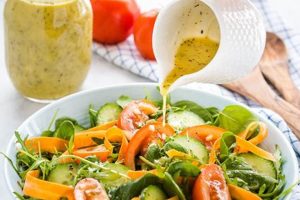
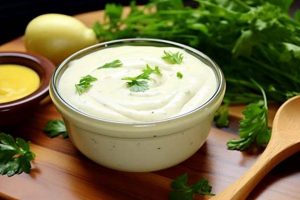
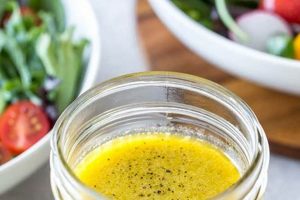
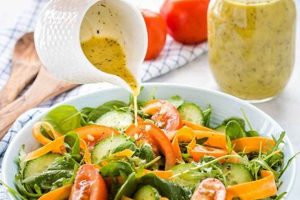
A guide for preparing a flavorful vinaigrette typically involves oil, an acidic element like rice vinegar, and seasonings often associated with East Asian cuisine. Common components include soy sauce, ginger, garlic, sesame oil, and sweeteners like honey or sugar. Variations can incorporate ingredients such as chili flakes, mandarin oranges, or toasted sesame seeds. A specific example could combine rice vinegar, soy sauce, grated ginger, minced garlic, sesame oil, and a touch of honey, whisked together until emulsified.
Such dressings offer a versatile and flavorful way to enhance salads and other dishes. The blend of sweet, savory, tangy, and sometimes spicy notes complements various greens, vegetables, proteins, and noodles. Historically, the term “oriental” has carried problematic connotations, reflecting a Westernized and often inaccurate generalization of diverse cultures. More accurate and respectful terminology, such as “East Asian” or referencing specific regional cuisines like “Japanese-inspired” or “Korean-style,” is preferred. This shift in language acknowledges the richness and nuance of individual culinary traditions.
This exploration will delve into specific ingredient combinations, preparation techniques, and suitable food pairings for these flavorful dressings, while emphasizing culturally sensitive language and promoting a deeper understanding of the culinary heritage they represent.
Tips for Crafting Flavorful East Asian-Inspired Salad Dressings
Creating a balanced and delicious dressing involves careful consideration of ingredients and techniques. These tips offer guidance for achieving optimal results.
Tip 1: Balance Sweet, Sour, and Savory: A harmonious blend of these core flavor profiles is essential. Achieve this by adjusting the proportions of ingredients like vinegar, soy sauce, and sweeteners. Taste and adjust as needed.
Tip 2: Freshly Prepared Ingredients: Freshly grated ginger and minced garlic offer a brighter, more intense flavor compared to pre-minced versions. Whenever possible, opt for fresh ingredients.
Tip 3: Quality Oils: The base oil significantly impacts the dressing’s flavor. Neutral oils like grapeseed or avocado oil allow other flavors to shine. Consider using a small amount of toasted sesame oil for added richness and aroma, but use it sparingly due to its strong flavor.
Tip 4: Emulsification for Texture: Whisking the ingredients vigorously creates an emulsion, preventing separation and providing a smooth, creamy texture. Alternatively, a blender can be used for a more thorough emulsification.
Tip 5: Customized Heat Levels: Adjust the spiciness by adding chili flakes or a dash of chili oil. Start with a small amount and gradually increase to reach the desired heat level.
Tip 6: Consider Citrus: A splash of citrus juice, like lime or mandarin orange juice, can add brightness and complexity.
Tip 7: Toast Sesame Seeds: Toasting sesame seeds enhances their nutty flavor and aroma. Add them to the dressing or sprinkle them over the salad for added texture and visual appeal.
By following these tips, one can consistently create flavorful and well-balanced dressings that complement a wide variety of salads and dishes. Experimentation with different ingredients and flavor combinations is encouraged.
These techniques and considerations offer a foundation for creating dressings that enhance culinary experiences, highlighting the versatility and richness of East Asian-inspired flavors.
1. Ingredients

The quality and combination of ingredients directly impact the flavor profile of any East Asian-inspired salad dressing. Understanding the role of each component allows for informed choices that create balanced and nuanced flavors, moving beyond the outdated “oriental” descriptor to appreciate the specific culinary traditions being referenced.
- Acidity
Rice vinegar is a common choice, providing a mild, slightly sweet acidity. Other options include mirin (a sweet rice wine), lime juice, or even black vinegar for a more assertive flavor. The level of acidity balances the richness of the oil and other components.
- Salt and Umami
Soy sauce is the foundation for saltiness and umami, the savory fifth taste. Variations include tamari (gluten-free) or fish sauce, each contributing a unique nuance. The amount used should be carefully considered in relation to other salty ingredients.
- Sweetness
Sweeteners balance the sour and salty elements. Common choices include sugar, honey, or mirin. The level of sweetness can be adjusted to preference, ranging from subtle to more pronounced.
- Aromatics and Flavor Enhancers
Ginger, garlic, chili flakes, and toasted sesame seeds contribute aromatic complexity and depth of flavor. Freshly grated or minced ginger and garlic are preferred for their vibrancy. Sesame oil, with its distinctive nutty aroma, should be used sparingly due to its potency. These ingredients add layers of flavor beyond the basic sweet, sour, and salty foundation.
The interplay of these ingredient categories determines the final character of the dressing. Careful selection and proportioning create a balanced, flavorful result that complements a variety of dishes while reflecting the nuances of specific East Asian culinary traditions. Further exploration of regional variations can reveal a wider range of potential ingredient combinations and flavor profiles.
2. Balance (Sweet, Sour, Savory)

Balance among sweet, sour, and savory elements forms the foundation of a successful East Asian-inspired salad dressing. Achieving harmony among these flavors elevates the dressing beyond a simple condiment to a complex and nuanced component of the culinary experience. The careful interplay of these tastes distinguishes a well-crafted dressing, offering a more sophisticated and enjoyable result.
- Sweetness
Sweetness, often derived from ingredients like sugar, honey, mirin, or fruit juices, tempers the acidity and complements the savory notes. It provides a roundedness to the flavor profile, preventing the dressing from becoming overly sharp or pungent. For example, the subtle sweetness of mirin in a Japanese-style dressing balances the saltiness of soy sauce and the tang of rice vinegar.
- Sourness
Sourness, typically originating from rice vinegar, lime juice, or other acidic components, provides brightness and lift. It cuts through the richness of the oil and other ingredients, creating a refreshing counterpoint to the other flavors. The right level of acidity enhances the overall taste experience, preventing the dressing from feeling heavy or cloying. A Korean-style dressing might utilize rice vinegar for a milder tang, while a Southeast Asian-inspired version might incorporate lime juice for a more pronounced citrusy note.
- Savory (Umami)
Savory notes, often achieved through soy sauce, fish sauce, or other umami-rich ingredients, add depth and complexity. Umami provides a satisfying, mouth-filling sensation that enhances the overall flavor profile. The interplay of umami with sweet and sour notes creates a layered and balanced taste experience. A Vietnamese-style dressing might employ fish sauce for a distinct umami character.
- The Interplay
The dynamic interplay among these three elements is critical. No single flavor should dominate; rather, they should complement and enhance each other. Adjusting the proportions of each component allows for customization and fine-tuning of the flavor profile to achieve the desired balance. The delicate balance of these elements distinguishes a well-crafted East Asian-inspired dressing, creating a more refined and enjoyable culinary experience that respects the complexity of the underlying cultural influences.
Mastery of this balance allows for the creation of dressings that not only complement salads but also enhance a wide range of dishes, from marinades to dipping sauces. It transforms the simple act of dressing a salad into an opportunity to explore the nuances and complexities of East Asian-inspired flavors.
3. Cultural Sensitivity
Cultural sensitivity plays a crucial role when discussing or creating recipes labeled “oriental salad dressing.” The term “oriental” itself carries a complex and often problematic history, rooted in Western colonialism and carrying connotations of exoticism and otherness. It homogenizes a vast and diverse array of Asian cultures, reducing them to a single, inaccurate stereotype. This lack of specificity disrespects the unique culinary traditions and nuances of individual countries and regions, from Japan to Korea to Vietnam. Using “oriental” as a catch-all term ignores the significant differences in ingredients, techniques, and flavor profiles that define each cuisine.
Recipes using this outdated terminology often perpetuate stereotypical flavor profiles, relying on generic “Asian-inspired” ingredients without acknowledging the specific origins or cultural significance of those ingredients. For example, a recipe might call for a generic blend of soy sauce, ginger, and sesame oil without specifying whether it draws inspiration from Japanese, Chinese, Korean, or other distinct culinary traditions. This not only misrepresents the diversity of Asian cuisines but also contributes to the erasure of specific cultural identities. A more culturally sensitive approach would be to identify the specific regional cuisine that inspires the dish, such as “Korean-style sesame dressing” or “Vietnamese-inspired dipping sauce,” and use ingredients and techniques authentic to that region. This specificity demonstrates respect for individual culinary traditions and promotes a deeper understanding of their unique characteristics.
Moving away from the term “oriental” and embracing more precise language is essential for fostering cultural understanding and appreciation. Recipes should accurately reflect the specific regional cuisine being referenced, using appropriate terminology and ingredients. This shift requires a conscious effort to learn about and respect the diverse culinary heritages of East and Southeast Asia, moving beyond generalizations and stereotypes to appreciate the richness and complexity of each distinct tradition. This contributes to a more inclusive and informed culinary landscape.
4. Preparation Technique

Preparation technique significantly influences the final quality and character of East Asian-inspired salad dressings, impacting both flavor and texture. While ingredient selection establishes the foundation, proper technique elevates the outcome, moving beyond a simple mixture to a carefully crafted culinary creation. Emulsification, a crucial process in many of these dressings, directly affects the texture and stability. Vigorous whisking or blending combines the oil and aqueous ingredients, creating a smooth, cohesive emulsion that prevents separation and clings evenly to salad components. The order of ingredient addition can also impact the final emulsion’s stability.
Consider a Japanese-style sesame dressing. Toasting the sesame seeds before grinding enhances their nutty flavor. The toasted seeds are then ground and combined with rice vinegar, soy sauce, and a touch of sugar. Gradual addition of oil while whisking creates a stable emulsion, resulting in a creamy, flavorful dressing that clings beautifully to greens. Improper emulsification can lead to a separated, oily dressing with uneven flavor distribution. Similarly, in a Vietnamese-style dipping sauce (nc chm), the balance of sweet, sour, salty, and spicy is achieved through precise measurements and thorough mixing. Fresh chilies and garlic are finely minced to release their flavors, while lime juice, fish sauce, sugar, and water are combined to create a harmonious blend. The resulting sauce balances all flavor components, demonstrating the importance of proper technique in achieving the desired taste profile.
Understanding these techniques unlocks the full potential of East Asian-inspired dressings, transforming simple ingredients into complex flavor profiles. Mastery of emulsification, ingredient order, and proper mixing ensures a balanced, flavorful, and texturally appealing dressing that enhances any culinary experience. These techniques go beyond mere steps in a recipe; they become essential tools for creating a truly exceptional and culturally nuanced dish. This knowledge also empowers culinary exploration and adaptation, allowing for confident experimentation with various regional flavor profiles and ingredient combinations.
5. Adaptability

Adaptability represents a significant advantage when considering recipes historically categorized as “oriental salad dressing.” Moving beyond this outdated terminology, the core principle lies in the versatility of East Asian-inspired flavor profiles. These dressings can be adapted to complement a wide range of culinary applications, extending far beyond the traditional salad. Their inherent balance of sweet, sour, savory, and sometimes spicy elements allows for seamless integration into various dishes, enhancing both flavor and complexity. This adaptability stems from the foundational ingredients commonly used: soy sauce, vinegar, ginger, garlic, and sesame oil. These components offer a flexible base that can be easily adjusted and expanded upon to create a diverse array of flavor profiles. For instance, a basic ginger-soy dressing can be transformed into a marinade for grilled chicken or fish, adding depth and umami to the protein. The same dressing, with the addition of chili garlic sauce, becomes a vibrant dipping sauce for spring rolls or dumplings. Similarly, a sesame-based dressing can be thinned with water and used as a noodle sauce, or thickened with tahini for a richer, creamier texture suitable for roasted vegetables.
This inherent adaptability also allows for customization based on dietary needs and preferences. Substituting ingredients like tamari for soy sauce caters to gluten-free diets, while agave or maple syrup can replace honey for vegan alternatives. Adjusting the proportions of core ingredients like vinegar and sugar further personalizes the flavor profile, creating a dressing tailored to individual tastes. This flexibility encourages culinary creativity and experimentation, allowing individuals to explore a range of flavor combinations and applications while respecting the underlying cultural influences. Adapting these dressings to different dishes not only expands their utility but also offers a deeper appreciation for the versatility of East Asian-inspired flavors. For example, a vibrant Vietnamese-style dressing, typically used for salads or spring rolls, can be adapted into a marinade for tofu, infusing it with complex sweet, sour, and spicy notes. This approach transforms a simple ingredient into a flavorful centerpiece, showcasing the adaptability and depth of these culinary traditions.
Understanding the adaptable nature of these dressings unlocks a world of culinary possibilities, transforming them from simple condiments into versatile flavor enhancers. This adaptability encourages experimentation, personalization, and a deeper understanding of the diverse flavors within East Asian culinary traditions. By moving beyond the limitations of outdated terminology and embracing the adaptable nature of these flavor profiles, individuals can create a wider array of delicious and culturally nuanced dishes. This understanding fosters creativity in the kitchen and promotes a more informed and appreciative approach to culinary exploration.
Frequently Asked Questions
This FAQ section addresses common inquiries regarding recipes often labeled “oriental salad dressing,” aiming to provide clear and informative responses while promoting culturally sensitive language and understanding. It seeks to clarify potential misconceptions and offer practical guidance for creating and utilizing these flavorful dressings.
Question 1: What is commonly meant by the term “oriental salad dressing,” and why is this term problematic?
The term typically refers to dressings with ingredients associated with East Asian cuisine, such as soy sauce, ginger, and sesame oil. However, “oriental” is outdated and considered offensive due to its colonialist origins and the generalization of diverse Asian cultures. More specific and respectful terminology, such as “East Asian-inspired” or referencing a particular country’s cuisine (e.g., “Japanese-style”), is preferred.
Question 2: How can one create a balanced flavor profile in these dressings?
Balancing sweet, sour, savory (umami), and spicy elements is key. This balance is achieved by carefully adjusting the proportions of ingredients like vinegar, soy sauce, sweeteners (sugar, honey, or mirin), and spices (ginger, garlic, chili). Tasting and adjusting throughout the preparation process is crucial.
Question 3: What are some suitable substitutes for common allergens like soy sauce or gluten?
Tamari serves as a gluten-free alternative to soy sauce. Coconut aminos offer a soy-free and gluten-free option, although the flavor profile differs. For sweeteners, maple syrup or agave nectar can replace honey for vegan diets. Ingredient substitutions should be made mindfully, considering their impact on the final flavor profile.
Question 4: Beyond salads, how else can these dressings be utilized?
Their versatility extends to marinades for meat or tofu, dipping sauces for spring rolls or dumplings, and noodle sauces. They can also enhance roasted vegetables or grain bowls. The adaptability of these dressings makes them a valuable addition to a variety of dishes.
Question 5: Are there significant regional variations within East Asian dressings?
Yes, significant regional variations exist. Japanese dressings might incorporate mirin and wasabi, while Korean versions could include gochujang and sesame seeds. Southeast Asian dressings often feature fish sauce, lime juice, and chili. Understanding these regional differences allows for more nuanced and authentic culinary creations.
Question 6: What role does freshness play in these dressings?
Fresh ingredients, especially aromatics like ginger and garlic, are crucial for optimal flavor. Whenever possible, using freshly grated ginger and minced garlic provides a brighter, more vibrant taste compared to pre-prepared versions. Freshly squeezed citrus juice also adds a significant boost of flavor.
By understanding these key aspects, individuals can approach creating and using East Asian-inspired dressings with greater awareness and cultural sensitivity, appreciating the diverse and nuanced flavors they offer.
The following sections will provide specific recipe examples and further explore regional variations, offering practical guidance for incorporating these flavorful dressings into diverse culinary applications.
Conclusion
Exploration of recipes historically termed “oriental salad dressing” necessitates acknowledging the problematic nature of this descriptor. Analysis reveals the importance of moving beyond such generalizations to appreciate the diverse culinary traditions of East and Southeast Asia. Key componentsincluding the balance of sweet, sour, savory, and spicy flavors; the careful selection of ingredients like soy sauce, vinegar, ginger, and sesame oil; and the application of proper techniques like emulsificationcontribute to the creation of authentic and flavorful dressings. Furthermore, understanding regional variations and adapting these principles to various culinary applications allows for a broader appreciation of these complex flavor profiles.
Culinary language evolves, reflecting broader societal understanding. Embracing accurate and respectful terminology ensures appropriate recognition of diverse cultural influences. Continued exploration of specific regional cuisines offers opportunities for deeper culinary knowledge and a more nuanced appreciation of the rich heritage represented within East and Southeast Asian cooking. This ongoing learning process enriches culinary experiences and fosters greater cultural understanding.