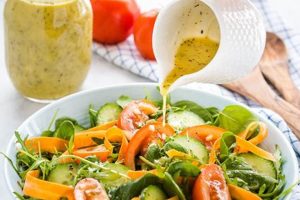
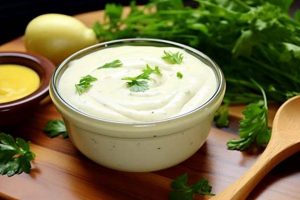
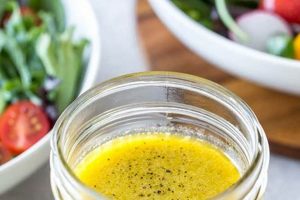
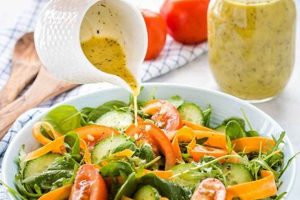
Plant-based emulsified liquids used to enhance the flavor and texture of salads offer a wide range of possibilities for culinary creativity. From creamy cashew-based dressings to tangy citrus vinaigrettes, these mixtures often incorporate ingredients like nuts, seeds, tofu, nutritional yeast, herbs, spices, and various fruits and vegetables.
Such culinary creations offer significant health and ethical advantages. They eliminate cholesterol and saturated fats often found in traditional dressings while aligning with cruelty-free dietary practices. Moreover, they frequently showcase fresh, whole-food ingredients, contributing to a nutrient-rich diet. The rising popularity of plant-based diets has fueled innovation in this area, resulting in a diverse array of flavors and textures to complement any salad.
This discussion will explore various categories of plant-based dressings, including creamy, vinaigrette, and unique ethnic variations, offering practical guidance on ingredient selection, preparation techniques, and storage methods.
Tips for Crafting Exceptional Plant-Based Salad Dressings
Creating flavorful and versatile plant-based salad dressings requires an understanding of key techniques and ingredient combinations. The following tips offer guidance for achieving optimal results.
Tip 1: Embrace the Power of Soaking: Soaking nuts and seeds before blending creates a creamier, smoother texture in dressings. Cashews, for instance, transform into a luxurious base after soaking in warm water for at least 30 minutes.
Tip 2: Balance Flavors with Acidity: Acidity is crucial for a well-rounded dressing. Vinegars like apple cider, balsamic, or red wine vinegar, as well as citrus juices like lemon or lime, provide brightness and complexity.
Tip 3: Experiment with Umami: Nutritional yeast, miso paste, or tamari can add depth and savory notes, replicating the umami found in some traditional dressings.
Tip 4: Utilize Fresh Herbs and Spices: Fresh herbs like parsley, dill, or mint, and spices like cumin, coriander, or smoked paprika, elevate flavor profiles and add vibrancy.
Tip 5: Adjust Consistency with Liquids: Water, plant-based milk, or even the soaking liquid from nuts can be used to thin dressings and achieve the desired consistency.
Tip 6: Proper Storage Extends Shelf Life: Store dressings in airtight containers in the refrigerator for optimal freshness. Most will last for up to a week.
Tip 7: Taste and Adjust: Before serving, taste the dressing and adjust seasonings as needed. A pinch of salt, a touch more sweetness, or a dash of acidity can make a significant difference.
By employing these techniques, one can elevate simple salads into culinary experiences, demonstrating the versatility and deliciousness of plant-based cuisine.
Through careful consideration of ingredients and techniques, crafting delectable plant-based salad dressings becomes an accessible and rewarding endeavor.
1. Plant-based Ingredients

Plant-based ingredients are the foundation of vegan salad dressings, offering a diverse range of flavors, textures, and nutritional benefits. Understanding their roles and potential combinations is essential for crafting successful recipes.
- Nuts and Seeds:
Nuts and seeds provide creaminess, healthy fats, and distinct flavor profiles. Cashews, for example, create a rich base for creamy dressings, while sunflower seeds offer a lighter, nuttier alternative. Soaking nuts and seeds prior to blending enhances their smoothness and digestibility.
- Fruits and Vegetables:
Fruits and vegetables contribute sweetness, acidity, and vibrant color. Blended avocados create a creamy texture, while tomatoes and citrus fruits offer tangy notes. These ingredients add both flavor and nutritional value to the final product.
- Herbs and Spices:
Herbs and spices elevate flavor profiles and add complexity. Fresh herbs like parsley, dill, or mint provide brightness, while spices like cumin, coriander, or smoked paprika introduce warmth and depth. These ingredients allow for customization and creativity in dressing development.
- Tofu and Tempeh:
Tofu and tempeh, while less common, offer unique textural and flavor possibilities. Silken tofu can contribute creaminess, while fermented tempeh provides a more savory, umami note. These ingredients expand the range of plant-based options available.
The careful selection and combination of these plant-based ingredients determines the final character of a vegan salad dressing. From creamy cashew-based dressings to light and tangy citrus vinaigrettes, the possibilities are vast, offering a delicious and ethical alternative to traditional dressings. Experimentation with these ingredients allows for the creation of unique flavor profiles to complement any salad.
2. Flavor Balance

Flavor balance is paramount in crafting successful vegan salad dressings. A harmonious blend of tastes elevates a simple mixture of ingredients into a complex and enjoyable culinary experience. This balance typically involves a careful interplay of four fundamental tastes: sweetness, acidity, saltiness, and bitterness, often with the addition of umami for depth.
Acidity, often derived from vinegar or citrus juice, provides brightness and cuts through richness. Sweetness, from sources like maple syrup or agave nectar, tempers the acidity and adds complexity. Salt enhances other flavors and provides a foundational savory element. Bitterness, while used more sparingly, can add an intriguing counterpoint to other tastes. Umami, achieved through ingredients like nutritional yeast or miso paste, contributes a savory depth reminiscent of animal-based products, rounding out the flavor profile.
For instance, a lemon-tahini dressing exemplifies flavor balance. The tartness of lemon juice is balanced by the nutty richness of tahini, with a touch of maple syrup adding subtle sweetness and salt enhancing the overall profile. Alternatively, a raspberry vinaigrette balances the sweetness of raspberries with the tartness of apple cider vinegar and a hint of Dijon mustard for complexity. These examples illustrate how a well-balanced dressing enhances the flavor of the salad itself, rather than masking it.
A well-executed flavor balance ensures that no single taste dominates, creating a dressing that complements the salad’s ingredients rather than overwhelming them. Understanding these principles empowers culinary exploration, allowing for the creation of dressings tailored to specific salads and individual preferences. Furthermore, mastering flavor balance in vegan dressings underscores the versatility and deliciousness of plant-based cuisine.
3. Texture Variations

Texture significantly impacts the sensory experience of a salad, and dressings play a crucial role in manipulating this element. Vegan salad dressing recipes offer a diverse range of textural possibilities, from creamy and rich to light and vinaigrette-style. Understanding these variations allows for a more nuanced approach to recipe development and salad creation.
- Creamy Dressings:
Creamy dressings provide a rich, coating mouthfeel, often achieved through the use of ingredients like soaked cashews, silken tofu, or avocados. These dressings cling well to salad components, delivering flavor effectively. Examples include cashew cream dressings, avocado-lime dressings, and white bean-based dressings. The creamy texture enhances the richness of salads featuring hearty greens or roasted vegetables.
- Vinaigrettes:
Vinaigrettes offer a lighter, more fluid texture, typically achieved through a simple emulsion of oil and vinegar. These dressings provide a refreshing counterpoint to crisp greens and lighter vegetables. Examples include balsamic vinaigrettes, citrus vinaigrettes, and herb-infused vinaigrettes. Their light texture prevents salads from becoming heavy or soggy.
- Chunky Dressings:
Chunky dressings incorporate textural elements like chopped herbs, nuts, seeds, or even fruits and vegetables. These dressings add a dimension of visual and textural interest to salads. Examples include cilantro-lime dressing with chopped peanuts or a sun-dried tomato dressing with chopped olives. The added texture provides a contrasting element to the other ingredients in the salad.
- Smooth Dressings:
Smooth dressings prioritize a completely homogenous texture, often achieved through careful blending and straining. These dressings provide a clean, consistent flavor delivery. Examples include a perfectly blended tahini dressing or a smooth roasted red pepper dressing. The smooth texture ensures even coating and enhances the overall sensory experience.
The choice of texture should complement the other components of the salad. A creamy dressing might overwhelm a delicate salad of spring greens, while a light vinaigrette might not provide sufficient coating for a robust salad with roasted vegetables. By considering the interplay of textures, one can elevate a simple salad into a more sophisticated and satisfying culinary creation. The versatility of vegan ingredients allows for a spectrum of textural possibilities, demonstrating the breadth and depth of plant-based cuisine.
4. Nutritional Value

Nutritional value represents a significant advantage of vegan salad dressings. Unlike conventional dressings often laden with saturated fats, cholesterol, and artificial additives, plant-based alternatives offer opportunities to incorporate nutrient-rich ingredients, promoting health and well-being. Careful ingredient selection allows for the creation of dressings that not only enhance flavor but also contribute to a balanced diet.
- Healthy Fats
Vegan dressings often incorporate healthy fats from sources like nuts, seeds, and avocados. These fats provide essential fatty acids, contributing to cardiovascular health and supporting various bodily functions. For example, a dressing featuring flaxseed oil delivers omega-3 fatty acids, while one based on avocados provides monounsaturated fats. These healthy fats play a crucial role in nutrient absorption and overall well-being.
- Vitamins and Minerals
The inclusion of whole foods like fruits, vegetables, and herbs allows for the incorporation of essential vitamins and minerals. A dressing featuring blended spinach, for example, contributes vitamin K and folate, while one utilizing citrus fruits provides vitamin C. These micronutrients support immune function, cellular health, and overall vitality.
- Fiber Content
Certain plant-based ingredients, such as blended beans or whole seeds, contribute dietary fiber to vegan dressings. Fiber aids digestion, promotes satiety, and contributes to stable blood sugar levels. A dressing incorporating blended chickpeas, for instance, offers a boost of dietary fiber, promoting gut health and overall well-being.
- Reduced Additives and Processed Ingredients
Vegan dressings, particularly those made from scratch, often minimize or eliminate the use of artificial additives, preservatives, and refined sugars commonly found in conventional dressings. This focus on whole-food ingredients contributes to a cleaner dietary profile, reducing exposure to potentially harmful substances.
By prioritizing whole, unprocessed ingredients and understanding the nutritional contributions of various components, individuals can craft vegan salad dressings that not only taste delicious but also support a healthy lifestyle. This emphasis on nutrition further distinguishes plant-based dressings, highlighting their role in a balanced and health-conscious diet.
5. Creative Combinations
Creative combinations of ingredients lie at the heart of innovative vegan salad dressing recipes. Moving beyond basic vinaigrettes and embracing unexpected flavor pairings allows for the development of unique and exciting culinary experiences. This exploration delves into various facets of creative combination within the realm of plant-based dressings.
- Fusion of Culinary Traditions
Drawing inspiration from global cuisines opens avenues for inventive flavor profiles. Incorporating elements from Asian, Mediterranean, or Latin American cooking, for example, can introduce unique spice blends, herbs, and fruits into vegan dressings. A miso-ginger dressing, inspired by Japanese cuisine, or a cilantro-lime dressing with a hint of chili, reflecting Mexican flavors, exemplifies this approach. Such fusion expands the palate beyond traditional Westernized dressings.
- Unconventional Ingredient Pairings
Moving beyond traditional flavor pairings encourages culinary innovation. Combining roasted beets with balsamic vinegar and orange zest, or blending smoked paprika with maple syrup and Dijon mustard, exemplifies this concept. These unexpected combinations create complex and intriguing flavor profiles, demonstrating the versatility of plant-based ingredients.
- Seasonal Ingredient Integration
Utilizing seasonal produce maximizes freshness and flavor while promoting culinary creativity. Incorporating fresh berries into a summer vinaigrette or roasted butternut squash into an autumnal dressing reflects this principle. Seasonal variations not only enhance the taste but also add nutritional value and reflect a connection to the natural world.
- Textural Contrasts and Layering
Combining ingredients with varying textures adds complexity and interest to vegan dressings. Incorporating toasted nuts or seeds for crunch, or blending silken tofu for creaminess alongside chopped fresh herbs, demonstrates this approach. These textural contrasts elevate the sensory experience of the dressing, moving beyond simple flavor profiles.
Through the exploration of these facets, creative combinations emerge as a defining characteristic of innovative vegan salad dressing recipes. This approach not only expands the range of flavor possibilities but also elevates the culinary experience, demonstrating the artistry and versatility inherent in plant-based cuisine. By embracing experimentation and unexpected pairings, individuals can craft dressings that are both delicious and reflective of individual creativity.
6. Storage Techniques

Proper storage techniques are essential for maintaining the quality, flavor, and safety of vegan salad dressings. These techniques preserve the freshness of ingredients, prevent spoilage, and maximize shelf life, ensuring optimal enjoyment and minimizing waste. Effective storage considers the specific ingredients and characteristics of each dressing.
- Refrigeration
Refrigeration is the primary method for storing most vegan salad dressings. Storing dressings in airtight containers at temperatures below 40F (4C) inhibits microbial growth and slows enzymatic degradation, preserving freshness. The exclusion of air minimizes oxidation and prevents the development of off-flavors. Proper refrigeration significantly extends the shelf life of dressings, typically ranging from several days to a week, depending on the ingredients.
- Freezing (for select recipes)
While not suitable for all vegan dressings, freezing can be an effective long-term storage solution for certain types. Dressings with a high water content, such as vinaigrettes, may separate upon thawing, but those with a creamy base, like cashew or tahini dressings, often freeze well. Freezing in airtight containers or freezer-safe bags minimizes freezer burn and preserves quality for extended periods, typically up to three months. Thawing should occur gradually in the refrigerator to maintain optimal texture and flavor.
- Container Selection
Selecting appropriate containers plays a vital role in preserving dressing quality. Airtight containers, such as glass jars or plastic containers with tight-fitting lids, prevent exposure to air and minimize oxidation, maintaining flavor and preventing spoilage. Opaque containers protect light-sensitive ingredients from degradation, further extending shelf life and preserving nutritional value. Choosing the right container is a simple yet effective step in maximizing dressing longevity.
- Ingredient Considerations
Specific ingredients influence storage longevity. Dressings containing fresh herbs or fruits may have a shorter shelf life compared to those with more stable ingredients like nuts and seeds. Understanding the perishability of individual components allows for informed storage practices. For instance, dressings with fresh avocado may brown more quickly and benefit from storage techniques that minimize air exposure, such as adding a thin layer of oil to the surface before sealing the container.
By implementing these storage techniques, individuals can maximize the lifespan and enjoyment of their vegan salad dressing creations. Proper storage not only preserves flavor and quality but also reduces food waste, contributing to a more sustainable and enjoyable culinary experience. Understanding these principles ensures that homemade dressings remain fresh, flavorful, and safe to consume, enhancing the overall culinary experience.
Frequently Asked Questions
This section addresses common inquiries regarding plant-based salad dressings, offering concise and informative responses to clarify potential uncertainties and provide practical guidance.
Question 1: How can oil separation be prevented in homemade vinaigrettes?
Oil separation is a natural occurrence in vinaigrettes. Vigorous whisking or blending immediately before serving typically re-emulsifies the mixture. Adding a small amount of emulsifier, such as a teaspoon of Dijon mustard or a tablespoon of tahini, can help stabilize the emulsion and reduce separation.
Question 2: What are suitable alternatives to nuts in creamy vegan dressings?
Individuals with nut allergies can utilize alternatives like silken tofu, sunflower seeds, or white beans as a base for creamy dressings. These ingredients, when blended, provide a similar texture and consistency without compromising flavor.
Question 3: How can the shelf life of homemade dressings be maximized?
Storing dressings in airtight containers in the refrigerator is crucial for maximizing shelf life. Properly stored dressings typically last for up to a week. Minimizing exposure to air and light further preserves freshness.
Question 4: Can vegan salad dressings be frozen?
While freezing is not recommended for all vegan dressings, those with a creamy base, such as cashew or tahini dressings, generally freeze well. Vinaigrettes may separate upon thawing. Freezing in airtight containers prevents freezer burn.
Question 5: How can one adjust the thickness of a vegan salad dressing?
The thickness of a dressing can be adjusted by adding more liquid (water, plant-based milk, or additional vinegar/citrus juice) to thin it, or by adding more of the base ingredient (nuts, seeds, tofu) to thicken it. Achieving the desired consistency may require incremental adjustments and thorough mixing.
Question 6: What are some effective ways to add umami to a vegan dressing?
Umami, the savory fifth taste, can be enhanced in vegan dressings through ingredients like nutritional yeast, miso paste, tamari, or soy sauce. These ingredients add depth and complexity, mimicking the savory notes found in some traditional dressings.
Understanding these aspects of vegan salad dressing preparation and storage ensures optimal results and encourages exploration of the diverse flavors and textures possible within plant-based cuisine.
For further culinary inspiration, explore the following section featuring a collection of curated vegan salad dressing recipes.
Vegan Salad Dressing Recipes
Plant-based salad dressings offer a versatile and flavorful approach to culinary creation. From creamy cashew-based mixtures to vibrant citrus vinaigrettes, the possibilities extend far beyond traditional limitations. Careful consideration of ingredient selection, flavor balance, textural variations, and nutritional value allows for the development of dressings that not only complement salads but also contribute to a health-conscious diet. Proper storage techniques further enhance the longevity and enjoyment of these culinary creations. Exploration of creative combinations, incorporating diverse culinary influences and innovative ingredient pairings, unlocks a world of flavor profiles, demonstrating the versatility and artistry inherent in plant-based cuisine.
The ongoing evolution of plant-based gastronomy promises continued innovation within the realm of vegan salad dressings. As culinary awareness expands and ingredient accessibility increases, further exploration and experimentation will undoubtedly yield exciting new flavor combinations and textural experiences. Embracing these possibilities empowers individuals to create personalized dressings that cater to individual preferences and dietary needs, contributing to a more vibrant and flavorful culinary landscape.