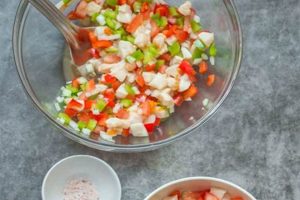
A vibrant and nutritious dish, this culinary creation typically features cooked quinoa as a base, combined with a variety of fresh vegetables, herbs, and often peanuts or other nuts. The defining characteristic lies in the dressing, a balanced blend of sweet, sour, salty, and spicy flavors commonly achieved through ingredients like lime juice, fish sauce, chili, and brown sugar. An example might include shredded carrots, cucumber, red onion, cilantro, mint, and chopped peanuts tossed with quinoa and this distinctive sauce.
This style of salad offers a healthy and satisfying meal option. Quinoa provides a complete protein source, while the fresh vegetables contribute essential vitamins and minerals. The light yet flavorful dressing avoids heavy oils and creams, making it a refreshing choice. Furthermore, the adaptability of the dish allows for variations to suit dietary needs and preferences, with tofu or shrimp easily incorporated for added protein. This contemporary dish reflects the increasing global interest in both healthy eating and the diverse flavors of Southeast Asian cuisine.
The following sections will delve deeper into specific elements, including variations on the core recipe, tips for ingredient selection and preparation, and guidance on achieving the perfect balance of flavors in the dressing. Nutritional information and suggested pairings will also be explored.
Tips for a Perfect Thai Quinoa Salad
Achieving optimal flavor and texture requires attention to detail throughout the preparation process. The following tips offer guidance for creating a truly exceptional salad.
Tip 1: Rinse the quinoa. Rinsing removes the naturally occurring bitter coating (saponins) found on quinoa, resulting in a cleaner flavor profile.
Tip 2: Fluff the quinoa after cooking. Once cooked, fluffing with a fork ensures light and separate grains, preventing a sticky or mushy texture.
Tip 3: Balance the dressing. The signature Thai flavor profile relies on a harmonious blend of sweet, sour, salty, and spicy elements. Taste and adjust the dressing as needed to achieve the desired balance.
Tip 4: Use fresh, high-quality ingredients. The vibrancy of this salad comes from the fresh vegetables and herbs. Selecting peak-season produce enhances both flavor and nutritional value.
Tip 5: Don’t overdress the salad. Add the dressing gradually, tossing gently to coat the ingredients evenly. Overdressing can lead to a soggy salad.
Tip 6: Toast the nuts. Toasting nuts before adding them to the salad enhances their flavor and provides a satisfying crunch.
Tip 7: Customize with protein. While delicious on its own, consider adding grilled shrimp, tofu, or shredded chicken for a more substantial meal.
Tip 8: Prepare components in advance. The quinoa, dressing, and chopped vegetables can be prepared separately ahead of time and combined just before serving, ensuring maximum freshness.
By following these tips, one can elevate a simple quinoa salad into a culinary masterpiece, showcasing the vibrant and complex flavors of Thai cuisine.
This understanding of preparation techniques provides a foundation for exploring variations and adaptations in the concluding sections.
1. Quinoa Preparation

Proper quinoa preparation forms the foundation of a successful Thai quinoa salad. The quality and texture of the cooked quinoa significantly impact the overall dish, influencing how the grains absorb the dressing and interact with other ingredients. A thorough understanding of this foundational element ensures a pleasant culinary experience.
- Rinsing: Removing Saponins
Rinsing quinoa under cold water before cooking is crucial for removing saponins, naturally occurring compounds that contribute a bitter flavor. This step ensures a cleaner, more palatable taste, allowing the other flavors in the salad to shine. Neglecting this step can result in a slightly soapy aftertaste, detracting from the overall culinary experience.
- Cooking Method: Achieving Optimal Texture
The cooking method influences the final texture of the quinoa. The standard method involves simmering quinoa in water or broth, similar to rice. Proper cooking yields light, fluffy grains that are separate and tender, not mushy or sticky. This texture is ideal for absorbing the flavorful Thai dressing without becoming overly saturated.
- Water Ratio: Balancing Absorption
The ratio of water to quinoa affects the final texture. Too much water can lead to overcooked, mushy quinoa, while too little results in undercooked, crunchy grains. Adhering to the recommended ratio, typically two parts water to one part quinoa, ensures proper hydration and optimal texture.
- Cooling and Fluffing: Enhancing Texture and Flavor Absorption
After cooking, allowing the quinoa to cool slightly and then fluffing it with a fork further enhances the texture, separating the grains and preventing clumping. This step also improves the absorption of the Thai dressing, ensuring that each grain is evenly coated with flavor.
By mastering these aspects of quinoa preparation, one creates a neutral yet texturally pleasing base that complements the vibrant flavors and textures of the other salad components. This attention to detail elevates the final dish, ensuring a harmonious blend of flavors and a satisfying culinary experience. The properly prepared quinoa acts as a canvas, allowing the bright, bold notes of the Thai dressing and the fresh ingredients to take center stage.
2. Fresh Ingredients

The vibrancy and authenticity of a Thai quinoa salad depend heavily on the freshness of its ingredients. This reliance stems from the cuisine’s emphasis on bright, bold flavors and contrasting textures, which are best achieved with high-quality, recently harvested produce. The delicate balance of sweet, sour, salty, and spicy notes characteristic of Thai cuisine necessitates ingredients at their peak flavor. For example, wilted herbs or less-than-crisp vegetables would diminish the overall sensory experience, compromising the intended complexity. Fresh ingredients contribute not only to the flavor profile but also to the nutritional value and aesthetic appeal of the salad.
Consider the impact of using fresh cilantro and mint. These herbs provide a refreshing, aromatic counterpoint to the richness of the nuts and the boldness of the dressing. Similarly, crisp vegetables like shredded carrots, cucumber, and bell peppers offer a satisfying crunch and contribute essential vitamins and minerals. The use of freshly squeezed lime juice, as opposed to bottled juice, provides a brighter, more vibrant acidity that is crucial for balancing the other flavor components. These examples illustrate the direct relationship between ingredient freshness and the overall quality of the Thai quinoa salad.
The practical significance of understanding this connection lies in the ability to create a truly exceptional culinary experience. Sourcing the freshest possible ingredients elevates the salad from a simple meal to a showcase of vibrant flavors and textures. While some compromises might be necessary depending on availability, prioritizing freshness remains paramount for achieving an authentic and satisfying Thai quinoa salad. This principle underscores the importance of mindful ingredient selection and proper storage techniques to maintain optimal quality and maximize the dish’s potential.
3. Balanced Dressing
The hallmark of a successful Thai quinoa salad lies in the delicate balance of its dressing. This balance, a cornerstone of Thai cuisine, hinges on the harmonious interplay of four fundamental taste profiles: sweet, sour, salty, and spicy. The dressing acts as a unifying element, binding the diverse ingredients and transforming them into a cohesive culinary experience. A well-executed dressing elevates the salad beyond a simple combination of components, creating a symphony of flavors that dance on the palate.
The “sweet” component often comes from brown sugar or palm sugar, providing a mellow sweetness that tempers the other, more assertive flavors. The “sour” element, typically derived from lime juice, introduces a refreshing acidity that cuts through the richness of the nuts and other ingredients. Fish sauce contributes the essential “salty” dimension, adding a depth of umami that enhances the overall complexity. Finally, the “spicy” element, often provided by fresh chilies or chili flakes, introduces a stimulating heat that balances the other flavors and adds a pleasant kick. A disproportionate emphasis on any single element can disrupt this delicate balance, resulting in a dressing that is overly sweet, excessively sour, too salty, or overwhelmingly spicy. For instance, an overabundance of lime juice can make the salad unpleasantly tart, while too much fish sauce can render it overly saline. The key lies in achieving a harmonious equilibrium where each flavor complements and enhances the others.
The practical significance of this understanding lies in the ability to create a dressing that not only complements but also elevates the other components of the salad. The balanced dressing enhances the natural flavors of the fresh vegetables and herbs, while also providing a cohesive backdrop for the nutty quinoa. This harmonious integration of flavors distinguishes a truly exceptional Thai quinoa salad from a mediocre one. Furthermore, mastering the art of balancing these flavors allows for adaptation and customization. One might adjust the proportions of each element to cater to individual preferences or dietary restrictions, while still maintaining the fundamental principles of balance that define this culinary style. This adaptability makes the Thai quinoa salad a versatile and universally appealing dish.
4. Flavorful Herbs

The aromatic profile of a Thai quinoa salad distinguishes it from other quinoa-based dishes. This profile relies heavily on the strategic use of fresh herbs, which contribute not only distinct flavors but also vibrant aromas and visual appeal. These herbs are integral to achieving the authentic flavor profile characteristic of Thai cuisine, playing a crucial role in balancing the sweet, sour, salty, and spicy notes of the dressing.
- Cilantro: A Staple Aromatic
Cilantro, with its bright, citrusy notes, acts as a refreshing counterpoint to the richness of the nuts and the boldness of the dressing. Its slightly peppery undertones add depth and complexity to the overall flavor profile. In Thai cuisine, cilantro is ubiquitous, appearing in everything from curries to salads, and its presence in the quinoa salad contributes to an authentic taste experience.
- Mint: A Cooling Counterpoint
Mint provides a cooling element that balances the heat from chilies often present in the dressing. Its refreshing aroma and slightly sweet flavor enhance the overall sensory experience. The combination of mint and cilantro creates a classic flavor pairing commonly found in Southeast Asian cuisine.
- Thai Basil: An Aromatic Accent
Thai basil, with its anise-like aroma and slightly spicy flavor, adds a distinctive dimension to the salad. Its unique flavor profile differentiates it from sweet basil, contributing an authentic Thai touch. Thai basil’s robust flavor can withstand the strong flavors of the dressing, ensuring its presence is not lost.
- Lemongrass (Optional): A Citrusy Infusion
While not always included, lemongrass can be incorporated into the dressing or used as a garnish, imparting a bright, citrusy aroma and flavor. Its subtle yet distinct presence complements the other herbs and enhances the overall freshness of the salad.
The careful selection and combination of these herbs contribute significantly to the overall sensory experience of the Thai quinoa salad. They provide a refreshing contrast to the heavier elements of the dish, creating a harmonious blend of flavors, aromas, and textures. The interplay of these herbs, along with the balanced dressing and fresh ingredients, elevates the Thai quinoa salad from a simple meal to a vibrant and complex culinary creation. Furthermore, the choice of herbs can be adapted to individual preferences, allowing for personalized variations while maintaining the core principles of Thai flavor profiles.
5. Optional Protein
While a Thai quinoa salad can stand alone as a vegetarian dish, the addition of protein transforms it into a more substantial and complete meal. This optional component not only increases satiety but also contributes to the nutritional profile and textural complexity of the salad. The choice of protein influences the overall flavor profile and can be tailored to individual dietary preferences and needs.
Common protein choices include grilled chicken or shrimp, which offer lean protein and complement the flavors of the dressing. Tofu, a versatile plant-based protein, readily absorbs the flavors of the dressing and provides a textural contrast to the quinoa and vegetables. For those seeking richer flavors, crispy fried tofu offers a satisfying crunch. The inclusion of protein impacts the overall balance of the salad; for example, the saltiness of fish sauce in the dressing may need adjustment depending on the salinity of the chosen protein. Similarly, the spiciness level might be modified to complement the protein’s flavor profile. Consider grilled shrimp marinated in lemongrass and garlic; the subtle char and aromatic marinade enhance the existing Thai-inspired flavors. Alternatively, incorporating crispy tofu adds a textural element and a nutty flavor dimension that complements the toasted peanuts often included in the salad.
Understanding the impact of optional protein additions allows for customization and optimization of the Thai quinoa salad. This understanding empowers individuals to create a dish tailored to specific dietary requirements and taste preferences. Careful consideration of protein choices ensures a well-balanced and satisfying meal that showcases the versatility of this culinary creation. The interplay between the protein, the dressing, and the other ingredients ultimately determines the final flavor profile and nutritional value, highlighting the importance of informed protein selection.
Frequently Asked Questions
This section addresses common inquiries regarding Thai quinoa salad preparation and variations.
Question 1: Can brown rice be substituted for quinoa?
While brown rice offers a similar texture, it lacks the complete protein profile of quinoa. Substitution will alter the nutritional content and subtly impact the flavor profile. If substituting, ensure the rice is cooked to a similar consistency as quinoa for optimal texture.
Question 2: What can be used in place of fish sauce for vegetarian/vegan adaptations?
Soy sauce or tamari can provide a similar salty, umami element. Alternatively, seaweed flakes or mushroom powder offer a more nuanced umami flavor. Adjusting the amount of salt may also be necessary.
Question 3: How long can this salad be stored?
Refrigeration in an airtight container is recommended for up to three days. The texture of the salad may change slightly over time as the quinoa absorbs the dressing. Adding the dressing just before serving can help maintain optimal texture.
Question 4: Can different vegetables be used?
The recipe is adaptable to various vegetables. Shredded cabbage, bell peppers, edamame, or bean sprouts can provide additional texture and nutrients. Maintaining a balance of flavors and textures is key when substituting ingredients.
Question 5: Is it necessary to toast the nuts?
Toasting enhances the nuts’ flavor and provides a desirable crunch, but it is not strictly mandatory. If omitting this step, ensure the nuts are fresh and of good quality for optimal flavor and texture.
Question 6: How can the spiciness level be adjusted?
The amount of chili in the dressing directly controls the spiciness. Reduce or omit fresh chilies or chili flakes for a milder flavor. Alternatively, increase the amount for a spicier salad. Taste and adjust the dressing as needed to achieve the desired level of heat.
Understanding these common points of inquiry allows for greater flexibility and successful adaptation of Thai quinoa salad recipes.
The subsequent section offers a curated collection of variations on the classic recipe, providing further inspiration for culinary exploration.
Conclusion
Exploration of Thai quinoa salad recipes reveals a dish offering nutritional value and culinary versatility. Emphasis on fresh ingredients, a balanced dressing featuring sweet, sour, salty, and spicy notes, and aromatic herbs distinguishes this salad. Adaptability to various dietary preferences through the inclusion or omission of protein sources further enhances its appeal. Proper quinoa preparation, including rinsing and achieving optimal texture, forms a critical foundation. The interplay of these components contributes to a harmonious and flavorful culinary experience.
This adaptable and healthful dish exemplifies the fusion of global culinary influences and the increasing emphasis on balanced nutrition. Continued exploration and adaptation of Thai quinoa salad recipes promise further culinary innovation and enjoyment.