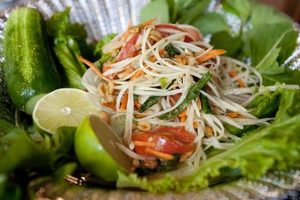
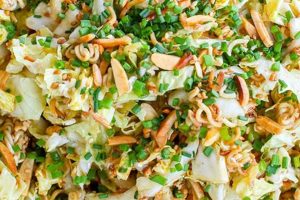
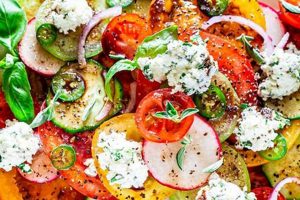
This iconic dish, a staple of Thai cuisine, blends shredded unripe papaya with a vibrant mix of flavors. A traditional preparation typically includes ingredients such as tomatoes, green beans, garlic, chilies, fish sauce, lime juice, and palm sugar, pounded together using a mortar and pestle. This process releases the ingredients’ aromas and creates a complex, harmonious blend of spicy, sour, sweet, salty, and savory notes. Variations exist across different regions of Thailand, incorporating ingredients like dried shrimp, peanuts, or fermented crab.
Beyond its delicious taste, this culinary creation offers nutritional benefits. The papaya contributes vitamins C and A, while the other fresh ingredients provide essential minerals and fiber. Originating in the northeastern region of Thailand (Isan), it reflects the resourcefulness of the local cuisine, making the most of readily available ingredients. Its popularity has since spread throughout Thailand and internationally, becoming a symbol of Thai culinary heritage.
This exploration will delve into the intricacies of preparing this dish, highlighting various regional adaptations and offering insights into achieving an authentic flavor profile. From ingredient selection to pounding techniques, each step will be examined to equip readers with the knowledge to create their own version of this remarkable Thai delicacy.
Tips for Authentic Preparation
Achieving the perfect balance of flavors and textures requires attention to detail throughout the preparation process. The following tips offer guidance for crafting an exceptional rendition of this classic Thai dish.
Tip 1: Papaya Selection: Opt for firm, green papayas. Avoid overly ripe fruit, as it will lack the necessary crispness. The papaya should offer resistance when pressed but not be rock hard.
Tip 2: Balancing Flavors: The hallmark lies in the harmonious blend of sweet, sour, salty, and spicy. Adjust the quantities of lime juice, fish sauce, palm sugar, and chilies to achieve the desired balance according to personal preference.
Tip 3: The Art of Pounding: Utilize a mortar and pestle to gently bruise the ingredients. This technique releases their flavors and creates the desired texture. Avoid over-pounding, which can result in a mushy consistency.
Tip 4: Ingredient Order: Begin by pounding garlic and chilies, followed by tomatoes and green beans. Add the papaya last to maintain its texture. This allows the flavors to meld gradually.
Tip 5: Freshness is Key: Utilize the freshest ingredients available. The quality of the ingredients directly impacts the final flavor of the dish.
Tip 6: Regional Variations: Explore different regional variations by incorporating ingredients such as dried shrimp, fermented crab (pla ra), or long beans. These additions contribute unique flavor profiles.
Tip 7: Garnish and Serve: Garnish with roasted peanuts, fresh herbs, or lime wedges. Serve immediately to enjoy the dish at its peak freshness.
By adhering to these tips, one can elevate this simple dish to a culinary masterpiece. Mastering the balance of flavors and textures allows for a truly authentic and satisfying experience.
This exploration concludes with a summary of key takeaways and resources for further exploration of Thai cuisine.
1. Green Papaya

Green papaya forms the indispensable foundation of this iconic Thai salad. Its firm texture, resistant to becoming mushy when pounded, provides the necessary structure for the dish. The subtle, slightly bitter flavor of the unripe papaya serves as a blank canvas, absorbing the vibrant flavors of the other ingredients, such as lime juice, fish sauce, and chilies. Without green papaya, the dish loses its characteristic textural complexity and its ability to harmonize the diverse flavor profile. One could consider ripe papaya as a substitute; however, its sweetness and soft texture would fundamentally alter the dish, resulting in a markedly different culinary experience.
The choice of green papaya also influences the overall balance of the dish. A less mature, firmer papaya will require more vigorous pounding, potentially impacting the final texture. Conversely, a slightly more mature green papaya might bruise more easily, necessitating a gentler approach. Experienced cooks understand these nuances and adjust their techniques accordingly. For instance, in Northeastern Thailand, where the dish originates, papayas tend to be smaller and firmer, influencing the regional preference for a more robust pounding technique. This contrasts with some central Thai variations, where a slightly riper green papaya might be used, resulting in a less intense pounding process.
Understanding the crucial role of green papaya is essential for anyone seeking to create an authentic rendition of this dish. Selecting the right papaya and applying the appropriate pounding technique are pivotal steps in achieving the desired balance of flavors and textures. The specific characteristics of green papayaits firmness, subtle flavor, and responsiveness to poundingare integral to the dish’s identity, highlighting the deep connection between ingredient and culinary tradition.
2. Mortar and pestle

The mortar and pestle are not merely tools in the preparation of this Thai salad; they are integral to its essence. More than simply crushing ingredients, they bruise and release flavors, creating the dish’s characteristic texture and aroma. This traditional method fundamentally distinguishes it from versions prepared using food processors, which tend to produce a more uniform, less nuanced result. The rhythmic pounding also represents a cultural significance, connecting the cook to generations of culinary tradition.
- Flavor Release and Texture Development
The process of pounding using a mortar and pestle goes beyond simply chopping or grinding. It gently bruises the ingredients, rupturing cell walls and unlocking aromatic compounds, resulting in a more complex flavor profile. The controlled bruising also creates a desirable textural contrast, combining softer elements like tomatoes with the firmer papaya shreds. This textural complexity is difficult to replicate with other methods, showcasing the mortar and pestle’s crucial role in achieving the dish’s authentic character.
- Cultural Significance
The use of the mortar and pestle is deeply embedded in Thai culinary culture. It represents a connection to traditional cooking methods passed down through generations. The rhythmic pounding is often a communal activity, creating a shared experience around food preparation. This cultural aspect adds another layer of meaning to the dish, distinguishing it from salads prepared using modern equipment.
- Material Matters
Traditional Thai mortars and pestles are typically made from materials like granite, clay, or wood. Each material offers subtle differences in how it interacts with the ingredients. Granite, for example, is durable and ideal for creating a fine paste. Clay mortars are favored for their ability to retain some moisture, while wooden mortars offer a gentler approach for softer ingredients. The choice of material can subtly influence the final flavor and texture of the salad.
- Beyond the Salad: A Versatile Tool
While essential for this specific dish, the mortar and pestle’s utility extends to other elements of Thai cuisine. From curry pastes to chili sauces, it serves as a fundamental tool for developing complex flavors and textures. Its versatility demonstrates its significance within the broader culinary landscape of Thailand.
The mortar and pestle are thus inseparable from the identity of this Thai salad. Their role transcends mere functionality, contributing to the dish’s unique flavor profile, textural complexity, and cultural significance. The choice of material and the rhythmic act of pounding connect the cook to generations of tradition, elevating a simple salad to an embodiment of culinary heritage.
3. Balance of Flavors

The defining characteristic of this Thai salad lies in its intricate balance of flavors. This dynamic interplay of tastesprimarily sweet, sour, salty, spicy, and umamicreates a complex sensory experience that distinguishes it from other salads. Achieving this balance requires a precise understanding of each flavor component and how they interact, highlighting the culinary artistry involved in its preparation.
- Sweetness: The Balancing Act
Palm sugar typically provides the sweetness, tempering the acidity of the lime and the heat of the chilies. The level of sweetness can be adjusted to personal preference, but it plays a crucial role in harmonizing the other flavors. For instance, a slightly higher sugar content might be preferred to balance the intense spiciness of bird’s eye chilies. Conversely, reducing the sugar allows the sour and salty notes to become more prominent.
- Sourness: The Zesty Foundation
The sourness, primarily derived from lime juice, provides a refreshing counterpoint to the other flavors. It brightens the dish and cuts through the richness of the fish sauce and the sweetness of the palm sugar. The variety of lime used can also influence the sourness. For example, Key limes offer a more tart flavor compared to standard limes, affecting the overall balance.
- Saltiness: The Umami Depth
Fish sauce contributes both saltiness and umami, adding depth and complexity to the flavor profile. The type of fish sauce used can significantly impact the final result. Fermented fish sauces, like pla ra, introduce a pungent, umami-rich dimension often found in northeastern Thai versions, showcasing regional variations in flavor preferences.
- Spiciness: The Fiery Kick
Thai chilies, ranging from mild to intensely hot, provide the characteristic spiciness. The level of heat can be adjusted based on individual tolerance, but it’s an essential element of the flavor profile. The type of chili used also influences the flavor beyond just heat. Bird’s eye chilies, for instance, offer a sharp, intense heat, while other varieties might provide a more nuanced, fruity heat.
The harmonious interplay of these four flavor elementssweet, sour, salty, and spicyforms the cornerstone of this Thai salad. The delicate balance achieved through precise ingredient proportions and skillful preparation transforms simple components into a complex and satisfying culinary experience. Regional variations often introduce additional flavors and textures, further highlighting the adaptability and depth of this iconic dish.
4. Regional Variations

Regional variations within Thailand contribute significantly to the diversity of this iconic salad. These variations reflect local ingredient availability, cultural preferences, and historical influences, resulting in distinct flavor profiles and textural nuances that extend beyond the basic recipe. Understanding these regional adaptations provides a deeper appreciation for the dish’s complexity and evolution.
In Northeastern Thailand (Isan), the birthplace of this dish, variations often incorporate ingredients like pla ra (fermented fish sauce), pa daek (fermented fish), and long beans. These ingredients contribute a pungent, umami-rich flavor profile characteristic of the region’s cuisine. The inclusion of these strong flavors reflects the Isan people’s historical reliance on preserved ingredients and their preference for bold tastes. Conversely, in central Thailand, variations tend to be milder, often omitting pla ra and using less chili. These regional adaptations highlight how local palates and ingredient availability shape culinary traditions.
Northern Thai variations might include ingredients like pickled crab or dried shrimp, adding unique salty and savory dimensions. Coastal regions may utilize fresh seafood, reflecting the proximity to the sea. These examples demonstrate how geography and resource availability influence culinary innovation within a specific dish. Furthermore, the level of sweetness, sourness, and spiciness can also vary regionally, further contributing to the diverse landscape of this seemingly simple salad. The practical significance of understanding these regional variations lies in the ability to appreciate the depth and breadth of Thai culinary heritage. It also allows cooks to adapt recipes based on personal preferences and available ingredients, ensuring a vibrant and evolving culinary tradition.
Furthermore, analyzing these variations offers insight into the historical and cultural exchanges within Thailand. For example, the use of pa daek in some northeastern variations points to influences from Lao cuisine, reflecting the historical connections and shared culinary traditions between the two regions. Similarly, the incorporation of dried shrimp in northern variations might indicate historical trade routes and ingredient exchanges with neighboring countries. By understanding these regional nuances, one gains a deeper appreciation for the complex interplay of cultural and historical factors that shape culinary practices. Ultimately, these regional adaptations highlight the dynamic nature of this beloved Thai dish. They showcase how a simple combination of ingredients can evolve and adapt to local preferences and resource availability, resulting in a rich tapestry of flavors and textures that continue to delight palates across Thailand and beyond.
5. Fresh Ingredients

The quality and freshness of ingredients directly impact the flavor profile of this Thai salad. Because the dish relies on the natural flavors of its components, rather than masking them with heavy sauces or cooking processes, ingredient freshness becomes paramount. Using subpar ingredients results in a muted, less vibrant flavor experience, diminishing the dish’s characteristic vibrancy. For example, a tomato past its prime introduces an undesirable acidity, while stale garlic lacks the pungent aroma essential for the foundational flavor base. Conversely, fresh, ripe tomatoes contribute a balanced sweetness and acidity, and freshly pounded garlic delivers a sharp, aromatic punch that elevates the other components.
The emphasis on fresh ingredients also reflects the dish’s origins in rural Thailand, where access to fresh produce was integral to daily life. This reliance on readily available, seasonal ingredients underscores the resourcefulness and deep connection to the land inherent in Thai culinary tradition. The immediate consumption of the salad after preparation further emphasizes the importance of freshness, ensuring the ingredients retain their optimal texture and flavor. Consider the crispness of the green papaya: a freshly shredded papaya provides the desired crunch, while one that has been sitting for too long becomes limp and loses its textural appeal. This highlights the importance of preparing and consuming the salad promptly to fully appreciate the interplay of fresh flavors and textures.
An understanding of the crucial role of fresh ingredients underscores the fundamental principles of this iconic Thai salad. It emphasizes the direct relationship between ingredient quality and the overall sensory experience, highlighting the culinary artistry involved in selecting and preparing each component. The practical application of this knowledge empowers individuals to create authentic and flavorful renditions, appreciating the dish’s connection to Thai culinary heritage and its emphasis on utilizing the bounty of fresh, seasonal produce.
Frequently Asked Questions
This section addresses common inquiries regarding the preparation and variations of this classic Thai dish. Clarity on these points aims to facilitate a deeper understanding and more successful culinary endeavors.
Question 1: Can ripe papaya be substituted for green papaya?
Ripe papaya’s sweetness and soft texture are unsuitable for this salad. Green papaya’s firmness is essential for the dish’s characteristic texture.
Question 2: Is a mortar and pestle essential for authentic preparation?
While food processors can shred ingredients, a mortar and pestle is crucial for bruising and releasing flavors, achieving the authentic texture and aroma.
Question 3: How can the level of spiciness be adjusted?
Spiciness is controlled by the type and quantity of chilies used. Bird’s eye chilies offer intense heat, while milder varieties provide a gentler spice. Removing seeds and membranes also reduces heat.
Question 4: What are common regional variations?
Regional variations incorporate ingredients like pla ra (fermented fish sauce) in Northeastern Thailand, dried shrimp in the North, and variations in central Thailand may be milder. These additions reflect local preferences and ingredient availability.
Question 5: How long can the prepared salad be stored?
For optimal flavor and texture, this salad is best consumed immediately after preparation. Storage can lead to textural degradation and flavor changes.
Question 6: Where can one find authentic Thai ingredients?
Asian grocery stores typically stock essential ingredients like fish sauce, palm sugar, dried shrimp, and various types of Thai chilies. Online retailers also offer these specialty items.
Careful attention to ingredient selection and preparation techniques ensures an authentic and flavorful outcome. Further research into regional variations can deepen one’s appreciation for this multifaceted dish.
The subsequent section offers a collection of curated recipes for different variations of this iconic Thai salad.
Thai Papaya Salad Recipe Somtum
This exploration has delved into the multifaceted nature of Thai papaya salad, from its fundamental ingredients and preparation techniques to regional variations and the crucial role of ingredient freshness. The balance of flavorssweet, sour, salty, and spicydefines its unique character, while the mortar and pestle remain essential tools for achieving authentic texture and aroma. Regional adaptations, incorporating ingredients like pla ra or dried shrimp, showcase the dish’s adaptability and deep connection to local culinary traditions. An understanding of these nuances provides a richer appreciation for this iconic Thai staple.
The enduring popularity of Thai papaya salad speaks to its ability to transcend geographical boundaries and cultural differences. Its vibrant flavors and refreshing textures continue to captivate palates worldwide. Continued exploration of its regional variations and culinary nuances promises a deeper understanding of Thai culinary heritage and the dynamic evolution of this beloved dish.