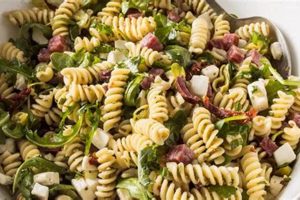
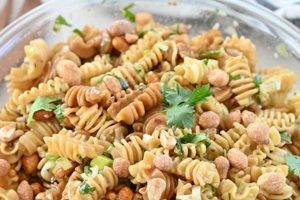
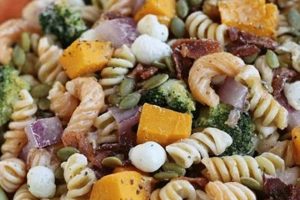
A chilled dish featuring small, rice-shaped pasta combined with fresh, seasonal vegetables, herbs, and often a light vinaigrette, forms the basis of this culinary creation. Examples include pairings such as orzo with cherry tomatoes, cucumbers, feta cheese, and a lemon-herb dressing, or a combination of grilled zucchini, bell peppers, Kalamata olives, and a red wine vinaigrette. The versatility of this dish allows for endless variations, incorporating grilled proteins like chicken or shrimp for a more substantial meal.
This type of dish offers a refreshing and convenient meal option, particularly well-suited for warm weather. Its adaptability makes it ideal for picnics, potlucks, and light lunches or dinners. Historically, pasta salads have evolved from simple combinations of pasta and vegetables to more complex and flavorful creations, reflecting regional culinary traditions and seasonal ingredients. The increasing popularity of Mediterranean cuisine has further contributed to the prevalence of orzo pasta salads, showcasing the health benefits of fresh produce and olive oil.
The following sections will explore various aspects of crafting this dish, including selecting the right ingredients, preparing the orzo, creating flavorful dressings, and presenting the salad for optimal enjoyment. Tips and variations will also be provided to help readers personalize their creations and achieve culinary success.
Tips for Creating the Perfect Orzo Pasta Salad
Achieving a well-balanced and flavorful dish requires attention to detail and an understanding of key culinary principles. The following tips offer guidance for preparing a successful and enjoyable culinary experience.
Tip 1: Cook the Orzo Properly: Orzo should be cooked al dente, meaning firm to the bite. Overcooked orzo will result in a mushy texture. Follow package directions for cooking time, typically 8-10 minutes. Drain immediately and rinse with cold water to stop the cooking process and maintain a firm texture.
Tip 2: Embrace Seasonal Vegetables: Peak-season vegetables offer the best flavor and texture. Consider using ripe tomatoes, crisp cucumbers, sweet corn, or vibrant bell peppers. Farmers’ markets provide excellent sources for fresh, locally sourced produce.
Tip 3: Select Complementary Flavors: Balance flavors by combining contrasting elements like salty cheeses (feta, parmesan), acidic ingredients (lemon juice, vinegar), and fresh herbs (basil, mint, parsley). Consider the overall flavor profile and ensure ingredients complement each other.
Tip 4: Create a Flavorful Vinaigrette: A well-balanced vinaigrette enhances the overall dish. Experiment with different oils (olive oil, avocado oil), vinegars (red wine vinegar, balsamic vinegar), and citrus juices. Emulsify the dressing by whisking vigorously or using a blender.
Tip 5: Add Protein for a Heartier Meal: Grilled chicken, shrimp, or chickpeas can transform a side dish into a complete meal. Ensure proteins are cooked thoroughly and complement the other flavors in the salad.
Tip 6: Don’t Overcrowd the Salad: Allow space between ingredients for visual appeal and even distribution of flavors. Avoid adding too many ingredients, which can result in a cluttered and less enjoyable experience.
Tip 7: Chill Thoroughly Before Serving: Chilling allows the flavors to meld and enhances the refreshing nature of the dish. Refrigerate for at least 30 minutes before serving, allowing the ingredients to absorb the flavors of the vinaigrette.
By following these tips, one can create a visually appealing and flavorful dish suitable for any occasion. Attention to detail and thoughtful ingredient selection contribute to a satisfying culinary experience.
The following section will offer a variety of recipe variations, showcasing the adaptability of this versatile dish and providing inspiration for personalized creations.
1. Fresh, Seasonal Ingredients
The emphasis on fresh, seasonal ingredients is integral to a successful summer orzo pasta salad. Seasonality dictates optimal ripeness and peak flavor, contributing significantly to the overall taste and quality of the dish. Summer produce, such as ripe tomatoes, cucumbers, bell peppers, and zucchini, offers vibrant flavors and textures ideally suited for this cold pasta salad. The inherent sweetness of in-season corn or the slight bitterness of fresh herbs like basil or mint enhances the complexity of the dish, creating a balanced and refreshing flavor profile. Utilizing ingredients at their peak freshness minimizes the need for excessive seasoning, allowing the natural flavors to shine.
Consider a summer orzo pasta salad featuring ripe tomatoes harvested at their peak. The sweetness and juiciness of these tomatoes, compared to those harvested out of season, provide a burst of flavor that complements the other ingredients. Similarly, incorporating fresh basil or mint from a local garden offers a more intense aroma and taste than dried herbs. These examples illustrate the practical significance of prioritizing seasonal produce in elevating the overall sensory experience. Furthermore, the use of fresh, local ingredients often supports local farmers and sustainable agricultural practices.
In conclusion, the connection between fresh, seasonal ingredients and a successful summer orzo pasta salad is undeniable. Prioritizing seasonal produce not only elevates the flavor and nutritional value of the dish but also contributes to a more sustainable and environmentally conscious approach to cooking. The vibrant flavors and crisp textures of summer vegetables, combined with a light and flavorful vinaigrette, create a refreshing and satisfying dish that epitomizes summer cuisine.
2. Light, flavorful vinaigrette

A light, flavorful vinaigrette plays a crucial role in a successful summer orzo pasta salad recipe. The vinaigrette acts as a unifying element, binding the individual components while contributing significantly to the overall flavor profile. A heavy, creamy dressing would overwhelm the delicate flavors of fresh summer vegetables and the orzo itself. In contrast, a light vinaigrette enhances these flavors without masking them, creating a refreshing and balanced dish. The acidity in the vinaigrette, whether from vinegar or citrus juice, also helps to brighten the other ingredients and cut through any richness from added cheese or protein.
Consider a lemon-herb vinaigrette. The bright citrus notes of the lemon juice complement the fresh herbs and enhance the sweetness of summer vegetables like cherry tomatoes and bell peppers. Alternatively, a balsamic vinaigrette offers a touch of sweetness and tanginess that pairs well with grilled vegetables or bolder flavors like olives and feta cheese. These examples demonstrate the versatility of vinaigrettes and their ability to complement a wide range of flavor profiles within a summer orzo pasta salad. The vinaigrette also contributes to the overall texture of the salad, providing a light coating that keeps the orzo and vegetables from becoming dry while avoiding a heavy, gloppy consistency. Practical application of this understanding allows for the creation of a well-balanced and harmonious dish where each ingredient contributes to a cohesive whole.
In summary, the choice of vinaigrette significantly impacts the overall success of a summer orzo pasta salad. A light and flavorful vinaigrette enhances the delicate flavors of the fresh ingredients, creating a refreshing and balanced dish. Understanding the role and impact of the vinaigrette allows for informed decisions regarding ingredient pairings and flavor combinations, leading to a more enjoyable and satisfying culinary experience. This understanding is crucial for achieving the desired balance and harmony within the dish, ultimately contributing to a successful summer orzo pasta salad.
3. Al dente orzo pasta
The texture of orzo pasta significantly impacts the overall quality of a summer orzo pasta salad. “Al dente,” which translates to “to the tooth” in Italian, describes pasta cooked until firm but not hard. Achieving this texture is crucial for a successful summer orzo pasta salad, as it prevents the dish from becoming mushy and provides a pleasant chewiness that complements the fresh ingredients and light vinaigrette.
- Texture and Mouthfeel
Al dente orzo provides a textural contrast to the other ingredients in the salad, such as crisp vegetables and creamy cheeses. This contrast elevates the sensory experience, making the salad more interesting and enjoyable. Overcooked orzo, on the other hand, creates a homogenous texture that can be unappealing. Imagine biting into a summer orzo pasta salad and experiencing the satisfying firmness of the orzo against the juicy burst of a cherry tomato. This textural interplay is a hallmark of a well-made dish.
- Absorption of Vinaigrette
Properly cooked orzo absorbs the vinaigrette more effectively, ensuring that the flavors are evenly distributed throughout the salad. Overcooked orzo tends to absorb too much liquid, leading to a soggy salad. Al dente orzo, with its slightly porous surface, absorbs just the right amount of vinaigrette, allowing the flavors to meld without compromising the texture. This balance is crucial for preventing the salad from becoming watery or overly saturated.
- Visual Appeal
Al dente orzo maintains its distinct shape, contributing to the visual appeal of the salad. Overcooked orzo can become clumped and shapeless, detracting from the overall presentation. The individual grains of al dente orzo, separated and distinct, create a more visually appealing dish, showcasing the vibrant colors of the other ingredients. This visual appeal enhances the dining experience, making the salad more appetizing.
- Storage and Serving
Al dente orzo holds its shape better than overcooked orzo, making the salad ideal for meal prepping and storing leftovers. Overcooked orzo is more likely to break down and become mushy when stored in the refrigerator. A summer orzo pasta salad made with al dente orzo maintains its desirable texture even after refrigeration, making it a convenient and practical dish for picnics, potlucks, or make-ahead meals. This characteristic is particularly beneficial for those seeking time-saving meal options without sacrificing quality or flavor.
In conclusion, achieving the al dente texture when cooking orzo is essential for creating a successful summer orzo pasta salad. This texture contributes not only to the pleasant mouthfeel but also to the visual appeal, flavor absorption, and overall structural integrity of the salad, particularly when stored and served later. The interplay of these factors results in a more satisfying and enjoyable culinary experience, highlighting the importance of proper orzo preparation in this refreshing summer dish.
4. Vibrant Color Combinations

Visual appeal plays a significant role in culinary enjoyment. Vibrant color combinations contribute substantially to the attractiveness of a summer orzo pasta salad, enhancing its perceived freshness and palatability. The strategic use of color elevates the dish from a simple meal to a visually engaging experience. Color considerations influence ingredient selection and arrangement, impacting both presentation and perceived flavor.
- Natural Pigments and Health Perception
The colors in food often indicate the presence of beneficial nutrients and antioxidants. Deeply colored vegetables, such as red bell peppers (rich in vitamin C) and dark leafy greens (rich in vitamin K), contribute vibrant hues and suggest healthfulness. Incorporating a variety of colors not only enhances visual appeal but also suggests a balanced and nutritious meal, making the salad more attractive to health-conscious individuals. For instance, the bright red of tomatoes alongside the deep green of spinach creates a visually appealing contrast while also signifying a combination of vitamins and antioxidants.
- Contrast and Visual Interest
Contrasting colors create visual interest and make the salad more appealing. The interplay of different hues stimulates appetite and enhances the dining experience. Consider the contrast between the bright yellow of corn kernels, the deep red of cherry tomatoes, and the dark green of chopped parsley. This contrast draws the eye and makes the salad more visually stimulating. Conversely, a monochromatic salad, even if flavorful, may appear less appetizing.
- Reflecting Seasonality and Freshness
Bright, vibrant colors are often associated with fresh, seasonal produce. In a summer orzo pasta salad, these colors contribute to the perception of freshness and quality. The vibrant green of fresh basil, the bright yellow of summer squash, and the deep red of ripe tomatoes evoke the essence of summer. These colors signal peak ripeness and reinforce the seasonal nature of the dish, enhancing its appeal and perceived flavor.
- Psychological Influence on Appetite
Color psychology suggests that certain colors can stimulate appetite. Warm colors, such as reds and yellows, are often associated with increased hunger, while cool colors, such as greens and blues, can have a calming effect. In a summer orzo pasta salad, a balance of warm and cool colors can create a visually appealing and appetizing presentation. For example, the inclusion of orange carrots alongside green cucumbers and purple onions provides a balanced color palette that is both visually stimulating and appetizing.
In conclusion, vibrant color combinations play a crucial role in the overall appeal of a summer orzo pasta salad. The intentional use of color elevates the dish beyond mere sustenance, transforming it into a visually engaging and appetizing culinary experience. By understanding the interplay of colors and their impact on perception, one can create a salad that is not only delicious but also visually captivating, showcasing the fresh, seasonal ingredients and enhancing the overall enjoyment of the meal.
5. Proper Chilling Time

Proper chilling time is essential for optimizing the flavors and textures of a summer orzo pasta salad. Chilling allows the vinaigrette to meld with the pasta and other ingredients, enhancing the overall flavor profile. The cold temperature also firms the pasta and vegetables, creating a more pleasant textural experience. Insufficient chilling results in a bland dish with disparate flavors and textures, while excessive chilling can make the ingredients too firm and diminish their vibrancy. Consider a scenario where the orzo pasta salad, dressed with a lemon-herb vinaigrette, is served immediately after preparation. The flavors will be distinct and separate, lacking the cohesive harmony achieved through chilling. Conversely, imagine the same salad chilled for an extended period. The vegetables may become excessively firm, losing their delicate nuances.
Flavor development within a chilled orzo pasta salad is a gradual process. As the ingredients rest together in the chilled environment, their individual flavors begin to merge and complement each other. The vinaigrette, initially a separate entity, gradually infuses the pasta and vegetables, creating a more balanced and harmonious flavor profile. This process also allows the acidic components of the vinaigrette to mellow, resulting in a more rounded and nuanced taste. For instance, the sharpness of red wine vinegar in a vinaigrette will soften over time, allowing the subtler flavors of the herbs and spices to emerge. This gradual integration of flavors is crucial for creating a complex and satisfying culinary experience. Furthermore, the chilling process enhances the refreshing quality of the salad, making it particularly appealing in warm weather.
In conclusion, proper chilling time is a critical factor in creating a successful summer orzo pasta salad. It allows for the harmonious integration of flavors, enhances textural appeal, and maximizes the refreshing quality of the dish. Understanding the impact of chilling time enables informed decisions regarding preparation and serving, ensuring a more enjoyable and satisfying culinary experience. The practical application of this knowledge translates directly to a higher quality dish, demonstrating the importance of this often-overlooked element in recipe execution.
6. Versatile Serving Options
The versatility of summer orzo pasta salad contributes significantly to its appeal. Suitable as a light lunch, a refreshing side dish, or a component within a larger buffet, this adaptability makes it a practical and convenient choice for various occasions. This inherent versatility stems from the dish’s ability to complement a wide range of cuisines and settings, from casual picnics to more formal gatherings. Consider a summer barbecue where the salad serves as a refreshing counterpoint to grilled meats. Alternatively, envision a light lunch where the salad, perhaps with the addition of grilled chicken or chickpeas, constitutes a complete and satisfying meal. These examples illustrate the adaptability of this dish and its capacity to fulfill diverse culinary needs.
The adaptability of summer orzo pasta salad extends beyond its role in various meal structures. Its composition allows for modifications to suit dietary restrictions or preferences. Vegetarian variations might incorporate plant-based proteins like chickpeas or lentils, while vegan versions could utilize a tahini-based dressing. Gluten-free adaptations can substitute quinoa or rice for the orzo. This adaptability broadens the dish’s appeal, ensuring inclusivity and catering to diverse dietary needs. For instance, a vegan version might feature roasted vegetables, toasted nuts, and a lemon-tahini dressing, demonstrating that dietary adaptations need not compromise flavor or satisfaction. This inherent flexibility further solidifies the pasta salad’s practicality and appeal across a broad spectrum of dining contexts.
In summary, the versatile serving options associated with summer orzo pasta salad enhance its practicality and appeal. Its adaptability to various meal structures, occasions, and dietary needs contributes to its widespread popularity. This inherent versatility, coupled with the dish’s refreshing nature and customizable flavor profiles, positions it as a valuable and adaptable component within the culinary landscape. Understanding the breadth of its potential applications allows for more effective meal planning and enhances the overall dining experience, demonstrating the practical significance of this versatility in both casual and formal settings.
Frequently Asked Questions
This section addresses common inquiries regarding the preparation and enjoyment of summer orzo pasta salad.
Question 1: How long can orzo pasta salad be stored in the refrigerator?
Properly stored in an airtight container, orzo pasta salad typically remains fresh for three to five days in the refrigerator. Factors such as ambient temperature and ingredient variations may influence shelf life.
Question 2: Can orzo pasta salad be frozen?
Freezing is not generally recommended. Freezing can negatively impact the texture of the vegetables and the consistency of the dressing, resulting in a less palatable dish upon thawing.
Question 3: What are suitable substitutions for orzo pasta?
Alternative small pasta shapes, such as ditalini or couscous, can be substituted for orzo. Quinoa or rice offer gluten-free alternatives. These substitutions may necessitate slight adjustments to cooking times.
Question 4: How can one prevent the orzo pasta salad from becoming soggy?
Ensuring the orzo is cooked al dente and the vegetables are adequately dried before combining them with the dressing helps prevent sogginess. Adding the dressing shortly before serving further minimizes excess moisture absorption.
Question 5: Can the vegetables be roasted or grilled before adding them to the salad?
Roasting or grilling vegetables prior to inclusion adds a depth of flavor. Ensure vegetables cool completely before incorporating them to prevent overcooking the orzo and other ingredients.
Question 6: What are some suitable protein additions for a more substantial meal?
Grilled chicken, shrimp, chickpeas, or white beans can enhance the protein content. Cured meats like salami or prosciutto offer additional flavor complexity. These additions should complement the existing flavor profile of the salad.
Addressing these common questions provides a more comprehensive understanding of the preparation and storage of orzo pasta salad. Attention to these details ensures optimal enjoyment and successful culinary outcomes.
The subsequent section will explore variations on the classic summer orzo pasta salad recipe, offering further inspiration and culinary possibilities.
Summer Orzo Pasta Salad Recipe
Exploration of the summer orzo pasta salad recipe reveals a dish defined by versatility, freshness, and adaptability. Key elements, including the importance of al dente orzo, the selection of vibrant, seasonal vegetables, and the creation of a balanced vinaigrette, contribute significantly to the dish’s success. Proper chilling time allows flavors to meld, while diverse serving options highlight the recipe’s adaptability to various occasions and dietary preferences. From casual picnics to more formal gatherings, the summer orzo pasta salad offers a refreshing and customizable culinary experience.
The adaptability of this recipe encourages culinary exploration and personalization. One can discover further dimensions of flavor and texture by experimenting with diverse ingredients and preparation methods. The summer orzo pasta salad recipe provides a foundation upon which culinary creativity can flourish, offering a canvas for seasonal ingredients and individual preferences. This potential for personalization ensures the dish remains a relevant and engaging culinary option across diverse palates and occasions.