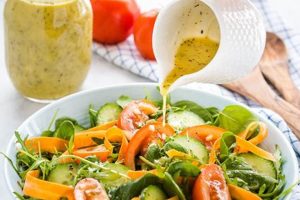
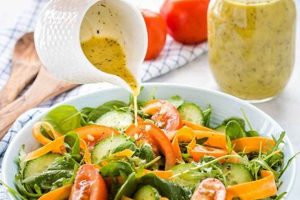
A flavorful complement to robust beef and fresh greens, the sauce for a steak salad elevates the dish beyond a simple combination of ingredients. This crucial element provides a bridge between the richness of the meat and the crispness of the vegetables, unifying diverse textures and flavors into a cohesive and satisfying culinary experience. For example, a vibrant chimichurri sauce, with its herbaceous notes and tangy acidity, cuts through the richness of grilled steak while complementing the peppery bite of arugula.
The proper emulsion can make or break this culinary creation. It enhances the overall enjoyment by adding depth and complexity, creating a balance that prevents any single ingredient from overpowering the others. Historically, salads incorporating protein like steak have represented a substantial and fulfilling meal. The accompanying sauce evolved to not just enhance flavor, but also to tenderize tougher cuts of meat and preserve freshness.
This exploration will delve into various styles, from classic vinaigrettes to creamy dressings, examining their compositions and suggesting ideal pairings for different steak preparations and salad components.
Tips for Crafting the Perfect Steak Salad Dressing
Elevating a steak salad from satisfactory to exceptional hinges on a well-crafted dressing. These guidelines offer insights into achieving a harmonious balance of flavors and textures.
Tip 1: Consider the Cut of Steak: Richer cuts, like ribeye or New York strip, benefit from dressings with brighter acidity, such as a vinaigrette with red wine vinegar or lemon juice. Leaner cuts, like sirloin or flank steak, pair well with creamier dressings or those with bolder flavors.
Tip 2: Complement the Greens: Delicate greens like butter lettuce or spinach require a lighter dressing, while heartier greens like romaine or kale can handle bolder, more assertive flavors.
Tip 3: Balance Flavors: Strive for a balance of sweet, sour, salty, and savory elements. A touch of sweetness, like honey or maple syrup, can balance the acidity of vinegar, while a pinch of salt enhances overall flavor.
Tip 4: Emulsify Properly: A stable emulsion prevents the dressing from separating, ensuring a consistent coating on the salad ingredients. Whisk oil into vinegar slowly or use a blender for a smoother texture.
Tip 5: Season Thoughtfully: Freshly ground black pepper and herbs like chives, parsley, or oregano can add depth and complexity. Consider adding a pinch of red pepper flakes for a touch of heat.
Tip 6: Taste and Adjust: Before serving, taste the dressing and adjust seasonings as needed. A final touch of acidity or sweetness can make a significant difference.
Tip 7: Timing is Key: Dress the salad just before serving to prevent the greens from wilting. For steak salads, dress the steak slices separately and add them to the dressed greens just before serving.
By following these guidelines, one can create a dressing that not only complements the steak and other salad components but elevates the dish to a truly memorable dining experience.
The following section will explore specific dressing recipes suitable for various steak salad combinations.
1. Flavor Balance

Flavor balance represents a cornerstone of successful steak salad preparation. The dressing acts as a unifying element, harmonizing the disparate flavors of the beef, greens, and other salad components. A well-balanced dressing neither overwhelms nor underwhelms, but rather enhances the overall culinary experience.
- Acidity
Acidity plays a vital role in cutting through the richness of the steak and providing a refreshing counterpoint. Sources of acidity, such as vinegar (red wine, balsamic, apple cider), citrus juice (lemon, lime), or even yogurt, introduce brightness and complexity. For example, a balsamic vinaigrette with a touch of Dijon mustard offers a tangy counterpoint to the savory flavors of grilled steak and the bitterness of radicchio.
- Sweetness
A touch of sweetness can balance the acidity and other savory elements in the dressing. Honey, maple syrup, or fruit juices like pomegranate or orange juice can add depth and complexity. A small amount of honey in a lemon-herb vinaigrette complements the char of grilled steak and the sweetness of roasted vegetables.
- Saltiness
Salt enhances the other flavors in the dressing and helps to season the salad. Sea salt, kosher salt, or flavored salts can be used judiciously. Proper salting brings out the natural flavors of the ingredients, preventing the dressing from tasting bland.
- Fat
Fat, typically in the form of oil, contributes to the texture and mouthfeel of the dressing. Olive oil, avocado oil, or grapeseed oil can be used to create a smooth, emulsified dressing. The type of oil chosen can also contribute to the flavor profile. A robust extra virgin olive oil adds a peppery note, while avocado oil offers a creamy texture.
By carefully balancing these four elements acidity, sweetness, saltiness, and fat one can create a steak salad dressing that elevates the dish from simple to sublime. Consideration of these components ensures the dressing complements the steak and other ingredients, resulting in a harmonious and flavorful experience. The interplay of these elements creates a dynamic flavor profile that enhances the overall enjoyment of the dish.
2. Texture
Texture represents a critical sensory element in a successful steak salad, significantly influenced by the dressing. This element contributes to the overall dining experience, affecting how the dish interacts with the palate. Dressings provide more than just flavor; they introduce textural contrast and complexity, elevating the salad beyond a simple combination of ingredients. A creamy dressing, for example, coats the steak and greens, offering a smooth, rich mouthfeel that complements the tender meat and crisp vegetables. Conversely, a vinaigrette provides a lighter, more acidic touch, its thin consistency allowing the individual textures of the ingredients to shine through.
The interplay of textures within the salad creates a dynamic and engaging culinary experience. Consider a salad with seared steak, crunchy croutons, and peppery arugula. A creamy blue cheese dressing adds a velvety richness that contrasts with the crisp greens and croutons, while clinging to the steak, enhancing its savory profile. Alternatively, a light vinaigrette with a touch of Dijon mustard offers a sharp, tangy counterpoint to the rich steak and bitter greens, its thinner consistency allowing the textural nuances of each ingredient to remain distinct. Achieving textural balance prevents the salad from feeling one-dimensional, ensuring an engaging and satisfying meal. The choice of dressing should complement the other textural elements within the salad, creating a harmonious and well-rounded dish.
Understanding the impact of texture on the overall composition of a steak salad allows for informed decisions regarding dressing selection. Careful consideration of textural elements, alongside flavor profiles, ensures a cohesive and enjoyable culinary experience. The right dressing not only complements the flavors but also enhances the textural interplay, transforming a simple steak salad into a multi-sensory delight. This principle applies not just to steak salads, but to a broader range of culinary creations, highlighting the importance of texture in achieving a balanced and satisfying dish.
3. Ingredient Compatibility
Ingredient compatibility forms a critical foundation for successful steak salad dressing formulation. Careful consideration of how individual components interact determines the overall balance and harmony of flavors. This principle encompasses not only the dressing’s internal balance but also its interaction with the steak and other salad elements. A dressing’s success hinges on its ability to bridge the disparate flavors present, creating a cohesive and enjoyable culinary experience. For instance, a blue cheese dressing, while delicious on its own, might clash with a delicate vinaigrette-dressed salad incorporating balsamic vinegar and fresh berries. However, that same blue cheese dressing may complement a robust steak, bitter greens like radicchio, and candied pecans.
The principle of ingredient compatibility extends beyond flavor profiles to encompass textural considerations. A creamy dressing might overwhelm delicate greens, while a light vinaigrette may not adequately coat heartier vegetables or cling to seared steak. An example illustrating this principle is the pairing of a thick, creamy ranch dressing with sturdy romaine lettuce and grilled chicken or steak. This combination offers a satisfying textural contrast. Conversely, delicate spring greens would likely fare better with a lighter vinaigrette, preserving their texture and preventing them from becoming weighed down. Effective dressing formulation requires an understanding of these textural interactions to create a balanced and appealing final product.
Understanding ingredient compatibility empowers informed decision-making in crafting steak salad dressings. It enables the creation of harmonious flavor profiles and balanced textures that enhance the overall dining experience. Neglecting this principle can result in a disjointed and unsatisfying salad, where individual components compete rather than complement each other. Achieving ingredient compatibility ensures that the dressing not only tastes good on its own but also elevates the other elements of the salad, creating a cohesive and enjoyable culinary composition. This understanding translates to greater control over the final product, enabling culinary creativity and ensuring a consistently successful outcome.
4. Acidity
Acidity forms a cornerstone of well-balanced steak salad dressings, providing a crucial counterpoint to the richness of the beef. This essential element brightens the overall flavor profile, cutting through the fattiness of the steak and preventing the dish from feeling heavy. The acidic component acts as a palate cleanser, preparing the taste buds for the next bite. A classic example lies in the use of a vinaigrette. The vinegar’s sharpness contrasts with the steak’s umami, creating a dynamic interplay that elevates the entire salad. Without sufficient acidity, the dressing, and subsequently the salad, can taste flat and overly rich.
Beyond simply balancing richness, acidity contributes complexity to the dressing’s flavor profile. Different acidic ingredients offer unique characteristics. Lemon juice provides a bright, citrusy tang, while red wine vinegar adds a subtle fruity note. Balsamic vinegar, with its deeper, more complex flavor profile, introduces a nuanced sweetness. The choice of acid depends on the desired flavor outcome and the other ingredients in the dressing and the salad itself. For example, a lime-cilantro vinaigrette complements the flavors of grilled flank steak and avocado, while a balsamic reduction provides a richer, more savory counterpoint to a salad featuring seared New York strip and gorgonzola cheese. This careful selection allows for a tailored flavor experience, enhancing the overall enjoyment of the dish.
Understanding the role of acidity in steak salad dressings allows for informed choices that enhance the culinary experience. The appropriate level and type of acidity depend on factors such as the cut of steak, the other salad ingredients, and the desired flavor profile. Balancing acidity with other flavor components, such as sweetness, saltiness, and fat, creates a harmonious dressing that elevates the entire dish. Failure to properly incorporate acidity can result in a bland or overly rich salad. Thus, mastering the use of acidity represents a crucial step in crafting truly exceptional steak salads, demonstrating a nuanced understanding of flavor balance and composition.
5. Freshness
Freshness represents a critical element in achieving a high-quality steak salad dressing, impacting both flavor and overall culinary experience. A dressing composed of fresh, high-quality ingredients elevates the dish, enhancing the flavors of the steak and other salad components. Conversely, the use of stale or low-quality ingredients can detract from the overall enjoyment, resulting in a less vibrant and satisfying meal.
- Ingredient Quality
The quality of individual ingredients directly influences the final flavor profile of the dressing. Freshly squeezed citrus juice offers a brighter, more vibrant acidity compared to bottled varieties. High-quality oils, such as extra virgin olive oil, contribute nuanced flavors and desirable textures. Fresh herbs, like chives or parsley, provide a more intense aroma and flavor compared to dried alternatives. Selecting peak-season produce for any incorporated fruits or vegetables further enhances the dressing’s freshness and flavor complexity.
- Proper Storage
Proper storage of ingredients and the prepared dressing plays a crucial role in maintaining freshness. Oils should be stored in a cool, dark place to prevent oxidation and rancidity. Fresh herbs benefit from refrigeration, ideally stored in a damp paper towel or in a glass of water. Prepared dressings should be stored in airtight containers in the refrigerator to maintain their quality and prevent spoilage. Adhering to appropriate storage practices ensures that the dressing remains fresh and flavorful for as long as possible.
- Time Sensitivity
Freshness is inherently time-sensitive. Certain ingredients, particularly fresh herbs and some fruits, have a limited shelf life. Utilizing these ingredients promptly after purchase ensures optimal flavor and prevents spoilage. Similarly, prepared dressings are best consumed within a reasonable timeframe to maintain their quality. While some dressings can be stored for several days, others are best enjoyed immediately after preparation. Understanding the time sensitivity of different ingredients and dressings allows for optimal flavor and minimizes waste.
- Preparation Techniques
Preparation techniques can significantly impact the freshness of a dressing. For example, chopping herbs just before use preserves their volatile oils and maximizes their flavor contribution. Similarly, emulsifying a vinaigrette immediately before serving ensures a smooth, well-combined dressing. Over-processing or prolonged exposure to air can degrade the quality of certain ingredients, diminishing their freshness and flavor. Careful attention to preparation techniques preserves the integrity of the ingredients, resulting in a more vibrant and flavorful dressing.
These facets of freshness contribute significantly to the overall quality and enjoyment of a steak salad. By prioritizing fresh, high-quality ingredients, employing proper storage techniques, respecting time sensitivity, and utilizing appropriate preparation methods, one can create a dressing that elevates the entire dish. The resulting vibrant flavors and textures enhance the culinary experience, transforming a simple steak salad into a truly memorable meal. Freshness, therefore, represents a crucial element in achieving culinary excellence in steak salad preparation.
Frequently Asked Questions
This section addresses common inquiries regarding the creation and utilization of suitable dressings for steak salads.
Question 1: How does one prevent a vinaigrette from separating?
A stable emulsion is key. Whisking oil slowly into the vinegar while continuously whisking creates a more stable emulsion. Alternatively, a blender or food processor can be utilized for a smoother, more consistent result. Adding a small amount of emulsifying agent, such as Dijon mustard or honey, can further enhance stability.
Question 2: What are suitable alternatives to traditional vinegar in dressings?
Citrus juices, such as lemon or lime, offer a bright, acidic alternative. Yogurt or buttermilk can provide a creamy base with a tangy flavor. Less conventional options include fruit purees, such as raspberry or mango, which introduce unique flavor profiles and sweetness.
Question 3: How can one adjust a dressing that is too acidic?
A touch of sweetness can balance excessive acidity. Honey, maple syrup, or a pinch of sugar are effective options. Alternatively, a small amount of additional oil can mellow the acidity without significantly altering the flavor profile.
Question 4: Can dressings be made ahead of time?
Many dressings can be prepared in advance. Storing dressings in airtight containers in the refrigerator allows flavors to meld. However, dressings containing fresh herbs are often best prepared just before serving to maximize their vibrancy. Vinaigrettes may separate upon standing and require re-emulsification before use.
Question 5: What are some strategies for reducing the fat content in dressings?
Substituting a portion of the oil with low-sodium broth or water can reduce overall fat content. Utilizing flavorful ingredients, such as herbs, spices, and citrus zest, can compensate for the reduced oil and enhance the overall flavor profile. Greek yogurt can also provide a creamy texture with lower fat than traditional mayonnaise or sour cream.
Question 6: How does one choose the right dressing for a specific steak and salad combination?
Consider the flavor profiles of both the steak and the other salad components. Richer cuts of steak often pair well with dressings that offer bright acidity, while leaner cuts can benefit from creamier or more boldly flavored options. Delicate greens require lighter dressings, whereas heartier greens can handle more robust flavors. Strive for a harmonious balance between all elements.
Careful consideration of these factors ensures a well-balanced and flavorful steak salad experience.
The following section will provide a collection of sample recipes to illustrate these principles in practice.
Conclusion
Careful consideration of the formulation and application of appropriate dressings elevates steak salads from simple meals to culinary experiences. Balancing acidity, sweetness, saltiness, and fat creates a harmonious foundation. Textural considerations, ranging from creamy emulsions to light vinaigrettes, further enhance the interplay of ingredients. Ingredient compatibility ensures that the dressing complements both the steak and accompanying salad components. Fresh, high-quality ingredients and proper storage practices contribute to the vibrancy and overall enjoyment of the dish. Acidity plays a pivotal role in cutting through richness and balancing flavors. Understanding these principles empowers informed decision-making, allowing for a tailored approach to dressing selection and creation.
The explored principles offer a pathway toward consistent culinary success in crafting exceptional steak salads. Application of these guidelines allows for creative exploration and personalized flavor experiences, transforming ordinary meals into memorable culinary creations. Ultimately, a well-crafted dressing serves as the unifying element, transforming a collection of individual ingredients into a cohesive and satisfying dish.