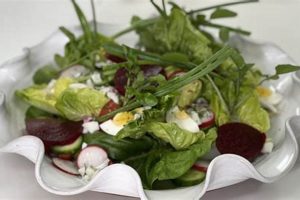
Pea salad is a culinary dish typically composed of cooked peas, often combined with other vegetables, and bound with a creamy or vinaigrette-based dressing. Variations exist, incorporating ingredients like cheese, bacon, or onion, resulting in a spectrum of flavors and textures. For instance, a classic preparation might include mayonnaise, celery, and hard-boiled eggs, while other versions feature fresh mint, feta cheese, and a lemon vinaigrette.
This versatile dish provides a refreshing and nutritious complement to a variety of meals. Its adaptability makes it appropriate for picnics, barbecues, potlucks, and holiday gatherings. Historically, pea salad gained popularity as refrigeration became more common, allowing for safe storage and transportation. Its relative ease of preparation and customizable nature further contributed to its widespread adoption as a staple side dish. Pea salad offers a good source of protein, fiber, and various vitamins, particularly when incorporating fresh ingredients.
The following sections will delve into specific formulations, exploring different ingredient combinations, dressing options, and preparation techniques to create delightful variations of this classic dish. Nutritional information and suggestions for incorporating pea salad into a balanced diet will also be provided.
Tips for Exceptional Pea Salad
Achieving a truly delightful pea salad involves attention to detail and an understanding of key techniques. The following suggestions offer guidance for optimizing flavor, texture, and overall presentation.
Tip 1: Use Fresh or Frozen Peas: Canned peas can sometimes have a mushy texture. Opting for fresh or frozen peas ensures a brighter flavor and firmer consistency. If using frozen peas, thaw them completely before incorporating them into the salad.
Tip 2: Blanch Fresh Peas: Briefly blanching fresh peas in boiling water enhances their vibrant green color and tenderizes them without overcooking. Immediately plunge the blanched peas into ice water to stop the cooking process and maintain their crispness.
Tip 3: Balance Flavors: Consider the interplay of sweet, savory, and acidic elements. A touch of sweetness from chopped red onion or a dash of sugar can complement the savory notes of bacon or cheese. Acidity from vinegar or lemon juice brightens the overall flavor profile.
Tip 4: Customize the Dressing: While mayonnaise-based dressings are classic, explore variations with vinaigrettes, yogurt-based dressings, or even a simple combination of olive oil, herbs, and spices. This allows for tailoring the salad to individual preferences and dietary needs.
Tip 5: Add Texture: Incorporating ingredients with contrasting textures creates a more engaging sensory experience. Consider adding chopped celery, water chestnuts, crumbled bacon, or toasted nuts for a delightful crunch.
Tip 6: Chill Thoroughly: Allowing the salad to chill in the refrigerator for at least an hour before serving allows the flavors to meld and enhances the refreshing quality of the dish.
Tip 7: Garnish Thoughtfully: A simple garnish can elevate the visual appeal. Fresh herbs like mint or dill, a sprinkle of paprika, or a few strategically placed croutons add a touch of elegance.
By implementing these tips, one can create a pea salad that is not only visually appealing but also offers a delightful balance of flavors and textures.
The following section will offer concluding remarks and recipe suggestions for further exploration.
1. Fresh or Frozen Peas

The choice between fresh or frozen peas significantly impacts the quality of pea salad. Fresh peas, when in season, offer optimal sweetness and a tender-crisp texture. However, their availability is limited. Frozen peas provide a convenient and readily available alternative that retains much of the fresh flavor and texture when handled correctly. Using canned peas often results in a softer, less vibrant product, which can detract from the overall appeal of the salad. The difference stems from the processing methods; fresh and frozen peas are typically processed shortly after harvesting, preserving their quality, while canned peas undergo a more extensive process that can compromise texture.
Consider a pea salad composed of fresh garden peas, blanched briefly and chilled. Their bright green color and crisp-tender texture contrast delightfully with other ingredients. Conversely, a salad made with canned peas may exhibit a duller hue and a mushier consistency, diminishing the overall sensory experience. This distinction underscores the importance of selecting high-quality peas as a foundation for a successful pea salad. Freezing peas shortly after harvest locks in their freshness, making them a practical and flavorful choice year-round. Thawing them gently and incorporating them immediately into the salad ensures optimal texture and prevents them from becoming waterlogged.
Selecting fresh or frozen peas constitutes a crucial first step in crafting a superior pea salad. While fresh peas offer peak flavor during their season, frozen peas present a reliable and convenient alternative for achieving comparable results. The textural and visual differences between these options and canned peas highlight the impact of ingredient selection on the final product. Understanding this connection empowers informed decision-making and contributes to a more satisfying culinary outcome.
2. Complementary Ingredients

Complementary ingredients elevate pea salad from simple to exceptional. These additions provide textural contrast, enhance the flavor profile, and contribute visual appeal. The interplay of different ingredients creates a more complex and satisfying sensory experience. Consider the textural contrast achieved by combining tender peas with crisp chopped celery and red onion. The sweetness of the peas is balanced by the slight sharpness of the onion, while the celery adds a refreshing crunch. Similarly, the addition of crumbled bacon introduces a savory element, complementing the sweetness of the peas and enhancing the overall flavor profile. Other complementary ingredients, such as crumbled feta cheese or chopped hard-boiled eggs, contribute creaminess and protein, further enriching the dish. Choosing complementary ingredients thoughtfully transforms a basic pea salad into a culinary creation.
The selection of complementary ingredients should consider the overall balance of flavors and textures. For a lighter, brighter salad, incorporating fresh mint, crumbled feta, and a lemon vinaigrette creates a refreshing Mediterranean-inspired dish. Conversely, a more traditional approach might include cheddar cheese, chopped bacon, and a creamy mayonnaise-based dressing, offering a richer, more savory profile. Practical application of this understanding allows for customization based on individual preferences and dietary needs. One might substitute sunflower seeds for nuts to accommodate allergies, or opt for a lighter vinaigrette instead of a mayonnaise-based dressing for a lower-calorie option. Understanding the role of complementary ingredients empowers informed choices, enhancing the culinary outcome.
Effective pea salad recipes rely heavily on the strategic incorporation of complementary ingredients. These additions not only enhance flavor and texture but also offer opportunities for creative expression. A thoughtful combination of ingredients elevates the dish beyond its basic components, creating a more nuanced and satisfying experience. The ability to adapt and customize based on specific dietary needs or flavor preferences further underscores the importance of understanding the role of complementary ingredients. Mastering this element enhances culinary creativity and ensures a more rewarding pea salad experience.
3. Balanced Dressing
Balanced dressing is paramount in pea salad recipes. The dressing serves as a unifying element, binding the individual components and influencing the overall flavor profile. A well-balanced dressing complements rather than overpowers the delicate sweetness of peas and the other ingredients. It provides a harmonious blend of flavors, creating a cohesive and enjoyable culinary experience. An overly acidic dressing can mask the subtle sweetness of the peas, while an excessively rich dressing can make the salad feel heavy and cloying. Consider a pea salad with a simple vinaigrette. If the vinaigrette is overly tart, it will dominate the flavor profile, obscuring the taste of the peas and other vegetables. Conversely, a bland dressing fails to enhance the other flavors, resulting in a less satisfying dish.
The concept of balance extends to the interplay of different flavor components within the dressing itself. A classic mayonnaise-based dressing, for example, often incorporates a touch of sweetness, a hint of acidity, and a savory element. This balance ensures that no single flavor dominates, creating a harmonious blend that complements the other ingredients in the salad. For instance, a mayonnaise-based dressing might include a small amount of sugar or honey to balance the tanginess of vinegar or lemon juice, while a pinch of salt enhances the overall flavor profile. This interplay of flavors elevates the dressing beyond a simple condiment, transforming it into an integral component of the dish. Practical application involves careful consideration of ingredient ratios and thoughtful tasting throughout the preparation process.
Achieving a balanced dressing is crucial for a successful pea salad. It requires an understanding of flavor dynamics and the ability to adjust ingredients to create a harmonious blend. A well-balanced dressing enhances the natural sweetness of the peas and complements the other ingredients, resulting in a cohesive and enjoyable culinary experience. Challenges may arise when attempting to balance flavors for a wide range of palates, but careful consideration and incremental adjustments during preparation can address this. Ultimately, the balanced dressing elevates the pea salad from a simple assemblage of ingredients to a cohesive and flavorful dish.
4. Proper Chilling Time

Proper chilling time significantly influences the final quality of pea salad. Chilling allows the flavors of the various components, including the peas, vegetables, and dressing, to meld and mature. This process enhances the overall flavor profile, creating a more cohesive and enjoyable culinary experience. Insufficient chilling results in a salad where the individual flavors remain distinct, lacking the desired integration. Conversely, excessive chilling can negatively impact the texture of certain ingredients, particularly delicate greens or vegetables. Consider a freshly prepared pea salad. The individual flavors of the peas, celery, onion, and dressing are discernible, but they haven’t yet harmonized. After an hour or two in the refrigerator, the flavors meld, creating a more balanced and nuanced taste. This fusion of flavors elevates the dish beyond its individual components.
The optimal chilling time depends on the specific ingredients and the dressing used. A mayonnaise-based dressing, for example, benefits from a longer chilling period, allowing the flavors to fully develop. Vinaigrette-based dressings, on the other hand, often require less chilling time. Furthermore, the inclusion of delicate ingredients, such as fresh herbs or leafy greens, may necessitate shorter chilling durations to prevent them from becoming wilted or losing their crispness. Practical application involves considering the specific recipe and adjusting the chilling time accordingly. A recipe incorporating a creamy dressing and robust vegetables might benefit from two to three hours of chilling, while a salad with a vinaigrette and delicate herbs might only require one hour. This adaptability ensures optimal flavor and texture.
Appropriate chilling time is an often-overlooked but essential aspect of pea salad preparation. It plays a critical role in flavor development and overall enjoyment. The process of chilling allows the individual flavors to meld, creating a more harmonious and balanced dish. While general guidelines exist, the optimal chilling time depends on the specific recipe and ingredients. Understanding this relationship and adapting accordingly ensures a superior culinary outcome. Challenges might include time constraints or limited refrigeration space, necessitating adjustments in planning and preparation strategies. Pea salad intended for a potluck, for instance, requires careful consideration of transportation and serving temperature to maintain optimal quality.
5. Creative Presentation
Creative presentation elevates pea salad from a simple side dish to a visually appealing culinary creation. Thoughtful presentation enhances the dining experience, stimulating appetite and adding a touch of elegance. While flavor remains paramount, visual appeal plays a significant role in overall enjoyment. This exploration delves into various facets of creative presentation, demonstrating how they transform pea salad into a dish that delights both the palate and the eye.
- Serving Vessels
The choice of serving vessel significantly impacts the presentation. Moving beyond traditional bowls, consider utilizing hollowed-out vegetables like bell peppers or tomatoes for individual portions. A rustic wooden platter or a sleek glass serving dish can also enhance visual appeal. For example, serving pea salad in endive leaves creates an elegant appetizer, while using a scooped-out bread bowl adds a rustic touch. The serving vessel contributes to the overall aesthetic and sets the tone for the dining experience.
- Garnishes
Garnishes provide the finishing touch, adding color, texture, and visual interest. Fresh herbs like mint or dill offer a vibrant contrast to the green peas. A sprinkle of paprika adds a pop of color, while a few strategically placed croutons contribute textural contrast. Consider garnishing with edible flowers for a touch of elegance or using a sprig of fresh parsley for a classic presentation. The garnish should complement the flavors of the salad while enhancing its visual appeal.
- Plating Techniques
Plating techniques further elevate the presentation. Instead of simply spooning the salad into a bowl, consider using a ring mold to create a more structured presentation. Layering the salad with complementary ingredients, such as sliced hard-boiled eggs or crumbled bacon, adds visual depth. For example, a composed salad with layers of peas, eggs, and bacon, topped with a dollop of dressing and a sprinkle of paprika, creates a visually striking presentation. Thoughtful plating transforms the salad into an artistic expression.
- Contextual Considerations
The context of the meal influences presentation choices. For a casual picnic, a simple presentation in a reusable container suffices. A more formal setting, however, calls for elevated presentation, utilizing elegant serving dishes and carefully chosen garnishes. For example, serving pea salad alongside grilled fish requires a different presentation approach compared to a buffet-style barbecue. Contextual awareness ensures that the presentation aligns with the overall dining experience.
Creative presentation enhances the enjoyment of pea salad by engaging multiple senses. The interplay of colors, textures, and serving styles elevates the dish beyond its basic components, creating a more memorable and satisfying culinary experience. By considering these facets of presentation, one can transform a simple pea salad into a visually appealing and delectable dish appropriate for a variety of occasions.
Frequently Asked Questions
This section addresses common inquiries regarding pea salad preparation, storage, and variations.
Question 1: Can frozen peas be used directly from the freezer?
While frozen peas can be added directly to some dishes, for optimal texture and flavor in pea salad, thawing and draining them thoroughly beforehand is recommended. This prevents excess water from diluting the dressing and maintains the peas’ structural integrity.
Question 2: How long can pea salad be stored?
Pea salad, when properly refrigerated in an airtight container, typically lasts for three to five days. However, variations containing more perishable ingredients, such as fresh herbs or dairy products, might have a shorter shelf life. Always assess the salad’s quality before consumption, noting any changes in appearance or odor.
Question 3: What can be substituted for mayonnaise in pea salad dressing?
Several alternatives to mayonnaise exist for pea salad dressing. Plain yogurt or Greek yogurt offer a lighter, tangier option. A vinaigrette made with olive oil, vinegar, and herbs provides a refreshing alternative. Additionally, sour cream or a combination of sour cream and yogurt can create a creamy dressing with a distinct flavor profile.
Question 4: How can one prevent pea salad from becoming watery?
Excess moisture often arises from insufficiently drained peas or vegetables with high water content. Thoroughly draining all ingredients before combining them is crucial. Additionally, adding the dressing shortly before serving helps maintain the desired consistency. For recipes involving frozen peas, ensure they are completely thawed and patted dry prior to incorporation.
Question 5: Can pea salad be served warm?
While traditionally served cold, variations of pea salad can be served warm. Warm pea salads might feature blanched fresh peas combined with sauteed vegetables and a warm vinaigrette. The key is to ensure that the ingredients and dressing complement each other at the desired temperature. Warmer temperatures can intensify certain flavors, offering a different culinary experience.
Question 6: How can pea salad be made more nutritious?
Pea salad’s nutritional value can be enhanced through ingredient selection. Incorporating a variety of colorful vegetables, such as bell peppers, carrots, or chopped broccoli, increases vitamin and mineral content. Adding lean protein sources like grilled chicken or chickpeas boosts the protein content. Furthermore, using whole-grain croutons or toasted nuts adds fiber and healthy fats. Adjustments to the dressing, such as using a lighter vinaigrette or incorporating fresh herbs, can further optimize the nutritional profile.
These responses offer guidance on maximizing pea salad enjoyment and addressing common preparation concerns. Understanding these aspects empowers culinary exploration and customization.
The following section will offer concluding remarks and recipe suggestions for further exploration.
Pea Salad Recipes
Pea salad recipes offer a versatile canvas for culinary creativity. From the selection of fresh or frozen peas to the nuanced balance of complementary ingredients and dressings, each element contributes to the final product. Proper chilling allows flavors to meld, while creative presentation elevates the dish from simple to sophisticated. Understanding these components empowers informed decision-making, enabling customization to suit individual preferences and dietary needs. Whether adhering to classic preparations or exploring innovative variations, attention to detail ensures a delightful culinary experience.
The exploration of pea salad recipes extends beyond mere ingredient combinations; it delves into the art of balancing flavors, textures, and visual appeal. This pursuit of culinary excellence transforms a humble side dish into a celebration of freshness and creativity. Continued experimentation with ingredients, dressings, and presentation styles promises further evolution and enjoyment of this versatile dish, ensuring its enduring presence in culinary traditions.