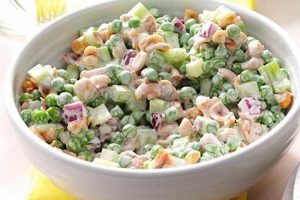
A Cobb salad is a main-dish American garden salad typically made with chopped salad greens (such as romaine lettuce), tomato, crisp bacon, fried or roasted chicken breast, hard-boiled eggs, avocado, chives, blue cheese, and red-wine vinaigrette. Variations exist, but these ingredients represent the core components. Preparing this dish involves specific techniques for ingredient preparation, such as cooking the bacon and chicken, and creating a balanced presentation.
The organized arrangement of ingredients in a Cobb salad contributes to its visual appeal and allows diners to appreciate the distinct flavors and textures of each component. Its popularity stems from its satisfying combination of protein, healthy fats, and fresh vegetables. Originating in the 1930s at the Brown Derby restaurant in Hollywood, California, the salad has become a classic American dish found on menus nationwide. Its enduring appeal demonstrates its versatility and adaptability to different tastes and preferences.
The following sections will explore various approaches to preparing a Cobb salad, ranging from traditional methods to contemporary adaptations, offering a range of options for every culinary skill level. Guidance on ingredient selection, preparation techniques, and presentation suggestions will be provided to ensure a successful and enjoyable culinary experience.
Tips for a Perfect Cobb Salad
Achieving a well-balanced and flavorful Cobb salad involves careful consideration of ingredient quality and preparation techniques. The following tips offer guidance for creating a truly exceptional dish.
Tip 1: Ingredient Quality is Paramount: Opt for fresh, high-quality ingredients. Ripe, flavorful tomatoes, crisp lettuce, and high-quality bacon and chicken contribute significantly to the overall taste experience.
Tip 2: Precise Ingredient Preparation: Dice ingredients uniformly for consistent bite size and aesthetic appeal. Properly cooked bacon should be crisp, while chicken should be tender and juicy.
Tip 3: The Art of the Egg: Perfectly cooked hard-boiled eggs are essential. Overcooked yolks can be dry and crumbly. Aim for a firm, yet creamy yolk.
Tip 4: Avocado Handling: To prevent browning, add avocado just before serving. Alternatively, lightly coat diced avocado with lemon juice.
Tip 5: Blue Cheese Selection: Consider the intensity of the blue cheese. A milder variety can complement the other flavors without overpowering them.
Tip 6: Vinaigrette Versatility: While a classic red wine vinaigrette is traditional, experimentation with other dressings, such as a buttermilk ranch or a creamy blue cheese dressing, can offer exciting variations.
Tip 7: Presentation Matters: Arrange ingredients neatly in rows or sections for a visually appealing presentation. This allows each ingredient’s color and texture to stand out.
By following these tips, one can ensure a Cobb salad that delivers a harmonious blend of flavors, textures, and visual appeal, offering a satisfying and memorable culinary experience.
By mastering these techniques, one can elevate the Cobb salad from a simple dish to a culinary masterpiece.
1. Classic Ingredients
Classic ingredients define the Cobb salad, differentiating it from other salads and contributing significantly to its enduring popularity. These core components, typically including crisp bacon, grilled or roasted chicken breast, hard-boiled eggs, tomatoes, avocado, blue cheese, chives, and a red wine vinaigrette, offer a complex interplay of flavors and textures. The salty, smoky bacon complements the richness of the avocado and blue cheese, while the chicken and eggs provide protein, and the tomatoes and chives offer freshness and acidity. Omitting any of these classic ingredients alters the fundamental character of the salad. For example, substituting feta cheese for blue cheese, while acceptable in some variations, changes the flavor profile considerably. Understanding the role of each classic ingredient allows for informed substitutions or additions while maintaining the essence of a Cobb salad.
The specific preparation of these classic ingredients also impacts the overall quality of the Cobb salad. Crisp bacon, achieved through proper cooking techniques, offers a satisfying textural contrast to the other ingredients. Similarly, the doneness of the chicken breast, whether grilled or roasted, affects its tenderness and juiciness. Overcooked eggs can result in a dry, crumbly yolk, detracting from the creamy texture expected in a classic Cobb. These nuances highlight the importance of not only selecting the classic ingredients but also preparing them with care and precision. Consider a Cobb salad with soggy bacon: the lack of crispness compromises the intended textural contrast and negatively impacts the overall dining experience.
Adhering to the classic ingredients, while allowing for minor variations based on preference or availability, ensures the integrity of the Cobb salad. This understanding allows for informed decisions regarding ingredient selection and preparation, resulting in a dish that remains true to its origins while offering a satisfying and balanced culinary experience. A successful Cobb salad relies on the harmonious blend of these classic ingredients, prepared and presented in a manner that showcases their individual characteristics and contributes to a cohesive whole. Maintaining this balance ensures the dish remains a timeless classic.
2. Precise chopping
Precise chopping is integral to a successful Cobb salad, impacting both the aesthetic presentation and the overall dining experience. Uniformly sized ingredients ensure even distribution of flavors and textures in each bite. Consider the interplay of a crisp bacon piece, a tender morsel of chicken, and a creamy segment of avocado. If these ingredients are chopped unevenly, some bites might be dominated by a single flavor, disrupting the intended balance. Precise chopping allows for a harmonious blend of flavors in every mouthful, maximizing the complexity and enjoyment of the salad.
Beyond flavor distribution, precise chopping contributes to the visual appeal, a defining characteristic of the Cobb salad. The traditional presentation, with ingredients arranged in neat rows, relies on uniformity of size and shape. Unevenly chopped ingredients create a visually cluttered and less appealing presentation. Imagine a row of diced tomatoes next to uneven chunks of chicken. The visual disharmony detracts from the overall presentation and diminishes the dining experience. Precise chopping ensures a clean, organized appearance, enhancing the visual appeal and making the salad more enticing.
Mastering precise chopping techniques elevates the Cobb salad from a simple dish to a carefully crafted culinary creation. This attention to detail reflects a commitment to both flavor and presentation, demonstrating culinary skill and enhancing the overall dining experience. While seemingly a minor detail, precise chopping significantly contributes to the success of a Cobb salad, highlighting the importance of technique in achieving culinary excellence. This precision ultimately differentiates a well-executed Cobb salad from a haphazardly assembled one.
3. Balanced Flavors

Balanced flavors are essential to a successful Cobb salad, distinguishing it from other salads and contributing significantly to its appeal. The interplay of contrasting yet complementary flavors creates a harmonious and satisfying culinary experience. Understanding this balance is crucial for crafting a Cobb salad that delivers on its promise of a complex and nuanced flavor profile.
- Salty and Savory:
Ingredients like bacon and blue cheese provide the salty, savory foundation of the Cobb salad. The crisp, smoky bacon contributes a rich, salty flavor, while the blue cheese adds a pungent, savory note. These elements are essential for balancing the lighter, fresher components of the salad.
- Fresh and Acidic:
Tomatoes, chives, and the vinaigrette provide the necessary acidity and freshness to counterbalance the richness of the bacon, blue cheese, and avocado. The tomatoes offer a juicy sweetness with a hint of acidity, the chives contribute a mild onion flavor, and the vinaigrette adds a tangy brightness. These elements prevent the salad from feeling too heavy or rich.
- Rich and Creamy:
Avocado and hard-boiled eggs contribute richness and creaminess. The avocado offers a smooth, buttery texture and a subtle nutty flavor, while the eggs provide a creamy yolk and a mild, slightly sulfurous note. These elements add depth and complexity to the salad.
- Textural Contrast:
The Cobb salad offers a delightful interplay of textures, from the crisp bacon and lettuce to the creamy avocado and the crumbly blue cheese. This textural variety enhances the dining experience and contributes to the overall enjoyment of the salad. A Cobb salad lacking this contrast, for instance, one with soggy bacon or overcooked eggs, would be significantly less appealing.
The careful balance of these flavor and texture components is what defines a successful Cobb salad. The absence or overemphasis of any single element can disrupt this balance and detract from the overall experience. Achieving this harmony requires careful attention to ingredient selection, preparation, and the final composition of the salad. A well-balanced Cobb salad offers a symphony of flavors and textures, a testament to the power of culinary balance.
4. Visually Appealing
Visual appeal is a defining characteristic of the Cobb salad, setting it apart from other salads and contributing significantly to its enduring popularity. The intentional arrangement of ingredients is not merely decorative; it enhances the dining experience by showcasing the diversity of components and creating anticipation for the interplay of flavors and textures.
- Ingredient Arrangement:
The traditional presentation of a Cobb salad features ingredients arranged in neat, distinct rows or sections. This structured layout allows each componentfrom the crisp bacon and vibrant tomatoes to the creamy avocado and crumbled blue cheeseto stand out. This visual clarity highlights the variety of ingredients and creates a sense of order, contrasting with the mixed nature of many other salads. This meticulous arrangement transforms the salad into a visually engaging culinary composition.
- Color Contrast:
The Cobb salad boasts a vibrant color palette. The deep green of the lettuce, the bright red of the tomatoes, the crisp white of the hard-boiled eggs, and the varied hues of the other ingredients create a visually striking contrast. This color contrast further enhances the appeal and stimulates the appetite, making the salad even more enticing.
- Textural Variation:
The visual presentation also highlights the textural diversity of the salad. The crisp bacon, the tender chicken, the creamy avocado, and the crumbly blue cheese are all visually distinct, foreshadowing the delightful textural contrasts experienced when eating the salad. This visual representation of texture adds another layer of complexity to the presentation, further enhancing its appeal.
- Portion Control and Balance:
The organized arrangement of ingredients also contributes to portion control and balance. By presenting each ingredient separately, diners can appreciate the proportion of each component and tailor their consumption accordingly. This visual cue allows for a more balanced and mindful eating experience.
The visual appeal of the Cobb salad is integral to its overall success. It elevates the dish beyond a simple mixture of ingredients, transforming it into a carefully composed culinary creation that engages the senses and enhances the dining experience. This meticulous attention to presentation underscores the importance of visual appeal in the culinary arts and contributes to the Cobb salad’s enduring status as a classic.
5. Versatile Adaptations

The versatility inherent in Cobb salad recipes contributes significantly to the dish’s enduring popularity. This adaptability allows for modifications tailored to individual preferences, dietary restrictions, and seasonal ingredient availability, ensuring the salad remains a relevant and appealing option in diverse culinary contexts. This inherent flexibility stems from the salad’s fundamental structure: a base of greens topped with a variety of ingredients, each contributing distinct flavors and textures. This modular design allows for substitutions and additions without compromising the essence of the dish. For example, individuals seeking to reduce saturated fat might substitute turkey bacon for traditional pork bacon, while vegetarians might replace the chicken with grilled tofu or halloumi cheese. These adaptations demonstrate the recipe’s capacity to accommodate a wide range of dietary needs.
Furthermore, the Cobb salad’s adaptability extends to seasonal variations. Swapping out winter tomatoes for summer varieties at their peak ripeness enhances the salad’s freshness and flavor profile. Similarly, incorporating seasonal greens, such as spinach in the spring or kale in the fall, adds nutritional value and textural variety. Such adaptations not only reflect a commitment to using fresh, seasonal produce but also demonstrate the salad’s capacity to evolve with the changing seasons, maintaining its appeal throughout the year. Consider a restaurant adapting its Cobb salad offering based on local farm produce. This not only supports local agriculture but also provides patrons with a dish showcasing the freshest ingredients available.
In conclusion, the versatility of Cobb salad recipes is a key factor in its continued relevance in contemporary cuisine. This adaptability allows for personalized variations catering to diverse dietary preferences and seasonal ingredient availability. This inherent flexibility ensures the Cobb salad remains a dynamic and appealing dish, capable of satisfying a broad range of culinary needs and preferences. Understanding this adaptability empowers individuals and culinary professionals to create customized versions that align with specific dietary goals and seasonal influences, further solidifying the Cobb salad’s position as a culinary staple.
Frequently Asked Questions
This section addresses common inquiries regarding Cobb salad preparation and variations.
Question 1: Can the traditional red wine vinaigrette be substituted?
While a classic red wine vinaigrette is customary, other dressings, such as buttermilk ranch or blue cheese, can complement the salad’s ingredients. Flavor profiles will vary accordingly.
Question 2: What are suitable alternatives for individuals with dietary restrictions?
Ingredient substitutions can accommodate dietary needs. Turkey bacon offers a lower-fat alternative to pork bacon, and grilled tofu or halloumi can replace chicken for vegetarian adaptations. Avocado can be omitted for those sensitive to its richness.
Question 3: How can the salad be adapted for different seasons?
Seasonal ingredients enhance the salad’s freshness. Utilize ripe summer tomatoes during warmer months and incorporate seasonal greens, such as spinach in the spring or kale in the fall.
Question 4: What is the optimal method for preventing avocado browning?
To minimize browning, incorporate avocado just before serving. Alternatively, a light coating of lemon or lime juice can help preserve its color.
Question 5: Does ingredient chopping size significantly influence the salad’s quality?
Uniformly chopped ingredients ensure even flavor distribution and contribute to a visually appealing presentation. Uneven chopping can result in some bites dominated by a single ingredient, compromising the intended balance.
Question 6: How crucial is the traditional arrangement of ingredients in rows?
While the traditional row arrangement is visually distinctive, slight variations do not inherently diminish the salad’s quality. The primary aim is to ensure an even distribution of ingredients for a balanced flavor experience.
Careful attention to these considerations ensures a successful and enjoyable Cobb salad experience, regardless of individual adaptations or preferences.
Further exploration of Cobb salad variations and customization options will be provided in the following sections.
Recipes Cobb Salad
Exploration of Cobb salad recipes reveals a dish characterized by a balance of flavors, textures, and visual appeal. From the classic combination of ingredients to the precise chopping techniques and the artful arrangement, each aspect contributes to the overall dining experience. Adaptability allows for personalized variations catering to dietary preferences and seasonal ingredient availability. Understanding the interplay of these elements distinguishes a well-executed Cobb salad from a mere assemblage of ingredients.
The enduring popularity of Cobb salad speaks to its versatility and adaptability. Continued exploration of variations and ingredient combinations ensures its relevance in contemporary cuisine. Careful consideration of these elements allows for a deeper appreciation of this classic dish and empowers culinary enthusiasts to create personalized versions that reflect individual tastes and preferences.