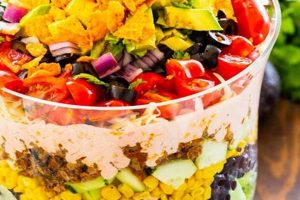
A dish featuring cooked salmon as its primary ingredient, combined with various complementary elements like mayonnaise, celery, onion, and seasonings, constitutes a classic salmon salad. This mixture can be enjoyed in numerous ways, from a simple sandwich filling to a more elaborate appetizer served on crackers or lettuce cups. A well-executed version balances the richness of the fish with bright, acidic notes and textural contrasts.
Beyond its culinary versatility, this dish offers nutritional value. Salmon is a rich source of protein and omega-3 fatty acids, known for their potential health benefits. Historically, preserved or smoked fish combined with other ingredients has been a practical way to extend shelf life and create flavorful meals. Modern interpretations often emphasize fresh ingredients and lighter preparations to highlight the salmon’s flavor and nutritional profile. Its enduring popularity speaks to its adaptability and satisfying flavor combinations.
The following sections will delve into specific variations, ingredient selection, preparation techniques, and serving suggestions to guide the creation of exceptional salmon salads. Whether seeking a quick lunch, a party appetizer, or a healthy weeknight meal, this versatile dish offers something for everyone.
Tips for Exceptional Salmon Salad
Creating a truly delicious salmon salad involves attention to detail and an understanding of flavor balancing. These tips offer guidance for achieving optimal results.
Tip 1: High-Quality Salmon is Key: Opting for high-quality, preferably wild-caught, salmon significantly impacts the final flavor. Fresh or frozen salmon can be used; ensure proper thawing if using frozen.
Tip 2: Proper Cooking Technique: Overcooked salmon results in a dry, less flavorful salad. Methods like poaching, baking, or grilling maintain moisture and enhance the fish’s natural taste.
Tip 3: Careful Flaking: Once cooked, allow the salmon to cool slightly before flaking. Avoid over-processing, which can create a mushy texture. Larger flakes provide better texture in the finished salad.
Tip 4: Balancing Flavors: The richness of salmon benefits from bright, acidic elements. Ingredients like lemon juice, Dijon mustard, or finely diced red onion add necessary contrast.
Tip 5: Textural Variety: Consider incorporating ingredients that provide textural contrast. Finely diced celery, chopped water chestnuts, or capers add satisfying crunch.
Tip 6: Mayonnaise Matters: High-quality mayonnaise serves as the binder and adds richness. Experimenting with different types, such as flavored mayonnaise or aioli, can elevate the flavor profile. Greek yogurt can be substituted for a lighter version.
Tip 7: Seasoning with Purpose: Freshly ground black pepper, dill, parsley, or chives are excellent seasonings. Avoid overpowering the delicate salmon flavor; season judiciously.
Tip 8: Chilling Time: Allowing the salad to chill for at least 30 minutes allows the flavors to meld and enhances the overall taste experience.
By following these tips, one can create a salmon salad that is both flavorful and satisfying, highlighting the natural qualities of the fish while creating a balanced and delicious dish.
The following section will provide a selection of salmon salad recipes that showcase these principles in practice, offering a range of flavor profiles and serving suggestions.
1. High-quality salmon

The foundation of an exceptional salmon salad rests upon the quality of its principal ingredient: the salmon itself. Selecting high-quality salmon significantly impacts the final dish’s flavor, texture, and overall appeal. This section explores the multifaceted nature of high-quality salmon and its crucial role in crafting a superior salad.
- Sourcing and Sustainability
Sourcing practices play a vital role in determining salmon quality. Wild-caught salmon, particularly from reputable fisheries committed to sustainable practices, often exhibits superior flavor and texture compared to conventionally farmed salmon. Sustainable sourcing ensures the long-term health of fish populations and minimizes environmental impact, contributing to a more responsible culinary choice.
- Freshness and Handling
Freshness is paramount. Whether purchasing fresh or frozen salmon, proper handling is essential. Fresh salmon should exhibit firm flesh, a vibrant color, and a fresh, mild aroma. Frozen salmon should be stored and thawed correctly to maintain its integrity. Proper handling preserves the salmon’s delicate flavor and minimizes the risk of bacterial contamination.
- Flavor Profile and Texture
High-quality salmon boasts a rich, buttery flavor and a delicate, flaky texture. The flavor profile should be clean, with no off-putting notes. The texture should be firm yet tender, contributing to a pleasant mouthfeel in the finished salad. These characteristics enhance the overall sensory experience of the dish.
- Nutritional Value
Beyond flavor and texture, high-quality salmon offers notable nutritional benefits. It is a rich source of omega-3 fatty acids, known for their potential health benefits, and provides high-quality protein. Selecting superior salmon maximizes these nutritional advantages, contributing to a healthier and more wholesome meal.
By prioritizing high-quality salmon, one elevates the salmon salad from a simple dish to a culinary experience. The investment in superior ingredients translates directly to a more flavorful, texturally appealing, and nutritionally valuable final product. Understanding the nuances of salmon quality empowers informed choices and contributes to a more satisfying culinary outcome.
2. Proper Cooking Method

The cooking method employed for salmon significantly influences the final texture and flavor of a salmon salad. Overcooking results in dry, chalky salmon, detracting from the desired delicate flakiness and richness. Conversely, undercooking poses food safety risks. Therefore, selecting and executing an appropriate cooking method is crucial for a successful recipe. Methods like poaching, baking, or grilling offer controlled heat application, ensuring even cooking and optimal moisture retention. Poaching in seasoned liquid gently infuses the salmon with flavor while maintaining its tenderness. Baking, particularly en papillote, preserves moisture and allows for aromatic additions. Grilling imparts a smoky char, adding depth of flavor. Each technique contributes unique characteristics to the final product.
Consider the example of poaching salmon in court bouillon. The gentle simmering in a flavorful liquid results in succulent, evenly cooked fish, ideal for flaking into a salad. The poaching liquid itself can contribute to the salad’s flavor profile. Alternatively, baking salmon with lemon and herbs creates a fragrant, moist fish, enhancing the salad’s overall brightness and complexity. Grilling, while requiring more attention, yields a distinct smoky flavor that complements bolder salad ingredients. The chosen method directly impacts the sensory experience of the final dish.
Mastery of proper salmon cooking techniques is essential for creating a high-quality salmon salad. The selected method dictates the final texture, flavor, and overall appeal. By understanding the nuances of each technique, one can tailor the cooking process to achieve the desired outcome. Careful consideration of these factors ensures a salmon salad that highlights the fish’s inherent qualities and contributes to a satisfying culinary experience.
3. Flavorful additions

Flavorful additions constitute a pivotal element in a successful salmon salad recipe, elevating it beyond the simple sum of its parts. These additions introduce complexity, balance the richness of the salmon, and contribute textural intrigue. The interplay between these additions and the base ingredients defines the character of the salad. Consider the interplay of fresh dill, lemon zest, and capers. The dill provides an herbaceous backdrop, the lemon zest contributes brightness, and the capers introduce a briny, salty counterpoint. These flavors, when combined with flaked salmon and a creamy binder, create a multi-dimensional flavor profile that elevates the dish from simple to sophisticated. Ignoring the role of flavorful additions risks a bland, one-dimensional outcome.
Understanding the synergistic relationships between different flavorful additions is essential for creating a well-balanced and nuanced salmon salad. For example, the sweetness of chopped apple or dried cranberries can offset the savory notes of the salmon and create a more complex flavor profile. The crunch of celery or water chestnuts provides textural contrast to the flaky salmon and creamy dressing. The piquancy of red onion or Dijon mustard cuts through the richness of the fish. These carefully chosen elements, when combined in appropriate proportions, elevate the overall sensory experience.
The strategic incorporation of flavorful additions unlocks the full potential of a salmon salad recipe. These elements contribute not only to the overall taste experience but also to the visual appeal and textural complexity of the dish. By carefully considering the interplay of flavors and textures, one can create a salmon salad that is both satisfying and memorable. Challenges may arise in balancing these additions, requiring attention to proportion and complementary flavor profiles. Overuse can mask the delicate flavor of the salmon; underuse can result in a bland and uninteresting dish. A thoughtful approach to incorporating these elements distinguishes an ordinary salmon salad from an exceptional one.
4. Textural Balance

Textural balance constitutes a critical element within a successful salmon salad recipe. The interplay of textures contributes significantly to the overall sensory experience, elevating the dish beyond a simple combination of ingredients. A well-executed salmon salad features a considered contrast between the flaky tenderness of the salmon and other components. This contrast prevents a monotonous mouthfeel and adds depth to each bite. Consider the integration of finely diced celery, which offers a crisp counterpoint to the soft salmon flakes. Alternatively, the inclusion of toasted nuts or seeds introduces a satisfying crunch. These textural variations create a dynamic eating experience that enhances enjoyment.
The absence of textural balance can result in a dish that feels one-dimensional and less satisfying. A salmon salad composed solely of soft, homogenous ingredients may lack the complexity and interest that contrasting textures provide. For instance, a salad consisting exclusively of flaked salmon and mayonnaise, while palatable, might benefit from the addition of chopped water chestnuts or capers to introduce textural variation. This principle extends to the choice of serving vessel. Serving the salad on crisp lettuce cups or crackers provides a contrasting textural element compared to serving it on soft bread. These seemingly minor details contribute significantly to the overall perception of the dish.
Achieving textural balance in a salmon salad necessitates careful ingredient selection and preparation. Attention to the size and shape of ingredients influences the final textural profile. Dicing vegetables finely creates a different sensation compared to larger, coarser cuts. Toasted nuts offer a more pronounced crunch than raw nuts. Understanding these nuances allows for precise control over the textural landscape of the salad. Balancing textural elements distinguishes a thoughtfully crafted salmon salad from a merely adequate one. This attention to detail elevates the sensory experience and contributes to a more satisfying culinary outcome.
5. Appropriate Binder

The binder in a salmon salad performs the crucial function of unifying disparate ingredients into a cohesive whole. It contributes to the overall texture, moisture content, and flavor profile of the dish. An appropriate binder complements the delicate flavor of the salmon without overpowering it, while simultaneously providing the necessary structure to hold the salad together. The choice of binder significantly impacts the final result, influencing both the sensory experience and the practical aspects of serving and consumption. Mayonnaise, a classic choice, provides a creamy texture and rich flavor that pairs well with salmon. Greek yogurt offers a lighter, tangier alternative, while aioli introduces a garlicky dimension. The selection depends on the desired flavor profile and dietary considerations.
Consider the difference between using mayonnaise and Greek yogurt as a binder. Mayonnaise, with its higher fat content, creates a richer, more luxurious salad, ideal for classic preparations. Greek yogurt, conversely, yields a lighter, tangier result, aligning with contemporary preferences for healthier options. Furthermore, the quantity of binder influences the salad’s consistency. Too little binder results in a dry, crumbly mixture, while an excess can create a heavy, overly rich salad. The appropriate amount depends on the desired texture and the other ingredients incorporated. For example, a salmon salad with a higher proportion of crunchy vegetables may require more binder to achieve the desired consistency.
Selecting an appropriate binder is essential for achieving the desired balance of flavor, texture, and practicality in a salmon salad. This choice influences not only the taste and mouthfeel but also the structural integrity of the salad, affecting how well it holds its shape when served on bread, crackers, or lettuce cups. The careful consideration of the binder’s properties, in conjunction with the other ingredients, ensures a harmonious and satisfying final product. Challenges may arise in finding the optimal balance between flavor, texture, and structural integrity, necessitating experimentation and careful evaluation of the chosen binder’s characteristics. A well-chosen binder elevates the salmon salad from a simple mixture to a cohesive and enjoyable dish.
6. Seasoning Choices
Seasoning choices profoundly influence the final flavor profile of a salmon salad, acting as a critical bridge between the inherent qualities of the salmon and the other incorporated ingredients. Strategic seasoning elevates the dish beyond a simple combination of components, creating a harmonious and nuanced flavor experience. The delicate flavor of salmon provides a versatile canvas for various seasonings, allowing for both subtle enhancements and bolder flavor combinations. Fresh dill, a classic pairing, complements the salmon’s natural richness with its bright, herbaceous notes. Lemon zest introduces a citrusy lift, balancing the richness of the fish and adding a refreshing element. Black pepper provides a subtle bite, enhancing the overall savory profile without overpowering the delicate salmon flavor. These seemingly simple choices contribute significantly to the final complexity of the dish.
Consider a salmon salad featuring smoked paprika and cayenne pepper. The smoked paprika adds a warm, smoky depth, while the cayenne introduces a touch of heat, creating a more complex and intriguing flavor profile than a simply salted salad. Alternatively, a combination of fresh parsley, chives, and tarragon creates a vibrant, herbaceous blend that complements the salmon’s natural flavors without masking them. The quantity of seasoning also plays a critical role; over-seasoning can easily overpower the delicate flavor of the salmon, while under-seasoning can result in a bland and uninspiring dish. A judicious hand and careful consideration of the interplay between different seasonings are essential for achieving a balanced and nuanced flavor profile.
Mastery of seasoning within a salmon salad recipe allows for precise control over the final flavor outcome, transforming a simple dish into a culinary expression. The considered selection and application of seasonings elevate the sensory experience, creating a symphony of flavors that complement and enhance the inherent qualities of the salmon. Challenges may arise in balancing the various flavor components, requiring attention to proportion and the interplay of different seasonings. However, the rewards of thoughtful seasoning are significant, contributing to a more complex, nuanced, and ultimately satisfying culinary creation. This careful attention to detail distinguishes an exceptional salmon salad from a merely adequate one.
7. Chilling Period
The chilling period represents a crucial, yet often overlooked, stage in crafting a superior salmon salad. This seemingly simple step allows the complex interplay of flavors to meld and mature, transforming individual ingredients into a cohesive and harmonious whole. Beyond flavor development, chilling impacts the structural integrity and overall sensory experience of the salad.
- Flavor Enhancement
Chilling allows the individual flavors of the various ingredientsthe salmon, vegetables, seasonings, and binderto harmonize. During this period, the flavors meld and deepen, creating a more nuanced and complex profile. The chilling process allows subtle notes to emerge, contributing to a more sophisticated and well-rounded flavor experience. This is analogous to allowing a stew or soup to simmer; time allows the flavors to integrate and develop fully.
- Texture Refinement
Chilling affects the texture of the salmon salad, firming the ingredients and creating a more cohesive structure. This is particularly noticeable when using mayonnaise or yogurt-based binders. The chilling process allows these binders to set, preventing the salad from becoming watery or excessively soft. The result is a salad that holds its shape better, whether served in a sandwich, on crackers, or in lettuce cups. Similar to how chilling firms up a custard or pudding, the cold temperature solidifies the binder and enhances the overall textural integrity of the salad.
- Food Safety Considerations
Chilling plays a vital role in maintaining food safety, particularly with a dish containing perishable ingredients like fish and mayonnaise. Promptly chilling the prepared salad inhibits bacterial growth, minimizing the risk of foodborne illness. Maintaining the salad at a safe temperature below 40F (4C) throughout the chilling period is crucial. This aligns with standard food safety practices for handling perishable foods.
- Sensory Experience Optimization
A chilled salmon salad offers a more refreshing and enjoyable sensory experience, particularly in warmer weather. The cool temperature enhances the perception of flavors and provides a welcome contrast to the often rich and creamy nature of the salad. This aspect contributes to the overall enjoyment and satisfaction derived from consuming the dish. Similar to how a chilled beverage is more refreshing on a hot day, the cool temperature of the salad enhances its palatability.
The chilling period, therefore, is not merely a passive waiting period but rather an active stage in the development of a successful salmon salad. It is an essential step that contributes significantly to the final flavor profile, textural integrity, food safety, and overall sensory experience. By understanding the multifaceted role of chilling, one can appreciate its importance in creating a truly exceptional salmon salad.
Frequently Asked Questions
This section addresses common inquiries regarding the preparation and enjoyment of salmon salad, offering practical guidance and clarifying potential points of confusion. Understanding these frequently asked questions empowers informed decision-making and contributes to a more successful culinary outcome.
Question 1: What is the best type of salmon to use?
Wild-caught salmon, such as Sockeye or Chinook, generally offers superior flavor and texture. However, high-quality farmed salmon can also produce excellent results. The key is to select salmon with a vibrant color, firm texture, and fresh aroma.
Question 2: Can canned salmon be used?
Canned salmon provides a convenient and cost-effective option. Opt for high-quality canned salmon packed in water or olive oil, and drain thoroughly before incorporating into the salad. Bones and skin can be removed for a smoother texture.
Question 3: How long can salmon salad be stored?
Properly stored in an airtight container in the refrigerator, salmon salad typically lasts for three to four days. Always ensure the salad is kept at a safe temperature below 40F (4C).
Question 4: What are some common allergens to be aware of?
Salmon salad often contains common allergens such as fish, eggs (in mayonnaise), and gluten (if served on bread or crackers). Always inform guests of potential allergens and offer suitable alternatives when necessary.
Question 5: How can one reduce the richness of salmon salad?
Substituting Greek yogurt for some or all of the mayonnaise creates a lighter, tangier salad. Adding more acidic ingredients like lemon juice or vinegar also helps balance the richness.
Question 6: Can salmon salad be frozen?
While freezing is not generally recommended, as it can negatively impact the texture of the mayonnaise and other ingredients, it can be done in certain circumstances. It’s best to freeze the cooked salmon separately and then combine it with the other ingredients after thawing.
Understanding these frequently addressed concerns enables a more informed approach to preparing and enjoying salmon salad. This knowledge contributes to a more positive culinary experience, optimizing both flavor and food safety practices.
The following section offers a collection of curated recipes, providing concrete examples of how to incorporate these principles and create a truly exceptional salmon salad.
Recipe Salmon Salad
Exploration of salmon salad recipes reveals a dish adaptable to various tastes and culinary contexts. From classic preparations emphasizing mayonnaise and traditional seasonings to innovative variations incorporating diverse ingredients and flavor profiles, the potential for customization is extensive. Emphasis on ingredient quality, proper cooking techniques, and balanced flavor profiles remains paramount throughout these explorations. Textural considerations, appropriate binder selection, and judicious seasoning contribute significantly to the final product’s success. Furthermore, adherence to safe food handling practices, including appropriate chilling, ensures both quality and safety.
Culinary traditions surrounding salmon salad continue to evolve, reflecting contemporary trends and individual preferences. The inherent versatility of this dish allows for continuous exploration and adaptation within the culinary landscape. Further investigation into regional variations and innovative flavor combinations promises to yield continued culinary discoveries within the realm of salmon salad preparation.