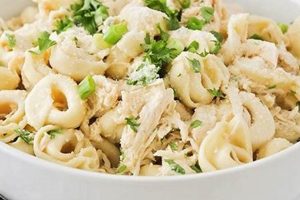
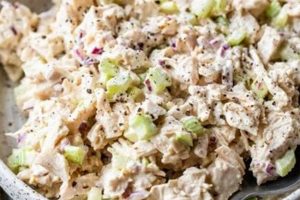
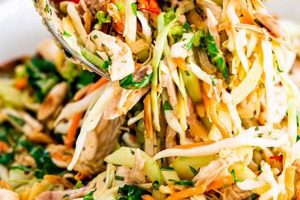
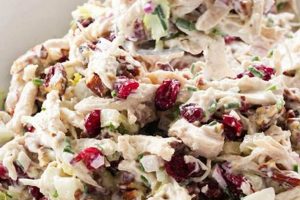
A dish combining cooked macaroni pasta, diced chicken, and a binding agent, typically mayonnaise, forms the foundation of this popular cold salad. Additional ingredients such as celery, onion, grapes, or nuts can enhance the flavor and texture. Variations exist using different pasta shapes, dressings, or incorporating other proteins like ham or tuna.
This versatile salad offers convenience for meal preparation, picnics, and potlucks, as it can be made ahead of time and served chilled. Its adaptability to different flavor profiles makes it a crowd-pleasing dish suitable for casual and more formal gatherings. The combination of carbohydrates, protein, and added ingredients provides a relatively balanced nutritional profile. Historically, pasta salads gained popularity in the mid-20th century with the rise of refrigeration and convenience foods, becoming a staple in American cuisine.
This discussion will further explore various preparation methods, regional variations, nutritional information, and creative ways to elevate this classic dish.
Tips for Macaroni Chicken Salad Preparation
Optimizing the preparation process enhances the overall quality and enjoyment of this classic dish. Attention to detail in ingredient selection and technique ensures a flavorful and satisfying culinary experience.
Tip 1: Perfectly Cooked Pasta: Cook pasta al dente for optimal texture. Overcooked pasta can result in a mushy salad. Rinse cooked pasta under cold water to stop the cooking process and maintain firmness.
Tip 2: High-Quality Chicken: Utilize rotisserie chicken, leftover baked or grilled chicken, or poached chicken for the best flavor. Canned chicken can be used, but ensure it is drained thoroughly.
Tip 3: Balanced Flavor Profile: Achieve a harmonious blend of flavors by incorporating complementary ingredients such as celery, red onion, or bell peppers. Fresh herbs like dill or chives can add a bright note.
Tip 4: Dressing Consistency: The binding agent, typically mayonnaise, should coat the ingredients without being excessive. Start with a smaller amount and add more as needed to achieve the desired consistency.
Tip 5: Chill Time: Allow the salad to chill for at least 30 minutes before serving. Chilling allows the flavors to meld and enhances the overall taste experience.
Tip 6: Ingredient Incorporation: Add delicate ingredients, such as grapes or dried cranberries, closer to serving time to prevent them from becoming soggy or discolored.
Tip 7: Creative Variations: Experiment with different additions, such as toasted nuts, seeds, or dried fruits, to create unique flavor combinations and add textural complexity.
By following these tips, one can achieve a superior macaroni chicken salad that offers a delightful combination of flavors and textures. Attention to these details ensures a satisfying culinary experience.
These preparation insights pave the way for a comprehensive understanding of recipe variations and serving suggestions.
1. Ingredients

Ingredient selection significantly impacts the final flavor profile and overall quality of macaroni chicken salad. Careful consideration of each component contributes to a balanced and enjoyable culinary experience. Understanding the role of individual ingredients provides a foundation for recipe development and customization.
- Protein:
Chicken serves as the primary protein source. Options include rotisserie, baked, grilled, or poached chicken. Canned chicken offers convenience. The choice of chicken preparation influences the overall flavor. High-quality chicken enhances the taste and texture of the salad.
- Base:
Cooked macaroni pasta forms the base of the salad. Different pasta shapes, such as elbows, shells, or rotini, can be used. The pasta should be cooked al dente and rinsed under cold water to maintain its firmness. Overcooked pasta can lead to a mushy texture.
- Binding Agent:
Mayonnaise typically serves as the binding agent, coating the ingredients and creating a creamy consistency. Alternatives include Greek yogurt, sour cream, or a combination of these. The amount of binding agent influences the richness and overall texture of the salad.
- Flavor Enhancers:
A variety of ingredients enhance the flavor profile, including celery, onion, bell peppers, grapes, nuts, and dried fruits. Fresh herbs, such as dill, chives, or parsley, can add brightness. Spices, like curry powder or paprika, introduce complexity. The selection of flavor enhancers allows for customization and creativity.
The interplay of these ingredient categories contributes to the overall success of the dish. Balancing the proportions of protein, base, binding agent, and flavor enhancers results in a harmonious and satisfying macaroni chicken salad. Thoughtful ingredient selection elevates this simple dish from ordinary to exceptional.
2. Proportions
Proportions play a critical role in achieving a balanced and palatable macaroni chicken salad. The ratio of ingredientspasta, chicken, binding agent, and flavor enhancersdirectly impacts the final texture and taste. An excess of pasta can result in a bland, carbohydrate-heavy salad, while too much mayonnaise can create an overly rich and heavy dish. Careful consideration of ingredient proportions is essential for a successful outcome.
Consider a standard recipe: a typical ratio might involve 2 cups of cooked pasta, 2 cups of diced chicken, 1 cup of mayonnaise, and cup of combined chopped celery and onion. This provides a balanced foundation, allowing each component to contribute without overwhelming the others. Adjusting these proportions based on personal preference is possible, but significant deviations can compromise the desired result. For example, reducing the chicken significantly while maintaining the other ingredient quantities might yield a salad lacking in protein and flavor. Conversely, increasing the mayonnaise dramatically could result in a salad that is too creamy and heavy.
Understanding the importance of ingredient proportions empowers one to create a macaroni chicken salad tailored to specific preferences while maintaining a harmonious balance of flavors and textures. Mastering this aspect of recipe development ensures a consistently delicious and satisfying dish. This attention to detail elevates the simple combination of ingredients to a culinary creation worthy of appreciation.
3. Preparation Method
Preparation methods significantly influence the final quality and taste of macaroni chicken salad. A systematic approach ensures consistent results and maximizes flavor development. The sequence of steps, from ingredient preparation to final chilling, contributes to the overall success of the dish. A well-defined preparation method transforms individual components into a cohesive and flavorful salad.
Consider the impact of chicken preparation. Using pre-cooked chicken, such as rotisserie or leftover baked chicken, streamlines the process. Alternatively, poaching or grilling chicken specifically for the salad offers greater control over flavor and texture. Dicing the chicken into uniform pieces ensures even distribution throughout the salad and enhances the visual appeal. Similarly, cooking pasta al dente prevents a mushy texture, while rinsing it under cold water stops the cooking process and maintains firmness. These seemingly minor steps contribute significantly to the final product.
The order in which ingredients are combined also plays a role. Incorporating dry ingredients, such as spices or chopped vegetables, before the mayonnaise allows them to distribute evenly and prevents clumping. Adding delicate ingredients like grapes or herbs closer to serving time maintains their freshness and prevents them from becoming soggy. Finally, chilling the salad for an adequate period allows the flavors to meld, resulting in a more complex and enjoyable taste experience.
A well-defined preparation method provides a roadmap for achieving consistent results. Understanding the rationale behind each step empowers one to adapt and refine techniques, resulting in a superior macaroni chicken salad. This meticulous approach transforms a simple recipe into a culinary expression of care and attention to detail.
4. Flavor Combinations

Flavor combinations represent a crucial element within macaroni chicken salad recipes, offering opportunities for customization and culinary creativity. The interplay of sweet, savory, acidic, and textural elements defines the overall sensory experience. A well-balanced flavor profile elevates this simple dish, transforming it from a basic staple into a memorable culinary creation. Understanding the principles of flavor pairing enables the development of unique and satisfying variations.
Classic combinations often incorporate complementary ingredients such as celery, onion, and grapes. Celery provides a crisp, vegetal note, while onion adds a subtle pungency. The sweetness of grapes balances these savory elements, creating a harmonious blend. More adventurous palates might explore incorporating dried cranberries or chopped apples for a heightened sweet-tart contrast. Toasted nuts, such as pecans or walnuts, introduce textural complexity and a rich, earthy dimension. Spices like curry powder or paprika can transform the flavor profile, adding warmth and depth. The interplay of these diverse ingredients allows for a spectrum of flavor experiences.
Consider the impact of fresh herbs. Dill, chives, or parsley introduce a bright, herbaceous element that complements the richness of the mayonnaise and chicken. These aromatic additions elevate the overall flavor profile, creating a more nuanced and refreshing experience. Similarly, the choice of dressing plays a significant role. While mayonnaise is traditional, substituting Greek yogurt or sour cream offers a lighter, tangier alternative. Experimenting with different dressings opens up possibilities for flavor exploration and customization. Ultimately, the success of a macaroni chicken salad recipe hinges on a thoughtful and balanced approach to flavor combinations. This understanding empowers culinary exploration and ensures a consistently satisfying and delicious result.
5. Serving Suggestions
Serving suggestions enhance the enjoyment and versatility of macaroni chicken salad. Presentation and accompaniments influence the overall dining experience. Consideration of various serving styles expands the culinary possibilities beyond a basic side dish. Thoughtful presentation elevates the perceived value and enjoyment of this classic dish.
Classic accompaniments include bread, crackers, or lettuce cups. Serving the salad on croissants or in hollowed-out tomatoes offers a more substantial presentation. Incorporating the salad into a larger meal, such as a buffet or picnic spread, provides a versatile option. The choice of serving style should complement the occasion and the other dishes being served. For example, a simple sandwich on white bread suits a casual lunch, while a more elaborate presentation using croissants or endive leaves might be appropriate for a more formal gathering. The quantity served also requires consideration, ranging from individual portions in small bowls to larger quantities suitable for sharing.
Garnishing the salad with fresh herbs, chopped nuts, or a sprinkle of paprika enhances visual appeal and adds a final touch of flavor. Attention to detail in presentation elevates the dining experience. Understanding the interplay between serving suggestions and the overall perception of the dish allows for a more nuanced and satisfying culinary experience. Practical application of these principles transforms a simple macaroni chicken salad into a versatile and appealing culinary offering.
6. Storage Techniques
Proper storage techniques are essential for maintaining the quality, safety, and flavor of macaroni chicken salad. Improper storage can lead to bacterial growth, spoilage, and undesirable changes in texture and taste. Implementing appropriate storage practices ensures food safety and maximizes the shelf life of this perishable dish.
- Container Selection
Choosing appropriate containers plays a vital role in preserving the salad’s freshness. Airtight containers prevent exposure to oxygen, which can accelerate spoilage. Durable, food-grade materials ensure the salad remains uncontaminated by harmful chemicals. The size of the container should match the quantity of salad being stored to minimize air space.
- Temperature Control
Maintaining a consistent, low temperature is crucial for inhibiting bacterial growth. Refrigeration at or below 40F (4C) is essential for food safety. Promptly refrigerating the salad after preparation minimizes the time it spends in the temperature danger zone, where bacteria proliferate rapidly. Avoid storing the salad in areas of the refrigerator prone to temperature fluctuations, such as the door.
- Shelf Life
Macaroni chicken salad typically has a limited shelf life due to its perishable ingredients. Refrigerated storage maintains quality for approximately 3-5 days. Freezing is generally not recommended, as it can negatively impact the texture and consistency of the mayonnaise and other ingredients, leading to a less desirable final product upon thawing.
- Handling and Serving
Proper handling practices further mitigate the risk of contamination. Using clean utensils and avoiding cross-contamination with other food items are essential. Discarding any leftover salad that has been left at room temperature for more than two hours minimizes food safety risks. Adhering to these guidelines ensures the safe consumption and enjoyment of macaroni chicken salad.
Implementing these storage techniques preserves the quality and safety of macaroni chicken salad, allowing for enjoyment over several days without compromising flavor or texture. Attention to these details ensures a satisfying culinary experience while minimizing food safety risks.
Frequently Asked Questions
This section addresses common inquiries regarding macaroni chicken salad preparation, storage, and variations. Clear and concise responses provide practical guidance for achieving optimal results and ensuring food safety.
Question 1: What type of chicken is best suited for macaroni chicken salad?
Rotisserie, baked, or grilled chicken offer excellent flavor and texture. Canned chicken provides a convenient alternative, but ensure it is thoroughly drained.
Question 2: How long can macaroni chicken salad be stored safely in the refrigerator?
Properly stored in an airtight container, it should be consumed within 3-5 days to maintain optimal quality and minimize spoilage risks.
Question 3: Can macaroni chicken salad be frozen?
Freezing is not recommended. Mayonnaise-based dressings often separate and become watery upon thawing, negatively affecting the salad’s texture.
Question 4: How can one prevent the salad from becoming watery?
Ensure all ingredients, especially the chicken and vegetables, are thoroughly drained before incorporating them into the salad. Avoid overdressing; start with a smaller amount of mayonnaise and add more as needed.
Question 5: What are some healthy variations of macaroni chicken salad?
Substitute Greek yogurt or a light mayonnaise for a lower-fat dressing. Incorporate additional vegetables, such as chopped bell peppers or cucumbers, for added nutrients and fiber. Use whole wheat pasta for increased nutritional value.
Question 6: How can one add more flavor to macaroni chicken salad?
Fresh herbs, such as dill, chives, or parsley, offer a bright, flavorful addition. Spices like curry powder, paprika, or a pinch of cayenne pepper can introduce depth and complexity. Toasted nuts or seeds provide textural contrast and nutty flavor.
Addressing these common inquiries provides a comprehensive understanding of macaroni chicken salad preparation and storage. These insights empower culinary exploration while ensuring food safety and optimal enjoyment.
This concludes the frequently asked questions section. The following segment will offer a collection of diverse and flavorful macaroni chicken salad recipes.
Recipe Macaroni Chicken Salad
Exploration of this classic dish reveals a foundation built upon simple ingredients transformed through thoughtful preparation. Ingredient selection, proportion balance, and methodical preparation contribute significantly to the final product. Flavor combinations, serving suggestions, and proper storage techniques further enhance the culinary experience. This examination underscores the potential for customization and creativity within a seemingly straightforward recipe.
Culinary enthusiasts are encouraged to experiment with variations, adapting the foundational principles to suit individual preferences and dietary needs. The adaptability of macaroni chicken salad positions it as a versatile dish suitable for casual meals, festive gatherings, and culinary exploration. Continued experimentation promises further evolution of this enduring classic.