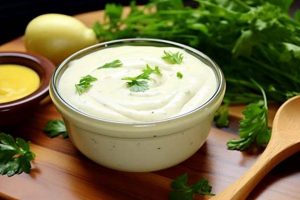
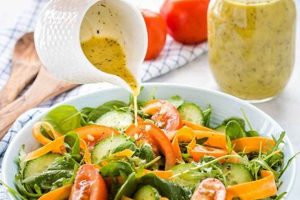
A vibrant, herbaceous blend of fresh herbs, mayonnaise, and anchovies, this dressing delivers a creamy, tangy, and slightly salty flavor profile. Typically, the mixture includes parsley, chives, tarragon, and green onions, though variations may incorporate other ingredients like dill, basil, or watercress. The inclusion of anchovies provides a savory depth, while lemon juice or vinegar contributes a bright, acidic counterpoint. The dressing is traditionally emulsified, creating a smooth, cohesive texture ideal for coating various salad components.
The versatility of this dressing makes it a valuable addition to a wide range of culinary creations. Its refreshing flavor complements delicate leafy greens, roasted vegetables, grilled fish, and cold chicken or shrimp. Originating in the early 20th century, its creation is often attributed to the Palace Hotel in San Francisco as a tribute to actor George Arliss. The dressing’s enduring popularity speaks to its balanced flavor profile and adaptability, allowing it to remain a beloved condiment for over a century.
This exploration will delve further into specific variations, providing detailed instructions and highlighting the key ingredients that contribute to the distinctive character of this classic dressing. Discussions will also encompass tips for ingredient selection, preparation techniques, and suitable pairings to ensure a delightful culinary experience.
Tips for Crafting the Perfect Green Goddess Dressing
Achieving optimal flavor and texture requires attention to detail and an understanding of the interplay between ingredients. The following tips offer guidance for creating a truly exceptional dressing.
Tip 1: Fresh Herbs are Essential: The foundation of this dressing lies in the quality of the herbs. Opt for fresh, vibrant specimens and avoid wilted or bruised leaves. Thorough washing and drying are crucial for preventing a watery emulsion.
Tip 2: Balance the Anchovy: Anchovies provide a savory depth, but their flavor can be overpowering. Start with a small amount and adjust according to preference. Rinsing the anchovies can mellow their intensity.
Tip 3: Emulsification is Key: Proper emulsification creates a smooth, cohesive dressing. A blender or food processor is ideal for achieving this, but whisking vigorously by hand can also produce excellent results.
Tip 4: Acid Adjustment: Lemon juice or vinegar provides essential brightness and balance. Taste and adjust the acidity to complement the other flavors. A touch of sweetness, such as a pinch of sugar, can further enhance the balance.
Tip 5: Ingredient Variations: While traditional recipes offer a starting point, experimentation can yield exciting results. Consider incorporating fresh dill, basil, or watercress to customize the flavor profile.
Tip 6: Storage Considerations: Store the prepared dressing in an airtight container in the refrigerator. It typically remains fresh for up to three days, though the herbs may lose some vibrancy over time.
Tip 7: Serving Suggestions: Beyond salads, consider using the dressing as a marinade for chicken or fish, a dip for vegetables, or a spread for sandwiches. Its versatility makes it a valuable addition to numerous dishes.
By adhering to these guidelines, one can consistently produce a dressing that embodies the vibrant, herbaceous character of a true classic. Careful ingredient selection and proper technique ensure a flavorful and visually appealing accompaniment to a variety of culinary creations.
The following section will offer concluding remarks and summarize the key elements discussed throughout this exploration, providing a comprehensive understanding of this versatile and beloved dressing.
1. Fresh Herbs

Fresh herbs are essential to a successful green goddess dressing, contributing significantly to its vibrant flavor and aromatic complexity. The traditional recipe incorporates a blend of parsley, chives, tarragon, and green onions. These herbs provide distinct yet complementary flavor notes: parsley offers a clean, grassy taste; chives contribute a mild onion flavor; tarragon imparts a subtle anise-like note; and green onions add a gentle sharpness. The interplay of these flavors creates the dressing’s characteristic herbaceous profile. Substituting dried herbs diminishes the brightness and freshness of the dressing, resulting in a muted, less vibrant flavor. For example, using dried parsley results in a noticeably different, less impactful flavor compared to fresh parsley’s bright, verdant taste.
The quality and freshness of the herbs directly influence the overall quality of the dressing. Wilted or bruised herbs can impart off-flavors and compromise the dressing’s vibrant green color. Therefore, selecting fresh, vibrant herbs is crucial. Proper handling, including gentle washing and thorough drying, further preserves the herbs’ quality. Chopping the herbs finely ensures even distribution of flavor throughout the dressing and prevents large pieces from overwhelming the other ingredients. This careful preparation maximizes the impact of the fresh herbs, resulting in a dressing that exemplifies their bright, herbaceous character. For instance, coarsely chopped herbs might create pockets of intense flavor rather than a balanced taste experience.
The careful selection and preparation of fresh herbs constitute a crucial step in crafting a high-quality green goddess dressing. Their aromatic contributions define the dressing’s character. Understanding the importance of using fresh, high-quality herbs, and employing appropriate handling techniques, ensures the final product achieves the desired vibrancy and complexity. Neglecting these details can compromise the dressing’s flavor and diminish its appeal. This understanding enables consistent preparation of a dressing that embodies the fresh, herbaceous qualities that define this classic condiment.
2. Anchovy Fillets
Anchovy fillets play a crucial, albeit often understated, role in a recipe green goddess salad dressing. They provide a depth of umami flavor that complements the herbaceous notes of the fresh herbs, creating a more complex and balanced flavor profile. While their presence may seem unexpected, anchovies contribute a savory foundation that elevates the dressing beyond a simple herb and mayonnaise mixture.
- Umami Enhancement:
Anchovies are a rich source of glutamates, compounds responsible for the savory “umami” taste. This umami note adds depth and complexity to the dressing, balancing the brightness of the herbs and acidity of the lemon juice. For example, a green goddess dressing without anchovies may taste overly herbaceous and lack a certain savory grounding.
- Balancing Agent:
The saltiness of anchovies helps balance the other flavors in the dressing, preventing it from tasting too sweet or too acidic. They act as a bridge between the various components, creating a harmonious blend. This balanced flavor profile makes the dressing suitable for a wider range of applications, from salads to grilled meats.
- Subtle Integration:
Despite their strong flavor, anchovies are used in relatively small quantities in green goddess dressing. When properly incorporated, their flavor melts into the background, adding depth and complexity without being overtly fishy. The blending process emulsifies the anchovies, distributing their flavor evenly throughout the dressing.
- Substitutions and Alternatives:
For those who avoid anchovies, alternatives exist to replicate their umami contribution. Fish sauce, Worcestershire sauce, or even a small amount of miso paste can provide a similar savory depth, albeit with slightly different flavor nuances. Capers can also add a salty, briny element, though they lack the distinct umami quality of anchovies.
The inclusion of anchovy fillets distinguishes green goddess dressing from other herb-based dressings. Their subtle yet significant contribution of umami and saltiness elevates the overall flavor profile, creating a balanced and complex condiment. Understanding the role of anchovies allows for informed ingredient choices and potential substitutions, ultimately leading to a more nuanced appreciation of this classic dressing.
3. Mayonnaise (base)
Mayonnaise serves as the foundational element in green goddess dressing, providing the creamy texture and rich mouthfeel that distinguishes it from vinaigrettes or other dressings. Its neutral flavor profile acts as a canvas for the other ingredients, allowing the herbs, anchovies, and acid to shine without being overpowered. Understanding mayonnaise’s role is crucial for achieving the desired consistency and overall balance in the final product.
- Texture and Body:
Mayonnaise contributes the creamy, emulsified texture characteristic of green goddess dressing. Its viscosity coats the other ingredients, creating a cohesive dressing that clings to salad components. Without mayonnaise, the dressing would be thin and watery, lacking the desired richness. For instance, comparing green goddess to a simple herb vinaigrette highlights the significant textural difference mayonnaise provides.
- Flavor Foundation:
Mayonnaise, while possessing a mild flavor, provides a subtle richness that complements the other ingredients. Its neutrality allows the brighter flavors of the herbs and the savory notes of the anchovies to take center stage. This balance is crucial for preventing the dressing from becoming overly sharp or acidic.
- Emulsion Stability:
Mayonnaise acts as an emulsifier, binding the oil and water-based ingredients together. This creates a stable, homogenous dressing that doesn’t separate over time. A broken emulsion would result in an oily, unappetizing appearance and uneven flavor distribution.
- Variations and Substitutions:
While traditional recipes call for standard mayonnaise, variations exist. Greek yogurt, sour cream, or even avocado can be incorporated to create lighter or vegan versions of the dressing. These substitutions alter the flavor and texture, offering opportunities for customization. For example, using Greek yogurt results in a tangier, lighter dressing.
Mayonnaise’s role as the base of green goddess dressing extends beyond simply providing creaminess. It acts as a unifying element, binding the diverse flavors together and creating a harmonious, balanced condiment. The choice of mayonnaise, or its substitutes, significantly influences the final product’s character, allowing for both traditional and innovative interpretations of this classic dressing.
4. Lemon Juice (Acidity)
Lemon juice provides a crucial acidic element in green goddess dressing, balancing the richness of the mayonnaise and the savory notes of the anchovies. Its bright, citrusy flavor enhances the herbaceous character of the dressing, creating a more complex and nuanced flavor profile. Understanding the role of acidity is essential for achieving a harmonious balance and preventing the dressing from becoming overly rich or heavy.
- Flavor Enhancement:
Lemon juice brightens the overall flavor profile of the dressing. Its tartness cuts through the richness of the mayonnaise and the umami of the anchovies, creating a more vibrant and refreshing taste. The citrus notes complement the herbaceous flavors, adding another layer of complexity. A dressing lacking acidity might taste flat or overly rich.
- Balance and Harmony:
Acidity plays a critical role in balancing the various flavor components of the dressing. It acts as a counterpoint to the richness and saltiness, preventing the dressing from becoming cloying or heavy. This balance ensures that no single flavor dominates, resulting in a harmonious and well-rounded taste experience. The interplay between acidity, richness, and savoriness is key to the dressing’s success.
- Emulsion Stability:
The addition of lemon juice can contribute to emulsion stability. The acid helps to maintain the emulsion by interacting with the proteins in the mayonnaise, preventing separation and maintaining a smooth, cohesive texture. A stable emulsion is essential for both the appearance and the mouthfeel of the dressing.
- Ingredient Compatibility:
Lemon juice complements the other ingredients in the dressing, particularly the fresh herbs. Its brightness enhances the herbaceous notes, while its acidity prevents the herbs from oxidizing and browning prematurely. This helps to maintain the vibrant green color and fresh flavor of the dressing.
The inclusion of lemon juice, or another acidic component like vinegar, is essential for creating a well-balanced and flavorful green goddess dressing. Its role extends beyond simply adding tartness; it contributes to flavor enhancement, emulsion stability, and overall harmony within the dressing. The careful balance of acidity with the other ingredients ensures a complex and refreshing condiment suitable for a variety of culinary applications.
5. Proper Emulsification

Proper emulsification is crucial for the texture, stability, and overall quality of a green goddess salad dressing. It transforms individual ingredientsoil, herbs, acid, and anchoviesinto a cohesive, creamy, and visually appealing condiment. A well-emulsified dressing exhibits a smooth, uniform consistency, clinging effectively to salad components and other foods. This exploration delves into the key facets of proper emulsification within the context of green goddess dressing.
- Creating a Stable Mixture:
Emulsification involves combining two immiscible liquids, typically oil and water-based ingredients like vinegar or lemon juice, into a stable mixture. In green goddess dressing, the mayonnaise acts as the primary emulsifying agent, containing lecithin from egg yolks that facilitates the binding of oil and water. This prevents separation and maintains the desired creamy consistency. Without proper emulsification, the dressing would separate into distinct layers, impacting both its appearance and mouthfeel.
- Impact on Texture and Mouthfeel:
Proper emulsification directly influences the dressing’s texture. A well-emulsified dressing exhibits a smooth, velvety mouthfeel, coating the palate evenly and enhancing the sensory experience. A poorly emulsified dressing, conversely, might feel thin, watery, or overly oily. This textural element is crucial to the overall enjoyment of the dressing and its interaction with other food components.
- Flavor Distribution and Enhancement:
Emulsification also plays a role in flavor distribution. By creating a homogenous mixture, it ensures that all the flavor componentsherbs, anchovies, acid, and seasoningsare evenly dispersed throughout the dressing. This prevents pockets of intense flavor and creates a balanced, consistent taste in each bite. A properly emulsified dressing allows for a more nuanced and harmonious flavor experience.
- Methods for Achieving Emulsification:
Several methods can achieve emulsification in green goddess dressing. Traditional recipes often call for vigorous whisking by hand, gradually incorporating the oil into the other ingredients. Modern approaches utilize blenders or food processors, which create a more efficient and consistent emulsion in less time. The chosen method impacts the final texture, with hand-whisking often producing a slightly coarser texture compared to the smoother result achieved with a blender.
Proper emulsification is an essential step in creating a high-quality green goddess dressing. It directly impacts the dressing’s texture, stability, flavor distribution, and overall appeal. Understanding the principles of emulsification, and employing appropriate techniques, ensures a smooth, creamy, and flavorful condiment that enhances a variety of dishes.
6. Versatile Applications

The versatility of green goddess dressing extends far beyond its traditional role as a salad dressing. Its complex flavor profile, combining herbaceous notes, creamy richness, and subtle umami, allows it to enhance a wide range of dishes, from appetizers to main courses. Exploring these diverse applications reveals the true potential of this classic condiment.
- Salads Beyond Greens:
While green goddess dressing pairs perfectly with delicate leafy greens, its versatility extends to more robust salads. It complements heartier vegetables like roasted potatoes, grilled asparagus, or marinated artichoke hearts. The dressing’s creamy texture and balanced flavor profile provide a cohesive element, binding diverse ingredients together. For example, a salad featuring roasted sweet potatoes, chickpeas, and kale benefits from the dressing’s ability to unify disparate flavors and textures.
- Elevating Grilled Proteins:
Green goddess dressing serves as an excellent marinade or finishing sauce for grilled proteins, particularly fish, chicken, and shrimp. Its herbaceous notes complement the smoky char of grilling, while the creamy texture adds richness and moisture. The dressing can be used to marinate proteins before grilling or drizzled over them after cooking for a burst of fresh flavor. Grilled salmon with a dollop of green goddess dressing exemplifies this application.
- Versatile Dip and Spread:
The creamy texture and robust flavor of green goddess dressing make it an ideal dip for raw vegetables, chips, or crackers. It also functions as a flavorful spread for sandwiches and wraps, adding a layer of complexity beyond traditional condiments. Its herbaceous and savory notes complement a variety of fillings, from grilled vegetables to roasted meats. Using the dressing as a dip for crudits showcases its versatility.
- Creative Culinary Applications:
Beyond its traditional uses, green goddess dressing can be incorporated into various creative culinary applications. It can be used as a sauce for pasta salads, a topping for baked potatoes, or a flavor enhancer for grain bowls. Its versatility allows for experimentation and customization, providing a unique twist to familiar dishes. Adding a dollop of green goddess dressing to a bowl of quinoa with roasted vegetables illustrates its adaptability.
The diverse applications of green goddess dressing highlight its adaptability and culinary potential. Its balanced flavor profile, creamy texture, and herbaceous character allow it to enhance a wide array of dishes, extending far beyond its traditional use as a salad dressing. Exploring these versatile applications opens up a world of culinary possibilities, showcasing the true value of this classic condiment.
7. Storage Techniques

Proper storage techniques are essential for preserving the quality and extending the shelf life of green goddess salad dressing. Because the dressing incorporates fresh herbs and other perishable ingredients, storage significantly impacts its flavor, texture, and color over time. Effective storage prevents undesirable changes, such as enzymatic browning of herbs, separation of the emulsion, and the development of off-flavors. For instance, improper storage can lead to a loss of the dressing’s vibrant green color, a decrease in its fresh, herbaceous aroma, and a separation of the mayonnaise base, rendering it less appealing and palatable.
The primary goal of proper storage is to minimize oxidation and microbial growth, both of which contribute to spoilage. Storing the dressing in an airtight container limits exposure to oxygen, which can cause the herbs to oxidize and lose their vibrant color and flavor. Refrigeration at temperatures below 40F (4C) slows down enzymatic activity and microbial growth, further preserving the dressing’s quality. Transferring the dressing to a clean container minimizes cross-contamination from other foods or utensils. For example, storing the dressing in the same container used to blend it, which might contain residual ingredients, can accelerate spoilage. While proper storage can extend the dressing’s lifespan for several days, it’s important to note that the delicate flavors of fresh herbs will inevitably diminish over time, even with optimal storage conditions. Therefore, consuming the dressing within two to three days of preparation is generally recommended for the best flavor and quality.
Implementing appropriate storage techniques is crucial for maintaining the quality and maximizing the shelf life of green goddess salad dressing. Airtight containers, refrigeration, and proper hygiene practices collectively minimize oxidation and microbial growth, preserving the dressing’s vibrant color, fresh flavor, and creamy texture. Understanding these principles ensures a more enjoyable culinary experience by maintaining the intended quality of this versatile condiment. Neglecting these practices can lead to a significant decrease in quality, potentially resulting in an unappetizing and unsafe product.
Frequently Asked Questions
This section addresses common inquiries regarding the preparation, storage, and variations of this classic dressing.
Question 1: How long can the dressing be stored in the refrigerator?
Prepared dressing should be stored in an airtight container and refrigerated for no more than three days. Flavor and color vibrancy may diminish over time.
Question 2: Can frozen herbs be substituted for fresh herbs?
Frozen herbs are not recommended. They often contain excess moisture, which can compromise the dressing’s emulsion and result in a less vibrant flavor profile. Fresh herbs are crucial for optimal quality.
Question 3: What can be used as a substitute for anchovies?
While anchovies contribute a unique umami flavor, alternatives include a small amount of fish sauce, Worcestershire sauce, or miso paste. Capers can provide a salty, briny element, though they lack umami.
Question 4: Can the dressing be made ahead of time for a large gathering?
Preparing the dressing a day in advance is acceptable, but optimal flavor and vibrancy are achieved when made fresh. Store airtight and refrigerated until serving.
Question 5: How can the dressing be adjusted if it’s too thick or too thin?
If too thick, add a small amount of water or additional lemon juice, one teaspoon at a time, until desired consistency is reached. If too thin, incorporate a small amount of additional mayonnaise.
Question 6: Are there variations on the classic recipe?
Numerous variations exist, including the addition of different herbs like dill or basil, or the substitution of Greek yogurt or avocado for a portion of the mayonnaise. These variations offer opportunities to customize the flavor profile and explore different textures.
Addressing these common questions provides a more comprehensive understanding of this versatile dressing. The following section delves into various recipe variations, offering further opportunities for culinary exploration.
Continue to explore the nuances of green goddess dressing by discovering different recipe variations in the next section.
Recipe Green Goddess Salad Dressing
This exploration has provided a comprehensive overview of recipe green goddess salad dressing, from its historical origins to its versatile applications. Key components, including fresh herbs, anchovy fillets, mayonnaise, and lemon juice, contribute to the dressing’s distinctive character. Proper emulsification techniques ensure optimal texture and flavor distribution. Furthermore, an understanding of storage practices maintains the dressing’s quality and extends its shelf life. The versatility of this condiment allows for culinary creativity, extending beyond salads to encompass marinades, dips, and spreads. Understanding the nuances of each ingredient and technique allows for informed choices and successful preparation.
Recipe green goddess salad dressing stands as a testament to the enduring appeal of fresh, vibrant flavors. Its continued presence in culinary traditions underscores the value of quality ingredients and careful preparation. Further exploration and experimentation with variations promise continued enjoyment and discovery within the realm of this classic condiment.