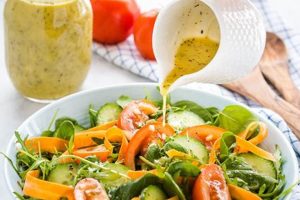
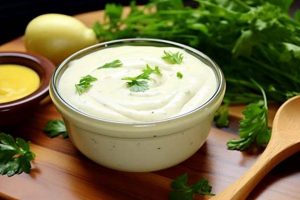
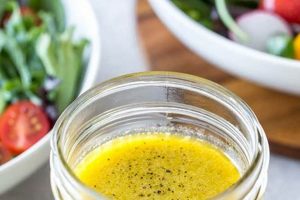
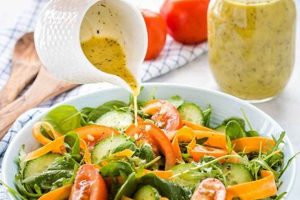
A guide to creating a vibrant and flavorful condiment for salads using fresh cilantro as the primary ingredient typically involves a blend of the herb, an acidic component like lime or vinegar, oil, and potentially additional flavorings such as garlic, jalapeo, or spices. Variations exist using different types of oils, vinegars, and additional herbs or spices to achieve unique flavor profiles. A well-executed preparation can elevate simple greens or add a zesty element to more complex salads, grilled meats, fish, or vegetables.
This type of condiment offers a fresh, herbaceous, and often tangy counterpoint to richer dishes. Cilantro’s distinctive flavor profile, combined with the acidity of the dressing, can brighten a meal while also providing potential health benefits associated with fresh herbs and spices. Historically, the use of fresh herbs in sauces and dressings has been a common practice across various cuisines, offering a way to preserve and enhance the flavors of seasonal ingredients. Modern interpretations continue this tradition, allowing for creative experimentation with diverse flavors.
The following sections will explore various approaches to crafting this versatile condiment, offering detailed instructions and tips for optimizing flavor and texture. From classic preparations to innovative variations, each approach will provide a unique culinary experience.
Tips for Cilantro Salad Dressing Preparation
Optimizing the flavor and texture of cilantro salad dressing involves attention to detail and a few key techniques. The following tips offer guidance for creating a vibrant and delicious condiment.
Tip 1: Freshness is Key: Utilizing fresh cilantro is paramount. Look for vibrant green leaves without signs of wilting. Proper storage in a refrigerator, wrapped in a damp paper towel and sealed in a plastic bag, extends shelf life.
Tip 2: Balance Acidity: The acidic component, often lime or vinegar, requires careful balancing. Start with a smaller amount and adjust to taste, avoiding excessive tartness. Different vinegars, such as apple cider or white wine vinegar, impart unique flavor profiles.
Tip 3: Oil Selection Matters: The choice of oil influences the dressing’s overall flavor and texture. Extra virgin olive oil offers a robust flavor, while a neutral oil like grapeseed allows the cilantro’s flavor to shine. Avocado oil offers a creamy texture.
Tip 4: Emulsification Techniques: Proper emulsification creates a smooth, cohesive dressing. A blender or food processor effectively combines ingredients into a stable emulsion, preventing separation.
Tip 5: Flavor Enhancement: Garlic, jalapeo, ginger, and other spices can enhance the flavor profile. Finely minced garlic or a small amount of finely chopped jalapeo adds a subtle heat. Experimentation is encouraged.
Tip 6: Seasoning Adjustments: Salt and pepper are essential seasonings. Start with a small amount of salt and adjust to taste. Freshly ground black pepper adds a subtle bite.
Tip 7: Proper Storage: Store the prepared dressing in an airtight container in the refrigerator. Proper storage maintains freshness for several days, although using it fresh is optimal.
By following these tips, one can consistently produce a vibrant and flavorful cilantro salad dressing, elevating any dish it accompanies.
This understanding of essential techniques provides a foundation for exploring specific recipes and variations, discussed in the following sections.
1. Fresh Cilantro

Fresh cilantro stands as the cornerstone of a successful cilantro salad dressing. Its vibrant, herbaceous flavor profile defines the condiment’s character. Utilizing fresh cilantro, as opposed to dried or frozen variations, offers a significant advantage in terms of both flavor intensity and overall quality. The volatile oils responsible for cilantro’s distinctive aroma and taste are best preserved in fresh leaves. Dried cilantro, while convenient, lacks the same potency and can impart a slightly bitter note. Frozen cilantro, while retaining some freshness, often loses its delicate texture upon thawing, resulting in a less appealing dressing. For instance, a dressing made with fresh cilantro will exhibit a bright, citrusy aroma and flavor, while a dressing made with dried cilantro may taste duller and slightly bitter.
The quality of fresh cilantro directly impacts the final product. Wilted or yellowing leaves indicate a loss of freshness and flavor. Opting for vibrant green cilantro, preferably with intact stems, ensures optimal flavor and aroma. The stems, often discarded, actually contain a concentrated flavor and can be included in the dressing preparation, particularly when using a blender or food processor. Practical applications of this understanding involve careful selection at the grocery store and proper storage techniques to maintain freshness. Storing cilantro in the refrigerator, wrapped in a damp paper towel and sealed in a plastic bag, extends its shelf life. This practice helps preserve the volatile oils and ensures a vibrant, flavorful dressing.
Understanding the crucial role of fresh cilantro ensures a flavorful and aromatic foundation for the dressing. Careful selection, proper storage, and utilizing the entire herb, including stems, maximize the potential for a vibrant culinary experience. Subsequent sections will delve into specific recipes and techniques for incorporating fresh cilantro effectively into salad dressings, highlighting the versatility of this essential ingredient.
2. Acidity (Lime/Vinegar)
Acidity plays a crucial role in cilantro salad dressings, providing balance and enhancing the overall flavor profile. The sharp, tangy notes of lime or vinegar counterbalance the herbaceousness of cilantro, creating a more complex and palatable condiment. This acidic element not only brightens the flavor but also contributes to the preservation of the dressing. The lowered pH inhibits bacterial growth, extending shelf life. For instance, a dressing made solely with cilantro and oil might taste flat and one-dimensional. Incorporating lime juice introduces a refreshing tartness that elevates the cilantro’s flavor, making the dressing more vibrant and appealing. Similarly, using a vinegar like apple cider vinegar adds a subtle sweetness and complexity that complements the cilantro.
The type of acid used influences the final flavor profile. Lime juice offers a bright, citrusy acidity that pairs well with cilantro’s herbaceous notes. Vinegars, such as white wine vinegar, apple cider vinegar, or rice vinegar, introduce different nuances. White wine vinegar imparts a clean, crisp acidity, while apple cider vinegar contributes a subtle sweetness. Rice vinegar, with its mild and slightly sweet flavor, offers a gentler acidity. Furthermore, the amount of acid requires careful consideration. Too much acid can overpower the cilantro and other flavors, while too little results in a bland dressing. Achieving the right balance requires experimentation and taste adjustments based on the specific recipe and desired outcome. A dressing intended for a robust salad with grilled vegetables might benefit from a stronger acidity, while a dressing for delicate greens might require a lighter touch.
Understanding the importance of acidity and its impact on flavor and preservation is essential for creating well-balanced and flavorful cilantro salad dressings. Selecting the appropriate acid and carefully adjusting its quantity allows for customization and ensures a harmonious blend of flavors. This knowledge facilitates experimentation with different acid profiles, enabling the creation of dressings tailored to specific dishes and individual preferences. This principle extends beyond simple salads, influencing the development of marinades, sauces, and other culinary applications where the balance of acidity and herbaceous flavors is desired.
3. Oil
Oil serves as a crucial component in cilantro salad dressings, contributing to texture, flavor, and overall palatability. Beyond its functional role in creating a smooth, emulsified dressing, oil acts as a flavor carrier, distributing the cilantro and other ingredients evenly throughout the salad. The choice of oil significantly impacts the dressing’s final flavor profile and mouthfeel. For example, extra virgin olive oil adds a robust, fruity flavor that complements the cilantro, while a neutral oil like grapeseed allows the cilantro’s fresh, herbaceous notes to shine. Avocado oil, with its creamy texture and mild flavor, offers another dimension to the dressing. Selecting the appropriate oil depends on the desired flavor profile and the other ingredients in the dressing. A lighter oil might be preferred for a delicate salad, while a more robust oil can stand up to stronger flavors like grilled meats or vegetables.
Different oils possess varying flavor profiles and textures, offering a range of possibilities for customization. Nut oils, such as walnut or hazelnut oil, introduce unique nutty nuances. Sesame oil adds a distinct Asian-inspired flavor. The oil’s viscosity also plays a role in the dressing’s texture. A thicker oil like avocado oil creates a creamier dressing, while a lighter oil like grapeseed oil results in a thinner consistency. The ratio of oil to other ingredients, particularly the acidic component, determines the emulsification and overall balance of the dressing. A higher oil content yields a richer, more emulsified dressing, while a lower oil content produces a lighter, vinaigrette-style dressing. Practical applications of this understanding enable the creation of dressings tailored to specific dishes and individual preferences. A cilantro-lime dressing for fish tacos might benefit from a light, flavorful oil like avocado oil, while a cilantro-jalapeo dressing for a grilled steak salad might be enhanced by a robust extra virgin olive oil.
Careful consideration of oil selection, considering its flavor, texture, and interaction with other ingredients, is essential for crafting well-balanced and flavorful cilantro salad dressings. Understanding these nuances allows for customization and ensures a harmonious blend of flavors and textures. This knowledge extends beyond simple salads, informing the development of marinades, sauces, and other culinary applications where the choice of oil significantly influences the final outcome. The interplay between oil and other ingredients, such as acidity, herbs, and spices, forms the foundation for creating diverse and flavorful culinary creations.
4. Emulsification Method

Emulsification plays a critical role in the creation of cilantro salad dressings, directly influencing the texture, stability, and overall sensory experience. A properly emulsified dressing exhibits a smooth, cohesive texture, preventing separation of the oil and aqueous components. This stability ensures a consistent flavor distribution throughout the salad and enhances the visual appeal of the dressing. The chosen emulsification method affects the dressing’s final characteristics and dictates the required tools and techniques.
- Whisking/Hand Shaking:
This traditional method involves vigorously whisking or shaking the ingredients together in a jar or bowl. The physical agitation forces the oil and aqueous components to combine, forming a temporary emulsion. While suitable for simple vinaigrettes, this method often produces a less stable emulsion that may separate over time. For cilantro salad dressings with minimal ingredients and a thinner consistency, whisking or hand shaking can suffice. However, dressings incorporating additional ingredients like garlic, jalapeo, or spices may benefit from more robust emulsification techniques.
- Blender/Food Processor:
Utilizing a blender or food processor offers a more efficient and effective method for emulsification. The high-speed blades create a powerful shearing force that breaks down the oil into smaller droplets, allowing them to disperse more uniformly throughout the aqueous phase. This results in a stable emulsion that is less prone to separation. Blenders and food processors are particularly advantageous for cilantro salad dressings containing ingredients like nuts, seeds, or avocado, as they can effectively break down these components into a smooth and creamy texture. This method also allows for the incorporation of larger quantities of cilantro, maximizing flavor extraction.
- Immersion Blender:
An immersion blender offers a convenient and efficient way to emulsify dressings directly in the container or bowl. This eliminates the need to transfer ingredients between containers, simplifying the process and reducing cleanup. The immersion blender’s rotating blades create a vortex that draws the ingredients together, effectively combining the oil and aqueous phases into a smooth emulsion. This method is particularly well-suited for smaller batches of cilantro salad dressing or for situations where minimal equipment is desired. Its direct application allows for precise control over the emulsification process, ensuring the desired texture and consistency.
- Egg Yolk Emulsification:
While less common for cilantro salad dressings, incorporating an egg yolk acts as a natural emulsifier. The lecithin found in egg yolks binds the oil and water molecules together, creating a stable and creamy emulsion. This method is often employed in classic Caesar dressings and other creamy salad dressings. For a richer, creamier cilantro salad dressing, incorporating an egg yolk can enhance the texture and mouthfeel. However, this method requires attention to food safety precautions due to the use of raw egg yolks. Pasteurized egg yolks can be used to mitigate these risks.
The chosen emulsification method profoundly impacts the final characteristics of a cilantro salad dressing. Understanding the advantages and limitations of each technique enables informed decisions based on the desired texture, stability, and ease of preparation. Selecting the appropriate method ensures a consistent and visually appealing dressing that complements the salad and enhances the overall dining experience. This principle extends beyond cilantro dressings, applying to a wide range of sauces, emulsions, and culinary preparations where texture and stability are critical factors.
5. Additional Flavors
Additional flavors play a pivotal role in cilantro salad dressing recipes, transforming a simple base into a complex and nuanced condiment. These additions build upon the foundational flavors of cilantro, oil, and acid, creating depth and character. Strategic incorporation of complementary flavors elevates the sensory experience, allowing for customization and adaptation to various culinary applications.
- Garlic:
Garlic’s pungent aroma and savory flavor profile provide a robust counterpoint to cilantro’s herbaceous notes. A small amount of finely minced or grated garlic adds depth and complexity to the dressing. Roasting the garlic mellows its intensity, yielding a sweeter, more nuanced flavor. In a cilantro-lime dressing, roasted garlic complements the bright citrus notes, creating a balanced and flavorful profile suitable for grilled fish or chicken.
- Chili Peppers:
Chili peppers introduce heat and complexity, ranging from the subtle warmth of jalapeos to the fiery intensity of habaneros. Finely chopped fresh chilies, dried chili flakes, or chili powders offer varying levels of heat and flavor. A cilantro-jalapeo dressing, for instance, provides a zesty kick that complements Mexican-inspired dishes. The type and quantity of chili pepper should be carefully considered based on the desired level of spiciness and the overall flavor profile of the dish.
- Spices:
Ground spices, such as cumin, coriander, or smoked paprika, introduce warm, earthy notes that enhance the complexity of cilantro salad dressings. Cumin’s distinctive flavor pairs well with cilantro, creating a dressing suitable for Southwestern-inspired cuisine. Smoked paprika adds a smoky depth, complementing grilled meats or roasted vegetables. The choice of spice depends on the desired flavor profile and the overall culinary context.
- Other Herbs:
Incorporating other fresh herbs, such as mint, parsley, or chives, creates a more complex and nuanced flavor profile. Mint adds a refreshing coolness, while parsley contributes a subtle earthiness. Chives offer a mild onion flavor. Combining cilantro and mint in a dressing creates a vibrant and refreshing accompaniment to Middle Eastern or Mediterranean dishes. The ratio of herbs should be carefully balanced to ensure that cilantro remains the dominant flavor.
The strategic use of additional flavors significantly enhances the versatility and complexity of cilantro salad dressings. These additions, carefully selected and balanced, create a dynamic interplay of flavors, transforming a simple condiment into a culinary statement. Understanding the flavor profiles of various ingredients allows for customization and adaptation to a wide range of dishes and cuisines, expanding the culinary potential of cilantro salad dressings beyond their basic form.
6. Seasoning
Seasoning is fundamental to a successful cilantro salad dressing, influencing the final flavor profile and overall balance. Salt, primarily, enhances the inherent flavors of the cilantro and other ingredients, while pepper adds a subtle complexity and depth. Proper seasoning elevates the dressing beyond a simple mixture of ingredients, creating a harmonious blend of flavors. The interplay between salt and other elements, such as acidity and sweetness, determines the overall taste experience. For instance, in a cilantro-lime dressing, salt not only enhances the cilantro’s herbaceous notes but also balances the lime’s tartness. Without sufficient salt, the dressing may taste overly acidic or bland. Conversely, excessive salt can overpower the delicate flavors of the cilantro and other components.
Beyond basic salt and pepper, other seasonings can further enhance a cilantro salad dressing. A pinch of sugar or a touch of honey can balance acidity and add a subtle sweetness. Granulated garlic or onion powder can contribute savory depth, particularly if fresh garlic or onion is not used. Experimentation with different seasonings allows for customization and the creation of unique flavor profiles. For example, adding a touch of smoked paprika to a cilantro-lime dressing imparts a smoky complexity that complements grilled meats or roasted vegetables. The key lies in understanding the interplay of flavors and adjusting seasonings incrementally to achieve the desired balance. Over-seasoning can be difficult to correct, whereas under-seasoning can be easily adjusted.
Careful attention to seasoning elevates cilantro salad dressing from a simple condiment to a complex and flavorful element of a dish. The judicious use of salt, pepper, and other seasonings creates a balanced flavor profile that complements and enhances the other ingredients. Understanding the impact of each seasoning and the interplay between them is crucial for achieving the desired outcome. This principle extends beyond salad dressings, applying to virtually all culinary endeavors where balanced and nuanced flavors are essential. Mastery of seasoning techniques distinguishes a competent cook from a truly skilled culinary artist.
7. Storage
Proper storage is crucial for maintaining the quality and flavor of cilantro salad dressing. This encompasses both the storage of fresh cilantro prior to dressing preparation and the storage of the prepared dressing itself. Cilantro, being a delicate herb, is susceptible to wilting and flavor degradation if not stored correctly. Fresh cilantro should be refrigerated, ideally wrapped in a damp paper towel and sealed in a plastic bag or airtight container, to maintain optimal freshness. This practice preserves the herb’s vibrant green color and its characteristic bright, citrusy aroma. Failure to store cilantro properly can lead to wilting, browning, and a loss of flavor, negatively impacting the final quality of the salad dressing.
Similarly, the prepared cilantro salad dressing requires appropriate storage to maintain its flavor and prevent spoilage. Storing the dressing in an airtight container in the refrigerator is essential. This limits exposure to air, which can cause oxidation and lead to off-flavors. Furthermore, refrigeration slows down the growth of microorganisms that can cause spoilage. The shelf life of cilantro salad dressing, even when properly stored, is typically limited to a few days. The delicate nature of fresh cilantro, even when incorporated into a dressing, makes it susceptible to flavor degradation over time. For instance, a dressing stored for an extended period might develop a duller flavor profile or exhibit signs of separation, impacting its overall quality and appeal.
Effective storage practices are integral to maximizing the quality and longevity of cilantro salad dressing. Understanding the proper storage techniques for both fresh cilantro and the prepared dressing ensures optimal flavor, texture, and appearance. Neglecting these practices can lead to a significant decline in quality, impacting the overall culinary experience. By prioritizing proper storage, one ensures that the vibrant flavors and aromas of fresh cilantro are preserved, contributing to a more satisfying and enjoyable culinary outcome.
Frequently Asked Questions
This section addresses common inquiries regarding the preparation and utilization of cilantro salad dressing, offering practical guidance and clarifying potential uncertainties.
Question 1: How long can cilantro salad dressing be stored in the refrigerator?
Properly stored in an airtight container, cilantro salad dressing typically maintains optimal quality for three to five days in the refrigerator. Beyond this timeframe, flavor degradation and potential spoilage may occur.
Question 2: Can frozen cilantro be used for making the dressing?
While frozen cilantro can be used, fresh cilantro is strongly recommended for optimal flavor and texture. Frozen cilantro often loses its delicate texture upon thawing, resulting in a less vibrant dressing.
Question 3: What can be substituted for lime juice if it is unavailable?
White wine vinegar or apple cider vinegar offer suitable alternatives to lime juice, each imparting a slightly different flavor profile. Lemon juice can also be used, but it offers a distinct citrus note compared to lime.
Question 4: How can the dressing’s thickness be adjusted?
To thicken the dressing, a small amount of Greek yogurt, avocado, or a nut butter like cashew butter can be incorporated. Conversely, thinning can be achieved by adding a small amount of water or additional oil.
Question 5: Can the dressing be made ahead of time for a party or gathering?
Yes, the dressing can be prepared a day or two in advance and stored in the refrigerator. It’s recommended to give it a good whisk or shake before serving to re-emulsify the ingredients.
Question 6: What dishes pair well with cilantro salad dressing?
Cilantro salad dressing complements a wide range of dishes, including salads with grilled chicken or fish, tacos, fajitas, roasted vegetables, and grain bowls. It also serves as a flavorful marinade for meats or tofu.
Understanding these key aspects of cilantro salad dressing preparation and storage ensures a successful culinary experience. Addressing these common inquiries provides clarity and facilitates the creation of a flavorful and versatile condiment.
The following section will explore various recipe variations for cilantro salad dressing, offering diverse options to suit different palates and culinary applications.
Conclusion
Exploration of cilantro salad dressing recipes reveals the interplay of fresh ingredients, balanced acidity, appropriate oil selection, and effective emulsification techniques as crucial elements for achieving optimal flavor and texture. Additional flavor components, judicious seasoning, and proper storage further contribute to the creation of a versatile condiment adaptable to diverse culinary applications. Understanding these fundamental principles allows for customization and encourages experimentation with various flavor profiles.
The potential of cilantro salad dressing extends beyond its role as a simple condiment. Its vibrant flavor profile, derived from fresh herbs and balanced acidity, offers a refreshing counterpoint to a wide array of dishes. Further exploration of flavor combinations and culinary pairings promises to unlock even greater culinary potential, solidifying cilantro salad dressing as a staple in kitchens worldwide.