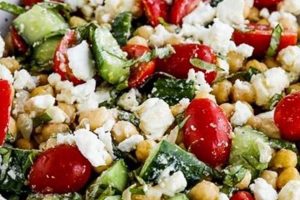
A dish featuring orzo pasta combined with traditional Greek salad ingredients like cucumbers, tomatoes, red onion, Kalamata olives, and feta cheese, typically dressed with a lemon-herb vinaigrette. Variations can include other vegetables, herbs, or protein additions such as chickpeas or grilled chicken.
This culinary creation offers a refreshing and nutritious meal option. The combination of complex carbohydrates from the pasta, healthy fats from the olives and feta, and the vitamins and minerals present in the fresh vegetables contributes to a balanced and satisfying dish. Furthermore, the vibrant flavors and textures make it an appealing choice for a light lunch, side dish, or potluck contribution. Its adaptability allows for customization based on dietary preferences and seasonal ingredient availability.
The following sections will explore variations on this popular dish, including vegan and gluten-free options, alongside tips for achieving optimal flavor and texture. Detailed ingredient lists, step-by-step instructions, and nutritional information will also be provided.
Tips for a Perfect Orzo Pasta Salad
Achieving optimal flavor and texture requires attention to several key elements. The following tips provide guidance for creating a delightful culinary experience.
Tip 1: Cook Orzo Properly: Orzo should be cooked al dente for the best texture. Follow package directions, but typically this involves boiling until tender but still firm to the bite. Avoid overcooking, which can result in a mushy texture.
Tip 2: Chill Ingredients: Using chilled vegetables and orzo contributes to a more refreshing salad. Refrigerate prepared ingredients before combining to ensure a crisp and cool final product.
Tip 3: Marinate the Salad: Allowing the salad to marinate for at least 30 minutes enhances the flavor development. The vinaigrette melds with the other ingredients, creating a more cohesive and flavorful dish.
Tip 4: Balance Flavors: The vinaigrette’s acidity should balance the saltiness of the feta and olives. Adjust lemon juice and vinegar quantities to achieve a harmonious blend of flavors.
Tip 5: Use High-Quality Ingredients: Selecting fresh, ripe vegetables and high-quality feta cheese elevates the overall taste and quality of the salad.
Tip 6: Add Fresh Herbs: Incorporating fresh herbs like dill, mint, or oregano enhances the aromatic profile and adds a layer of freshness.
Tip 7: Customize with Protein: Consider adding grilled chicken, chickpeas, or white beans for a more substantial and protein-rich meal.
By following these tips, one can consistently create a delicious and satisfying orzo pasta salad. Attention to detail and quality ingredients contribute significantly to the final outcome.
The next section offers a selection of recipe variations to cater to diverse preferences and dietary needs.
1. Orzo Pasta
Orzo pasta serves as the foundational element of an orzo Greek salad recipe. This small, rice-shaped pasta provides a neutral canvas for the vibrant flavors of the other ingredients. Its ability to absorb the lemon-herb vinaigrette ensures that each bite delivers a balanced taste profile. Without orzo, the dish transforms into a traditional Greek salad, lacking the heartiness and textural variation that the pasta provides. For example, a summer picnic might feature orzo Greek salad as a satisfying main dish, whereas a standard Greek salad would likely serve as a side. Understanding the crucial role of orzo allows for appropriate portioning and ingredient balancing.
Furthermore, the choice of orzo impacts the overall sensory experience. While traditional orzo is semolina-based, whole wheat or gluten-free varieties can be substituted to cater to specific dietary needs. This adaptability expands the recipe’s accessibility and demonstrates orzo’s versatility within the dish. Consider a catering scenario where both gluten-free and standard options are required; understanding the core role of orzo allows for appropriate substitutions without compromising the essence of the dish.
In conclusion, orzo pasta forms an integral part of the orzo Greek salad recipe, contributing texture, absorbing flavors, and providing a satisfying base. Recognizing its importance allows for recipe adaptation based on dietary preferences and desired outcomes. The versatility of orzo within this culinary context solidifies its position as a key ingredient.
2. Greek Salad Components
Greek salad components form the core flavor and textural profile of an orzo Greek salad recipe. These components typically include cucumbers, tomatoes, red onion, Kalamata olives, and feta cheese. Their inclusion transforms plain orzo pasta into a vibrant, Mediterranean-inspired dish. Omitting these elements results in a significantly different outcome, essentially reducing the recipe to orzo with a vinaigrette. For instance, removing the olives and feta diminishes the characteristic salty, briny notes essential to the Greek salad experience. Similarly, excluding the fresh vegetables impacts the refreshing, crisp element that balances the richness of the cheese and olives. The interplay of these components creates a synergy where the whole is greater than the sum of its parts.
The quality and freshness of these components directly influence the overall dish quality. Using ripe, in-season tomatoes enhances the sweetness and juiciness, while opting for high-quality Kalamata olives contributes a richer, more complex flavor profile. Consider a scenario where winter tomatoes are used their lack of flavor and watery texture would negatively impact the final result. Conversely, using flavorful heirloom tomatoes during their peak season elevates the dish, showcasing the importance of ingredient selection. This understanding empowers informed decisions regarding sourcing and preparation techniques, such as using locally grown produce or specific curing methods for olives.
In summary, Greek salad components define the orzo Greek salad recipe’s character. Their careful selection and balanced incorporation are crucial for achieving the desired flavor profile and textural complexity. Recognizing the impact of individual components enables informed ingredient choices and contributes to a more satisfying culinary experience. This knowledge allows adaptation and refinement of the recipe based on seasonal availability and individual preferences, ultimately enhancing the final product’s overall quality.
3. Vinaigrette
Vinaigrette functions as a crucial flavor component within an orzo Greek salad recipe, binding the individual ingredients and contributing a balanced acidity. The emulsion, typically composed of olive oil, lemon juice or vinegar, and seasonings, infuses the pasta and vegetables with a tangy brightness that complements the saltiness of the feta and olives. Without a properly balanced vinaigrette, the dish risks becoming bland or overly rich. Consider a scenario where insufficient acidity is present; the flavors may become muddled, and the overall experience less refreshing. Conversely, an excessively acidic vinaigrette can overpower the delicate flavors of the fresh vegetables. Therefore, achieving the correct balance within the vinaigrette is paramount to a successful orzo Greek salad.
Furthermore, the vinaigrette acts as a vehicle for flavor infusion beyond simple acidity. The addition of herbs, garlic, or spices within the vinaigrette imparts complexity and depth. For instance, incorporating dried oregano or fresh dill into the vinaigrette elevates the aromatic profile and enhances the Mediterranean character of the dish. Alternatively, a touch of Dijon mustard in the vinaigrette can add a subtle layer of sharpness and creaminess. Such variations demonstrate the vinaigrette’s adaptability and its potential to customize the overall flavor profile. This versatility allows for tailoring the recipe to individual preferences and exploring different culinary nuances.
In conclusion, the vinaigrette plays a pivotal role in the orzo Greek salad recipe, contributing not only essential acidity but also serving as a conduit for complex flavors. Understanding the vinaigrette’s impact allows for precise adjustments and creative exploration, ultimately enhancing the final dish. Careful consideration of the vinaigrette’s composition ensures a harmonious balance of flavors, contributing significantly to the overall culinary success of the orzo Greek salad. This knowledge empowers informed decision-making regarding ingredient selection and flavor profiling, enhancing the overall dining experience.
4. Fresh Herbs

Fresh herbs contribute significantly to the overall sensory experience of an orzo Greek salad recipe. Their aromatic and flavor profiles elevate the dish beyond the foundational ingredients, adding layers of complexity and freshness. Understanding the role and impact of fresh herbs allows for informed selection and optimal integration within the recipe.
- Aromatic Enhancement
Fresh herbs provide a vibrant aromatic dimension, enhancing the sensory experience beyond taste. The volatile oils released by herbs like dill, mint, and oregano create a fragrant bouquet that complements the other ingredients. For example, the bright, slightly peppery aroma of fresh oregano enhances the Mediterranean character of the salad. This aromatic lift differentiates a fresh herb-infused salad from one lacking this element, creating a more immersive and enjoyable dining experience.
- Flavor Complexity
Beyond aroma, fresh herbs contribute distinct flavor notes that add depth to the overall profile. Dill, with its slightly tangy, anise-like flavor, complements the cucumber and feta, while mint adds a refreshing coolness. Consider a variation incorporating parsley; its subtly peppery, slightly bitter taste provides a counterpoint to the richness of the olives. The judicious selection and combination of fresh herbs allow for customized flavor profiles tailored to individual preferences.
- Visual Appeal
Fresh herbs enhance the visual appeal of the orzo Greek salad, adding vibrant green hues and textural variation. A sprinkle of chopped fresh dill or parsley creates visual interest, while whole mint leaves add a touch of elegance. This visual enhancement elevates the presentation, making the salad more enticing and appetizing. Imagine a buffet setting; a brightly colored, herb-garnished orzo Greek salad is more likely to attract attention than a plain version.
- Nutritional Value
While often overlooked, fresh herbs offer nutritional benefits, contributing vitamins and antioxidants. Parsley, for example, is a good source of vitamins K and C. While not a primary nutritional component of the salad, the inclusion of fresh herbs adds a layer of health benefits alongside their flavor and aromatic contributions. This nutritional aspect aligns with the increasing emphasis on incorporating nutrient-rich ingredients into everyday meals.
Incorporating fresh herbs into an orzo Greek salad recipe elevates the dish from a simple combination of ingredients to a multi-sensory culinary experience. The careful selection and application of herbs like dill, mint, oregano, and parsley enhance the aroma, flavor, visual appeal, and even nutritional value. Understanding these contributions allows for informed choices and creative exploration within the recipe, ultimately resulting in a more satisfying and delightful culinary outcome.
5. Feta Cheese
Feta cheese plays a crucial role in an orzo Greek salad recipe, contributing significantly to its characteristic flavor profile and overall authenticity. The cheese’s salty, tangy, and slightly crumbly nature provides a counterpoint to the other ingredients, creating a balanced and complex sensory experience. Omitting feta or substituting it with another cheese alters the dish fundamentally, diminishing its connection to traditional Greek cuisine. For instance, using a milder cheese like goat cheese, while offering a similar texture, lacks the distinct briny and salty notes that define feta’s contribution. This substitution results in a different flavor profile, moving away from the intended Greek-inspired character.
The quality of feta directly impacts the overall quality of the orzo Greek salad. Authentic Greek feta, made from sheep’s milk or a blend of sheep and goat milk, offers a richer, more complex flavor compared to cow’s milk feta, which tends to be milder and less nuanced. Consider a scenario where a low-quality, pre-crumbled feta is used; its drier texture and less pronounced flavor detract from the overall dish. Conversely, using a high-quality block of feta, properly stored and crumbled just before serving, elevates the salad, enhancing both its flavor and textural appeal. Furthermore, the amount of feta used requires careful consideration. Too much feta can overpower the other flavors, while too little diminishes its impact. Achieving the correct balance ensures that the feta contributes its characteristic flavor without dominating the other components.
In summary, feta cheese forms an integral part of the orzo Greek salad recipe. Its unique flavor profile, textural contribution, and cultural significance within Greek cuisine establish its importance. Understanding the impact of feta quality and quantity allows for informed decisions that enhance the overall culinary outcome. Careful consideration of these factors ensures an authentic and balanced flavor profile, contributing significantly to a successful and satisfying orzo Greek salad experience. This knowledge allows for adaptation and refinement based on individual preferences and access to ingredients while maintaining the fundamental character of the dish.
6. Preparation Method

Preparation method significantly influences the final outcome of an orzo Greek salad recipe. Methodical approaches to ingredient preparation and combination directly impact flavor development, texture, and overall presentation. A systematic approach, encompassing specific steps executed in a particular order, ensures consistency and optimizes the sensory experience. For instance, cooking the orzo pasta al dente is crucial for achieving the desired texture. Undercooked orzo results in a hard, unpleasant texture, while overcooked orzo becomes mushy and absorbs less vinaigrette. Similarly, chopping vegetables uniformly ensures even flavor distribution and contributes to a visually appealing presentation. Consider a scenario where cucumbers are sliced thickly while tomatoes are diced finely; this inconsistency creates an uneven texture and may impact how the vinaigrette coats the ingredients. Therefore, consistent knife skills and attention to detail during preparation are essential.
Furthermore, the timing of ingredient incorporation plays a critical role. Adding the vinaigrette to the orzo while it is still warm allows the pasta to absorb the flavors more effectively. However, adding the feta too early can cause it to melt and lose its distinct crumbly texture. Consider a large-batch preparation for a catered event; combining all ingredients hours in advance, including the feta, could result in a less desirable outcome. Therefore, understanding the appropriate timing for each step ensures optimal flavor development and texture preservation. This knowledge allows for adjustments based on scale and anticipated serving time, ensuring a consistently high-quality result.
In conclusion, the preparation method employed in an orzo Greek salad recipe directly impacts the final dish. A methodical approach, encompassing careful attention to detail in ingredient preparation, order of combination, and timing, ensures optimal flavor, texture, and presentation. Understanding the cause-and-effect relationship between preparation techniques and the final outcome empowers informed decision-making and allows for adaptation based on specific circumstances. This knowledge is crucial for achieving a consistently delicious and visually appealing orzo Greek salad, whether preparing a small batch for a family meal or a large quantity for a catered event.
7. Serving Suggestions
Serving suggestions enhance the versatility of the orzo Greek salad recipe, adapting it to various culinary contexts and occasions. Understanding these suggestions allows for a broader application of the recipe, transforming it from a standalone dish into a component within a larger meal structure or event.
- Standalone Light Meal
Orzo Greek salad functions effectively as a complete light meal, offering a balance of carbohydrates, protein from the feta cheese, and healthy fats from the olives and olive oil. This makes it a suitable option for lunch, a light dinner, or a refreshing picnic item. Its portability and ease of preparation further enhance its suitability for these contexts. For example, packing orzo Greek salad in individual containers for a workday lunch provides a convenient and nutritious meal option.
- Side Dish
The orzo Greek salad complements various main courses as a refreshing side dish. Its Mediterranean flavors pair well with grilled meats, fish, or poultry. The salad’s vibrant colors and fresh flavors provide a contrast to richer, heavier main courses, adding balance and visual appeal to the plate. Consider a summer barbecue; orzo Greek salad serves as an excellent accompaniment to grilled chicken or lamb skewers, offering a lighter counterpoint to the smoky flavors of the main course.
- Part of a Buffet or Potluck
Orzo Greek salad’s adaptability makes it an ideal contribution to buffets or potlucks. Its ability to be served at room temperature allows for convenient transport and serving, while its vibrant appearance and diverse flavors make it an attractive option amongst other dishes. In a potluck setting, orzo Greek salad offers a refreshing and flavorful choice alongside heavier casseroles or richer desserts, contributing to a balanced and varied spread. Its adaptability to different dietary needs, through modifications like omitting feta for a vegan option, further enhances its suitability in these communal dining scenarios.
- Appetizer or Starter
Served in smaller portions, orzo Greek salad can function as an appetizer or starter. Individual cups or small plates of the salad provide a refreshing and flavorful introduction to a meal. In a formal dining setting, this presentation adds a touch of elegance while showcasing the vibrant colors and fresh ingredients. Consider a dinner party; serving small portions of orzo Greek salad as a starter stimulates the appetite while offering a light and refreshing prelude to the main course.
These varied serving suggestions demonstrate the orzo Greek salad recipe’s versatility. Understanding these applications expands the recipe’s utility beyond a single context, allowing for its incorporation into a range of meal structures and social occasions. This adaptability enhances the recipe’s value, positioning it as a flexible and convenient culinary tool.
Frequently Asked Questions
This section addresses common inquiries regarding orzo Greek salad recipes, providing concise and informative responses.
Question 1: Can orzo Greek salad be prepared in advance?
Yes, orzo Greek salad can be prepared up to a day in advance. However, it is recommended to add the feta cheese just before serving to prevent it from becoming overly salty or losing its texture.
Question 2: What are suitable substitutions for feta cheese?
While feta is traditional, crumbled goat cheese, ricotta salata, or even a vegan feta alternative can be substituted. Flavor profiles will vary, impacting the overall authenticity of the dish.
Question 3: How can the recipe be adapted for gluten-free diets?
Substitute gluten-free orzo pasta for traditional semolina orzo. Ensure all other ingredients, including sauces and dressings, are certified gluten-free.
Question 4: What are effective methods for preventing the salad from becoming watery?
Ensure vegetables are thoroughly dried before adding them to the salad. Salting cucumbers and tomatoes beforehand and draining excess liquid can also help prevent a watery consistency. Additionally, adding the dressing just before serving minimizes excess moisture absorption by the orzo.
Question 5: Can protein be added to orzo Greek salad?
Grilled chicken, shrimp, chickpeas, or white beans complement orzo Greek salad, adding protein and enhancing its nutritional value. Consider the chosen protein’s flavor profile and its compatibility with the existing ingredients.
Question 6: How should orzo Greek salad be stored?
Store leftover orzo Greek salad in an airtight container in the refrigerator for up to three days. Consume within this timeframe for optimal quality and food safety.
Addressing these frequently asked questions provides clarity and guidance for preparing and enjoying orzo Greek salad. Careful consideration of these points enhances the culinary experience and ensures a successful outcome.
The subsequent section offers a collection of recipe variations, allowing for customization and exploration of different flavor profiles.
Conclusion
Exploration of orzo Greek salad recipes reveals a dish offering versatility and adaptability. Key componentsorzo pasta, traditional Greek salad ingredients, vinaigrette, fresh herbs, and feta cheesecontribute distinct flavors and textures, creating a harmonious balance. Proper preparation techniques, including cooking orzo al dente and incorporating high-quality ingredients, maximize the dish’s potential. Serving suggestions range from light meals to side dishes, demonstrating adaptability to various culinary contexts. Recipe variations, accommodating dietary restrictions and preferences, further broaden the dish’s appeal.
Orzo Greek salad represents a culinary intersection of tradition and innovation. Its adaptability encourages exploration and customization, allowing for personalized interpretations while retaining core elements. Continued exploration of flavor profiles and ingredient combinations promises further evolution of this classic dish, ensuring its enduring presence in culinary landscapes.