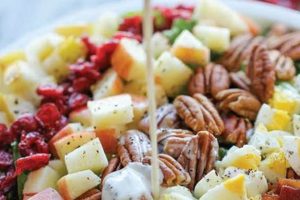
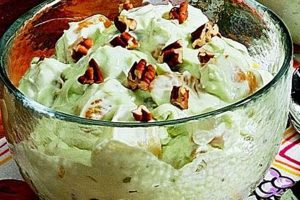
A traditional fruit salad typically features a base of citrus fruits (oranges, grapefruit), often combined with shredded coconut and miniature marshmallows. Variations may include additions such as pineapple, maraschino cherries, pecans, or other fruits and nuts. The dressing is often a simple mixture of sweetened condensed milk, sour cream, or whipped cream, creating a creamy, sweet, and tangy profile.
This dish evokes nostalgia for many, representing a staple at holiday gatherings and special occasions, particularly in Southern United States cuisine. Its enduring popularity stems from the refreshing blend of flavors and textures, along with its relative ease of preparation. The dish offers a balance of sweetness and tartness, with the creamy dressing complementing the fruit and providing a textural contrast. Historically, the inclusion of readily-available canned fruits made it a convenient dessert option year-round, contributing to its widespread adoption.
The following sections will explore the evolution of this classic dessert, provide variations on the traditional formulation, and offer detailed instructions for creating an authentic version at home.
Tips for a Perfect Ambrosia Fruit Salad
Achieving optimal flavor and texture requires attention to detail. The following tips offer guidance for creating a successful ambrosia fruit salad.
Tip 1: Fresh Fruit Selection: Whenever possible, opt for fresh, ripe fruit. Peak-season produce provides superior flavor and texture compared to canned alternatives.
Tip 2: Citrus Preparation: Segment citrus fruits to remove the membranes for a more pleasant eating experience. This prevents bitterness and ensures a smooth, creamy texture.
Tip 3: Coconut Considerations: Freshly grated coconut adds a delightful aroma and texture. If using sweetened coconut flakes, adjust the sweetness of the dressing accordingly.
Tip 4: Balancing Sweetness: Taste the dressing before adding it to the fruit. Adjust the amount of sweetener based on the sweetness of the fruit and personal preference.
Tip 5: Chilling Time: Allow the salad to chill for at least one hour before serving. This allows the flavors to meld and the fruit to absorb the dressing.
Tip 6: Presentation: Serve in a decorative bowl or individual glasses. Garnishing with fresh mint sprigs or toasted coconut flakes adds an elegant touch.
Tip 7: Preventing Browning: A light squeeze of lemon juice over apples and bananas helps prevent browning and maintains their fresh appearance.
By following these suggestions, one can create a fruit salad that balances sweetness, tartness, and creamy textures, resulting in a truly satisfying dish.
By understanding the nuances of ingredient selection and preparation, individuals can elevate this simple dish to a truly memorable culinary experience.
1. Fresh, Seasonal Fruits
The emphasis on fresh, seasonal fruits lies at the heart of a truly authentic ambrosia salad experience. While canned fruit provided convenience and year-round availability, particularly in earlier decades, utilizing fresh, in-season produce elevates the dish considerably. The superior flavor and texture of ripe, seasonal fruits contribute significantly to the overall quality of the salad. For example, using juicy summer peaches or fragrant winter oranges offers a depth of flavor unmatched by canned counterparts. This connection to seasonality aligns with traditional culinary practices that prioritize utilizing ingredients at their peak.
The choice of fresh, seasonal fruits also impacts the balance of sweetness and acidity. A summer ambrosia might feature sweet berries and tart raspberries, while a winter version could showcase segments of juicy oranges and grapefruit. This allows for variation and creativity while maintaining the integrity of the dish. Furthermore, the textural diversity introduced by fresh fruit enhances the overall sensory experience. The firm bite of an apple contrasts with the delicate texture of a ripe peach, while juicy berries provide bursts of flavor. This interplay of textures complements the creamy dressing, creating a harmonious balance.
Prioritizing fresh, seasonal fruits ultimately yields a more vibrant and flavorful ambrosia salad. This practice honors the tradition of using high-quality ingredients to achieve optimal results. Although convenience often dictates ingredient choices in contemporary cooking, opting for fresh produce reinforces the connection between seasonality and culinary excellence, resulting in a more satisfying and authentic dish. This consideration demonstrates a respect for traditional culinary principles and a commitment to maximizing flavor and quality.
2. Creamy, sweet dressing

The creamy, sweet dressing serves as a defining characteristic of ambrosia fruit salad, contributing significantly to its textural and flavor profile. This element distinguishes ambrosia from other fruit salads that typically employ lighter dressings or syrups. The dressing’s richness complements the natural sweetness and acidity of the fruit, creating a harmonious balance. Classic variations often incorporate whipped cream, sour cream, or sweetened condensed milk, each lending a distinct character to the final product. A whipped cream-based dressing offers a light, airy texture, while sour cream provides a tangy counterpoint to the fruit’s sweetness. Sweetened condensed milk delivers a denser, richer consistency and pronounced sweetness. The choice of dressing influences the overall experience, offering diverse flavor and texture combinations.
The historical context of ambrosia salad further illuminates the significance of the creamy, sweet dressing. During eras when fresh fruit availability fluctuated seasonally, canned fruits became a popular substitute. The inherent sweetness of canned fruits, often packed in syrup, paired well with the richness of a creamy dressing. This combination offered a decadent treat, especially during times when access to fresh produce was limited. Furthermore, the dressing’s ability to coat and bind the fruit contributed to the salad’s cohesive presentation, enhancing its visual appeal. The evolution of ambrosia salad reflects changing culinary preferences and ingredient availability, with the creamy, sweet dressing remaining a constant element that defines its character.
Understanding the role of the creamy, sweet dressing provides insights into the enduring appeal of ambrosia fruit salad. It functions not merely as a binding agent but as an integral component that elevates the overall flavor and textural experience. The interplay of sweet and tangy elements, combined with the creamy texture, distinguishes ambrosia from other fruit salads, contributing to its unique identity. Appreciating the historical context and practical function of this component allows for a deeper understanding and appreciation of this classic dessert.
3. Traditional coconut addition

Shredded coconut stands as a hallmark of traditional ambrosia fruit salad, contributing distinct textural and flavor dimensions that intertwine with the dish’s historical and cultural significance. Examining the multifaceted role of coconut within this culinary context reveals its importance in shaping the ambrosia experience.
- Textural Contrast:
Coconut’s slightly chewy texture provides a counterpoint to the softer textures of the fruits and the creamy dressing. This contrast elevates the sensory experience, adding complexity beyond simple sweetness and juiciness. The delicate shreds of coconut create pockets of subtle chewiness, enhancing the overall mouthfeel.
- Flavor Enhancement:
Coconut’s subtle sweetness and unique aroma complement the fruit flavors without overpowering them. The nutty, slightly toasty notes of the coconut enhance the citrus and other fruit profiles, adding depth to the overall flavor profile. This interplay of flavors creates a balanced and harmonious taste experience.
- Historical Context:
The inclusion of coconut reflects the historical availability of ingredients and the evolution of culinary traditions. As ambrosia salad gained popularity during a time when fresh coconut was less accessible in some regions, sweetened, shredded coconut became a readily available and convenient option. This adaptation contributed to the widespread adoption and enduring popularity of the dish.
- Visual Appeal:
The bright white color of the coconut against the vibrant hues of the fruit enhances the visual appeal of the salad. This contrast contributes to the dish’s festive and celebratory presentation, reinforcing its role as a dessert often served at special occasions. The visual element further underscores the sensory experience of ambrosia salad.
These facets of coconut’s contribution illustrate its integral role in shaping the classic ambrosia fruit salad. More than just an ingredient, coconut represents a textural, flavorful, and historical component that elevates the dish beyond a simple combination of fruits and dressing. Its presence contributes to the enduring popularity and cultural significance of this traditional dessert.
4. Optional nuts, marshmallows
The inclusion of nuts and marshmallows in ambrosia fruit salad represents a point of divergence within the dish’s historical evolution, marking a shift from simpler formulations towards sweeter, more texturally complex variations. While not universally present in traditional recipes, these additions offer insights into changing culinary preferences and the adaptability of the dish itself. Nuts, such as pecans or walnuts, introduce a contrasting textural element, providing a satisfying crunch against the softer fruits and creamy dressing. Their inherent richness complements the sweetness of the other ingredients, adding depth of flavor. Marshmallows, on the other hand, contribute a distinct airy sweetness and a soft, melt-in-the-mouth texture, further enriching the sensory experience. However, the use of marshmallows also reflects a trend towards increased sweetness in desserts, potentially obscuring the delicate balance of flavors present in more traditional preparations.
The decision to incorporate nuts and marshmallows presents an opportunity for personalized customization. Pecans, a popular choice in Southern variations, offer a buttery, slightly sweet flavor profile that pairs well with citrus fruits and coconut. Walnuts, with their more robust, earthy flavor, provide a contrasting note. Miniature marshmallows are frequently preferred for their ability to distribute evenly throughout the salad and their quicker integration with the dressing. Larger marshmallows, while offering a more substantial textural presence, can sometimes become overly sweet and dominate the flavor profile. Recipes focusing on historical accuracy might omit these additions altogether, emphasizing the natural flavors of the fruit and the simplicity of the creamy dressing. Conversely, contemporary interpretations often embrace these additions, seeking a sweeter, more texturally diverse experience. Ultimately, the choice depends on individual preferences and the desired balance of flavors.
Understanding the role of these optional ingredients offers insight into the dynamic nature of culinary traditions. While additions like nuts and marshmallows may deviate from the purist’s view of ambrosia fruit salad, they represent an evolution of taste and a willingness to adapt recipes to changing preferences and ingredient availability. Analyzing these variations enhances appreciation for the broader culinary landscape and the ongoing dialogue between tradition and innovation. The ability to customize the recipe by including or omitting these ingredients empowers individuals to tailor the dish to their specific tastes, underscoring the adaptable nature of ambrosia fruit salad and its continued relevance in contemporary cuisine.
5. Citrus Prominence (Oranges)
Citrus fruits, particularly oranges, occupy a central position in traditional ambrosia fruit salad, contributing not only to its characteristic flavor profile but also reflecting historical and cultural influences. The prominence of oranges stems from several factors. Their readily availability, particularly in regions where ambrosia gained early popularity, made them a practical choice. The bright, sweet-tart flavor of oranges provides a refreshing counterpoint to the richness of the creamy dressing and the sweetness of other fruit components. Furthermore, the vibrant color of orange segments enhances the visual appeal of the salad, contributing to its festive presentation. Oranges also offer a textural contrast, with their juicy segments providing a burst of flavor alongside the smoother textures of the dressing and other fruits. In early recipes, oranges often constituted the dominant fruit component, reflecting a time when access to a wide variety of fruits was less common. This historical usage solidified the association between oranges and ambrosia salad, establishing them as a core ingredient.
The importance of oranges extends beyond their flavor contribution. The inherent acidity of oranges aids in balancing the overall sweetness of the dish, preventing it from becoming cloying. The juice released by the orange segments also mingles with the dressing, adding a layer of complexity to the flavor profile. Consider, for instance, a traditional ambrosia salad featuring segments of navel oranges alongside coconut and a whipped cream-based dressing. The orange’s sweetness and tartness cut through the richness of the cream, while its juice adds a subtle tang to the overall flavor. This example highlights the practical significance of understanding the role of oranges in achieving a balanced and flavorful ambrosia salad. Furthermore, the historical usage of oranges influenced later variations, with other citrus fruits, such as grapefruit and mandarins, sometimes incorporated to add nuance to the flavor profile. These variations demonstrate the adaptability of the dish while retaining its citrus-centric core.
In summary, the prominence of oranges in ambrosia fruit salad stems from a combination of historical availability, flavor balance, and visual appeal. Their bright, sweet-tart flavor, balanced acidity, and juicy texture contribute significantly to the dish’s overall character. Understanding the integral role of oranges in achieving a harmonious blend of flavors and textures allows for a deeper appreciation of this classic dessert and facilitates informed ingredient selection and preparation. This understanding also allows for informed adaptations, enabling cooks to create variations that honor the tradition while incorporating personal preferences and exploring the interplay of different citrus fruits.
6. Chilling Enhances Flavors

The practice of chilling ambrosia fruit salad prior to serving significantly impacts the final sensory experience, demonstrating a crucial understanding of flavor development and ingredient interaction. Chilling allows the individual flavors of the various fruits, the creamy dressing, and any additional components like coconut or nuts to meld and harmonize. This integration creates a more unified and complex flavor profile compared to a freshly assembled salad. The lower temperature also dulls excessive sweetness, allowing the subtle nuances of each ingredient to emerge. For instance, the tartness of oranges becomes more pronounced, balancing the sweetness of the dressing and other fruits. The chilling process further enhances the textural experience. The fruit firms slightly, providing a more satisfying bite, while the creamy dressing thickens, creating a more luxurious mouthfeel.
Consider the difference between a freshly made ambrosia salad and one that has been chilled for several hours. In the fresh salad, the individual flavors may stand apart, with the sweetness of the dressing potentially dominating. The textures might also be less distinct, with the fruit feeling softer and the dressing thinner. However, in the chilled salad, the flavors have melded, creating a more balanced and nuanced profile. The sweetness is tempered, allowing the tartness of the citrus and the subtle flavors of the coconut to emerge. The textures are also more defined, with the fruit offering a pleasant bite and the dressing providing a creamy counterpoint.
Chilling represents a fundamental step in achieving the optimal flavor and textural profile of a traditional ambrosia fruit salad. This practice demonstrates an understanding of how temperature influences flavor perception and ingredient interaction. By allowing the flavors to meld and the textures to develop fully, chilling elevates the dish from a simple combination of ingredients to a cohesive and satisfying culinary experience. This seemingly simple step underscores the importance of attention to detail in traditional cooking and its impact on the final product.
7. Simple, yet elegant dessert

The phrase “simple, yet elegant dessert” encapsulates the essence of old fashioned ambrosia fruit salad. This characterization highlights the dish’s enduring appeal, stemming from its straightforward preparation and its ability to impress without requiring complex techniques or elaborate ingredients. Ambrosia salad embodies a balance between accessibility and refinement, making it a suitable dessert for both casual gatherings and special occasions.
- Ease of Preparation:
Ambrosia salad requires minimal culinary expertise. Combining readily available ingredients, often canned or preserved in earlier times, with a simple dressing eliminates the need for complex cooking processes. This accessibility contributes to its historical popularity, particularly during periods when elaborate dessert preparation was less practical.
- Visual Appeal:
Despite its simplicity, ambrosia salad presents elegantly. The vibrant colors of the fruit, contrasted against the creamy white of the dressing and the texture of coconut, create a visually appealing dish. Served in a clear glass bowl or individual dessert glasses, the salad’s components contribute to an aesthetically pleasing presentation suitable for formal settings.
- Flavor Balance:
The interplay of sweet and tart flavors, derived from the fruit and enhanced by the creamy dressing, creates a balanced and refreshing taste experience. This balance prevents the dessert from being overly sweet or cloying, contributing to its broad appeal. The combination of textures further enhances this balance, offering a satisfying sensory experience.
- Adaptability:
The basic ambrosia recipe allows for variations, enabling adaptation to seasonal fruit availability and personal preferences. The addition of nuts, marshmallows, or different types of citrus fruits provides flexibility, demonstrating the recipe’s adaptability while maintaining its core identity.
The combination of these factors contributes to the enduring popularity of ambrosia fruit salad as a “simple, yet elegant dessert.” Its accessibility, attractive presentation, balanced flavors, and adaptability make it a timeless choice for various occasions. The simplicity of its preparation belies the sophisticated interplay of flavors and textures, creating a dessert that is both satisfying and aesthetically pleasing. Ambrosia salad demonstrates that elegance can be achieved through thoughtful combinations of simple ingredients, highlighting the enduring appeal of classic culinary traditions.
Frequently Asked Questions
This section addresses common inquiries regarding the preparation and variations of traditional ambrosia fruit salad.
Question 1: What distinguishes “old fashioned” ambrosia from contemporary versions?
Traditional recipes emphasize fresh, seasonal fruits and simpler dressings, often featuring whipped cream or sour cream. Contemporary versions may incorporate canned fruits, marshmallows, and more complex dressings involving cream cheese or yogurt.
Question 2: Can canned fruit be used in a traditional recipe?
While fresh fruit is preferred for optimal flavor and texture, canned fruit can be substituted, particularly when fresh options are unavailable. However, it’s essential to drain the canned fruit thoroughly and adjust dressing sweetness accordingly, as canned fruit often comes packed in syrup.
Question 3: What type of coconut is recommended?
Freshly grated coconut offers the best flavor and texture. Sweetened, shredded coconut is a convenient alternative, but requires adjustments to the dressing’s sweetness to prevent an overly sweet result.
Question 4: How can browning of certain fruits be prevented?
A light coating of lemon juice helps prevent oxidation in fruits susceptible to browning, such as apples and bananas. This maintains their fresh appearance and prevents discoloration.
Question 5: What are the best storage practices for ambrosia salad?
Ambrosia salad should be stored in an airtight container in the refrigerator. Consume within two to three days for optimal quality. Avoid freezing, as the texture of the fruit and dressing can be negatively affected.
Question 6: Can the dressing be made ahead of time?
The dressing can be prepared a day in advance and stored separately in the refrigerator. Combine with the fruit shortly before serving to maintain the fruit’s texture and prevent excessive softening.
Understanding these aspects of ambrosia salad preparation contributes to a successful and enjoyable culinary experience. Careful attention to ingredient selection, dressing preparation, and storage practices ensures optimal flavor, texture, and presentation.
For those interested in exploring specific recipe variations and detailed instructions, the following section offers a curated selection of traditional and contemporary ambrosia fruit salad recipes.
Old Fashioned Ambrosia Fruit Salad Recipe
This exploration of the old fashioned ambrosia fruit salad recipe has delved into its historical context, ingredient significance, and preparation techniques. From the prominence of fresh, seasonal fruits and the creamy dressing to the traditional inclusion of coconut and the optional additions of nuts and marshmallows, each component contributes to the dish’s unique character. The balance of sweetness, tartness, and creamy textures, enhanced by proper chilling, defines the ambrosia experience. Emphasis on ingredient quality and preparation details ensures a successful outcome, honoring the tradition of this classic dessert.
Ambrosia fruit salad represents more than a simple combination of ingredients; it embodies a culinary tradition passed down through generations. Understanding its historical evolution and the nuances of its preparation allows for a deeper appreciation of this seemingly simple yet elegant dessert. This knowledge empowers individuals to recreate the classic dish authentically while also inspiring creative adaptations that reflect personal preferences and evolving culinary landscapes. The continued enjoyment of ambrosia fruit salad ensures the preservation of a culinary legacy, offering a timeless connection to the past while inspiring future interpretations.