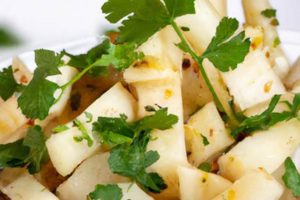
A distinctly Minnesotan dish, this salad typically features a mix of fresh, crisp greens, dried wild rice, crumbled blue cheese, and a sweet-tart vinaigrette often incorporating ingredients like apples, grapes, and toasted nuts. Variations may include grilled chicken or other proteins. A representative example includes romaine lettuce, wild rice, crumbled blue cheese, red grapes, Granny Smith apples, and candied pecans, tossed with a dressing of apple cider vinegar, olive oil, honey, and Dijon mustard.
The combination of textures and flavors, from the nutty wild rice and pungent blue cheese to the sweetness of the fruit and the tangy vinaigrette, creates a balanced and refreshing salad. Its popularity stems from its connection to the Brainerd Lakes area of Minnesota, particularly the town of Nisswa, where it is a staple on restaurant menus. It represents a celebration of local ingredients and regional culinary traditions. The salad offers a nutritional profile rich in vitamins, minerals, and antioxidants, contributing to a healthy diet.
This exploration will delve further into variations of this regional classic, provide detailed preparation instructions, and discuss the best strategies for sourcing authentic ingredients.
Tips for a Superior Salad
Optimizing ingredient selection and preparation techniques elevates this regional dish to its full potential.
Tip 1: Wild Rice Selection: Opt for true wild rice, hand-harvested from Minnesota lakes, for an authentic flavor and texture. Cultivated varieties lack the distinctive nutty notes and firm bite.
Tip 2: Toasting Nuts: Toasting pecans or other nuts enhances their flavor and adds a satisfying crunch. Spread nuts in a single layer on a baking sheet and toast at 350F (175C) for 5-7 minutes, or until fragrant.
Tip 3: Apple Selection: Tart apples like Granny Smith or Honeycrisp provide a pleasant contrast to the other ingredients. Avoid overly sweet varieties that may overwhelm the balance of flavors.
Tip 4: Blue Cheese Quality: Choose a high-quality, crumbled blue cheese with a pronounced flavor. The intensity of the cheese contributes significantly to the overall profile.
Tip 5: Vinaigrette Preparation: Freshly prepared vinaigrette offers the best flavor. Whisk together apple cider vinegar, olive oil, honey, and Dijon mustard until emulsified. Adjust proportions to achieve desired balance.
Tip 6: Ingredient Temperature: Serve the salad chilled for optimal enjoyment. Refrigerate prepared components separately and combine just before serving.
Tip 7: Proper Assembly: Toss the greens, wild rice, fruit, and nuts gently with the vinaigrette just before serving. This prevents the salad from becoming soggy.
Attention to these details ensures a vibrant and flavorful salad that showcases the best of this regional delicacy.
By following these guidelines, one can create a memorable culinary experience reflective of Minnesota’s rich culinary heritage.
1. Fresh, Crisp Greens

The foundation of a successful Nisswa salad rests upon a bed of fresh, crisp greens. Their selection and preparation significantly influence the overall texture and flavor profile of the dish. The greens provide a refreshing counterpoint to the richness of the other ingredients, ensuring a balanced and enjoyable culinary experience.
- Variety Selection
While romaine lettuce is a traditional choice, other crisp greens offer compelling alternatives. Butter lettuce contributes a delicate sweetness, while a blend of baby spinach and arugula introduces peppery notes. The chosen variety should offer a pleasant textural contrast to the wild rice, nuts, and cheese.
- Preparation and Handling
Proper washing and drying are crucial. Thoroughly rinse the greens to remove any grit or debris, then dry them completely to prevent a soggy salad. Torn, rather than chopped, greens offer a more pleasing texture and prevent bruising.
- Storage and Timing
Storing greens properly maintains their freshness and crispness. Refrigerate unwashed greens in a sealed container lined with a paper towel to absorb excess moisture. Add the greens to the salad just before serving to prevent them from wilting.
- Flavor Balancing
The mild flavor of the greens provides a canvas for the other, more assertive ingredients. Their freshness enhances the overall balance of the salad, preventing the richer elements from becoming overwhelming. The crispness also adds a textural dimension crucial for a satisfying eating experience.
The careful consideration of greens elevates the Nisswa salad from a simple combination of ingredients to a carefully constructed culinary experience. The right greens provide a refreshing backdrop that complements the other components, ensuring a harmonious blend of flavors and textures.
2. Authentic Wild Rice

Authentic wild rice, hand-harvested from Minnesota lakes, forms an integral part of a true Nisswa salad. Unlike cultivated varieties, authentic wild rice possesses a distinct nutty flavor, firm texture, and dark, almost black color. This contributes significantly to the salad’s complex flavor profile and satisfying mouthfeel. Substituting cultivated wild rice alters the dish’s character, diminishing its connection to the regional culinary tradition. For instance, a Nisswa salad featuring genuine wild rice offers a nuanced earthiness that complements the blue cheese and vinaigrette, while cultivated varieties tend to be bland and lack textural complexity.
The importance of authentic wild rice extends beyond flavor and texture. It represents a connection to the cultural heritage of the region, reflecting the traditional harvesting practices of the Anishinaabe people. Using authentic wild rice supports sustainable harvesting and contributes to the preservation of this unique ingredient. Furthermore, authentic wild rice offers greater nutritional value compared to cultivated varieties, boasting higher levels of protein, fiber, and certain minerals. This nutritional density enhances the salad’s health benefits, aligning with contemporary culinary trends that emphasize wholesome ingredients.
Understanding the role of authentic wild rice in a Nisswa salad is crucial for appreciating the dish’s cultural and culinary significance. Choosing authentic wild rice not only enhances the sensory experience but also supports sustainable practices and strengthens the connection to the region’s heritage. Failure to utilize this key ingredient compromises the authenticity and diminishes the overall quality of the Nisswa salad experience.
3. Tangy Vinaigrette
The vinaigrette serves as a critical unifying element in a Nisswa salad recipe, binding the diverse ingredients and providing a counterpoint to the richness of the cheese and wild rice. Its tangy character, derived primarily from an acidic component like apple cider vinegar, cuts through the heavier elements, creating a balanced and refreshing flavor profile. The vinaigrette’s role extends beyond simply adding acidity; it also contributes to the overall texture and aroma of the salad, enhancing the dining experience.
- Acidic Base
The choice of acid significantly influences the vinaigrette’s character. Apple cider vinegar, a common choice, offers a mild sweetness and fruity complexity that complements the other ingredients. Other options, such as white wine vinegar or lemon juice, provide a sharper, more citric tang. The acidity level should be carefully balanced to avoid overpowering the other flavors while still providing sufficient brightness. For example, using too much vinegar can make the salad overly tart, whereas too little may result in a bland dressing that fails to enhance the other components.
- Sweetener
A touch of sweetness balances the acidity and adds depth to the vinaigrette. Honey, maple syrup, or even a small amount of granulated sugar can achieve this balance. The sweetener choice affects not only the taste but also the viscosity and texture of the dressing. Honey, for instance, lends a subtle floral sweetness and a slightly thicker consistency compared to granulated sugar. The sweetness should complement the tartness of the apples and the acidity of the vinaigrette without becoming cloying.
- Emulsifier
An emulsifier helps bind the oil and vinegar, creating a stable and homogenous dressing. Dijon mustard, a frequent choice in Nisswa salad dressings, acts as an emulsifier while also contributing a subtle tang and complexity. Other emulsifiers, such as egg yolks or a touch of mayonnaise, offer alternative textures and flavor profiles. A stable emulsion prevents the vinaigrette from separating and ensures even distribution across the salad ingredients. A properly emulsified dressing coats the ingredients more effectively, delivering a more consistent flavor in each bite.
- Aromatic Enhancements
Additional ingredients can enhance the vinaigrette’s aromatic complexity. Minced shallots or garlic add a pungent savory note, while fresh herbs like chives or parsley contribute a fresh, green element. These additions should complement the overall flavor profile without dominating the other components. For example, a touch of minced shallot can provide a subtle savory depth without overpowering the delicate flavor of the apples. These aromatic enhancements further differentiate the Nisswa salad dressing from simpler vinaigrettes.
The interplay of these elements in the vinaigrette contributes significantly to the overall success of the Nisswa salad. A well-balanced, flavorful dressing elevates the dish beyond a simple combination of ingredients, transforming it into a cohesive and satisfying culinary experience. The careful consideration of each component of the vinaigrette ensures that it complements and enhances the other elements of the salad, resulting in a harmonious blend of flavors and textures characteristic of this regional specialty.
4. Crumbled Blue Cheese
Crumbled blue cheese contributes a pungent, creamy, and salty counterpoint to the other ingredients within a Nisswa salad. Its distinct flavor profile, characterized by sharp, tangy notes and a creamy texture, plays a crucial role in balancing the sweetness of the fruit, the nuttiness of the wild rice, and the tartness of the vinaigrette. The crumbling process maximizes surface area, ensuring even distribution of flavor and texture throughout the salad. A Nisswa salad without blue cheese lacks a crucial dimension of flavor complexity, demonstrating the ingredients essential role. For example, imagine a Nisswa salad featuring solely sweet and tart components; the absence of blue cheese would leave a noticeable void in the flavor profile, resulting in a less balanced and less dynamic culinary experience. The intensity of the blue cheese prevents the salad from becoming overly sweet or one-dimensional.
The choice of blue cheese variety impacts the overall character of the salad. Stronger options like Roquefort provide a more assertive presence, while milder varieties such as Gorgonzola offer a subtler counterpoint. The amount of blue cheese used also influences the final balance; too much can overpower the other ingredients, while too little diminishes its impact. Consider the interplay of the blue cheese with the other components: its saltiness complements the sweetness of the apples and grapes, its tanginess balances the richness of the nuts, and its creaminess contrasts with the crispness of the greens. This careful balancing act demonstrates the integral role of blue cheese in achieving the desired flavor profile. Substituting another cheese, such as feta or goat cheese, would fundamentally alter the salad’s character, highlighting the unique contribution of blue cheese to this regional specialty.
Understanding the role of crumbled blue cheese in a Nisswa salad is crucial for achieving the intended balance of flavors and textures. Its unique characteristics make it an indispensable component, contributing a crucial dimension of flavor complexity and textural contrast that defines this regional dish. Successful preparation hinges on the careful selection and appropriate proportion of blue cheese, underscoring its importance as a defining element of the Nisswa salad experience.
5. Sweet, Crisp Apples
Sweet, crisp apples provide a crucial textural and flavor dimension within a Nisswa salad, counterbalancing the richness of other ingredients. Their selection and preparation influence the overall balance and enjoyment of the dish. Understanding the role of apples within this culinary context requires exploring specific facets contributing to their importance.
- Variety Selection
The choice of apple variety significantly impacts the salad’s flavor profile. Tart varieties like Granny Smith or Honeycrisp offer a refreshing acidity that complements the other ingredients. Sweeter apples, such as Fuji or Gala, may overwhelm the delicate balance. The chosen apple should provide a crisp texture that contrasts with the creaminess of the blue cheese and the chewiness of the wild rice. For instance, a Honeycrisp apple offers a balanced sweetness and tartness alongside a satisfying crunch, enhancing the overall sensory experience.
- Preparation Techniques
Proper preparation techniques maximize the apple’s contribution to the salad. Thinly slicing or dicing the apples ensures even distribution and prevents large pieces from disrupting the balance. Furthermore, techniques like briefly soaking the cut apples in a solution of lemon water can prevent browning while maintaining their crisp texture. This attention to detail ensures that the apples remain visually appealing and contribute the desired texture to each bite.
- Flavor Balancing
The sweetness of the apples interacts dynamically with the other ingredients. It tempers the saltiness of the blue cheese and the earthiness of the wild rice, creating a more harmonious flavor profile. The apple’s subtle tartness also complements the vinaigrette’s acidity, adding depth and complexity. This interplay of flavors highlights the apple’s crucial role in achieving a balanced and nuanced taste experience. Without the sweetness and tartness of the apples, the salad could become overly savory or one-dimensional.
- Textural Contrast
The crisp texture of the apples provides a refreshing contrast to the other components of the Nisswa salad. It complements the creamy blue cheese, the chewy wild rice, and the crunchy toasted nuts, creating a more dynamic and engaging mouthfeel. This interplay of textures elevates the salad beyond a simple combination of ingredients, transforming it into a multi-sensory culinary experience. A mealy or soft apple would detract from this textural complexity, underscoring the importance of selecting crisp varieties.
The inclusion of sweet, crisp apples in a Nisswa salad demonstrates a careful consideration of flavor and texture. Their presence elevates the dish beyond a simple combination of ingredients, transforming it into a complex and balanced culinary experience reflective of the region’s culinary traditions. Each facet, from variety selection to preparation techniques, contributes to the apple’s crucial role in achieving the desired harmony of flavors and textures that defines an authentic Nisswa salad. The careful selection and proper handling of apples directly impact the overall success and enjoyment of this regional dish.
6. Toasted Nuts (e.g., Pecans)

Toasted nuts, particularly pecans, contribute a crucial textural and flavor dimension to a Nisswa salad, complementing the other ingredients and enhancing the overall sensory experience. Their presence provides a satisfying crunch and a rich, nutty flavor that balances the sweetness of the fruit, the sharpness of the cheese, and the earthiness of the wild rice. Understanding the role of toasted nuts requires exploring the specific facets that contribute to their importance in this regional dish.
- Variety Selection
While pecans are a traditional choice, other nuts, such as walnuts or almonds, can also complement the salad. The selected nut should offer a robust flavor profile and a firm texture that holds up well against the other ingredients. For instance, pecans provide a buttery richness and a satisfying crunch that pairs well with the sweetness of apples and the sharpness of blue cheese. Walnuts, on the other hand, offer a more assertive, earthy flavor that might overpower more delicate components.
- Toasting Process
Toasting nuts enhances their natural oils, intensifying their flavor and creating a desirable crispness. Proper toasting involves spreading the nuts in a single layer on a baking sheet and heating them in a moderate oven until fragrant and lightly browned. Over-toasting can result in a bitter flavor, while under-toasting fails to maximize their potential. The toasting process intensifies the pecans’ inherent buttery flavor, creating a more pronounced and desirable taste that complements the other salad components. This step is crucial for achieving the optimal flavor profile and textural contribution.
- Flavor Balancing
The nutty flavor of toasted pecans provides a counterpoint to the other ingredients in the salad. It complements the sweetness of the fruit, the tanginess of the vinaigrette, and the sharpness of the blue cheese, creating a balanced and complex flavor profile. This interplay of flavors prevents any single ingredient from dominating, resulting in a harmonious and nuanced taste experience. The absence of toasted nuts would leave a noticeable void in the flavor profile, resulting in a less satisfying dish. Their inherent richness complements the earthiness of the wild rice, preventing the salad from becoming overly sweet or one-dimensional.
- Textural Contrast
The crunch of toasted nuts provides a crucial textural contrast within the salad. This crispness complements the creamy blue cheese, the chewy wild rice, and the crisp greens, creating a more engaging and satisfying mouthfeel. The interplay of textures elevates the Nisswa salad beyond a simple combination of ingredients, transforming it into a multi-sensory culinary experience. The absence of this crunch would diminish the textural complexity and overall enjoyment of the salad. The textural contrast provided by the toasted nuts enhances the interplay of flavors, making each bite a more dynamic and satisfying experience.
The inclusion of toasted nuts, specifically pecans, in a Nisswa salad demonstrates a thoughtful approach to flavor and texture. Their presence enhances the complexity and balance of the dish, contributing a crucial dimension that elevates the overall dining experience. Careful consideration of nut variety, toasting technique, and the interplay of flavors and textures underscores the essential role of toasted nuts in defining the character of an authentic Nisswa salad.
Frequently Asked Questions
This section addresses common inquiries regarding the preparation and enjoyment of Nisswa salad, offering clarity and guidance for achieving optimal results.
Question 1: Can iceberg lettuce be substituted for romaine?
While iceberg lettuce offers a crisp texture, it lacks the flavor and nutritional value of romaine. Romaine’s slightly bitter notes and higher nutrient content contribute more effectively to the salad’s overall profile. Substituting iceberg lettuce results in a less flavorful and less nutritious salad.
Question 2: Is it essential to use authentic wild rice?
Authentic, hand-harvested wild rice provides a distinct nutty flavor and chewy texture crucial for an authentic Nisswa salad experience. Cultivated varieties lack the same depth of flavor and textural complexity. While substitutions are possible, they compromise the dish’s authenticity and overall quality.
Question 3: What can be used in place of blue cheese for those with an aversion to it?
While blue cheese provides a signature flavor profile, crumbled feta or goat cheese can offer alternative tangy and salty notes. However, these substitutions alter the traditional character of the salad. A mild cheddar or a creamy Havarti might offer a less assertive presence while still complementing the other ingredients for individuals sensitive to strong flavors. Completely omitting the cheese component compromises the intended balance of the dish.
Question 4: Can the vinaigrette be made in advance?
Preparing the vinaigrette in advance allows the flavors to meld. However, it should be stored separately from the other ingredients and tossed with the salad just before serving to prevent the greens from wilting.
Question 5: What are suitable alternatives to pecans if they are unavailable?
Walnuts or slivered almonds can provide alternative textural and flavor components, though they introduce different flavor profiles. Toasted sunflower or pumpkin seeds offer a unique crunch and nutritional value as well. These substitutions should be considered with awareness of their distinct flavor contributions, which will subtly alter the overall profile of the salad.
Question 6: How long can Nisswa salad be stored in the refrigerator?
The salad is best consumed immediately after preparation to maximize the crispness of the greens and the textural integrity of the other ingredients. Refrigerating the assembled salad for extended periods leads to wilting and compromises the intended balance of textures. Storing components separately and combining them just prior to serving preserves optimal quality.
Careful consideration of these frequently asked questions ensures a successful and enjoyable Nisswa salad experience, preserving the intended balance of flavors and textures characteristic of this regional specialty. Understanding the nuances of ingredient selection and preparation techniques contributes to the overall quality and authenticity of the final dish.
The next section offers step-by-step instructions for preparing a classic Nisswa salad.
Nisswa Salad Recipe
Exploration of the Nisswa salad recipe reveals a carefully constructed balance of flavors and textures. From the crisp greens and nutty wild rice to the tangy vinaigrette and pungent blue cheese, each component contributes a distinct element to the overall profile. Careful selection of ingredients, proper preparation techniques, and an understanding of the interplay between components are essential for achieving an authentic and satisfying result. The emphasis on fresh, high-quality ingredients, particularly the use of authentic Minnesota wild rice, underscores the salad’s connection to regional culinary traditions.
The Nisswa salad recipe represents more than a simple combination of ingredients; it embodies a regional culinary heritage. Preparation and consumption offer an opportunity to connect with the cultural and historical significance of the dish. Further exploration of regional variations and adaptations promises continued enjoyment and a deeper appreciation for this unique culinary tradition. Continued appreciation for this dish ensures the preservation of regional culinary heritage and encourages ongoing culinary exploration.