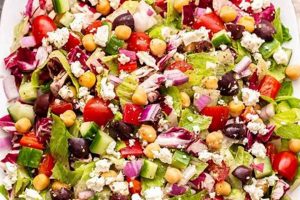
A blend of various leafy greens forms the foundation of a vibrant and nutritious salad. Common components include lettuces such as romaine, butterhead, and red leaf, often supplemented with spinach, arugula, or other flavorful additions like mizuna or dandelion greens. This combination offers a diverse range of textures, colors, and nutritional benefits. A simple example might consist of romaine, spinach, and red leaf lettuce tossed with a light vinaigrette.
Combining different lettuces and greens offers a wider spectrum of vitamins and minerals compared to using a single variety. The diverse flavors and textures create a more appealing culinary experience, encouraging greater consumption of fresh produce. Historically, consuming a mix of foraged greens was a practical way to ensure nutritional variety. This practice has evolved into the modern mixed green salad, a staple in many cuisines worldwide.
The subsequent sections will delve into specific types of greens, recommended pairings of ingredients and dressings, as well as techniques for creating perfectly balanced and delicious salads.
Tips for Creating Exceptional Salads
Creating a truly exceptional salad involves more than simply tossing greens and vegetables together. Attention to detail, from ingredient selection to preparation techniques, elevates the final product.
Tip 1: Variety is Key: Incorporate a diverse selection of greens with varying textures and flavors. Consider a blend of crisp romaine, peppery arugula, and tender butter lettuce.
Tip 2: Proper Washing and Drying: Thoroughly wash all greens and ensure they are completely dry before assembling the salad. Excess moisture dilutes dressings and can lead to a soggy salad.
Tip 3: Strategic Ingredient Pairing: Complementary flavor combinations enhance the overall experience. Pair bitter greens like radicchio with sweet fruits or creamy cheeses.
Tip 4: Dressing Application: Add dressing just before serving to prevent the greens from wilting. Lightly toss to ensure even coating.
Tip 5: Freshness is Paramount: Utilize the freshest ingredients available. Peak-season produce offers optimal flavor and nutritional value.
Tip 6: Consider Texture: Incorporate ingredients with contrasting textures, such as toasted nuts, crunchy croutons, or creamy avocado, to create a more dynamic sensory experience.
Tip 7: Balance Flavors: Strive for a balance of sweet, sour, salty, and bitter elements within the salad. A touch of acidity from citrus or vinegar brightens the overall flavor profile.
By adhering to these guidelines, one can consistently create flavorful, visually appealing, and nutritious salads.
These tips provide a strong foundation for crafting delicious and satisfying salads that can be enjoyed as a light meal or a complement to any main course.
1. Fresh, Diverse Greens

The foundation of any successful mixed green salad lies in the selection and quality of its leafy components. Fresh, diverse greens contribute not only to the nutritional value but also to the textural complexity and visual appeal of the salad. Understanding the characteristics of various greens allows for strategic combinations that maximize flavor and create a balanced, satisfying dish.
- Flavor Profiles
Different greens possess distinct flavor profiles, ranging from mild and buttery to peppery and assertive. Mild lettuces like butterhead and romaine provide a neutral base, while stronger flavored greens like arugula or mizuna add depth and complexity. Combining a variety of flavors creates a more dynamic and nuanced culinary experience. For example, the peppery bite of arugula can be balanced by the sweetness of baby spinach, while the subtle bitterness of radicchio complements the richness of a creamy dressing.
- Textural Variety
Texture plays a crucial role in the overall enjoyment of a salad. Crisp romaine provides a satisfying crunch, while tender spinach offers a smooth contrast. Incorporating greens with varying textures, such as curly endive or oak leaf lettuce, adds another dimension to the sensory experience. The interplay of textures prevents monotony and creates a more interesting and engaging dish.
- Nutritional Content
Different greens offer diverse nutritional benefits. Darker greens, like kale and spinach, are generally richer in vitamins and minerals than lighter varieties. Including a mix of greens ensures a broader spectrum of nutrients, maximizing the health benefits of the salad. For instance, kale is an excellent source of vitamin K, while spinach provides significant amounts of iron.
- Visual Appeal
A vibrant mix of colors enhances the presentation of a salad. Deep red lettuces, vibrant green spinach, and speckled varieties like mizuna create a visually appealing composition that stimulates the appetite. The artful arrangement of diverse greens transforms a simple salad into an aesthetically pleasing culinary creation.
By carefully considering the flavor profiles, textures, nutritional value, and visual appeal of various greens, one can craft a mixed green salad that is not only delicious but also nutritionally balanced and visually captivating. This attention to detail elevates the simple act of eating a salad into a more complete and satisfying experience.
2. Complementary Ingredients

Complementary ingredients elevate a mixed green salad from a simple base of greens to a complex and satisfying dish. Strategic pairings enhance flavor, texture, and nutritional value, creating a balanced and enjoyable culinary experience. The selection of these additions should consider the existing flavors and textures of the chosen greens, aiming for a harmonious blend of contrasting yet complementary elements.
- Fruits and Vegetables
Fruits and vegetables introduce sweetness, acidity, and contrasting textures. Sweet berries, like strawberries or blueberries, pair well with milder greens and creamy cheeses. Crisp vegetables, such as cucumbers, bell peppers, or shredded carrots, contribute a refreshing crunch. The acidity of tomatoes or red onions can balance richer dressings and cheeses. Consider seasonal produce for optimal flavor and freshness.
- Proteins
Adding protein transforms a mixed green salad into a more substantial meal. Grilled chicken or fish, hard-boiled eggs, beans, lentils, or nuts provide essential nutrients and create a more satiating dish. The choice of protein should complement the other ingredients and the chosen dressing. For example, grilled chicken pairs well with a vinaigrette, while flaked salmon might complement a creamy dill dressing.
- Cheeses
Cheese contributes a creamy texture, salty notes, and umami flavors. Crumbled feta, goat cheese, shaved Parmesan, or cubed cheddar can enhance the overall flavor profile. The intensity of the cheese should be balanced against the other ingredients. A strong blue cheese, for instance, might overpower delicate greens, while a mild mozzarella complements a wider range of flavors.
- Nuts and Seeds
Nuts and seeds add healthy fats, textural contrast, and complex flavors. Toasted almonds, walnuts, pecans, sunflower seeds, or pumpkin seeds provide a satisfying crunch and enhance the nutritional value of the salad. Consider the flavor profile of the nuts; toasted walnuts provide an earthy note, while slivered almonds offer a subtle sweetness.
The careful selection and combination of complementary ingredients significantly contribute to the overall success of a mixed green salad. By thoughtfully balancing flavors, textures, and nutritional elements, a simple salad transforms into a dynamic and satisfying culinary creation.
3. Balanced Dressing

A balanced dressing is crucial to a successful mixed green salad recipe. It serves to unite the diverse flavors and textures of the various components, enhancing rather than masking their individual characteristics. A well-executed dressing provides a harmonious blend of acidity, sweetness, saltiness, and sometimes, a touch of bitterness or spice. These elements should complement the chosen greens and other ingredients, creating a cohesive and enjoyable culinary experience. An overly acidic dressing can overwhelm delicate greens, while a dressing lacking acidity can result in a bland and uninspired salad.
Consider a salad composed of peppery arugula, sweet roasted beets, and creamy goat cheese. A balanced vinaigrette, made with a light oil, a touch of honey or maple syrup, and a bright vinegar like champagne or white wine vinegar, would complement the existing flavors without overpowering them. The acidity cuts through the richness of the cheese and the sweetness of the beets, while the oil provides a smooth texture and helps distribute the flavors evenly across the salad. Conversely, a heavy, creamy dressing might clash with the peppery arugula and mask the delicate sweetness of the beets.
Achieving balance in a dressing involves careful consideration of the other salad components. The intensity of the dressing should be proportional to the robustness of the flavors present in the salad. Delicate greens benefit from lighter dressings, while heartier greens can withstand more assertive flavors. Understanding the interplay between the dressing and the other ingredients is essential for creating a harmonious and flavorful mixed green salad. Mastering this aspect of salad preparation elevates the dish from a simple combination of ingredients to a well-composed culinary creation.
4. Proper Preparation Techniques

Proper preparation techniques are essential for creating a high-quality mixed green salad. These techniques ensure the ingredients retain their optimal texture, flavor, and nutritional value. From washing and drying the greens to the timing of dressing application, each step contributes significantly to the final result. Overlooking these details can lead to a subpar salad experience, with wilted greens, diluted flavors, and compromised textures.
- Washing and Drying
Thorough washing removes soil and debris, crucial for both food safety and optimal flavor. Gentle handling prevents bruising delicate leaves. Proper drying, using a salad spinner or clean towels, is paramount. Excess moisture dilutes dressings and leads to soggy salads. A salad with crisp, clean greens provides a more enjoyable culinary experience.
- Ingredient Storage
Storing ingredients correctly maintains freshness and prevents premature wilting. Greens should be refrigerated in airtight containers or bags lined with paper towels to absorb excess moisture. Other ingredients, like chopped vegetables or fruits, should also be stored separately and appropriately to maximize their shelf life and retain their quality. Proper storage ensures that each component is at its peak when combined in the salad.
- Cutting and Tearing Greens
Cutting or tearing greens into bite-sized pieces promotes even dressing distribution and ease of eating. Larger leaves can be unwieldy and make the salad difficult to manage. Using a sharp knife for cutting or gently tearing the leaves by hand prevents bruising and ensures a pleasant texture. Uniformly sized pieces contribute to a more aesthetically pleasing and enjoyable dining experience.
- Timing of Dressing Application
Adding dressing just before serving prevents the greens from wilting and becoming soggy. Prematurely dressed salads lose their crispness and become less appealing. This timing also allows for more accurate portioning of the dressing, preventing an overly dressed or under-dressed salad. Freshly dressed greens maintain their texture and flavor, contributing to a superior salad experience.
These seemingly simple preparation techniques contribute significantly to the overall quality and enjoyment of a mixed green salad. Attention to detail in each step ensures the final product is not only visually appealing but also delivers optimal flavor, texture, and nutritional value.
5. Creative Presentation
Creative presentation elevates a mixed green salad from a simple dish to a visually appealing culinary creation. While flavor and nutritional value remain paramount, the visual aspect significantly impacts the overall dining experience. Thoughtful arrangement and attention to detail transform a basic salad into an aesthetically pleasing and enticing meal. This connection between presentation and enjoyment stems from the inherent human appreciation for beauty and artistry, even in everyday contexts. A visually appealing salad stimulates the appetite and enhances the perceived freshness and quality of the ingredients.
Consider the impact of arranging a salad with vibrant green spinach leaves as a base, topped with strategically placed ruby-red beet slices, crumbled goat cheese, and toasted pecans. This deliberate placement of color and texture creates visual interest compared to simply tossing all ingredients together. Further enhancement can be achieved through the use of varied serving dishes, garnishes, and even the way the dressing is applied. A simple drizzle of balsamic glaze can add both flavor and visual appeal. Serving the salad in individual portions, using unique bowls or plates, further enhances the presentation. These visual cues influence perception, enhancing the dining experience and making the salad more enjoyable.
The practical significance of creative presentation extends beyond individual enjoyment. In restaurant settings, attractive plating enhances the perceived value of a dish. In home cooking, creative presentation adds a touch of elegance and elevates everyday meals. Understanding the impact of visual appeal allows one to transform a simple mixed green salad into a memorable culinary experience, regardless of the setting. While flavor and nutritional content remain foundational, creative presentation adds another layer of enjoyment and satisfaction to the dining experience.
Frequently Asked Questions
This section addresses common inquiries regarding the creation of flavorful and nutritious mixed green salads.
Question 1: How can wilting be prevented?
Wilting can be minimized by washing and thoroughly drying greens before storage. Refrigeration in airtight containers lined with absorbent paper towels further helps maintain crispness. Dressing should be applied immediately prior to serving.
Question 2: What are ideal pairings for strong-flavored greens like arugula?
Strong-flavored greens like arugula pair well with sweeter elements such as fruits (berries, pears), roasted vegetables (beets, sweet potatoes), or creamy cheeses (goat cheese, feta). These pairings balance the peppery notes of arugula.
Question 3: How can one achieve a balanced flavor profile in a salad?
Balance is achieved through the incorporation of contrasting yet complementary flavors. Consider incorporating sweet, sour, salty, bitter, and umami elements. A well-balanced dressing plays a key role in unifying these diverse flavors.
Question 4: What are suitable protein additions for a more substantial salad?
Suitable protein additions include grilled chicken or fish, hard-boiled eggs, beans, lentils, tofu, or nuts. The choice of protein should complement the other ingredients and the chosen dressing.
Question 5: How does one choose an appropriate dressing?
Dressing selection depends on the other ingredients. Light vinaigrettes complement delicate greens and lighter flavors, while creamy dressings pair well with robust greens and richer ingredients. Balance is key; the dressing should enhance, not overpower, the other flavors.
Question 6: What are some strategies for making salads visually appealing?
Visual appeal can be enhanced through strategic arrangement of ingredients, utilizing a variety of colors and textures. Consider the placement of ingredients, use of garnishes, and the choice of serving dish to create a visually appealing presentation.
Understanding these fundamental elements contributes to the creation of consistently delicious and satisfying mixed green salads.
This concludes the frequently asked questions section. The following sections will explore specific recipe variations and offer detailed instructions for creating a range of mixed green salads.
Conclusion
Exploration of the elements contributing to a successful formulation of mixed green salads reveals the importance of ingredient selection, preparation techniques, and balanced flavor profiles. Careful consideration of green varieties ensures textural and nutritional diversity. Complementary ingredients, such as fruits, vegetables, proteins, and cheeses, enhance flavor complexity and nutritional value. Properly balanced dressings unify these diverse elements, while appropriate preparation techniques maintain ingredient quality. Creative presentation elevates the dining experience, transforming a simple salad into a visually appealing culinary creation.
The principles outlined herein provide a framework for crafting consistently satisfying and nutritious salads. Application of these principles allows for adaptation and improvisation, encouraging culinary exploration and the creation of personalized variations. Ultimately, understanding the interplay of these elements empowers individuals to create salads that nourish both body and palate.