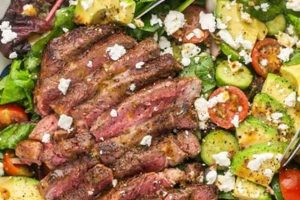
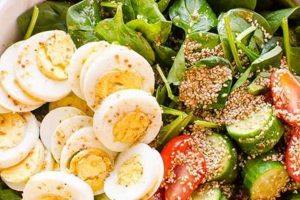
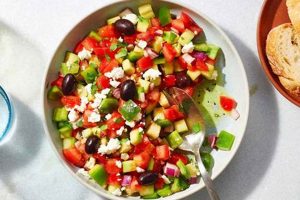
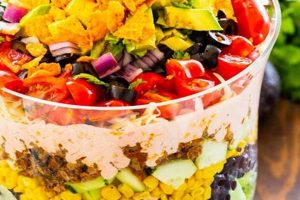
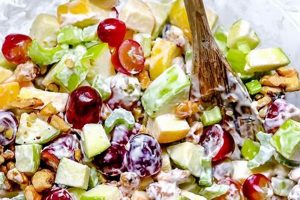
Salads prepared and stored in mason jars offer a convenient and effective method for portion control and advanced meal preparation, particularly beneficial for individuals seeking healthier eating habits. These layered salads typically place the dressing at the bottom, followed by hardier vegetables, grains, proteins, and lighter greens at the top to prevent premature wilting. A simple example includes a vinaigrette at the base, layered with chopped carrots, cucumbers, chickpeas, grilled chicken, and finally, spinach.
This approach to salad preparation offers numerous advantages. Pre-portioning helps manage calorie intake and promotes balanced meals. Making salads in advance saves time and encourages consistent healthy choices throughout the week, reducing reliance on less nutritious, on-the-go options. Furthermore, the layered structure preserves the freshness of ingredients, ensuring a crisp and flavorful salad even after several days in the refrigerator. This method has gained popularity in recent years as a practical strategy for busy individuals committed to healthier lifestyles.
Further exploration will delve into specific recipe ideas categorized by dietary needs and preferences, tips for successful layering and storage, and address common questions regarding ingredient choices and shelf life. This will provide a comprehensive guide to incorporating this practical and healthy eating strategy into daily routines.
Tips for Effective Layered Salad Preparation
Optimizing the benefits of layered salads requires attention to ingredient selection, layering techniques, and proper storage. These tips offer guidance for creating nutritious, flavorful, and convenient meals.
Tip 1: Dressing First: Always start with the dressing at the bottom of the jar. This prevents delicate greens from wilting and creates a flavorful foundation.
Tip 2: Sturdy Vegetables Next: Layer hardier vegetables like chopped carrots, bell peppers, cucumbers, and onions on top of the dressing. These vegetables can withstand the dressing without becoming soggy.
Tip 3: Grains and Proteins Follow: Grains like quinoa, farro, or rice, along with protein sources such as beans, lentils, grilled chicken, or tofu, form the next layer. These ingredients absorb excess dressing and add substantial nutrients.
Tip 4: Delicate Greens Last: Place leafy greens like spinach, kale, or romaine lettuce at the very top. This placement protects them from the dressing and ensures they remain fresh and crisp.
Tip 5: Airtight Seal: Ensure the mason jar lids are tightly sealed to maintain freshness and prevent leakage. This also helps prevent the layers from mixing prematurely.
Tip 6: Storage: Store prepared jars in the refrigerator for up to four days. For optimal consumption, allow the salad to sit at room temperature for a short period after removal from the refrigerator.
Tip 7: Portion Control: Selecting appropriately sized jars helps manage portions and prevents overeating, supporting weight management goals.
Tip 8: Variety is Key: Explore different ingredient combinations to ensure nutritional variety and prevent mealtime boredom. Experiment with different dressings, vegetables, proteins, and grains to discover preferred flavor profiles.
Following these tips will maximize the benefits of pre-prepared salads, promoting healthy eating habits and streamlining meal preparation.
By incorporating these strategies, individuals can enjoy convenient, nutritious, and flavorful meals that contribute to overall well-being.
1. Portion Control

Portion control plays a crucial role in weight management strategies. Mason jar salads offer a practical and effective method for regulating portion sizes, contributing significantly to successful weight loss efforts. Pre-packaging salads into individual jars eliminates guesswork and promotes mindful consumption.
- Visual Cues
Mason jars provide clear visual cues for portion sizes. The defined volume of a jar eliminates the tendency to overfill plates, a common pitfall when serving salads from larger bowls. This visual aid reinforces portion awareness and supports adherence to dietary goals.
- Pre-Portioned Servings
Preparing individual servings in advance eliminates the need for on-the-spot portioning decisions, which can be influenced by hunger or external factors. Having pre-portioned salads readily available simplifies healthy choices and reduces the likelihood of overconsumption.
- Reduced Food Waste
Preparing precise portions minimizes food waste. Individuals consume the pre-determined amount, reducing the likelihood of discarding leftover salad ingredients. This aligns with both economic and environmental sustainability principles.
- Simplified Calorie Tracking
Using consistently sized jars simplifies calorie tracking. Once the caloric content of a standard jar salad is calculated, it becomes easier to monitor daily intake and adjust recipes as needed to meet specific dietary targets. This facilitates accurate tracking and informed dietary choices.
By facilitating portion control, mason jar salads become a valuable tool in weight management. The combined benefits of visual cues, pre-portioned servings, reduced food waste, and simplified calorie tracking contribute to sustainable and effective weight loss efforts.
2. Advanced Preparation

Advanced preparation is a cornerstone of successful weight management, particularly when utilizing mason jar salads. Planning and preparing meals in advance fosters healthier dietary choices and reduces reliance on less nutritious, convenient options.
- Time Efficiency
Dedicating time to prepare several mason jar salads at once streamlines the week’s meals. This batch preparation approach saves considerable time and effort compared to daily meal preparation. Individuals can utilize weekend hours to create a week’s worth of salads, simplifying daily routines and ensuring healthy meals are readily available.
- Reduced Impulsive Choices
Having nutritious meals readily available mitigates the likelihood of making impulsive, unhealthy food choices driven by hunger or time constraints. The convenience of grab-and-go mason jar salads eliminates the temptation to resort to fast food or processed snacks, supporting adherence to dietary goals.
- Consistency and Routine
Advanced preparation promotes dietary consistency. Pre-planned meals ensure regular consumption of vegetables, lean proteins, and healthy fats, contributing to a balanced nutritional intake. This regularity supports overall well-being and aids in achieving weight management objectives.
- Stress Reduction
Knowing that healthy meals are already prepared reduces mealtime stress. This eliminates the daily decision-making process around food choices, freeing up mental energy and contributing to a more relaxed approach to healthy eating. This is particularly beneficial for individuals with busy schedules.
The advantages of advanced preparation significantly contribute to the effectiveness of mason jar salads as a weight-loss strategy. By streamlining mealtimes, reducing impulsive choices, promoting consistency, and mitigating stress, advanced preparation empowers individuals to maintain healthy eating habits and achieve weight management goals.
3. Freshness Preservation

Freshness preservation is paramount in maximizing the nutritional value and palatability of mason jar salads, particularly within a weight-loss context. Maintaining optimal ingredient quality ensures consumption of nutrient-rich, flavorful meals, supporting adherence to dietary plans. The layered structure of mason jar salads plays a key role in preserving freshness and preventing spoilage.
- Layered Structure
The strategic layering of ingredients within the mason jar is crucial for freshness preservation. Placing the dressing at the bottom, followed by progressively more delicate ingredients, prevents the greens from becoming soggy and extends the shelf life of the entire salad. This method maintains the crispness of vegetables and prevents premature wilting.
- Airtight Seal
Mason jars provide an airtight seal, limiting oxidation and minimizing exposure to external elements that contribute to spoilage. This airtight environment preserves the integrity and nutritional value of the salad ingredients, ensuring they remain fresh and flavorful for an extended period.
- Reduced Bacterial Growth
The cool temperature of refrigeration, combined with the airtight environment within the mason jar, inhibits bacterial growth. This significantly extends the shelf life of the salad and reduces the risk of foodborne illnesses. This is crucial for safely consuming pre-prepared meals.
- Enhanced Flavor and Texture
By preserving ingredient freshness, mason jar salads retain their optimal flavor and texture. Crisp vegetables and flavorful dressings create a more enjoyable eating experience, promoting consistent consumption of healthy meals. This contributes to the long-term sustainability of dietary changes supporting weight loss.
Preserving freshness through proper layering, airtight seals, and refrigeration is essential for maximizing the benefits of mason jar salads as a weight-loss tool. These factors contribute not only to nutritional value but also to palatability, promoting consistent adherence to healthy eating habits. This approach ensures that each salad provides optimal nutrition and flavor, supporting individuals in achieving their weight-loss objectives.
4. Nutrient Density

Nutrient density plays a vital role in the efficacy of mason jar salads for weight loss. Consuming nutrient-rich foods while managing caloric intake is crucial for achieving sustainable weight loss and overall health. Nutrient-dense salads provide essential vitamins, minerals, and phytonutrients that support bodily functions, satiety, and energy levels, all while contributing to a reduced calorie intake. A salad featuring kale, spinach, grilled salmon, berries, and a sprinkle of nuts exemplifies a nutrient-dense meal that supports weight management goals without sacrificing essential nutrients.
Prioritizing nutrient-dense ingredients in mason jar salads maximizes the benefits of this weight-loss strategy. Leafy greens offer vitamins A, C, and K, while lean proteins contribute to satiety and muscle maintenance. Whole grains provide fiber, promoting digestive health and regulating blood sugar levels. Healthy fats from sources like avocados and nuts offer essential fatty acids and contribute to satiety. Incorporating a variety of colorful vegetables ensures a broad spectrum of micronutrients. Conversely, relying on calorie-dense, nutrient-poor ingredients can hinder weight loss efforts and compromise overall health. For example, a salad composed primarily of iceberg lettuce, croutons, and a high-calorie dressing offers minimal nutritional value despite its lower calorie count compared to other meal options.
Understanding the importance of nutrient density empowers individuals to make informed choices when constructing mason jar salads. Prioritizing nutrient-rich ingredients ensures that each meal contributes to both weight management and overall well-being. This approach fosters sustainable dietary habits that support long-term health and weight-loss success. Focusing on nutrient density over simply calorie restriction ensures adequate intake of essential nutrients, preventing deficiencies and promoting optimal physiological function while achieving weight-loss goals.
5. Calorie Awareness

Calorie awareness is fundamental to the effectiveness of mason jar salads as a weight-loss strategy. Weight loss occurs when caloric expenditure exceeds caloric intake. Understanding the caloric content of ingredients and portion sizes allows for the creation of salads that align with individual weight-loss goals. A lack of calorie awareness can negate the potential benefits of mason jar salads, even with meticulous attention to freshness and portion control. For instance, a salad filled with calorie-dense ingredients like cheese, nuts, and dried fruit, even in controlled portions, may hinder weight loss efforts if total caloric intake remains excessive. Conversely, a calorie-conscious approach might involve opting for lean protein sources like grilled chicken or fish, incorporating a variety of low-calorie vegetables, and utilizing a light vinaigrette instead of creamy dressings.
Practical application of calorie awareness involves calculating the approximate caloric content of each salad. This can be achieved using online nutritional calculators or food tracking apps. Adjusting ingredients and portion sizes based on these calculations allows for precise control over caloric intake. For example, substituting a high-calorie dressing with a lower-calorie alternative or reducing the portion size of higher-calorie ingredients like avocado can significantly impact the overall caloric value of the salad. Furthermore, calorie awareness extends to considering the caloric density of various ingredients. Opting for nutrient-dense, lower-calorie options like leafy greens and non-starchy vegetables increases satiety and provides essential nutrients while minimizing caloric intake. Understanding calorie density allows for the creation of satisfying and nutritious salads that support weight-loss goals without compromising essential nutrients.
Calorie awareness is not simply about restriction; it’s about making informed choices that support overall dietary goals. It empowers individuals to create balanced, nutritious, and calorie-controlled meals. Integrating calorie awareness into mason jar salad preparation ensures this convenient meal prep strategy effectively contributes to weight loss. This understanding facilitates sustainable weight management by enabling informed food choices aligned with individual caloric needs and weight-loss objectives. By combining calorie awareness with the inherent benefits of mason jar salads, individuals can achieve effective and sustainable weight management while enjoying convenient, healthy, and satisfying meals.
6. Ingredient Variety

Ingredient variety is crucial for the long-term success of mason jar salad-based weight loss strategies. Nutritional adequacy and sustained dietary adherence depend significantly on consuming a wide range of nutrients. Variety combats nutritional deficiencies and reduces the risk of diet-related plateaus. Monotonous meals, even healthy ones, can lead to decreased adherence over time, hindering weight loss progress. A diverse array of ingredients provides a broader spectrum of vitamins, minerals, antioxidants, and fiber, promoting overall health while supporting weight management goals. For instance, relying solely on spinach as the leafy green component limits the intake of certain nutrients found in other greens like kale or romaine lettuce. Similarly, limiting protein sources to only chicken breast overlooks the benefits of incorporating plant-based proteins like lentils or chickpeas, which offer different amino acid profiles and additional fiber.
Practical applications of ingredient variety in mason jar salads involve incorporating different food groups within each meal. Rotating leafy greens, utilizing diverse protein sources (lean meats, fish, legumes, tofu), including various colored vegetables (bell peppers, carrots, broccoli), and experimenting with whole grains (quinoa, farro, brown rice) maximizes nutritional intake and prevents dietary boredom. This variety also expands the flavor profile of meals, increasing satisfaction and reducing the temptation to deviate from the weight-loss plan. Further variety can be achieved through the use of herbs, spices, and low-calorie dressings. For example, one week might feature salads with grilled chicken, quinoa, spinach, and bell peppers, while the next week incorporates salmon, brown rice, kale, and cucumbers. Such variations ensure a wide range of nutrients and prevent taste fatigue, supporting continued adherence to the dietary plan.
Ingredient variety directly correlates with successful weight management using mason jar salads. Addressing potential challenges, like limited access to certain ingredients or dietary restrictions, requires careful planning and substitutions. Exploring seasonal produce, utilizing frozen vegetables, and finding creative alternatives for restricted foods can maintain both variety and adherence. Ultimately, embracing ingredient variety maximizes the nutritional benefits of mason jar salads, sustains engagement with the dietary approach, and promotes long-term weight loss success. This approach fosters a sustainable and healthy eating pattern, crucial for overall well-being and achieving weight management objectives.
Frequently Asked Questions
This section addresses common inquiries regarding the utilization of mason jar salads for weight management.
Question 1: How long can mason jar salads be stored in the refrigerator?
Properly prepared and stored mason jar salads typically remain fresh for up to four days in the refrigerator. Consuming them within this timeframe ensures optimal quality and minimizes the risk of spoilage.
Question 2: Are mason jar salads suitable for all dietary restrictions?
With careful ingredient selection, mason jar salads can accommodate most dietary restrictions. Vegetarian, vegan, gluten-free, and dairy-free options can be easily created by substituting ingredients accordingly. Consulting a nutritionist or registered dietitian can provide tailored guidance for specific dietary needs.
Question 3: What are the best types of dressings to use in mason jar salads?
Vinaigrettes are generally preferred due to their lower calorie content and reduced risk of causing vegetables to become soggy. However, thicker dressings can be used if placed above heartier ingredients like grains or beans, preventing contact with delicate greens. Portion control of dressings remains crucial, regardless of type.
Question 4: Can frozen vegetables be used in mason jar salads?
Frozen vegetables offer a convenient and cost-effective option. However, they should be thoroughly thawed and dried before inclusion to prevent excess moisture from affecting the salad’s texture and shelf life.
Question 5: How can the potential for mealtime boredom be addressed when using mason jar salads consistently?
Rotating ingredients regularly and experimenting with diverse flavor profiles are key to preventing mealtime boredom. Varying protein sources, incorporating seasonal vegetables, exploring different dressings, and utilizing various herbs and spices can significantly enhance the culinary experience.
Question 6: Are there any potential drawbacks to using mason jar salads for weight loss?
While generally beneficial, potential drawbacks include the initial investment in mason jars and the time commitment required for meal preparation. Additionally, some individuals may find transporting glass jars inconvenient. However, the benefits of portion control, convenience, and freshness preservation often outweigh these minor drawbacks.
Careful consideration of ingredient choices, portion sizes, and storage practices are essential for maximizing the effectiveness of mason jar salads as a weight management tool. Addressing these frequently asked questions provides a comprehensive understanding of this dietary approach and its potential benefits.
Further exploration of specific recipe ideas categorized by dietary needs and preferences will follow in the next section.
Conclusion
Mason jar salad recipes offer a structured approach to weight management through portion control, advanced preparation, and nutrient-dense meals. Strategic layering preserves freshness and enhances the longevity of prepared meals. Calorie awareness and ingredient variety are essential for maximizing the effectiveness of this method, ensuring nutritional adequacy and preventing dietary plateaus. Addressing practical considerations, such as appropriate dressing choices and storage techniques, further optimizes the benefits of this approach. Careful planning and execution are key to successful implementation.
Successful weight management requires a multifaceted approach. Mason jar salads provide a practical and adaptable tool within a broader weight-loss strategy. Integrating these principles into a comprehensive wellness plan can contribute to sustainable, healthy lifestyle changes. Prioritizing nutritional value, consistency, and informed food choices fosters long-term well-being beyond weight loss alone.