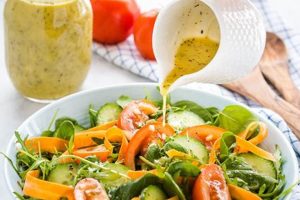
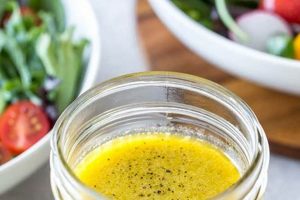
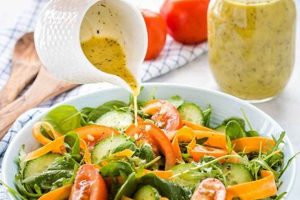
A vibrant and tangy emulsion typically combines citrus juices, such as mandarin orange, with oil, sweeteners, and seasonings. Common additions include vinegar, ginger, garlic, and soy sauce. Variations range from light and refreshing vinaigrettes to creamy dressings incorporating mayonnaise or yogurt. An example might involve whisking together mandarin orange juice, rice vinegar, sesame oil, honey, and grated ginger.
This type of dressing offers a bright, acidic counterpoint to the often mild flavors of salad greens and other ingredients. Its versatility extends beyond traditional salads, making it suitable for marinades, dipping sauces, and glazes for proteins like chicken or fish. The historical roots of citrus-based dressings likely trace back to Asian cuisine, where the balance of sweet, sour, and savory flavors is a hallmark. The modern iteration often reflects a fusion of Eastern and Western culinary traditions.
The following sections delve into specific formulations, explore the nuances of ingredient selection, and provide guidance on preparation techniques.
Tips for Crafting Exceptional Mandarin Salad Dressing
Achieving a well-balanced and flavorful mandarin salad dressing requires attention to detail and an understanding of the interplay between ingredients. These tips offer guidance for optimizing flavor profiles and creating dressings suited to various culinary applications.
Tip 1: Freshly Squeezed Juice is Paramount: Bottled mandarin orange juice often contains additives and preservatives that can detract from the dressing’s brightness. Freshly squeezed juice provides the purest flavor and allows for greater control over sweetness and acidity.
Tip 2: Balance Sweetness and Acidity: The interplay between sweet and sour elements is crucial. Adjust the ratio of sweeteners (honey, sugar, or maple syrup) and acidic components (vinegar, lemon juice) to achieve the desired balance. Taste and adjust incrementally.
Tip 3: Emulsify Thoroughly: Proper emulsification ensures a stable and creamy dressing. Whisk the oil slowly into the other ingredients or use a blender to create a smooth, cohesive texture.
Tip 4: Explore Flavor Combinations: Ginger, garlic, shallots, and chili flakes can add depth and complexity. Experiment with different combinations to discover preferred flavor profiles.
Tip 5: Consider the Salad Ingredients: The dressing should complement the other salad components. A lighter vinaigrette might suit delicate greens, while a creamier dressing may pair well with heartier ingredients.
Tip 6: Adjust Consistency as Needed: For a thinner dressing, add more citrus juice or water. To thicken, incorporate a small amount of mayonnaise, yogurt, or a cornstarch slurry.
Tip 7: Taste and Refine: Before serving, taste the dressing and adjust seasonings as needed. A final touch of salt, pepper, or a pinch of sugar can elevate the flavor profile.
By following these guidelines, one can create a mandarin salad dressing that elevates any salad or dish. Careful consideration of ingredient selection, balance, and technique yields exceptional results.
These insights provide a foundation for crafting dressings tailored to individual preferences. The following section offers specific recipe examples to further explore the versatility of mandarin salad dressing.
1. Fresh Mandarin Juice

Fresh mandarin juice constitutes a cornerstone of successful mandarin salad dressings. Its importance stems from the distinct flavor profile it imparts, characterized by bright citrus notes and a delicate sweetness absent in processed alternatives. Bottled juices often contain additives and preservatives that can muddy the flavor profile of the final dressing. Freshly squeezed juice, on the other hand, offers a clean, vibrant taste that allows the other ingredients to shine. This distinction becomes particularly evident when using the dressing with delicate greens or ingredients where subtle flavor nuances are desired. For instance, a salad composed of butter lettuce, toasted almonds, and crumbled goat cheese benefits significantly from the unadulterated brightness of fresh mandarin juice in the dressing. The clean citrus flavor enhances, rather than overpowers, the other components.
Beyond flavor, fresh juice offers greater control over the balance of sweetness and acidity. Mandarins themselves vary in sweetness and tartness depending on variety and ripeness. Using freshly squeezed juice allows for adjustments to be made with additional sweeteners or acids, ensuring a balanced final product. This level of control is difficult to achieve with pre-packaged juices, which often possess a standardized and less nuanced flavor profile. This customization becomes crucial when pairing the dressing with specific dishes. A spicier Asian-inspired salad might benefit from a dressing with a higher acidity level, while a fruit salad might require a sweeter, less tart dressing. Freshly squeezed juice offers the flexibility to tailor the dressing to the specific application.
The use of fresh mandarin juice, therefore, represents more than a simple ingredient choice; it directly impacts the overall quality and versatility of the mandarin salad dressing. It offers superior flavor, greater control over the final product, and ultimately, a more nuanced and satisfying culinary experience. While convenience may tempt some towards bottled alternatives, the difference in taste and adaptability underscores the irreplaceable role of fresh mandarin juice in achieving truly exceptional results.
2. Balanced Sweetness/Acidity

The interplay of sweetness and acidity forms the backbone of a successful mandarin salad dressing recipe. A harmonious balance between these two contrasting elements is essential for creating a dressing that complements, rather than overwhelms, the other salad components. Achieving this balance requires careful consideration of the ingredients and their relative proportions.
- The Role of Acidity
Acidity provides the necessary brightness and tang that cuts through the richness of the oil and other ingredients. It also acts as a preservative, extending the shelf life of the dressing. Common sources of acidity in mandarin dressings include citrus juices (lemon, lime, or vinegar). The specific type of acid used influences the final flavor profile. For example, rice vinegar lends a milder, slightly sweet acidity, while white wine vinegar offers a sharper, more assertive tang. The chosen acid must harmonize with the mandarin’s inherent sweetness.
- Sweetness as a Counterpoint
Sweetness tempers the acidity, preventing the dressing from becoming overly tart. It also adds depth and complexity to the flavor profile. Common sweeteners include honey, maple syrup, sugar, or even a touch of fruit juice. The choice of sweetener influences not only the level of sweetness but also the overall flavor. Honey, for example, imparts a floral sweetness, while maple syrup adds a subtle caramel note. The sweetness level should complement the acidity and other flavor components without being cloying.
- Achieving Harmony through Ratios
The precise ratio of sweetness to acidity depends on personal preference and the other ingredients in the dressing. A general guideline is to start with a 2:1 ratio of acid to sweetener, then adjust to taste. It is crucial to taste and adjust incrementally, as even small changes in the ratio can significantly impact the final flavor. This careful calibration is essential for creating a well-balanced dressing. Consider, for instance, a dressing with a pronounced ginger flavor; the sweetness and acidity must be adjusted to complement the ginger’s pungency without masking it.
- Impact on Overall Flavor Profile
The balance of sweetness and acidity not only affects the taste of the dressing itself but also how it interacts with the other salad ingredients. A dressing that is too acidic can overpower delicate greens, while one that is too sweet can clash with savory elements. The properly balanced dressing enhances the overall flavor profile of the salad, creating a harmonious blend of tastes and textures. For example, a slightly tart dressing with a hint of sweetness perfectly complements a salad with bitter greens, creamy goat cheese, and candied pecans.
Mastering the balance of sweetness and acidity is fundamental to creating a truly exceptional mandarin salad dressing. This delicate balance elevates the dressing from a simple condiment to an integral component of the dish, enhancing the overall flavor profile and creating a more satisfying culinary experience. By carefully considering the role of each element and adjusting ratios thoughtfully, one can achieve a dressing that perfectly complements any salad creation.
3. Emulsification Technique

Emulsification, the process of combining two immiscible liquids like oil and water into a stable mixture, plays a crucial role in determining the texture and palatability of mandarin salad dressing. A properly emulsified dressing exhibits a smooth, creamy consistency, with the oil and aqueous phases evenly dispersed. This prevents separation and ensures a pleasant mouthfeel. Understanding the underlying principles and employing appropriate techniques is essential for crafting a high-quality dressing.
- Temporary vs. Permanent Emulsions
Mandarin salad dressings typically fall under the category of temporary emulsions. While a stable mixture is achievable for a reasonable period, separation will eventually occur. Factors influencing stability include the ratio of oil to aqueous ingredients, the presence of emulsifying agents, and the intensity of mixing. Temporary emulsions, while not indefinitely stable, offer sufficient longevity for practical culinary applications. A classic vinaigrette, for example, is a temporary emulsion where the oil and vinegar are combined through vigorous whisking but will eventually separate if left undisturbed.
- The Role of Emulsifying Agents
Emulsifying agents, such as honey, mustard, or egg yolks, contain molecules with both hydrophilic (water-attracting) and lipophilic (oil-attracting) properties. These molecules position themselves at the oil-water interface, reducing surface tension and facilitating the formation of smaller droplets, thereby stabilizing the emulsion. In a mandarin dressing, a small amount of Dijon mustard can act as an effective emulsifier, promoting a smoother, more homogenous mixture.
- Methods of Emulsification
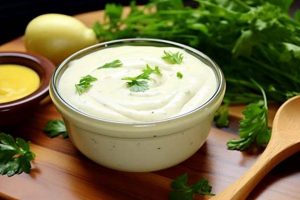
Several methods facilitate emulsion formation in mandarin dressings. Vigorous whisking by hand is often sufficient for temporary emulsions. Slowly drizzling the oil into the aqueous phase while whisking continuously promotes gradual incorporation and prevents separation. Alternatively, a blender or food processor offers a more efficient method for creating smoother, more stable emulsions, particularly for dressings containing thicker ingredients like mayonnaise or yogurt.
- Impact on Sensory Experience
The degree of emulsification directly influences the sensory experience of the dressing. A well-emulsified dressing coats the salad ingredients evenly, delivering a balanced flavor in each bite. Conversely, a poorly emulsified dressing can result in an uneven distribution of oil and aqueous components, leading to a less desirable mouthfeel and inconsistent flavor. The creamy texture of a properly emulsified mandarin dressing enhances the overall enjoyment of the salad.
Employing proper emulsification techniques ensures a mandarin salad dressing with a desirable texture, stable consistency, and enhanced flavor delivery. Understanding the factors affecting emulsification allows for greater control over the final product, enabling the creation of dressings tailored to specific preferences and culinary applications. From the classic vinaigrette to creamier variations, emulsification plays a pivotal role in achieving a successful and satisfying mandarin salad dressing.
4. Complementary Ingredients
Complementary ingredients represent a crucial aspect of mandarin salad dressing recipes, elevating them beyond simple citrus-vinaigrettes. These additions contribute depth, complexity, and balance, transforming the dressing into a versatile culinary tool. Careful selection and integration of complementary ingredients allows for customization, aligning the dressing’s flavor profile with specific salad components or desired culinary applications. Understanding the interplay of these ingredients is essential for crafting exceptional and well-balanced dressings.
- Aromatic Enhancements
Aromatics, such as ginger, garlic, and shallots, infuse the dressing with savory notes, balancing the sweetness and acidity of the citrus base. Fresh ginger provides a warm, slightly spicy undertone, while garlic contributes a pungent depth. Shallots offer a milder onion flavor, adding a subtle complexity. The quantity used dictates the intensity of these aromatic contributions. For example, a dressing intended for a delicate seafood salad might benefit from a hint of shallot, while a robust chicken salad could accommodate a more generous amount of ginger and garlic. These aromatic additions contribute a layered flavor profile, enhancing the overall sensory experience.
- Herbaceous Accents
Fresh herbs impart vibrant, verdant notes to the dressing. Mint, cilantro, and chives each offer distinct flavor profiles that complement the citrus base. Mint provides a refreshing coolness, cilantro adds a bright, citrusy note, and chives contribute a subtle onion flavor. The choice of herb should align with the overall flavor profile of the salad. For instance, mint pairs well with fruit salads or those featuring grilled chicken, while cilantro complements Asian-inspired salads. The addition of fresh herbs introduces a refreshing element and elevates the dressing’s complexity.
- Spice and Heat
Incorporating elements of spice and heat adds a stimulating dimension to the dressing. Chili flakes, a pinch of cayenne pepper, or a dash of sriracha introduce varying levels of heat, creating a dynamic interplay with the other flavor components. The level of spice should be carefully calibrated to complement the other ingredients and avoid overpowering the citrus notes. A delicate salad with shrimp and avocado, for example, might benefit from a subtle hint of chili flakes, while a heartier salad featuring grilled steak could accommodate a more generous dose of sriracha. Spice and heat add intrigue and depth to the dressing.
- Textural Considerations
Ingredients that contribute textural variation create a more engaging sensory experience. Toasted sesame seeds, chopped nuts, or crispy shallots introduce contrasting textures that complement the smoothness of the dressing. Sesame seeds provide a subtle nuttiness and a delicate crunch, while toasted almonds or walnuts add a richer, more robust textural element. Crispy shallots offer a savory crunch and a hint of onion flavor. These textural additions prevent the dressing from becoming monotonous, creating a more dynamic and enjoyable culinary experience.
The strategic incorporation of complementary ingredients elevates mandarin salad dressings from simple condiments to dynamic flavor components. By carefully considering aromatic enhancements, herbaceous accents, spice levels, and textural variations, one can craft dressings that perfectly complement a wide array of salad ingredients and culinary applications. This nuanced approach to flavor building allows for customization and creativity, resulting in dressings that are both flavorful and versatile.
5. Proper Storage
Proper storage is essential for maintaining the quality, flavor, and safety of mandarin salad dressing. Neglecting appropriate storage practices can lead to flavor degradation, textural changes, and potential microbial growth. Understanding and implementing correct storage techniques ensures the dressing remains palatable and safe for consumption.
- Container Selection
Selecting an appropriate storage container is crucial for preserving the dressing’s quality. Airtight containers, preferably made of glass or high-quality plastic, minimize oxidation and prevent the absorption of unwanted odors from the refrigerator. Avoid reactive metals, such as copper or aluminum, which can interact with the acidic components of the dressing. The size of the container should be appropriate for the volume of dressing, minimizing the amount of headspace, which can accelerate oxidation. An airtight glass jar with a tight-fitting lid provides an ideal storage environment, protecting the dressing from external influences.
- Refrigeration Temperature
Maintaining consistent refrigeration temperatures is crucial for inhibiting microbial growth and preserving the dressing’s freshness. The ideal temperature range for storing mandarin salad dressing is between 34F and 40F (1C and 4C). Avoid storing the dressing in the refrigerator door, as temperature fluctuations in this area can compromise its quality. Placing the dressing towards the back of the refrigerator on a stable shelf ensures consistent temperature exposure and minimizes the risk of spoilage.
- Shelf Life Considerations
Even with proper storage, mandarin salad dressing has a limited shelf life. Freshly made dressings typically last for up to one week in the refrigerator. Factors affecting shelf life include the ingredients used, the presence of preservatives, and the storage conditions. Dressings containing fresh herbs or fruits may have a shorter shelf life due to their perishability. Regularly inspecting the dressing for changes in appearance, texture, or odor is essential for determining its suitability for consumption. Discarding the dressing after one week, or sooner if any signs of spoilage are evident, ensures food safety.
- Freezing for Extended Storage
While not ideal, freezing can extend the shelf life of mandarin salad dressing for up to three months. However, freezing can alter the texture and consistency of the dressing, particularly those containing mayonnaise or yogurt. Upon thawing, the emulsion may break, resulting in a less desirable texture. To minimize textural changes, freeze the dressing in ice cube trays and then transfer the frozen cubes to an airtight container for longer-term storage. This method allows for portioning and minimizes the number of freeze-thaw cycles. Thawing the dressing slowly in the refrigerator minimizes the impact on its emulsion stability. It’s important to note that freezing does not eliminate the risk of spoilage; therefore, consuming the dressing within a reasonable timeframe after thawing remains crucial.
Adhering to proper storage practices is integral to maximizing the quality and longevity of mandarin salad dressing. Careful attention to container selection, refrigeration temperature, shelf life considerations, and appropriate freezing techniques ensures the dressing retains its desirable flavor and texture while minimizing the risk of spoilage. Implementing these practices contributes to a safer and more enjoyable culinary experience.
Frequently Asked Questions
This section addresses common inquiries regarding mandarin salad dressing preparation and utilization.
Question 1: What is the ideal ratio of oil to acid in a mandarin vinaigrette?
A standard vinaigrette ratio of 3:1 (oil to acid) provides a balanced foundation. However, individual preferences may vary. Adjusting the ratio incrementally allows for customization based on desired tartness.
Question 2: Can bottled mandarin juice be substituted for fresh juice?
While bottled juice offers convenience, fresh mandarin juice yields superior flavor and control over sweetness and acidity. Bottled alternatives often contain additives that can detract from the dressing’s brightness.
Question 3: How can the emulsification of a mandarin dressing be improved?
Slowly whisking the oil into the aqueous phase or using a blender aids in creating a stable emulsion. Incorporating a small amount of Dijon mustard or honey can further enhance emulsification and prevent separation.
Question 4: What complementary ingredients pair well with mandarin salad dressing?
Ginger, garlic, shallots, and fresh herbs like mint or cilantro enhance the flavor profile. Toasted sesame seeds or chopped nuts add textural complexity. The selection should complement the overall salad composition.
Question 5: How long can mandarin salad dressing be stored?
Freshly made dressings typically last up to one week when stored in an airtight container in the refrigerator. Freezing is possible for longer storage, but may alter texture, particularly in dressings containing mayonnaise or yogurt.
Question 6: Can mandarin salad dressing be used beyond salads?
Its versatility extends to marinades for poultry or fish, dipping sauces for spring rolls or dumplings, and glazes for roasted vegetables. The vibrant citrus flavor complements a variety of culinary applications.
Understanding these aspects contributes to successful mandarin salad dressing preparation and utilization. Experimentation with ingredients and techniques allows for further customization and flavor exploration.
The subsequent section provides a selection of recipe variations, showcasing the dressing’s adaptability.
Conclusion
Exploration of mandarin salad dressing recipes reveals the interplay of fresh ingredients, balanced flavors, and proper techniques. Emphasis on fresh mandarin juice, balanced sweetness and acidity, effective emulsification, and complementary ingredients contributes to a superior culinary outcome. Proper storage maintains quality and extends shelf life, maximizing the enjoyment of this versatile dressing.
Culinary exploration extends beyond basic recipes. Nuances in ingredient selection, technique refinement, and flavor pairings offer continuous opportunities for enhancement. This dynamic approach ensures mandarin salad dressing remains a vibrant and adaptable component within the culinary landscape.