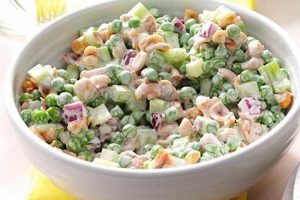
A finely diced salad featuring cucumbers, tomatoes, onions, and parsley, often augmented with other vegetables like bell peppers and herbs such as mint, is a staple of Middle Eastern cuisine. Typically dressed with a simple lemon juice and olive oil vinaigrette, this refreshing dish offers a vibrant mix of flavors and textures. A classic example includes ripe tomatoes and cucumbers diced into roughly equal-sized pieces, combined with finely chopped red onion and fresh parsley, then dressed with freshly squeezed lemon juice and extra virgin olive oil. Variations might incorporate additions like sumac, za’atar, or finely chopped green bell pepper.
This chopped salad’s ubiquity in the region reflects its versatility and nutritional value. It offers a refreshing counterpoint to richer dishes, serving as a light yet satisfying accompaniment to grilled meats, falafel, or hummus. The simple preparation highlights the fresh ingredients’ inherent flavors and contributes to a healthy diet rich in vitamins and antioxidants. Its adaptability also allows for regional and seasonal variations, reflecting the agricultural diversity of the area.
Understanding this dish involves exploring its variations, the nuances of ingredient selection and preparation, and its cultural significance within Middle Eastern culinary traditions. Delving into these aspects provides a comprehensive appreciation of this seemingly simple yet deeply flavorful salad.
Tips for a Perfect Chopped Salad
Achieving optimal flavor and texture requires attention to detail in ingredient selection and preparation techniques.
Tip 1: Ingredient Quality is Paramount: Opt for ripe, flavorful tomatoes and cucumbers. Vine-ripened tomatoes and firm cucumbers contribute significantly to the salad’s overall taste.
Tip 2: Dice Uniformly: Consistent chopping ensures even flavor distribution and a pleasant texture. Aim for pieces that are roughly the same size, approximately to inch.
Tip 3: Fresh Herbs are Key: Fresh parsley is essential; flat-leaf parsley is preferred. Other fresh herbs like mint or dill can be added for nuanced flavor profiles. Dried herbs should be avoided.
Tip 4: Red Onion, Finely Diced: The sharpness of red onion provides a crucial balance. To mitigate its intensity, soak the diced onion in cold water for 10 minutes before adding it to the salad.
Tip 5: Lemon Juice: Freshly Squeezed, Always: Bottled lemon juice lacks the vibrant flavor of freshly squeezed lemons. Use generous amounts for a bright, zesty dressing.
Tip 6: High-Quality Olive Oil: Extra virgin olive oil provides the best flavor and health benefits. A good olive oil elevates the simple dressing to another level.
Tip 7: Seasoning Simply: Salt and freshly ground black pepper are typically sufficient. Additional spices like sumac or za’atar can be incorporated for variation.
Tip 8: Serve Immediately: This salad is best enjoyed fresh. While it can be stored briefly, the vegetables release moisture over time, diluting the flavor and compromising the texture.
By following these tips, one can create a vibrant and flavorful salad that exemplifies the simple elegance of Middle Eastern cuisine.
These techniques illustrate the importance of fresh ingredients and precise preparation in achieving a truly exceptional culinary experience.
1. Fresh, High-Quality Produce

The essence of a truly exceptional chopped salad lies in the quality of its ingredients. Fresh, ripe produce elevates this simple dish, allowing the natural flavors of the vegetables to shine through. The emphasis on freshness stems from the salad’s role as a showcase for seasonal ingredients. Tomatoes bursting with flavor, crisp cucumbers, and fragrant herbs contribute a vibrancy that cannot be replicated with subpar produce. For instance, a tomato picked at peak ripeness offers a sweetness and depth of flavor that a supermarket tomato, often picked green and artificially ripened, simply cannot match. Similarly, a firm, freshly harvested cucumber delivers a refreshing crunch and clean taste absent in older, less vibrant specimens. The interplay of these fresh, high-quality ingredients creates a symphony of flavors and textures that defines the dish’s character.
The impact of ingredient quality extends beyond mere flavor. Using fresh, ripe produce also impacts the salad’s texture. A ripe tomato will hold its shape when diced, contributing to a pleasingly chunky salad, while an overripe tomato will become mushy and watery. Likewise, a firm cucumber provides a satisfying crunch, contrasting with the softer textures of the tomatoes and onions. These textural nuances are critical to the overall enjoyment of the dish. Consider the difference between a salad made with a vibrant, locally sourced tomato versus one made with a bland, out-of-season tomato. The former offers a burst of juicy sweetness, while the latter contributes little beyond watery texture. This distinction underscores the importance of prioritizing fresh, high-quality ingredients.
Prioritizing fresh, high-quality produce is therefore not merely a suggestion but a fundamental requirement for crafting an authentic and satisfying chopped salad. This principle highlights the dish’s inherent simplicity, where the quality of the ingredients takes center stage. Selecting produce at its peak ripeness ensures optimal flavor and texture, resulting in a culinary experience that celebrates the essence of fresh, seasonal ingredients. While variations exist regarding additional components, the unwavering focus on impeccable produce remains a constant, underscoring its significance in achieving culinary excellence.
2. Precise, Uniform Dicing

Achieving a successful outcome hinges on precise, uniform dicing of the vegetables. This seemingly minor detail significantly impacts the salad’s final flavor, texture, and overall aesthetic appeal. Consistent size ensures even distribution of flavor and facilitates a pleasant, harmonious mouthfeel. Furthermore, uniformity contributes to the visual appeal, transforming the salad into a cohesive and appetizing dish. This technique emphasizes the careful attention to detail characteristic of many Middle Eastern culinary traditions.
- Flavor Distribution:
Uniform dicing ensures that each bite contains a balanced blend of flavors. Inconsistent sizes can lead to bites dominated by a single ingredient, disrupting the intended flavor profile. Imagine a bite consisting primarily of large chunks of onion, overpowering the delicate flavors of the cucumber and tomato. Precise dicing avoids this issue, creating a consistent flavor experience throughout the salad.
- Texture and Mouthfeel:
Uniformity enhances the textural experience. Similarly sized pieces create a pleasant, consistent mouthfeel. Unevenly chopped vegetables result in an unbalanced texture, with some bites feeling too chunky and others too fine. This consistency is especially crucial in a salad primarily composed of raw vegetables, where texture plays a significant role in enjoyment. The uniformity allows for a harmonious blend of textures, crucial for an optimal sensory experience.
- Visual Appeal:
Precise dicing transforms the salad into a visually appealing dish. The uniformity creates a sense of order and balance, elevating the presentation beyond a simple mix of chopped vegetables. This visual appeal is often overlooked, but it contributes significantly to the overall dining experience. Aesthetics play a crucial role in food appreciation, and the clean lines created by uniformly diced vegetables add to the salad’s visual appeal.
- Cultural Significance:
The emphasis on precise dicing reflects a broader cultural emphasis on meticulous preparation in Middle Eastern cuisine. This attention to detail is evident in various aspects of regional cooking, from spice blending to intricate pastry work. In the context of this specific salad, precise dicing elevates the dish from a simple combination of ingredients to a carefully crafted culinary creation. It underscores the care and attention invested in even seemingly simple dishes, reflecting a deep appreciation for culinary craftsmanship.
These interconnected facets illustrate how precise, uniform dicing contributes to the dish’s overall success. It is not merely a technical step but a crucial element that influences the sensory experience, aesthetics, and cultural significance. The meticulous preparation elevates this seemingly simple salad into a testament to the importance of technique and attention to detail in creating a truly satisfying culinary experience.
3. Simple, Vibrant Dressing

The dressing is integral to an authentic experience, providing a crucial counterpoint to the fresh vegetables. Rather than masking the ingredients’ natural flavors, the dressing enhances them, creating a harmonious balance of acidity, richness, and herbaceous notes. This simplicity allows the quality of the produce to shine, exemplifying the less-is-more philosophy often found in Middle Eastern cuisine. Exploring the components and characteristics of this dressing provides insight into its crucial role in the dish’s overall success.
- Freshly Squeezed Lemon Juice:
The cornerstone of the dressing, freshly squeezed lemon juice provides vibrant acidity that brightens the other flavors. This tartness cuts through the richness of the olive oil and balances the sweetness of ripe tomatoes. Bottled lemon juice is an inadequate substitute, lacking the fresh, zesty character of freshly squeezed lemons. The amount of lemon juice can be adjusted to personal preference, but a generous amount is generally recommended to achieve the desired brightness.
- High-Quality Olive Oil:
Extra virgin olive oil adds richness and a subtle fruity flavor to the dressing. The quality of the olive oil significantly impacts the final taste, with a good quality extra virgin olive oil lending a depth of flavor absent in lower-grade oils. The olive oil not only contributes flavor but also helps to coat the vegetables, distributing the flavors evenly and creating a more cohesive salad.
- Minimal Seasoning:
Typically, only salt and freshly ground black pepper are used to season the salad. This minimalist approach emphasizes the fresh flavors of the vegetables and allows the lemon juice and olive oil to take center stage. While additional spices like sumac or za’atar can be added, they are not essential to the core dressing and should be used judiciously to avoid overpowering the delicate balance.
- Emulsification:
Whisking the lemon juice and olive oil together creates a temporary emulsion that coats the vegetables more evenly. This emulsification helps distribute the dressing’s flavor and prevents the oil from pooling at the bottom of the bowl. The whisking process also aerates the dressing slightly, contributing to a lighter, more vibrant texture.
The simplicity of the dressing demonstrates a profound understanding of flavor balance. Each component plays a specific role, contributing to a cohesive whole that elevates the fresh vegetables. The focus on fresh, high-quality ingredients, combined with minimal processing, results in a dressing that is both vibrant and refreshing, perfectly complementing the chopped salad. This harmonious interplay of ingredients underscores the elegance of simplicity in achieving culinary excellence. The careful balance of acidity, richness, and seasoning allows the inherent flavors of the fresh produce to shine, creating a dish that is both satisfying and refreshing.
4. Herbs (parsley essential)

Fresh herbs constitute an integral component, with parsley playing a particularly crucial role. Parsley’s presence is not merely traditional; its distinctive flavor profile significantly contributes to the salad’s overall character. The herb’s slightly peppery, bright taste complements the other ingredients, balancing the sweetness of ripe tomatoes and the sharpness of onions. Removing parsley diminishes the salad’s complexity, resulting in a less nuanced flavor profile. For instance, consider variations incorporating mint or dill. While these herbs offer pleasant alternatives, they lack the specific flavor profile that makes parsley essential to the authentic character. This distinction underscores parsley’s unique contribution, establishing it as a cornerstone of the recipe.
Beyond flavor, parsley’s vibrant green color enhances the salad’s visual appeal. Its presence adds a pop of color against the backdrop of red tomatoes, white onions, and green cucumbers, creating a visually appealing dish. This aesthetic contribution, while often overlooked, enhances the overall dining experience. Furthermore, parsley offers nutritional benefits, providing vitamins and antioxidants that contribute to the salad’s healthfulness. This combination of flavor, visual appeal, and nutritional value solidifies parsley’s essential role. One might compare this to the use of cilantro in salsa or basil in pesto; while other herbs could be substituted, the specific herb defines the dish’s character. Understanding this interplay of sensory and nutritional elements provides a deeper appreciation for parsley’s significance.
Parsley’s crucial role highlights the importance of ingredient selection in achieving an authentic culinary outcome. Using fresh, high-quality parsley is paramount, as dried parsley lacks the vibrant flavor and texture of its fresh counterpart. This emphasis on fresh ingredients reinforces the salad’s focus on simplicity and quality. Challenges may arise in sourcing fresh parsley, particularly in regions where it is not readily available. However, given its essential contribution, seeking out fresh parsley remains crucial for replicating the authentic flavor profile. This principle underscores the broader theme of ingredient selection as a critical factor in achieving culinary excellence.
5. Immediate Serving

The practice of serving this specific salad immediately after preparation is crucial for preserving its optimal texture and flavor. The delicate balance of crisp vegetables and a light, vibrant dressing is easily compromised by prolonged exposure to air. Delaying consumption leads to several undesirable outcomes, primarily stemming from the vegetables’ natural tendency to release moisture. This moisture dilutes the dressing, compromises the crispness of the vegetables, and ultimately diminishes the salad’s overall appeal. For example, a salad left at room temperature for an extended period will exhibit a watery consistency, with the cucumbers and tomatoes losing their firmness. The once-bright flavors become muted, and the overall sensory experience suffers. This cause-and-effect relationship underscores the importance of immediate consumption as an integral component of the recipe.
The practical significance of this understanding lies in its direct impact on the culinary outcome. Adhering to this practice ensures the salad remains a refreshing, vibrant dish, showcasing the fresh ingredients’ inherent qualities. Conversely, disregarding this guideline compromises the intended culinary experience, resulting in a less satisfying dish. Consider a scenario where the salad is prepared in advance for a large gathering. Unless served promptly, the accumulated moisture will significantly detract from the salad’s overall quality. This example illustrates the practical implications of delayed serving and reinforces the importance of timing in culinary execution. Furthermore, the immediate serving principle highlights the dish’s focus on freshness, emphasizing the role of raw, unprocessed ingredients in achieving optimal flavor and texture. This characteristic aligns with broader culinary trends emphasizing minimal processing and the use of fresh, seasonal produce.
In conclusion, the emphasis on immediate serving is not merely a suggestion but a fundamental principle directly impacting the sensory experience of the salad. The delicate balance of flavors and textures is best appreciated when the salad is consumed promptly after preparation. Ignoring this aspect, while seemingly minor, can significantly compromise the intended culinary outcome. This understanding allows for a more informed approach to preparation and serving, ensuring a truly satisfying and authentic culinary experience. This principle, while specific to this style of salad, connects to the broader theme of respecting ingredient quality and optimizing culinary techniques to achieve the best possible results.
Frequently Asked Questions
This section addresses common inquiries regarding preparation, variations, and cultural context.
Question 1: Can other herbs be substituted for parsley?
While other herbs like mint or dill can complement the salad, parsley is considered essential for an authentic flavor profile. Its distinct peppery, bright notes are integral to the overall balance.
Question 2: How critical is using freshly squeezed lemon juice?
Freshly squeezed lemon juice is highly recommended. Bottled lemon juice often lacks the vibrant, zesty flavor that fresh lemons provide, significantly impacting the dressing’s brightness.
Question 3: Is it possible to prepare the salad in advance?
The salad is best consumed immediately after preparation to maintain optimal texture and flavor. The vegetables release moisture over time, diluting the dressing and compromising crispness.
Question 4: What are common variations of this salad?
Common variations incorporate ingredients like bell peppers, mint, sumac, or za’atar. These additions provide regional nuances while maintaining the core elements of the dish.
Question 5: What is the cultural significance of this specific salad?
This salad holds a prominent place in Middle Eastern cuisine, representing a refreshing and healthful accompaniment to a variety of dishes, reflecting regional agricultural traditions.
Question 6: Why is uniform dicing emphasized?
Uniform dicing ensures even flavor distribution, consistent texture, and enhanced visual appeal, contributing to a more harmonious and enjoyable culinary experience.
Understanding these aspects facilitates a deeper appreciation for the dish’s preparation and cultural context.
This information should provide a comprehensive understanding of the key elements contributing to a successful outcome when preparing this dish.
Israeli Salad Recipe
This exploration of the Israeli salad recipe has highlighted the critical interplay of fresh, high-quality ingredients and precise preparation techniques. From the selection of ripe tomatoes and cucumbers to the uniform dicing, the emphasis on freshness and simplicity underscores the dish’s essence. The vibrant, straightforward dressing, composed of freshly squeezed lemon juice and high-quality olive oil, enhances rather than masks the natural flavors of the vegetables. The essential role of fresh parsley, both in flavor and visual appeal, further underscores the importance of each component. Finally, the practice of immediate serving emphasizes the delicate balance of textures and flavors, ensuring an optimal culinary experience. Each step, from ingredient selection to serving, contributes to a cohesive whole, showcasing the elegance of simplicity in Middle Eastern cuisine.
This seemingly simple salad embodies a deeper culinary philosophy a respect for fresh, seasonal ingredients and an understanding of how minimal intervention can yield exceptional results. Further exploration of regional variations and adaptations promises to offer additional insights into the adaptability and enduring appeal of this culinary staple. An appreciation for the nuances of the Israeli salad recipe provides a gateway to understanding broader culinary traditions and the significance of fresh, wholesome ingredients in creating vibrant and flavorful dishes.