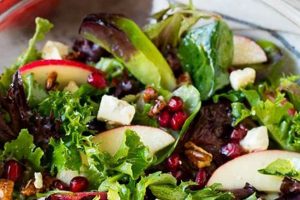
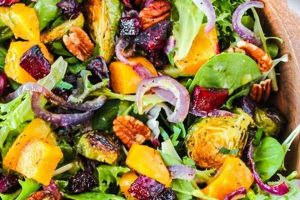
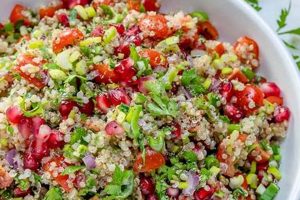
A culinary creation featuring vegetables cooked over direct heat, often enhanced with herbs, spices, and a flavorful dressing, constitutes a popular and healthful dish. Examples include combinations such as zucchini, bell peppers, red onion, and eggplant, seasoned with oregano and balsamic vinaigrette, or corn on the cob, asparagus, and cherry tomatoes with a lemon-herb dressing. The method imparts a smoky char and tenderizes the vegetables, adding depth to the overall flavor profile.
This style of preparation offers several advantages. It provides a versatile way to incorporate a variety of seasonal produce into a meal, promoting a balanced diet rich in vitamins and fiber. Grilling can enhance the natural sweetness of vegetables and create interesting textural contrasts. Historically, grilling vegetables has been a part of many cultures’ culinary traditions, reflecting both practical resourcefulness and a deep appreciation for fresh ingredients. The methods simplicity and adaptability have ensured its continued popularity in modern cuisine.
Further exploration will cover optimal vegetable selection, grilling techniques for different varieties, marinade and dressing recipes, and suggestions for creating complete meals using grilled vegetable salads as a centerpiece or accompaniment.
Tips for Creating Exceptional Grilled Vegetable Salads
Achieving optimal results requires attention to several key factors, from vegetable selection and preparation to grilling methods and flavor pairings.
Tip 1: Choose vegetables suited for grilling. Firm vegetables such as bell peppers, zucchini, onions, eggplant, and corn hold their shape well over direct heat. More delicate options like asparagus and cherry tomatoes require shorter cooking times and careful handling.
Tip 2: Prepare vegetables uniformly. Consistent sizing ensures even cooking. Cut vegetables into similar shapes and thicknesses, or use skewers to group smaller pieces together.
Tip 3: Preheat the grill properly. A hot grill is crucial for achieving desirable char marks and preventing sticking. Clean the grates thoroughly before use.
Tip 4: Oil vegetables lightly before grilling. This prevents sticking and promotes even browning. A neutral oil with a high smoke point, such as avocado or grapeseed oil, is recommended.
Tip 5: Season vegetables strategically. Simple seasonings like salt, pepper, and herbs enhance the natural flavors. Marinades can add further complexity but should not be overly sugary, which can lead to burning.
Tip 6: Don’t overcrowd the grill. Overcrowding reduces heat and creates steam, hindering proper caramelization. Grill in batches for best results.
Tip 7: Monitor cooking times carefully. Vegetables should be tender-crisp, not mushy. Cooking times will vary depending on the type of vegetable and the heat of the grill.
Tip 8: Allow vegetables to cool slightly before assembling the salad. This prevents wilting and allows flavors to meld. A brief resting period also enhances the smoky char.
By following these guidelines, one can consistently create delicious and visually appealing vegetable salads that highlight the unique flavors imparted by grilling.
These techniques contribute to a flavorful and satisfying culinary experience, showcasing the versatility and health benefits of incorporating grilled vegetables into one’s diet.
1. Fresh, Seasonal Vegetables
The foundation of a successful grilled vegetable salad rests upon the selection of fresh, seasonal produce. Seasonality dictates peak flavor and optimal texture, significantly impacting the final dish. Utilizing vegetables at their prime minimizes the need for excessive seasoning or manipulation, allowing their inherent qualities to shine through the grilling process. For example, grilling sweet corn during its summer peak yields a naturally sweet and tender result, requiring little more than a touch of salt and pepper. Conversely, using out-of-season corn, often lacking in sweetness and possessing a tougher texture, necessitates more intervention to achieve a palatable result. This principle applies across the spectrum of vegetables, from asparagus in spring to root vegetables in autumn. The inherent sweetness of ripe tomatoes in summer enhances the smoky char of the grill, creating a complexity not replicable with winter tomatoes often lacking in flavor and moisture.
Furthermore, the choice of seasonal vegetables influences the overall nutritional value of the salad. Vegetables harvested at their peak ripeness generally possess higher concentrations of vitamins and minerals. This nutritional boost further underscores the importance of prioritizing seasonal ingredients. Beyond nutritional considerations, utilizing seasonal vegetables often supports local agriculture and reduces the environmental impact associated with long-distance transportation. Choosing locally sourced, seasonal produce thus contributes to both a healthier diet and a more sustainable food system. The variety offered by different seasons encourages culinary creativity, leading to diverse and exciting salads. Adapting recipes to incorporate what is currently in season allows for continuous exploration of flavors and textures, preventing culinary stagnation.
In conclusion, the emphasis on fresh, seasonal vegetables within grilled vegetable salad recipes is not merely a culinary suggestion but a crucial determinant of flavor, nutritional value, and environmental impact. Prioritizing seasonal produce elevates the dish from a simple combination of ingredients to a celebration of nature’s bounty. Successfully navigating seasonal variations presents a valuable opportunity to connect with the origins of food and appreciate the nuances of flavor offered throughout the year. It offers both a culinary and ethical advantage, promoting healthier eating habits and a more sustainable approach to food consumption.
2. Proper Grilling Techniques

Proper grilling techniques are essential for creating a delicious and visually appealing grilled vegetable salad. These techniques affect the final flavor, texture, and overall quality of the dish. Mastering these techniques elevates the salad beyond simply cooked vegetables, transforming them into a culinary experience.
- Heat Control
Managing the grill’s temperature is paramount. Different vegetables require different heat levels. High heat is ideal for dense vegetables like onions and peppers, creating a flavorful char while maintaining their structure. Lower heat suits delicate vegetables such as asparagus and cherry tomatoes, preventing burning while ensuring they cook through. Consistent heat control throughout the grilling process ensures even cooking and prevents undercooked or overcooked portions within the salad.
- Oiling and Seasoning
Oiling vegetables lightly before grilling prevents sticking to the grates and promotes even browning. A high-smoke-point oil like avocado or grapeseed oil is recommended. Seasoning enhances the natural flavors of the vegetables. Simple seasonings, such as salt, pepper, and herbs, can be applied before, during, or after grilling. Marinades add deeper flavor complexity but require careful attention to sugar content, which can lead to burning at high temperatures. Proper oiling and seasoning contribute significantly to the final flavor profile of the salad.
- Grill Grate Management
A clean grill grate is essential for achieving desirable grill marks and preventing sticking. Regular cleaning removes residue from previous grilling sessions, ensuring optimal heat transfer and preventing off-flavors. Overcrowding the grill grate reduces heat and creates steam, hindering caramelization. Grilling in batches ensures each vegetable receives adequate heat and cooks evenly. Proper grill grate management promotes efficient cooking and enhances the visual appeal of the salad.
- Cooking Time and Doneness
Each vegetable has a specific optimal cooking time. Overcooking leads to mushy textures and diminished flavor, while undercooking results in undesirable rawness. Visual cues and texture tests help determine doneness. For example, bell peppers should be slightly softened with grill marks, while asparagus should be tender-crisp. Properly cooked vegetables contribute to a balanced textural experience within the salad, maximizing both flavor and visual appeal.
Mastering these grilling techniques ensures a grilled vegetable salad that is not only visually appealing but also flavorful and texturally satisfying. The interplay of heat, oil, seasoning, and cooking time transforms simple vegetables into a complex and enjoyable dish. Attention to these details elevates the salad from a basic side dish to a culinary centerpiece.
3. Balanced Flavor Profiles

Balanced flavor profiles are crucial to a successful grilled vegetable salad recipe. The inherent flavors of vegetables, amplified by the grilling process, necessitate careful consideration of balancing elements. The interplay of sweet, smoky, salty, acidic, and bitter notes determines the overall complexity and enjoyment of the dish. A salad featuring solely sweet vegetables, such as grilled corn and bell peppers, may lack depth. Incorporating bitter elements like grilled radicchio or endive adds a contrasting dimension, enhancing the sweetness of the other components. Similarly, the char from grilling imparts a smoky note, which can be balanced with acidic elements like a lemon vinaigrette or crumbled feta cheese. Understanding the interplay of these flavors allows for the creation of a more nuanced and satisfying culinary experience.
The concept of balance extends beyond simply incorporating contrasting flavors. The intensity of each flavor component also requires careful calibration. An overly acidic dressing can overwhelm the delicate sweetness of grilled carrots, while excessive salt can mask the natural flavors of the vegetables. A balanced flavor profile ensures that no single element dominates, allowing the individual characteristics of each vegetable to shine through. For instance, a grilled vegetable salad featuring eggplant, zucchini, and red onion benefits from a dressing that balances the smoky char of the eggplant with the mild sweetness of the zucchini and the pungent bite of the red onion. A simple vinaigrette with a touch of Dijon mustard and balsamic vinegar provides the necessary acidity and subtle sharpness to complement the vegetables without overpowering their individual flavors. Furthermore, the addition of fresh herbs, such as oregano or thyme, can further enhance the complexity of the flavor profile.
Achieving a balanced flavor profile requires both an understanding of individual ingredient characteristics and an ability to combine these elements harmoniously. It involves considering the inherent sweetness, bitterness, acidity, and savoriness of each vegetable and employing grilling techniques and complementary ingredients to create a cohesive and satisfying whole. Failure to achieve this balance can result in a one-dimensional dish lacking in complexity and depth. A well-balanced grilled vegetable salad, on the other hand, offers a dynamic interplay of flavors and textures, showcasing the versatility and culinary potential of grilled vegetables. This understanding allows for the creation of salads tailored to individual preferences and dietary needs while maximizing both flavor and nutritional value.
4. Complementary Dressings

Complementary dressings play a vital role in enhancing the flavor profile of grilled vegetable salads. The inherent smoky char and natural sweetness of grilled vegetables provide a foundation upon which a well-chosen dressing can build, adding depth, complexity, and balance. The right dressing unifies the individual components, creating a cohesive and satisfying culinary experience. Understanding the interplay between the characteristics of the grilled vegetables and the components of the dressing is essential for achieving optimal results.
- Acidity
Acidity provides a crucial counterpoint to the richness and sweetness of grilled vegetables. Vinaigrettes, incorporating ingredients like lemon juice, vinegar, or even a touch of citrus zest, cut through the fattiness of grilled oils and enhance the natural sweetness of the vegetables. A bright lemon vinaigrette, for example, complements the smoky char of grilled eggplant beautifully. The acidity also helps to balance the flavors of stronger vegetables like onions or peppers. The level of acidity should be carefully considered; an overly acidic dressing can overpower the subtle flavors of more delicate vegetables.
- Texture
The texture of a dressing contributes significantly to the overall sensory experience of the salad. A creamy dressing, such as one based on tahini, yogurt, or avocado, provides a contrasting textural element to the crisp-tender vegetables. Conversely, a light vinaigrette offers a refreshing contrast and allows the textures of the grilled vegetables to remain prominent. The choice of texture depends on the specific vegetables used and the desired overall mouthfeel. A creamy dressing might complement grilled root vegetables, while a lighter vinaigrette might be better suited to a salad featuring delicate greens and grilled summer vegetables.
- Flavor Complexity
Dressings offer an opportunity to introduce additional layers of flavor to a grilled vegetable salad. Incorporating herbs, spices, or aromatics enhances the complexity and depth of the dish. A balsamic vinaigrette infused with fresh rosemary complements grilled zucchini and bell peppers, while a tahini dressing with a hint of cumin enhances the earthy flavors of grilled mushrooms and eggplant. The chosen flavors should complement the vegetables without overpowering their natural taste. The goal is to create a harmonious blend of flavors that enhances the overall dining experience.
- Balance
The ultimate goal of a complementary dressing is to achieve balance within the grilled vegetable salad. The dressing should neither mask the flavors of the grilled vegetables nor overpower the dish with its own intensity. A properly balanced dressing enhances the natural sweetness and smoky char of the vegetables, creating a cohesive and satisfying whole. This balance can be achieved through careful consideration of the acidity, texture, and flavor complexity of the dressing in relation to the specific vegetables used in the salad. A well-balanced dressing elevates the salad from a simple combination of ingredients to a carefully crafted culinary creation.
The selection of a complementary dressing is an integral step in creating a truly exceptional grilled vegetable salad. By carefully considering the interplay of acidity, texture, flavor complexity, and balance, one can craft a dressing that enhances the inherent qualities of the grilled vegetables and elevates the dish to its full potential. The dressing serves not merely as a condiment but as a unifying element, transforming individual components into a harmonious and flavorful whole.
5. Optimal Cooking Times

Optimal cooking times are crucial for achieving a successful grilled vegetable salad. Properly cooked vegetables retain desirable texture and maximize flavor development, contributing significantly to the overall quality of the dish. Overcooking results in mushy, flavorless vegetables, while undercooking leads to an unpleasant rawness. Balancing these extremes requires careful attention to timing and an understanding of how different vegetables respond to heat.
- Vegetable Density and Water Content
Vegetable density and water content directly influence cooking times. Denser vegetables, such as potatoes and carrots, require longer grilling times compared to vegetables with higher water content, like zucchini and tomatoes. The high water content in vegetables like zucchini causes them to cook quickly, becoming tender in a matter of minutes on a hot grill. Denser vegetables, however, require more time for the heat to penetrate and soften the internal structure. Understanding these variations allows for strategic grilling, ensuring that all vegetables reach optimal doneness simultaneously.
- Desired Texture
The desired texture plays a key role in determining optimal cooking time. Some recipes call for slightly charred, crisp-tender vegetables, while others prioritize a softer, more yielding texture. For a salad featuring bell peppers, a slightly charred exterior with a crisp-tender interior offers a pleasant textural contrast. Grilled eggplant, on the other hand, often benefits from a longer cooking time to achieve a soft, creamy interior. Adjusting cooking times based on the desired texture ensures a balanced and satisfying sensory experience.
- Grill Temperature and Heat Distribution
Grill temperature and heat distribution significantly impact cooking times. A high-heat grill cooks vegetables more quickly than a low-heat grill. Even heat distribution is essential for consistent cooking. Hot spots on the grill can lead to uneven cooking, resulting in some vegetables being overcooked while others remain undercooked. Monitoring the grill’s temperature and adjusting cooking times accordingly ensures consistent results. Rotating vegetables during grilling also promotes even cooking and prevents burning.
- Thickness and Size of Vegetable Pieces
Uniformity in the thickness and size of vegetable pieces promotes even cooking. Larger, thicker pieces require longer grilling times compared to smaller, thinner pieces. Cutting vegetables into uniform sizes ensures they cook at the same rate, preventing a mix of overcooked and undercooked pieces within the salad. For vegetables like onions and potatoes, which can take longer to cook, slicing them thinly ensures they cook through in a reasonable timeframe without burning the exterior.
Careful consideration of these factors ensures that each vegetable in the salad reaches its optimal cooking time, maximizing flavor and texture. The interplay of vegetable density, desired texture, grill temperature, and size uniformity contributes to a well-balanced and enjoyable grilled vegetable salad. Attention to these details elevates the dish from a simple combination of ingredients to a carefully orchestrated culinary experience, showcasing the versatility and delicious potential of grilled vegetables.
6. Creative Presentation

Creative presentation elevates a grilled vegetable salad from a simple dish to a visually appealing culinary creation. While flavor and texture remain paramount, visual appeal significantly enhances the dining experience. Thoughtful arrangement and attention to color, height, and texture transform a basic salad into a feast for the eyes. This consideration extends beyond home kitchens to restaurant settings, where presentation plays a crucial role in menu appeal and customer satisfaction. For example, arranging grilled asparagus spears over a bed of mixed greens, topped with crumbled goat cheese and a drizzle of balsamic glaze, creates a more visually engaging presentation than simply tossing all ingredients together. Similarly, utilizing a variety of colorful vegetables, such as red peppers, yellow squash, and purple eggplant, enhances the visual appeal and stimulates appetite.
The practical significance of creative presentation lies in its ability to enhance perceived value and enjoyment. A thoughtfully presented salad signals care and attention to detail, creating a more positive dining experience. This principle applies to both casual and formal settings. A visually appealing salad served at a barbecue encourages guests to sample the dish, while a meticulously plated salad in a restaurant enhances the perceived value of the meal. Furthermore, creative presentation can influence flavor perception. A visually appealing salad often leads to heightened anticipation and enjoyment of the flavors. For instance, a salad featuring concentric circles of grilled vegetables, separated by contrasting colors and textures, can make the flavors seem more vibrant and complex.
In conclusion, creative presentation constitutes a crucial component of a successful grilled vegetable salad recipe. It enhances the dining experience by stimulating visual interest and increasing perceived value. While flavor and texture remain fundamental, visual appeal plays a significant role in overall enjoyment and satisfaction. The ability to transform simple grilled vegetables into a visually stunning creation elevates the dish from a basic side to a culinary centerpiece. This understanding allows for a more holistic approach to recipe development, considering not only taste and nutrition but also the aesthetic impact of the final presentation.
7. Nutritional Value

Nutritional value represents a significant advantage of grilled vegetable salads. The inherent nutritional benefits of various vegetables, often amplified by the grilling process, contribute to a healthy and balanced dietary choice. Understanding these nutritional components provides a foundation for informed meal planning and underscores the health-conscious nature of incorporating grilled vegetable salads into one’s diet. This exploration delves into specific nutritional facets, highlighting their relevance within the context of grilled vegetable salads.
- Vitamin and Mineral Retention
Grilling, unlike boiling, helps retain vital vitamins and minerals within vegetables. The direct heat and relatively short cooking times minimize nutrient leaching, preserving the nutritional integrity of the ingredients. For instance, grilling bell peppers preserves a higher percentage of vitamin C compared to boiling. This retention of essential nutrients contributes significantly to the overall health benefits of grilled vegetable salads, making them a nutrient-rich meal option.
- Antioxidant Concentration
Certain vegetables, such as tomatoes and onions, exhibit increased antioxidant activity after grilling. The application of heat can enhance the bioavailability of specific antioxidants, such as lycopene in tomatoes. These antioxidants play a crucial role in protecting cells from oxidative damage, contributing to long-term health benefits. Incorporating such vegetables into grilled salads maximizes their antioxidant potential, offering a dietary source of these protective compounds.
- Fiber Content and Digestive Health
Grilled vegetable salads offer a substantial source of dietary fiber. Vegetables naturally rich in fiber, such as broccoli and eggplant, retain their fiber content through the grilling process. Adequate fiber intake supports digestive health, promotes satiety, and contributes to healthy cholesterol levels. Incorporating a variety of fiber-rich vegetables into a grilled salad provides a convenient and palatable way to increase dietary fiber intake.
- Low Calorie Density and Weight Management
Grilled vegetable salads typically possess low calorie density, making them a valuable asset in weight management strategies. The high water and fiber content of vegetables, combined with minimal added fats during grilling, contribute to a satisfying meal with relatively low caloric impact. This characteristic allows for consumption of larger portions while maintaining caloric control, supporting weight management goals without compromising nutrient intake or satisfaction.
The nutritional value of grilled vegetable salads extends beyond individual nutrients, encompassing a holistic contribution to dietary health. The combination of vitamin and mineral retention, increased antioxidant activity, high fiber content, and low calorie density positions grilled vegetable salads as a nutrient-rich, health-conscious meal option. Incorporating these salads into regular dietary patterns provides a delicious and effective way to support overall health and well-being, demonstrating the powerful connection between informed culinary choices and nutritional benefits.
Frequently Asked Questions
This section addresses common inquiries regarding the preparation and enjoyment of grilled vegetable salads. Clarity on these points facilitates successful culinary endeavors and promotes a deeper understanding of the nuances involved.
Question 1: How can one prevent vegetables from sticking to the grill grates?
Oiling the vegetables lightly with a high-smoke-point oil, such as avocado or grapeseed oil, before grilling helps prevent sticking. Ensuring the grill grates are clean and properly preheated also minimizes adhesion.
Question 2: What are the best vegetables for grilling?
Vegetables with firm textures, such as zucchini, bell peppers, onions, eggplant, and corn, hold their shape well on the grill. More delicate vegetables, like asparagus and cherry tomatoes, require shorter cooking times and careful handling.
Question 3: How does one determine the optimal cooking time for different vegetables?
Optimal cooking times depend on factors such as vegetable density, desired texture, grill temperature, and the size of the vegetable pieces. Visual cues and texture tests are essential for gauging doneness. Denser vegetables require longer cooking times, while delicate vegetables cook quickly. Aim for a tender-crisp texture in most cases.
Question 4: Can grilled vegetable salads be prepared in advance?
While optimal flavor and texture are achieved when the salad is assembled just before serving, grilled vegetables can be prepared in advance and stored separately. Store grilled vegetables in an airtight container in the refrigerator for up to three days. Dress the salad just before serving to prevent wilting.
Question 5: What are some suitable dressing options for grilled vegetable salads?
Complementary dressings enhance the flavors of grilled vegetables. Vinaigrettes, with their acidity, provide a refreshing counterpoint to the richness of grilled vegetables. Creamy dressings, such as tahini or yogurt-based dressings, offer a contrasting texture. The choice of dressing depends on the specific vegetables and desired flavor profile.
Question 6: How can one enhance the flavor of grilled vegetables beyond simple seasonings?
Marinades offer an opportunity to infuse deeper flavors into vegetables before grilling. Herbs, spices, and aromatics can be added to marinades or used as dry rubs. The choice of flavoring agents should complement the natural flavors of the vegetables.
Understanding these fundamental aspects ensures successful preparation and maximizes enjoyment of grilled vegetable salads. Attention to detail, from ingredient selection to final presentation, contributes to a satisfying culinary experience.
The following section will provide specific recipe examples, demonstrating the practical application of these principles.
Grilled Vegetable Salad Recipe
Exploration of grilled vegetable salad recipes reveals a multifaceted culinary endeavor. Emphasis on fresh, seasonal produce, proper grilling techniques, balanced flavor profiles, complementary dressings, optimal cooking times, creative presentation, and inherent nutritional value underscores the dish’s complexity. Each element contributes significantly to the final product, transforming simple ingredients into a cohesive and satisfying culinary experience. From the selection of peak-season vegetables to the nuanced interplay of flavors and textures, a well-crafted grilled vegetable salad represents a harmonious blend of culinary art and nutritional awareness.
Mastery of these elements allows for adaptation and innovation within the culinary landscape. Grilled vegetable salad recipes offer a versatile framework for incorporating seasonal ingredients and exploring diverse flavor combinations. Continued exploration and refinement of these techniques promise a future rich in both culinary delight and nutritional well-being. The potential for creative expression within this culinary form remains vast, offering a canvas for ongoing innovation and a testament to the enduring appeal of fresh, wholesome ingredients prepared with care and intention.