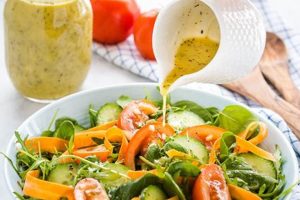
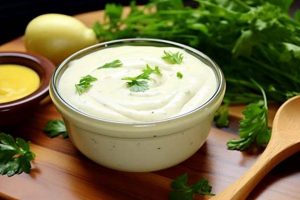
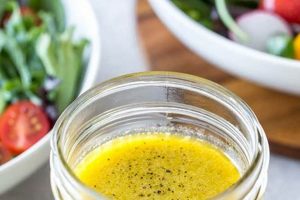
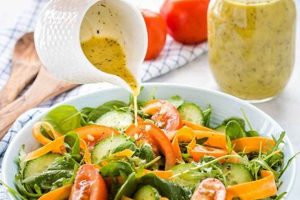
A vibrant and flavorful vinaigrette is essential for elevating a simple three-bean salad from ordinary to extraordinary. This crucial element typically involves a balanced blend of acidic components like vinegar or citrus juice, combined with oil, seasonings, and often a touch of sweetness. For example, a classic combination might include apple cider vinegar, olive oil, Dijon mustard, and a hint of maple syrup. The precise blend of ingredients determines the final character of the salad, offering bright, tangy, or even slightly sweet notes.
The right vinaigrette provides more than just flavor; it contributes to the overall texture and appeal of the dish. It coats the beans, allowing the seasonings to adhere and distribute evenly. The acidity also helps to brighten the flavors of the beans themselves and can even contribute to preserving their color and texture. Historically, such acidic dressings have played a crucial role in food preservation before refrigeration, and this legacy continues in contemporary cuisine through their ability to enhance both flavor and shelf-life.
This exploration of vinaigrette construction will cover a variety of options, from classic combinations to innovative twists. Whether seeking a simple everyday dressing or an elegant touch for a special occasion, the following information will provide the foundation for crafting the perfect complement to any three-bean salad.
Tips for Creating the Perfect Three-Bean Salad Vinaigrette
Crafting an exceptional vinaigrette is key to a memorable three-bean salad. These tips offer guidance for achieving a balanced and flavorful dressing.
Tip 1: Balance Acidity: The acid component provides brightness and tang. Popular choices include apple cider vinegar, red wine vinegar, or lemon juice. Taste and adjust the acidity to complement the sweetness of the beans and other ingredients.
Tip 2: Select Quality Oil: Olive oil is a classic choice, offering a fruity, peppery flavor. Other options include avocado oil for a neutral taste or grapeseed oil for a lighter texture.
Tip 3: Emulsify Thoroughly: A proper emulsion combines oil and vinegar into a stable mixture. Whisk vigorously or use a blender to create a creamy, cohesive dressing that clings to the beans.
Tip 4: Seasoning is Key: Freshly ground black pepper, Dijon mustard, minced garlic, or finely chopped shallots add depth and complexity.
Tip 5: Consider Sweetness: A touch of sweetness balances the acidity and enhances the overall flavor profile. Maple syrup, honey, or a pinch of sugar can be incorporated.
Tip 6: Taste and Adjust: Before adding the vinaigrette to the salad, taste and adjust seasonings as needed. This ensures a harmonious blend of flavors.
Tip 7: Timing Matters: Dress the salad shortly before serving to prevent the beans from becoming soggy. This preserves their texture and prevents the dressing from becoming overly diluted.
By following these tips, one can create a vinaigrette that elevates the three-bean salad to a new level of culinary delight. A well-balanced dressing enhances the natural flavors of the beans and other ingredients, resulting in a dish that is both refreshing and satisfying.
With the dressing perfected, the final step is to assemble and enjoy this versatile and flavorful salad.
1. Acidity

Acidity plays a vital role in three-bean salad dressings, contributing brightness, balance, and enhancing overall flavor. The correct level of acidity is essential for a palatable and enjoyable salad. It not only complements the inherent sweetness of the beans but also contributes to preservation and improved texture.
- Sources of Acidity
Various ingredients contribute acidity to three-bean salad dressings. Vinegar, particularly apple cider, red wine, or white wine vinegar, is a common choice. Citrus juices, such as lemon or lime, offer a brighter, more vibrant acidity. Less common, but still effective, options include rice vinegar or even a touch of verjus.
- Balancing Acidity and Sweetness
The interplay between acidity and sweetness is crucial. The tartness of the acid needs to be balanced by a complementary sweetness, often provided by sugar, maple syrup, or honey. This balance prevents the dressing from being overly sharp or cloyingly sweet, creating a harmonious flavor profile.
- Impact on Flavor and Texture
Acidity not only influences the overall flavor profile, but also impacts the texture of the salad. The acidic component helps to maintain the firmness of the beans, preventing them from becoming mushy. It also enhances the perception of other flavors in the dressing and the salad itself, making them more pronounced and vibrant.
- Preservation Properties
Historically, acidic elements have played a key role in food preservation. While less critical in modern refrigeration, the acidic nature of the dressing still contributes to the longevity of the salad, inhibiting bacterial growth and maintaining freshness for a longer period.
Careful consideration of acidity in a three-bean salad dressing is essential for creating a well-balanced and flavorful dish. By understanding the sources of acidity, the balance with sweetness, and its impact on both flavor and texture, one can craft a dressing that elevates the simple three-bean salad to a culinary delight. This attention to detail results in a more vibrant, flavorful, and texturally satisfying salad.
2. Sweetness

Sweetness in a three-bean salad dressing provides balance, complexity, and complements the other flavor components. It tempers the acidity and enhances the savory notes, creating a harmonious and well-rounded flavor profile. Careful consideration of the type and amount of sweetener is crucial for achieving the desired result.
- Types of Sweeteners
Various sweeteners can be incorporated into three-bean salad dressings. Granulated sugar offers a clean, neutral sweetness. Honey contributes a subtle floral complexity. Maple syrup provides a rich, caramel-like flavor. Other options include agave nectar or even a touch of molasses for a deeper, more robust sweetness.
- Balancing Sweetness and Acidity
The interplay between sweetness and acidity is fundamental to a well-balanced dressing. The sweetness should complement, not overpower, the acidity. Achieving the right balance prevents the dressing from being overly tart or excessively sweet. This balance is key to a palatable and enjoyable salad.
- Enhancing Savory Notes
Sweetness plays a crucial role in enhancing the savory aspects of the dressing and the salad itself. It interacts with the other ingredients, such as herbs, spices, and the beans themselves, creating a more complex and nuanced flavor profile. This interplay elevates the overall taste experience.
- Impact on Overall Flavor Profile
The choice of sweetener and its quantity significantly impacts the final flavor profile of the salad. A subtle sweetness allows the other flavors to shine, while a more pronounced sweetness can become the dominant characteristic. Careful consideration of the desired flavor profile is essential when selecting and incorporating a sweetener.
The judicious use of sweetness in a three-bean salad dressing is essential for achieving a balanced and flavorful dish. By understanding the different types of sweeteners, their interplay with acidity, and their impact on the overall flavor profile, one can create a dressing that complements the beans and other ingredients, resulting in a harmonious and satisfying culinary experience.
3. Texture
Texture plays a crucial role in the overall enjoyment of a three-bean salad. The dressing significantly influences the final textural experience, impacting how the individual components interact and contribute to the dish’s sensory appeal. A well-considered dressing enhances the inherent textures of the beans and other ingredients, creating a more satisfying culinary experience.
- Oil Viscosity
The type of oil used in the dressing directly impacts the texture. A lighter oil, such as grapeseed or sunflower oil, creates a thinner, more delicate coating on the beans. A heavier oil, like extra virgin olive oil or avocado oil, contributes a richer, more substantial mouthfeel. The choice of oil should complement the desired final texture of the salad.
- Emulsification
The stability of the emulsion affects how the dressing interacts with the beans. A stable emulsion, achieved through vigorous whisking or blending, creates a creamy, cohesive texture that clings evenly to the beans. An unstable emulsion can result in a watery, separated dressing that compromises the overall textural experience. Proper emulsification ensures that the flavors and textures are evenly distributed throughout the salad.
- Additional Ingredients
Incorporating ingredients like minced onions, chopped herbs, or crushed garlic can introduce textural variety. These additions provide contrasting textures that complement the smoothness of the beans and the dressing. The size and shape of these ingredients influence their textural contribution, adding layers of complexity to each bite.
- Bean Texture Preservation
The dressing also plays a role in preserving the texture of the beans themselves. The acidity in the dressing helps to maintain the firmness of the beans, preventing them from becoming mushy or overly soft. This ensures a pleasant textural contrast between the dressing and the beans, enhancing the overall enjoyment of the salad.
The interplay of these textural elements, influenced by the dressing, contributes significantly to the overall enjoyment of a three-bean salad. A well-executed dressing enhances the natural textures of the ingredients, creating a harmonious balance and a more satisfying culinary experience. Careful consideration of oil viscosity, emulsification, additional ingredients, and bean texture preservation allows for a customized textural profile that elevates the simple three-bean salad to a new level of culinary sophistication.
4. Seasoning
Seasoning is paramount in a three-bean salad dressing, elevating it from simple to exceptional. It provides depth, complexity, and balance, transforming the flavor profile of the beans and unifying the various components. A thoughtful approach to seasoning distinguishes a truly remarkable salad from a mediocre one.
- Balancing Flavors
Seasoning harmonizes the inherent sweetness of the beans with the acidity of the dressing and other ingredients. Salt, a fundamental seasoning, enhances sweetness and tempers acidity. Black pepper adds a subtle heat and complexity. The careful balance of these elements creates a more nuanced and palatable final product. For instance, a pinch of salt accentuates the sweetness of the beans, while freshly cracked black pepper provides a contrasting bite.
- Enhancing Individual Ingredients
Specific seasonings highlight individual components within the salad. Herbs, such as fresh dill, parsley, or mint, introduce aromatic complexity and freshness. Spices, like cumin, coriander, or paprika, contribute warmth and depth. These additions elevate the flavor profile of each ingredient, creating a more dynamic and interesting salad. Fresh dill complements the earthy flavors of kidney beans, while a touch of cumin adds warmth to black beans.
- Creating Flavor Profiles
Seasoning allows for the creation of diverse flavor profiles. A classic combination might include Dijon mustard, garlic powder, and onion powder for a savory profile. Alternatively, a southwestern flair can be achieved with chili powder, cumin, and oregano. These distinct flavor combinations offer versatility and allow for customization based on personal preferences or the occasion. The strategic use of herbs and spices allows for a wide range of flavor profiles, from traditional to innovative.
- Building Layers of Complexity
Layering seasonings introduces depth and complexity to the overall flavor profile. A base of salt and pepper can be enhanced with the addition of dried herbs, followed by fresh herbs just before serving. This layered approach creates a more nuanced and sophisticated flavor experience. Building layers of flavor, rather than relying on a single dominant seasoning, allows for a more balanced and complex final dish. This depth of flavor distinguishes a truly exceptional three-bean salad.
Strategic seasoning is essential for a truly exceptional three-bean salad. It balances flavors, enhances individual ingredients, allows for diverse flavor profiles, and builds layers of complexity. Mastering the art of seasoning elevates this simple dish, creating a culinary experience that is both satisfying and memorable. The interplay of seasonings, beans, and dressing transforms a basic three-bean salad into a flavorful and nuanced culinary creation.
5. Emulsification
Emulsification is crucial for creating a successful three-bean salad dressing. It refers to the process of combining two immiscible liquids, typically oil and an acidic component like vinegar or citrus juice, into a stable mixture. This process prevents the dressing from separating, ensuring a cohesive texture and even distribution of flavor across the salad. A properly emulsified dressing clings to the beans, enhancing their flavor and preventing a watery, unappetizing result.
- Stability and Texture
A stable emulsion is essential for a visually appealing and palatable three-bean salad. The emulsification process creates a smooth, creamy texture that coats the beans evenly. Without proper emulsification, the dressing separates, resulting in a layer of oil on top and a watery vinegar mixture at the bottom. This not only looks unappealing but also leads to uneven flavor distribution, with some bites tasting overly oily and others overly acidic. A stable emulsion ensures a consistent texture and flavor in every bite.
- Flavor Distribution
Emulsification plays a key role in how flavors are perceived in the salad. By combining the oil and acidic components into a homogenous mixture, the flavors are evenly distributed throughout the dressing. This allows the flavors of the herbs, spices, and other seasonings to blend harmoniously with the beans, creating a more balanced and complex flavor profile. Without emulsification, the flavors can become isolated and unbalanced, detracting from the overall taste experience.
- Techniques for Emulsification
Several techniques can be employed to create a stable emulsion. Vigorous whisking by hand is a common method, requiring continuous, rapid movement to combine the oil and acid. A blender or food processor offers a more efficient approach, quickly creating a smooth and stable emulsion. Alternatively, a slow, steady drizzle of oil into the acidic component while whisking constantly can also achieve a stable emulsion. The chosen technique depends on personal preference and available equipment.
- Ingredients that Aid Emulsification
Certain ingredients assist in creating and stabilizing emulsions. Mustard, egg yolks, and honey are natural emulsifiers that help bind the oil and acid together. These ingredients contain compounds that act as bridges between the two immiscible liquids, promoting a stable and homogenous mixture. Incorporating these ingredients can improve the texture and stability of the dressing, especially when using a less vigorous emulsification method.
Emulsification is an essential step in creating a high-quality three-bean salad dressing. It contributes to the stability, texture, and flavor distribution of the dressing, ensuring a visually appealing and delicious final product. By understanding the principles of emulsification and employing appropriate techniques, one can create a dressing that enhances the flavors and textures of the beans and other ingredients, transforming a simple three-bean salad into a culinary delight. A well-emulsified dressing is the foundation of a successful and satisfying three-bean salad.
Frequently Asked Questions
This section addresses common inquiries regarding the preparation of vinaigrettes for three-bean salads.
Question 1: Can olive oil be substituted with other oils?
While olive oil is a classic choice, other oils like avocado, grapeseed, or sunflower oil can be substituted. The flavor profile of the oil will influence the final taste of the dressing. Neutral oils offer greater versatility, allowing other ingredients to shine.
Question 2: How long can a dressed three-bean salad be stored?
Refrigeration is crucial for maintaining the quality and safety of a dressed three-bean salad. It is recommended to consume the salad within three to five days for optimal flavor and texture. Beyond this timeframe, the beans may become overly saturated with the dressing and lose their desirable firmness.
Question 3: What type of vinegar is best suited for this type of salad?
Apple cider vinegar, red wine vinegar, and white wine vinegar are popular choices, each offering distinct flavor profiles. Apple cider vinegar provides a slightly sweet and tangy note, while red wine vinegar offers a more robust, acidic flavor. White wine vinegar delivers a milder, more delicate acidity.
Question 4: How can one prevent the dressing from separating?
Thorough emulsification is key to preventing separation. Whisking the oil and vinegar vigorously creates a stable emulsion. Adding a small amount of Dijon mustard or honey can also act as an emulsifier, helping to bind the ingredients together and maintain a cohesive dressing.
Question 5: Can dried herbs be used in place of fresh herbs?
Dried herbs can substitute for fresh herbs, though the flavor intensity differs. Generally, one-third the amount of dried herbs is equivalent to the amount of fresh herbs called for in a recipe. Dried herbs offer a more concentrated flavor and longer shelf life compared to their fresh counterparts.
Question 6: How can the sweetness of the dressing be adjusted?
Sweetness can be adjusted by adding small increments of sugar, maple syrup, or honey. Tasting the dressing and adjusting accordingly ensures the desired balance between acidity and sweetness. The choice of sweetener also influences the overall flavor profile of the dressing.
Understanding these key aspects of vinaigrette preparation empowers one to craft a perfectly balanced and flavorful dressing. Careful attention to ingredient selection, emulsification techniques, and flavor balancing contribute significantly to the overall enjoyment of the three-bean salad.
The following section offers a collection of curated recipes to inspire culinary exploration and elevate three-bean salad preparation.
Dressing for Three-Bean Salad
Optimal vinaigrette preparation is paramount for elevating the three-bean salad. Careful consideration of acidity, sweetness, texture, seasoning, and emulsification unlocks the full potential of this seemingly simple dish. Balancing these elements ensures a harmonious blend of flavors and textures, transforming ordinary ingredients into a culinary delight. Understanding the interplay between these components allows for endless variations and personalized flavor profiles, accommodating diverse palates and culinary preferences.
Mastery of three-bean salad vinaigrette preparation extends beyond basic culinary skills. It represents an understanding of flavor dynamics and the transformative power of thoughtfully combined ingredients. This knowledge empowers culinary exploration and elevates everyday meals to memorable dining experiences. Exploration of diverse flavor profiles and innovative techniques enhances appreciation for the subtle nuances of culinary artistry, enriching the gastronomic landscape.