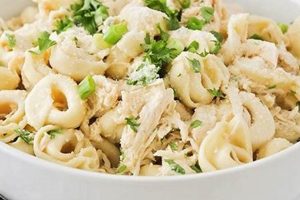
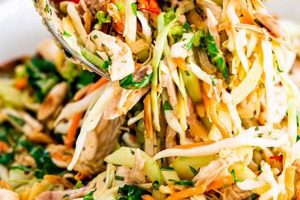
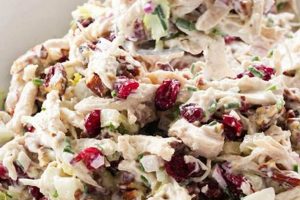
Dishes featuring cooked chicken, typically shredded or diced, combined with mayonnaise and curry powder constitute a popular and versatile meal option. Variations often include additional ingredients such as fruits (grapes, apples, raisins), vegetables (celery, onion, bell peppers), and nuts (almonds, cashews). These mixtures can be served chilled as a sandwich filling, atop a bed of lettuce, or as a dip with crackers or crudits.
The customizable nature of such dishes allows for a wide range of flavor profiles, from mild to intensely spiced. The incorporation of curry powder offers not only a distinct flavor but also potential health benefits due to the presence of spices like turmeric, cumin, and coriander, known for their anti-inflammatory and antioxidant properties. Historically, similar preparations have appeared in various culinary traditions, adapting to regional palates and available ingredients. This adaptability contributes to the ongoing popularity of these dishes in contemporary cuisine.
Further exploration will delve into specific ingredient combinations, preparation techniques, and serving suggestions to create flavorful and satisfying meal options.
Tips for Exceptional Chicken Salad with Curry
Optimizing flavor and texture requires attention to several key elements in preparation. The following tips offer guidance for achieving superior results.
Tip 1: Chicken Selection and Preparation: Opting for high-quality chicken, whether roasted, poached, or baked, contributes significantly to the final outcome. Overcooked chicken results in a dry salad. Allow the chicken to cool completely before shredding or dicing to prevent the mayonnaise from melting.
Tip 2: Mayonnaise Choice: Full-fat mayonnaise provides a richer, creamier texture. Reduced-fat or non-fat versions can be used, but may compromise the overall richness. Greek yogurt can be incorporated for a lighter, tangier variation.
Tip 3: Curry Powder Selection: Experiment with different curry powder blends to achieve desired flavor profiles. Freshly ground spices offer the most vibrant flavor. Consider toasting whole spices before grinding for enhanced aroma and taste.
Tip 4: Balancing Sweetness and Acidity: A touch of sweetness, such as chopped grapes, raisins, or apples, complements the savory curry flavor. A squeeze of lemon juice or a dash of apple cider vinegar provides balancing acidity.
Tip 5: Incorporating Textural Variety: Adding chopped celery, red onion, or bell peppers provides satisfying crunch. Toasted nuts, such as almonds or cashews, contribute both texture and flavor.
Tip 6: Chilling and Serving: Chilling the salad for at least 30 minutes allows the flavors to meld. Serve chilled on bread, crackers, lettuce cups, or as a filling for wraps or avocados.
Tip 7: Garnishing and Presentation: Fresh herbs, such as cilantro or parsley, offer a vibrant garnish and enhance visual appeal. A sprinkle of paprika or a dusting of curry powder provides a finishing touch.
By focusing on these elements, one can elevate a simple chicken salad into a flavorful and satisfying culinary experience. Careful selection of ingredients, balanced flavor profiles, and attention to texture contribute to a truly exceptional dish.
This exploration of preparation tips leads naturally into a discussion of specific recipe variations and serving suggestions.
1. Chicken Preparation

Chicken preparation significantly impacts the final quality of curried chicken salad. The chosen cooking method influences the meat’s texture, moisture content, and ability to absorb flavors. Several methods prove suitable, each offering distinct advantages. Poaching yields tender, moist chicken, ideal for absorbing the curry’s nuanced spices. Roasting produces a richer flavor profile, contributing depth to the salad. Baking provides a balance between moisture and flavor, resulting in a versatile base. Conversely, overcooked, dry chicken, regardless of the cooking method, results in a less desirable final product. Shredding or dicing the chicken, once cooled, ensures even distribution throughout the salad and allows the curry flavors to permeate the meat.
Consider a scenario where pre-cooked, store-bought rotisserie chicken serves as the base. While convenient, its inherent dryness necessitates careful consideration of the other ingredients. Increased mayonnaise or yogurt might compensate for the lack of moisture. Alternatively, incorporating ingredients with high water content, like chopped cucumber or grapes, can reintroduce moisture and enhance the salad’s overall freshness. When preparing poached chicken, ensuring the poaching liquid is adequately seasoned enhances the chicken’s flavor even before it’s incorporated into the salad. This pre-emptive flavor infusion allows for a more pronounced curry experience.
Ultimately, appropriate chicken preparation is crucial for achieving a balanced, flavorful curried chicken salad. Careful selection of the cooking method and attention to the chicken’s moisture level are essential for success. Understanding these factors allows for informed decisions regarding complementary ingredients and ensures a harmonious blend of flavors and textures.
2. Curry Powder Blend
Curry powder, a blend of ground spices, forms the foundational flavor profile of curried chicken salad. The specific composition of this blend significantly influences the final dish’s character, ranging from mild and aromatic to intensely spicy and complex. Understanding the nuances of various curry powders allows for informed choices tailored to individual preferences and desired outcomes.
- Spice Composition:
Typical curry powder constituents include turmeric, cumin, coriander, ginger, fenugreek, and chili peppers. The precise proportions of these spices dictate the overall flavor profile. A blend emphasizing turmeric delivers earthy notes and vibrant color, while a higher concentration of chili peppers results in increased heat. Commercial curry powders offer pre-blended options, while custom blends allow for precise control over flavor nuances. For instance, a Madras curry powder typically features a more robust chili presence compared to a milder Korma blend.
- Flavor Profile:
The interplay of spices within a curry powder creates a complex flavor tapestry. The warmth of ginger, the earthiness of turmeric, the citrusy brightness of coriander, and the pungent heat of chili peppers contribute distinct layers of flavor. These individual notes harmonize to create a balanced, nuanced profile, enhancing the chicken salad’s overall taste. A curry powder dominated by cumin might offer a more savory, earthy flavor, while one emphasizing coriander and fenugreek could present a sweeter, more aromatic profile.
- Freshness and Quality:
The freshness of the spices within the curry powder directly impacts the final dish’s vibrancy. Freshly ground spices retain their volatile oils, contributing a more potent aroma and flavor. Pre-ground powders, while convenient, may lose some of their aromatic intensity over time. Storing curry powder in an airtight container in a cool, dark place helps preserve its freshness. Using whole spices and grinding them just before incorporating them into the chicken salad ensures maximum flavor impact.
- Customization and Experimentation:
The adaptability of curry powder allows for creative exploration and customization. Blending individual spices permits tailoring the flavor profile to specific preferences, achieving a truly unique curried chicken salad. Experimentation with different spice combinations and ratios encourages culinary discovery and allows for a deeper understanding of flavor dynamics. Adding spices like cardamom, cloves, or cinnamon can introduce further complexity and depth.
The selected curry powder blend acts as a defining element in curried chicken salad, influencing the overall taste experience. By considering the spice composition, understanding the resulting flavor profile, prioritizing freshness, and embracing the potential for customization, one can elevate this dish from simple to exceptional. This knowledge empowers informed decisions when selecting and utilizing curry powder, ultimately contributing to a more satisfying culinary outcome. Specific examples of different curry powder blends and their applications in chicken salad recipes will further illustrate these principles.
3. Mayonnaise Selection

Mayonnaise serves as a critical binding agent and flavor component in curried chicken salad, significantly influencing the final product’s texture, richness, and overall palatability. Careful consideration of mayonnaise selection is essential for achieving the desired balance of flavors and creating a cohesive, enjoyable culinary experience. The quality, fat content, and flavor profile of the mayonnaise interact with the other ingredients, impacting the salad’s overall character.
- Fat Content and Texture:
Mayonnaise options range from full-fat to low-fat and even non-fat varieties. Full-fat mayonnaise contributes a rich, creamy texture and enhances the salad’s overall mouthfeel. Reduced-fat versions offer a lighter texture but may compromise the richness and creaminess. Non-fat options often result in a thinner, less satisfying consistency. The fat content directly impacts how the mayonnaise coats the chicken and other ingredients, influencing the salad’s perceived moisture and richness. A full-fat mayonnaise creates a luxurious, velvety texture, while a low-fat version may yield a slightly drier, less cohesive salad.
- Flavor Profile:
While traditional mayonnaise offers a neutral flavor profile, some varieties incorporate additional flavorings, such as lemon juice, herbs, or spices. These added flavors can either complement or clash with the curry spices, requiring careful consideration during selection. A lemon-infused mayonnaise might enhance the brightness of a curry blend emphasizing citrus notes, while a herbed mayonnaise could introduce unwanted complexity or clash with the delicate spice balance. Opting for a plain, unflavored mayonnaise provides a neutral canvas that allows the curry flavors to shine.
- Quality and Freshness:
The quality and freshness of the mayonnaise impact the overall flavor and stability of the curried chicken salad. High-quality mayonnaise, typically made with fresh eggs and oil, offers a superior taste and a smoother texture. Lower-quality mayonnaises may contain additives or preservatives that detract from the flavor or introduce unwanted textures. Freshness is crucial, as mayonnaise can degrade over time, leading to off-flavors or a compromised texture. Using fresh, high-quality mayonnaise ensures a pleasant sensory experience and contributes to the salad’s overall success.
- Alternatives and Substitutions:
While mayonnaise is the traditional choice, alternatives such as Greek yogurt, sour cream, or avocado can be utilized for variations. Greek yogurt offers a tangier, lighter alternative, while sour cream provides a richer, slightly more acidic flavor. Avocado contributes a creamy texture and healthy fats, offering a unique flavor dimension. These alternatives can alter the salad’s overall flavor profile and caloric content, providing options for dietary preferences or creative variations. Substituting a portion of the mayonnaise with Greek yogurt can create a lighter, brighter salad, while using avocado can introduce a subtly earthy flavor and enhance the salad’s nutritional value.
The interplay between mayonnaise and the other ingredients in curried chicken salad significantly impacts the final product. The choice of mayonnaise affects not only the salad’s texture and richness but also how the flavors meld and interact. Selecting a mayonnaise that complements the chosen curry powder and other ingredients is crucial for achieving a harmonious and flavorful result. A well-chosen mayonnaise elevates the curried chicken salad, transforming it from a simple mixture into a well-balanced and satisfying dish.
4. Complementary Ingredients
Complementary ingredients play a vital role in curried chicken salad recipes, contributing layers of flavor, texture, and visual appeal that elevate the dish beyond a simple combination of chicken, mayonnaise, and curry powder. These additions provide balance, contrast, and complexity, transforming the salad into a more nuanced and satisfying culinary experience. The careful selection and incorporation of complementary ingredients demonstrate an understanding of flavor pairings and culinary principles, resulting in a more sophisticated and enjoyable final product.
Several categories of complementary ingredients commonly enhance curried chicken salad. Fruits, such as grapes, raisins, apples, or mango, introduce sweetness and juiciness, counterbalancing the savory spices and adding textural variation. Vegetables, including celery, red onion, bell peppers, or water chestnuts, provide crunch and freshness, contributing both textural contrast and subtle vegetal notes. Nuts, such as almonds, cashews, or walnuts, offer a satisfying density and richness, while also introducing a contrasting textural element. Herbs, like cilantro, mint, or parsley, impart freshness and aromatic complexity, further enhancing the flavor profile. Consider a curried chicken salad featuring golden raisins and chopped apples. The sweetness of the raisins complements the warm spices of the curry powder, while the crisp apple provides a refreshing textural counterpoint. Alternatively, a salad incorporating toasted slivered almonds and chopped cilantro offers a different flavor and texture experience, with the nutty almonds providing richness and the cilantro contributing a bright, herbaceous aroma.
Strategic incorporation of complementary ingredients requires careful consideration of flavor pairings and textural balance. The sweetness of fruit should complement the curry’s spiciness, while the crunch of vegetables should contrast with the creaminess of the mayonnaise. Overloading the salad with too many ingredients can create a muddled flavor profile and a less appealing texture. Achieving a harmonious balance requires thoughtful consideration of each ingredient’s contribution and its interaction with the other components. The ultimate goal is to create a cohesive and well-balanced salad where each ingredient plays a distinct yet complementary role. Understanding the interplay of these elements allows for informed decisions regarding ingredient selection and quantity, resulting in a curried chicken salad that is both flavorful and texturally satisfying.
5. Texture and Consistency
Texture and consistency are crucial aspects of curried chicken salad recipes, significantly impacting the overall sensory experience. A well-executed salad exhibits a harmonious balance of textures, creating a pleasant and satisfying mouthfeel. Achieving this balance requires careful consideration of ingredient selection, preparation techniques, and the interplay between the various components. The desired texture and consistency influence ingredient choices and preparation methods, ultimately contributing to the dish’s success.
- Chicken Texture:
The texture of the chicken itself forms the foundation of the salad’s consistency. Overcooked chicken results in a dry, stringy texture, detracting from the overall enjoyment. Properly cooked chicken, whether poached, roasted, or baked, retains moisture and contributes a tender, palatable texture to the salad. The size of the chicken pieces also influences the texture; smaller, diced pieces create a finer texture, while larger, shredded pieces offer a more substantial mouthfeel. Consider the difference between finely diced poached chicken and coarsely shredded roasted chicken. The diced chicken creates a smoother, more uniform texture, while the shredded chicken offers a more varied, texturally interesting experience.
- Ingredient Incorporation:
The way ingredients are incorporated affects the salad’s overall consistency. Evenly distributing ingredients ensures a cohesive texture and prevents pockets of excessive mayonnaise or dry chicken. Gentle folding helps maintain the integrity of delicate ingredients, such as grapes or herbs, preventing them from being crushed or bruised. Overmixing can lead to a mushy texture, while undermixing can result in uneven distribution of flavors and textures. Imagine adding chopped celery and grapes to the salad. Gently folding these ingredients ensures they remain intact and contribute their distinct textures, while overmixing could crush the grapes and break down the celery, resulting in a less desirable consistency.
- Mayonnaise Ratio:
The amount of mayonnaise used directly influences the salad’s consistency. Too much mayonnaise creates a gloppy, overly rich texture, while too little results in a dry, crumbly salad. The ideal ratio depends on the other ingredients and the desired final consistency. A higher proportion of mayonnaise might be appropriate for a salad with drier ingredients, such as shredded roasted chicken, while a lower proportion might suit a salad with more moist ingredients, such as poached chicken. The mayonnaise acts as a binding agent, holding the ingredients together and contributing to the overall creaminess and moisture level.
- Textural Contrast:
Incorporating ingredients with contrasting textures enhances the sensory experience. The interplay of creamy mayonnaise, tender chicken, crunchy vegetables, and sweet, juicy fruits creates a dynamic and satisfying mouthfeel. The contrast between these textures prevents the salad from becoming monotonous and adds an element of interest. Consider the addition of toasted nuts or water chestnuts. These ingredients provide a contrasting crunch that complements the softer textures of the chicken and mayonnaise, creating a more engaging and enjoyable culinary experience.
Achieving the desired texture and consistency in curried chicken salad involves a careful balancing act. The interplay between the chicken’s texture, the incorporation of other ingredients, the mayonnaise ratio, and the inclusion of contrasting textural elements all contribute to the final product. A well-balanced salad offers a pleasant and satisfying mouthfeel, enhancing the overall enjoyment of the dish. Mastering these elements allows for greater control over the final product, ensuring a consistently enjoyable and texturally appealing curried chicken salad.
6. Serving and Presentation
Serving and presentation significantly influence the perceived quality and enjoyment of curried chicken salad. While flavor and texture remain paramount, the visual appeal and method of service enhance the overall dining experience. Thoughtful presentation elevates the dish from a simple meal to a more refined culinary offering. The following facets explore the connection between serving and presentation and the enjoyment of curried chicken salad.
- Serving Vessels:
The choice of serving vessel impacts both the visual presentation and the practical consumption of the salad. Options range from classic bread slices and crisp lettuce cups to flaky croissants and elegant endive spears. Consider the contrast between serving the salad on whole wheat bread versus within scooped-out avocado halves. The bread offers a familiar, convenient option, while the avocado provides a visually striking and nutritionally enriching vessel. Selecting a serving vessel appropriate for the occasion and the desired aesthetic enhances the overall presentation.
- Garnishes and Accompaniments:
Garnishes provide visual interest and subtle flavor enhancements. Fresh herbs, such as cilantro or parsley, add a touch of color and freshness. A sprinkle of paprika or a dusting of curry powder reinforces the flavor profile. Accompaniments, such as sliced grapes, toasted nuts, or chutney, offer complementary flavors and textures. Serving curried chicken salad alongside a vibrant mango chutney adds a layer of complexity and visual appeal. Similarly, a garnish of chopped toasted cashews provides both visual and textural contrast.
- Plating Techniques:
Thoughtful plating elevates the visual appeal of the dish. Mounding the salad on a bed of lettuce or arranging it artfully within a serving vessel creates a more refined presentation. Consider the difference between simply scooping the salad onto a plate versus carefully shaping it into a quenelle using two spoons. The latter demonstrates attention to detail and elevates the perceived value of the dish. Even simple plating techniques can significantly enhance the visual appeal and create a more enticing presentation.
- Context and Occasion:
The serving and presentation of curried chicken salad should align with the context of the meal. A casual lunch might call for a simple sandwich, while a more formal occasion might warrant a more elaborate presentation. Serving curried chicken salad in elegant pastry shells at a catered event elevates the dish and reflects the formality of the occasion. Conversely, a simple sandwich or wrap might be more appropriate for a casual picnic. Adapting the presentation to the specific context ensures a harmonious and appropriate dining experience.
Serving and presentation play a crucial role in the overall enjoyment of curried chicken salad. By considering the serving vessel, incorporating appropriate garnishes and accompaniments, employing thoughtful plating techniques, and adapting the presentation to the context of the meal, one can transform a simple dish into a more sophisticated and satisfying culinary experience. These elements, combined with the foundational aspects of flavor and texture, contribute to a truly memorable and enjoyable meal.
Frequently Asked Questions
This section addresses common inquiries regarding the preparation and enjoyment of curried chicken salad.
Question 1: What type of curry powder is best suited for chicken salad?
The optimal curry powder depends on individual preference. Milder blends, such as Korma, offer a gentler introduction to curry flavors. Madras curry powder introduces more pronounced heat. Experimentation with various blends allows discovery of preferred flavor profiles.
Question 2: Can pre-cooked chicken be used?
Pre-cooked chicken, including rotisserie chicken, offers convenience. However, its potential dryness necessitates careful moisture management through added mayonnaise, yogurt, or high-water-content ingredients like grapes or cucumber.
Question 3: How long can curried chicken salad be stored?
Properly stored in an airtight container in refrigeration, curried chicken salad typically remains safe for consumption for three to five days. Spoilage indicators include off-odors or changes in texture.
Question 4: What are suitable alternatives to mayonnaise?
Greek yogurt and avocado provide healthier alternatives to mayonnaise, offering distinct flavor profiles and potentially impacting the salad’s overall texture.
Question 5: How can excess moisture be prevented?
Ensuring the chicken is thoroughly drained before incorporating it into the salad helps minimize excess moisture. Adding ingredients judiciously and allowing the salad to chill before serving further reduces the risk of excess liquid.
Question 6: Can frozen ingredients be used?
While using frozen ingredients is possible, certain considerations apply. Frozen vegetables should be thawed and thoroughly drained before incorporation to prevent excess moisture. Frozen chicken should be completely thawed and cooked appropriately before inclusion in the salad.
Careful ingredient selection and proper storage techniques contribute significantly to the quality and safety of curried chicken salad. Addressing these common concerns ensures optimal enjoyment of this versatile dish.
This FAQ section concludes the exploration of curried chicken salad. Readers are encouraged to experiment with various ingredients and techniques to discover personalized variations.
Curried Chicken Salad Recipes
Exploration of this culinary subject has revealed the multifaceted nature of creating exceptional curried chicken salad. From the careful selection of ingredientschicken, curry powder, mayonnaise, and complementary additionsto the meticulous attention to texture, consistency, and presentation, each element contributes to the final product’s overall quality. Proper techniques in chicken preparation, balanced flavor profiles achieved through considered spice blends, and the strategic incorporation of fruits, vegetables, and nuts contribute to a dish that satisfies both visually and gastronomically. Understanding the interplay of these components empowers informed decision-making, ensuring a consistently delightful culinary outcome.
The adaptability of curried chicken salad allows for endless variations, encouraging culinary creativity and personalized adaptations. Continued exploration of flavor combinations and presentation techniques promises further enhancement of this versatile dish, solidifying its place as a staple in both casual and more formal dining settings.