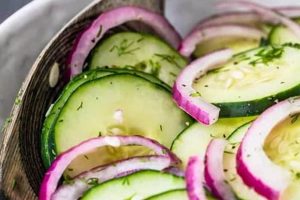
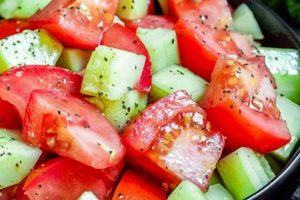
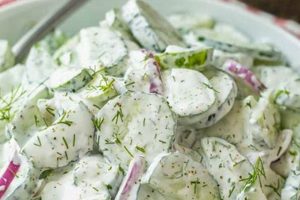
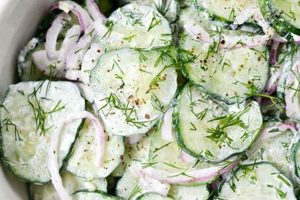
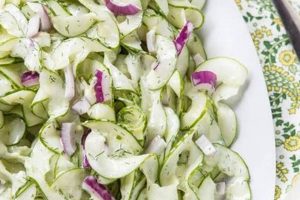
A refreshing and flavorful dish, this type of salad typically combines sliced cucumbers with crumbled feta cheese. Common additions include red onion, fresh herbs like dill or mint, and a simple vinaigrette. Variations can incorporate other ingredients such as tomatoes, olives, or bell peppers. A basic vinaigrette often consists of olive oil, lemon juice or vinegar, salt, and pepper.
This salad offers a light and healthy option, ideal as a side dish or a light lunch. Cucumbers provide hydration and essential vitamins, while feta contributes a salty, tangy flavor and a source of calcium and protein. The simplicity of preparation makes it a popular choice for picnics, barbecues, or a quick weeknight meal. Its versatility allows for adaptation to various cuisines and dietary preferences, with vegan options substituting the feta for plant-based alternatives. The refreshing nature of this salad makes it particularly appealing in warmer weather.
The following sections will explore specific variations of this salad, offering detailed instructions and ingredient lists. Nutritional information and tips for ingredient selection and preparation will also be provided.
Tips for a Perfect Cucumber and Feta Salad
Achieving optimal flavor and texture requires attention to detail. These tips offer guidance for creating a superior culinary experience.
Tip 1: Salt the Cucumbers: Salting the sliced cucumbers draws out excess moisture, preventing a watery salad. Place cucumber slices in a colander, sprinkle with salt, and let sit for 15-20 minutes before rinsing and patting dry.
Tip 2: Use High-Quality Feta: Opt for authentic feta cheese made from sheep’s milk or a blend of sheep and goat milk. This ensures a richer, more flavorful salad.
Tip 3: Add Fresh Herbs: Fresh herbs elevate the flavor profile. Dill, mint, and parsley complement the cucumbers and feta beautifully.
Tip 4: Balance the Vinaigrette: A well-balanced vinaigrette is crucial. Use a ratio of 3 parts olive oil to 1 part acid (lemon juice or vinegar). Adjust seasoning with salt and pepper to taste.
Tip 5: Chill Before Serving: Chilling the salad allows the flavors to meld and enhances the refreshing quality. Refrigerate for at least 30 minutes before serving.
Tip 6: Consider Textural Variety: Adding thinly sliced red onion or a sprinkle of toasted nuts can introduce a pleasing textural contrast.
Tip 7: Don’t Overcrowd the Bowl: Ensure the salad is loosely tossed to prevent bruising the cucumbers and herbs.
By following these tips, one can create a cucumber and feta salad that is both flavorful and visually appealing. The result is a dish that satisfies the palate and offers a healthy, refreshing option.
These techniques contribute to a consistently delicious and visually appealing salad. The following section concludes with final thoughts and serving suggestions.
1. Fresh Cucumbers

Fresh cucumbers serve as the foundational ingredient, providing the refreshing, crisp texture and mild, subtly sweet flavor that defines this salad. Their quality significantly impacts the overall culinary experience. Selecting and preparing them correctly is crucial for achieving the desired result.
- Variety Selection
Different cucumber varieties offer varying levels of water content and flavor profiles. English cucumbers, known for their thin skin and lower water content, are ideal, minimizing the need for pre-salting. Persian cucumbers offer a similar advantage. Alternatively, standard cucumbers can be used but benefit from salting to remove excess moisture. The choice influences the final texture and flavor balance.
- Sourcing and Storage
Locally sourced, in-season cucumbers generally possess superior flavor and texture. When purchasing, look for firm, unblemished cucumbers with a vibrant green color. Proper storage is essential to maintain freshness. Refrigeration in a perforated plastic bag helps retain moisture without promoting spoilage.
- Preparation Techniques
Thinly slicing the cucumbers ensures even distribution of flavor and creates a pleasing texture. Consistent slicing also enhances the visual appeal of the salad. Techniques like using a mandoline slicer can achieve uniform slices. For added visual interest, consider alternative cuts such as half-moons or ribbons.
- Flavor Enhancement
While cucumbers offer a delicate flavor on their own, their subtle sweetness can be enhanced through complementary ingredients. The saltiness of feta cheese provides a counterpoint, while the acidity of the vinaigrette brightens the overall flavor profile. Fresh herbs further contribute to the complexity of the taste experience.
The careful selection, proper storage, and skillful preparation of fresh cucumbers are essential for maximizing the flavor and textural appeal. By understanding the nuances of cucumber varieties and employing appropriate techniques, one ensures a successful and satisfying culinary outcome, highlighting the cucumber’s refreshing contribution to the overall salad experience. The interplay of the cucumber with other ingredients elevates this simple salad to a sophisticated dish.
2. Authentic Feta Cheese
Authentic feta cheese plays a pivotal role in the overall success of a cucumber salad, contributing a distinct salty, tangy flavor and creamy texture that complements the refreshing cucumbers. Understanding the characteristics of true feta, as opposed to imitation feta products, is crucial for achieving the desired flavor profile and textural balance.
- Origin and Composition
True feta is produced in specific regions of Greece, traditionally from sheep’s milk or a mixture of sheep and goat milk. This specific origin and milk composition contribute to its unique flavor profile, characterized by a tangy, slightly salty taste and a creamy, crumbly texture. Imitation feta cheeses, often made from cow’s milk, lack the distinctive characteristics of authentic feta and can result in a blander, less satisfying salad.
- Texture and Appearance
Authentic feta possesses a characteristic crumbly texture, readily breaking apart while retaining a certain creaminess. Its appearance is typically white and somewhat grainy, stored in brine to maintain moisture and freshness. This texture contributes to the salad’s overall mouthfeel, contrasting with the crispness of the cucumbers. Imitation products often exhibit a smoother, more rubbery texture that detracts from the desired sensory experience.
- Flavor Profile
The tangy, salty flavor of authentic feta is a defining element of the cucumber salad. This distinct taste provides a counterpoint to the subtle sweetness of the cucumbers, creating a balanced and refreshing flavor profile. The intensity of the saltiness can vary depending on the brand and age of the feta, offering opportunities to tailor the salad’s taste to individual preferences. Imitation feta cheeses often lack the characteristic tang, resulting in a less vibrant and complex flavor.
- Impact on Overall Dish
The choice of authentic feta significantly elevates the cucumber salad from a simple combination of ingredients to a more complex and satisfying dish. Its unique flavor and texture contribute to a balanced and refreshing culinary experience. The creaminess of the feta complements the crisp cucumbers, while the saltiness enhances the other flavors in the salad. Using imitation feta can result in a less satisfying and flavorful salad, compromising the intended balance of textures and tastes.
By selecting authentic feta cheese, one ensures that the cucumber salad achieves its full potential, showcasing a harmonious blend of flavors and textures. The distinct characteristics of true feta contribute significantly to the overall culinary experience, differentiating it from salads made with imitation products. The interplay between the feta’s creamy, salty tang and the cucumber’s refreshing crispness defines the essence of this classic dish.
3. Light Vinaigrette

A light vinaigrette forms an essential component of a successful cucumber salad with feta cheese, providing a crucial balance of acidity and richness that enhances the other ingredients without overpowering their delicate flavors. The vinaigrette acts as a unifying element, binding the cucumbers, feta, and any additional components into a cohesive and harmonious whole. Its lightness is paramount; a heavy or overly assertive dressing would mask the refreshing qualities of the cucumbers and the tangy saltiness of the feta. A properly balanced vinaigrette enhances the natural flavors, creating a symphony of tastes rather than a competition for dominance.
The specific composition of the vinaigrette can be tailored to complement the other ingredients. A simple lemon-herb vinaigrette, for instance, brightens the flavors of the cucumbers and feta with its citrusy notes, while a red wine vinaigrette adds a subtle depth and complexity. The choice of oil also plays a role; extra virgin olive oil offers a robust fruitiness, while a lighter oil like grapeseed oil provides a more neutral backdrop. The balance between oil and acid is critical, typically a ratio of 3:1, ensuring a pleasant tartness that doesn’t overwhelm the palate. Consider a salad with ripe tomatoes and cucumbers; a light vinaigrette with balsamic vinegar and a touch of honey complements the sweetness of the tomatoes while enhancing the refreshing cucumber and salty feta. Conversely, a heavier dressing, like a creamy ranch, would mask these subtle nuances.
Understanding the role of the light vinaigrette allows for informed choices in crafting a perfectly balanced cucumber salad with feta cheese. The interplay between acidity, richness, and the flavors of the other ingredients determines the overall success of the dish. Achieving this balance ensures a refreshing, flavorful salad that highlights the individual components while creating a unified and satisfying culinary experience. The vinaigrette is not merely a dressing; it is an integral part of the dish’s architecture, contributing significantly to its overall appeal.
4. Fresh Herbs (Dill, Mint)

Fresh herbs contribute significantly to the overall flavor profile of a cucumber salad with feta cheese. Dill and mint, in particular, offer distinct aromatic and flavor profiles that complement the other ingredients, enhancing the refreshing and savory qualities of the dish. Their careful selection and application elevate the salad beyond a simple combination of ingredients, creating a more complex and nuanced culinary experience.
- Aromatic Enhancement
Dill and mint introduce distinct aromatic notes that elevate the sensory experience of the salad. Dill imparts a slightly tangy, almost anise-like aroma, while mint offers a refreshing, cooling fragrance. These aromas complement the subtle scent of the cucumbers and the creamy tang of the feta, creating a more complex and inviting olfactory profile. The aromatic interplay stimulates the appetite and prepares the palate for the flavors to come.
- Flavor Complexity
Beyond their aromatic contributions, dill and mint add depth and complexity to the salad’s flavor profile. Dill’s slightly tangy, herbaceous notes provide a counterpoint to the sweetness of the cucumbers and the saltiness of the feta, while mint’s refreshing coolness adds a contrasting element. These flavors interact synergistically, creating a more balanced and nuanced taste experience. The combination of dill and mint also works well with additions like lemon zest or black pepper.
- Visual Appeal
The vibrant green hues of fresh dill and mint enhance the visual appeal of the cucumber salad. Their delicate leaves and sprigs provide a pleasing contrast to the white feta and pale green cucumbers, creating a more visually engaging and appetizing dish. The visual element is particularly important in culinary presentations, adding to the overall dining experience.
- Culinary Versatility
While dill and mint are classic pairings for cucumber and feta, other fresh herbs can also complement this salad. Parsley, chives, and oregano offer distinct flavor profiles that can be incorporated to create variations on the traditional recipe. Experimenting with different herb combinations allows for customization and exploration of diverse flavor profiles, catering to individual preferences. For example, a Mediterranean-inspired version might incorporate oregano and crumbled Kalamata olives alongside the dill.
The inclusion of fresh herbs like dill and mint transforms a basic cucumber and feta salad into a more sophisticated and flavorful dish. Their aromatic and flavor contributions, combined with their visual appeal, elevate the sensory experience, demonstrating the crucial role of fresh herbs in creating a well-balanced and satisfying culinary creation. The interplay of these herbs with the other ingredients showcases the potential for complexity and nuance within a seemingly simple salad.
5. Optional additions (onion, tomato)
While cucumbers and feta cheese form the core of this refreshing salad, optional additions offer opportunities to enhance flavor, texture, and visual appeal. Thoughtful incorporation of ingredients such as red onion and tomatoes can elevate the dish from simple to complex, catering to individual preferences and culinary goals. These additions contribute not only distinct flavors but also textural and color contrasts, expanding the salad’s versatility.
- Red Onion: Pungency and Bite
Thinly sliced red onion introduces a sharp, pungent flavor that complements the creamy feta and mild cucumber. Its crisp texture adds a contrasting bite to the salad’s overall mouthfeel. The red onion’s vibrant color also provides visual interest. However, the intensity of raw red onion can be overpowering; soaking the slices in cold water for 10 minutes mellows the flavor while maintaining the crisp texture. This step ensures the onion enhances rather than dominates the salad’s flavor profile.
- Tomatoes: Juiciness and Acidity
Ripe tomatoes contribute a burst of juicy sweetness and subtle acidity, complementing the other ingredients. Different tomato varieties offer diverse flavor profiles, from the classic sweetness of a vine-ripened tomato to the rich tanginess of a cherry tomato. The tomato’s vibrant color further enhances the salad’s visual appeal. Consider the interplay of a sweet summer tomato with the salty feta and cool cucumber; the tomato adds a layer of complexity, balancing the other flavors and adding a pleasant textural contrast.
- Bell Peppers: Sweetness and Crunch
Bell peppers, whether red, yellow, or orange, introduce a sweet, slightly vegetal flavor and a satisfying crunch. They provide a textural contrast and add vibrant color, increasing the salad’s visual appeal. Different colors offer subtle flavor variations; red bell peppers tend to be sweeter, while green bell peppers have a slightly more bitter note. Consider the balance; choosing a single color provides a cohesive visual element, while a mix of colors adds a more vibrant and playful presentation.
- Olives: Saltiness and Umami
Olives, particularly Kalamata olives, provide a salty, briny flavor and a subtle umami note that complements the feta. Their smooth, meaty texture adds another dimension to the salad’s mouthfeel. The dark purple color of Kalamata olives contrasts beautifully with the other ingredients, further enhancing visual interest. However, the saltiness of olives can be intense; using them sparingly ensures they enhance the flavor profile without overpowering the other ingredients. Consider how a few Kalamata olives contribute a burst of salty, briny flavor that complements the feta without overwhelming the delicate cucumber.
These optional additions offer opportunities to customize the cucumber salad with feta cheese, catering to individual preferences and expanding its culinary versatility. By understanding the flavor profiles, textures, and visual contributions of each ingredient, one can create a salad that is not only refreshing and flavorful but also visually appealing and texturally satisfying. The careful selection and incorporation of these additions elevate the salad from a simple side dish to a more complex and nuanced culinary creation.
6. Proper Chilling
Proper chilling is a crucial step in preparing a cucumber salad with feta cheese. It significantly impacts the final flavor, texture, and overall enjoyment of the dish. Chilling allows the flavors of the various componentscucumbers, feta, vinaigrette, and any additional ingredientsto meld and harmonize. Beyond flavor development, chilling also affects the salad’s textural profile, enhancing the crispness of the cucumbers.
- Temperature and Flavor Development
Chilling the salad at the correct temperature allows the flavors of the individual ingredients to meld and deepen. A temperature between 34F and 40F (1C and 4C) is ideal. This temperature range slows down enzymatic activity that can lead to flavor degradation, preserving the fresh taste of the cucumbers and herbs. Furthermore, the cool temperature enhances the perception of refreshing flavors, particularly important in a summer salad. Storing the salad at excessively cold temperatures, however, can dull the flavors and negatively impact the texture of the cucumbers.
- Texture Enhancement: Crispness and Refreshment
Proper chilling enhances the crispness of the cucumbers, a key textural element in this salad. The cold temperature firms the cucumber’s cell walls, maintaining their desirable crunch. This contrasts pleasantly with the creamy texture of the feta cheese, creating a balanced and satisfying mouthfeel. Conversely, failing to chill the salad adequately, or allowing it to sit at room temperature for extended periods, can result in soggy cucumbers, diminishing the salad’s refreshing qualities and overall appeal.
- Food Safety Considerations
Chilling is essential for food safety, particularly for salads containing perishable ingredients like feta cheese and fresh herbs. Maintaining a low temperature inhibits the growth of harmful bacteria, ensuring the salad remains safe for consumption. Promptly refrigerating the salad after preparation and avoiding prolonged storage at room temperature are crucial steps in preventing bacterial contamination. Adhering to food safety guidelines is paramount for maintaining the quality and safety of the dish.
- Optimal Serving Temperature
Serving the cucumber salad at the correct temperature maximizes enjoyment. A chilled salad is more refreshing and palatable, especially in warmer weather. The cool temperature enhances the perception of crispness and brightness of flavors. Conversely, serving the salad at too warm a temperature can result in a less satisfying experience, with the flavors seeming dull and the textures less appealing.
Proper chilling is therefore not merely a final step but an integral part of crafting a successful cucumber salad with feta cheese. It is essential for flavor development, texture enhancement, and food safety. Attention to temperature and chilling time ensures the salad reaches its full potential, offering a refreshing, flavorful, and safe culinary experience. Understanding the impact of chilling on each ingredient allows for informed decisions that maximize the overall quality and enjoyment of the dish.
Frequently Asked Questions
This section addresses common inquiries regarding cucumber salad with feta cheese, providing clear and concise information to ensure optimal preparation and enjoyment.
Question 1: How can excess moisture in the salad be prevented?
Salting the sliced cucumbers before adding them to the salad draws out excess water. Place the cucumber slices in a colander, sprinkle with salt, and let them sit for 15-20 minutes. Rinse the cucumbers thoroughly and pat them dry before combining them with the other ingredients. This process prevents a watery salad and maintains the desired crispness of the cucumbers.
Question 2: What type of feta cheese is recommended for this salad?
Authentic feta cheese, traditionally made from sheep’s milk or a blend of sheep and goat milk, is preferred. It offers a distinct tangy, salty flavor and a creamy, crumbly texture that complements the other ingredients. Imitation feta cheeses, often made from cow’s milk, may lack the characteristic flavor and texture of true feta.
Question 3: Can other herbs be substituted for dill and mint?
While dill and mint are classic pairings for cucumber and feta, other fresh herbs such as parsley, chives, or oregano can be used. Experimenting with different herb combinations allows for customization and exploration of diverse flavor profiles.
Question 4: How long can the salad be stored in the refrigerator?
The salad is best consumed within 24 hours of preparation for optimal flavor and texture. Beyond this timeframe, the cucumbers may become soggy, and the herbs may lose their vibrancy.
Question 5: What are some suitable accompaniments for this salad?
This salad pairs well with grilled meats, fish, or poultry. It can also be served alongside other salads or as part of a mezze platter. Its refreshing nature makes it an excellent choice for picnics or light lunches.
Question 6: How can the flavor of red onion be mellowed in the salad?
Soaking thinly sliced red onion in cold water for 10-15 minutes helps to mellow its sharp, pungent flavor while maintaining its crisp texture. This prevents the red onion from overpowering the other delicate flavors in the salad.
Addressing these common inquiries ensures optimal preparation techniques and enhances overall enjoyment. The information provided clarifies key aspects, facilitating a successful culinary experience.
The subsequent section offers a complete recipe with detailed instructions, enabling practical application of the information presented.
Cucumber Salad Recipe with Feta Cheese
This exploration of cucumber salad with feta cheese has highlighted the essential elements that contribute to its success. From the selection of fresh, crisp cucumbers and authentic feta, to the delicate balance of a light vinaigrette and the aromatic enhancement of fresh herbs, each component plays a crucial role in the final dish. Optional additions, such as red onion, tomatoes, bell peppers, or olives, offer opportunities for customization and flavor exploration, while proper chilling techniques ensure optimal texture and food safety. The interplay of these elements creates a harmonious blend of flavors and textures, resulting in a refreshing and satisfying culinary experience.
The simplicity of this salad belies its potential for complexity and nuance. Careful consideration of each ingredient, from sourcing to preparation, elevates the dish beyond a mere combination of components. This exploration serves as a guide for culinary enthusiasts seeking to create a cucumber salad with feta cheese that is not only delicious but also a testament to the power of fresh, high-quality ingredients and thoughtful preparation techniques. Ultimately, the success of this dish lies in the appreciation of the individual contributions of each element and their harmonious interplay.