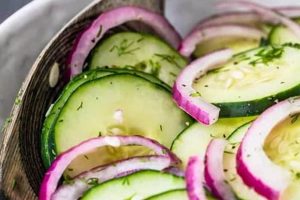
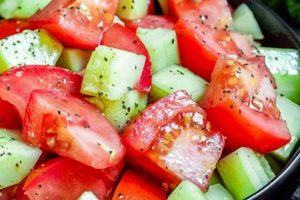
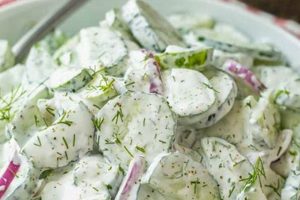
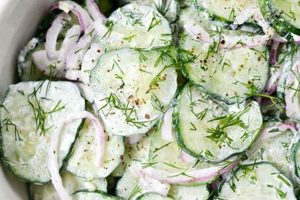
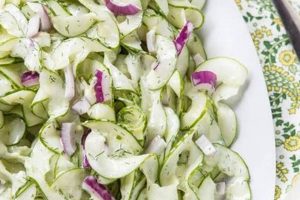
Refreshing and flavorful, combinations of cucumber, feta cheese, and various other ingredients offer a versatile culinary canvas. These salads can range from simple mixtures of sliced cucumber, crumbled feta, and a light vinaigrette to more complex creations incorporating olives, tomatoes, onions, herbs, and different dressings. A classic example includes diced cucumbers, crumbled feta, Kalamata olives, red onion, and a lemon-herb vinaigrette.
Such salads are valued for their nutritional value and culinary appeal. Cucumbers provide hydration and essential vitamins, while feta contributes protein and calcium. The inclusion of fresh herbs and a variety of vegetables further enhances the nutritional profile. Historically, similar combinations of fresh produce and cheese have been enjoyed in Mediterranean regions for centuries, highlighting the enduring appeal of these flavors. The adaptability of these salads to diverse ingredients and palates contributes to their continued popularity.
The following sections will explore variations on this theme, including specific ingredient combinations, dressing options, and tips for preparation and presentation.
Tips for Cucumber and Feta Salad Preparation
Optimizing ingredient selection and preparation techniques elevates the final product. Attention to detail ensures a balanced and flavorful salad.
Tip 1: Cucumber Selection and Preparation: Opt for firm cucumbers with smooth skin. English cucumbers, with their thinner skin and fewer seeds, are ideal. For a less watery salad, consider peeling the cucumbers partially or salting and draining them before combining with other ingredients.
Tip 2: Feta Cheese Considerations: Feta cheese comes in varying textures, from creamy to crumbly. Consider the desired texture when selecting feta. Crumbled feta distributes evenly throughout the salad, while block feta can be cubed for a more substantial presence.
Tip 3: Enhancing Flavor with Herbs: Fresh herbs significantly elevate the flavor profile. Dill, mint, parsley, and oregano complement the cucumber and feta exceptionally well. Finely chop the herbs to release their aromatic oils.
Tip 4: Balancing Acidity in Dressings: A well-balanced vinaigrette enhances the salad’s flavors. Lemon juice or red wine vinegar provides necessary acidity. Adjust the balance of acidity and oil to achieve the desired tartness.
Tip 5: Incorporating Additional Vegetables: Tomatoes, red onion, and bell peppers add texture, color, and flavor complexity. Dice these vegetables into sizes comparable to the cucumber and feta for uniform distribution.
Tip 6: Timing of Dressing Application: Dress the salad shortly before serving to prevent the vegetables from becoming soggy. This preserves the crispness of the cucumbers and maintains the salad’s fresh appearance.
Tip 7: Achieving Visual Appeal: Consider the presentation of the salad. Arrange the ingredients thoughtfully on a platter or in individual bowls for an aesthetically pleasing result.
By following these tips, one can consistently create a delicious and visually appealing salad that showcases the harmonious combination of flavors and textures.
The subsequent section will offer variations on classic recipes and encourage culinary exploration.
1. Fresh, High-Quality Ingredients

The success of any cucumber and feta salad hinges on the freshness and quality of its components. Subpar ingredients diminish the overall flavor and textural experience. Fresh cucumbers offer crispness and a clean taste, while aged or bruised cucumbers can introduce bitterness and unpleasant textures. Similarly, high-quality feta, preferably stored in brine, contributes a creamy, salty tang, whereas pre-crumbled or dry feta often lacks the desired flavor and moisture content. Using fresh, vibrant herbs like dill or mint, as opposed to dried or wilted ones, provides a noticeable lift in aroma and taste. The quality of the olive oil also significantly impacts the dressing, with extra virgin olive oil offering a superior flavor profile compared to refined oils. For instance, a salad made with a freshly picked cucumber, brine-stored feta, and vibrant dill, tossed in a dressing of high-quality extra virgin olive oil and lemon juice, presents a markedly different sensory experience than one made with less-than-optimal ingredients.
This emphasis on ingredient quality extends beyond the core components. Using ripe, in-season tomatoes contributes sweetness and juiciness, while opting for sweet onions, like Vidalia or red onion, adds depth without overpowering the other flavors. Even the seemingly minor ingredients, like salt and pepper, play a crucial role. Freshly ground black pepper offers a more pronounced aroma and flavor compared to pre-ground pepper. Sea salt or kosher salt, with their larger crystals, provide a subtle crunch and cleaner salinity than iodized table salt. These seemingly small distinctions cumulatively contribute to the overall quality and enjoyment of the dish.
Prioritizing fresh, high-quality ingredients is not merely a culinary suggestion but a fundamental requirement for achieving a truly exceptional cucumber and feta salad. The difference is palpable, impacting not only the taste but also the overall sensory experience. Selecting the best possible ingredients ensures a vibrant, flavorful, and texturally satisfying salad that showcases the inherent qualities of each component. While variations exist in specific ingredient combinations and dressings, the underlying principle of using fresh, high-quality products remains paramount. This commitment to quality elevates a simple salad from ordinary to extraordinary.
2. Balanced Flavor Profiles
Achieving a harmonious blend of flavors is paramount in cucumber and feta salad recipes. The inherent qualities of each ingredientthe refreshing coolness of cucumber, the salty tang of feta, and the acidity of the dressingmust complement rather than overpower one another. A balanced flavor profile elevates the salad from a simple combination of ingredients to a cohesive and satisfying culinary experience.
- Saltiness of Feta
Feta cheese provides the dominant salty element. The intensity of its saltiness can vary depending on the specific type and brand. Balancing this saltiness is crucial. Too much feta can make the salad overwhelmingly salty, while too little can leave it bland. Consider the salinity of the feta when determining the amount to include and adjust other ingredients accordingly. For example, a more intensely salty feta requires less salt in the dressing or the addition of ingredients that can mitigate saltiness, such as a squeeze of lemon juice or a touch of sweetness from chopped dates or dried cranberries.
- Acidity of the Dressing
The dressing’s acidity plays a vital role in cutting through the richness of the feta and providing a counterpoint to the cucumber’s mildness. Common acidic ingredients include lemon juice, red wine vinegar, and white wine vinegar. The level of acidity should be carefully calibrated. Too much acid can make the salad overly tart, while too little can leave it flat. Experimenting with different types of vinegar or citrus juices can also introduce nuanced flavor profiles. A light lemon vinaigrette provides a bright, refreshing contrast, while a red wine vinaigrette adds a deeper, more complex layer of flavor.
- Freshness of Herbs and Other Vegetables
Fresh herbs and other vegetables contribute additional layers of flavor and texture. Dill, mint, parsley, and oregano are commonly used herbs that complement cucumber and feta well. Other vegetables, such as tomatoes, red onion, and bell peppers, add sweetness, sharpness, and crunch. The selection and quantity of these additions should be considered in relation to the overall flavor balance. For instance, a generous amount of fresh dill can provide a pronounced herbal note, while a smaller quantity of mint adds a subtle hint of coolness. Similarly, the sweetness of cherry tomatoes contrasts nicely with the saltiness of the feta. The key is to use these ingredients strategically to enhance, not overwhelm, the core flavors.
- Textural Considerations
Texture plays a significant role in flavor perception. The crispness of the cucumber, the creaminess of the feta, and the potential additions of crunchy elements, such as toasted nuts or croutons, contribute to a multi-dimensional sensory experience. A salad that is solely soft and creamy might feel heavy, while a salad that is exclusively crunchy can lack depth. Consider the interplay of textures to create a more engaging and satisfying culinary experience. Adding toasted pine nuts or walnuts introduces a welcome crunch, while incorporating Kalamata olives adds a chewy element. The balance of textures, combined with the balanced flavors, creates a more complete and enjoyable salad.
Ultimately, a successful cucumber and feta salad relies on the careful orchestration of these flavor and texture components. A balanced flavor profile enhances the inherent qualities of each ingredient, creating a symphony of tastes that is both refreshing and satisfying. By considering the interplay of saltiness, acidity, freshness, and texture, one can create a salad that is not only delicious but also demonstrates a sophisticated understanding of flavor dynamics.
3. Proper Ingredient Preparation
Proper ingredient preparation is essential for optimizing the flavor, texture, and overall quality of cucumber and feta salads. Careful attention to each component ensures a balanced and enjoyable culinary experience, elevating the dish beyond a simple assembly of ingredients.
- Cucumber Handling
Cucumbers, with their high water content, require specific handling to prevent a watery salad. Slicing cucumbers too thickly can lead to uneven flavor distribution and a less appealing texture. Thinly slicing or dicing ensures optimal integration with other ingredients and allows for better absorption of the dressing. Furthermore, techniques like salting and draining sliced cucumbers draw out excess moisture, resulting in a crisper, more flavorful salad. Failing to address excess moisture can dilute the dressing and compromise the overall texture. For instance, a salad with thinly sliced, salted, and drained cucumbers maintains its structural integrity and allows the dressing to coat the ingredients evenly, enhancing flavor delivery.
- Feta Treatment
Feta cheese, available in blocks or pre-crumbled form, benefits from specific preparation methods. Crumbling block feta allows for even distribution throughout the salad, ensuring each bite contains the desired salty tang. If using pre-crumbled feta, consider its texture. Excessively dry feta can result in a less creamy and flavorful salad. Conversely, feta packed in brine requires draining to prevent excess moisture from diluting the dressing. For optimal flavor, consider using high-quality feta stored in brine, drained and crumbled just before assembling the salad.
- Herb Integration
Fresh herbs contribute significantly to the salad’s overall flavor profile. Properly integrating herbs enhances their impact. Finely chopping herbs like dill, mint, or parsley releases their aromatic oils, maximizing their flavor contribution. Adding whole herb sprigs, while visually appealing, may not distribute the flavor evenly. Alternatively, gently tearing larger herbs like basil prevents bruising and preserves their delicate flavor. Incorporating herbs directly into the dressing allows them to infuse their flavor throughout the salad more effectively.
- Additional Ingredient Optimization
Other vegetables included in the salad, such as tomatoes, onions, and peppers, also require specific preparation techniques. Uniformly dicing or slicing these ingredients ensures even distribution and consistent flavor in each bite. For ingredients like red onion, soaking sliced pieces in cold water can mellow their sharpness, preventing them from overpowering the other flavors. Consider the individual characteristics of each ingredient and adjust preparation methods accordingly to maximize their contribution to the final dish.
Proper ingredient preparation elevates the cucumber and feta salad from a simple combination of components to a carefully constructed dish with balanced flavors and textures. Attention to these details demonstrates culinary expertise and ensures a more enjoyable and satisfying dining experience. These techniques not only optimize the individual flavors but also contribute to the salad’s overall structural integrity, preventing a watery or unevenly flavored final product. The combination of properly prepared ingredients transforms a basic salad into a cohesive and flavorful culinary creation.
4. Complementary Textures
Textural interplay significantly enhances culinary experiences, particularly within cucumber and feta salad recipes. The inherent contrast between the cool, crisp cucumber and the creamy, crumbly feta provides a foundational textural dichotomy. This contrast, however, benefits from further enhancement through the strategic incorporation of additional ingredients. Consider the addition of toasted nuts: their crunch provides a stark counterpoint to the softer elements, creating a more dynamic and engaging mouthfeel. Similarly, incorporating ingredients like Kalamata olives or sun-dried tomatoes introduces a chewy texture, further diversifying the sensory experience. The absence of such textural variations can result in a one-dimensional, potentially less satisfying salad.
The importance of complementary textures extends beyond mere sensory variety. It influences flavor perception and overall enjoyment. A salad dominated by soft textures may feel heavy or monotonous, while one solely reliant on crunch can lack depth. The interplay of textures creates a more balanced and nuanced experience. For example, the burst of juice from a cherry tomato, followed by the yielding creaminess of feta and the satisfying crunch of a toasted walnut, delivers a complex and layered sensory experience. This interplay not only keeps the palate engaged but also enhances the perception of individual flavors. The contrast between textures accentuates the unique qualities of each ingredient, making them more pronounced and memorable.
Successfully incorporating complementary textures requires careful consideration of ingredient selection and preparation methods. Toasted nuts, while adding a desirable crunch, must be properly toasted to avoid bitterness. Ingredients like olives or sun-dried tomatoes, if not appropriately drained, can introduce unwanted moisture, compromising the salad’s overall texture. Dicing vegetables into uniform sizes ensures even distribution of textures throughout the salad, further enhancing the balanced experience. Achieving this textural harmony elevates the cucumber and feta salad from a simple dish to a thoughtfully constructed culinary creation, demonstrating a sophisticated understanding of sensory balance and its impact on overall enjoyment.
5. Visually Appealing Presentation
Visual appeal significantly enhances the perceived value and enjoyment of cucumber and feta salads. Presentation elevates the dish from a simple combination of ingredients to a carefully considered culinary creation. Strategic arrangement and attention to visual details heighten the dining experience, stimulating appetite and anticipation. The following facets contribute to visually appealing presentations within this specific culinary context.
- Color Palette
The inherent colors of cucumbers and fetathe cool green and bright whiteprovide a refreshing visual foundation. Enhancing this base with vibrant accents elevates the presentation. Incorporating ingredients like red tomatoes, purple onions, or dark Kalamata olives introduces contrasting hues, creating visual interest. Consider the color wheel and strive for a balanced and harmonious palette. A monochromatic green salad, while refreshing, can appear one-dimensional. Strategic color placement creates focal points and visual flow, drawing the eye across the dish and enhancing its overall appeal. A scattering of bright red cherry tomatoes or a sprinkle of deep green herbs can transform a simple salad into a visually striking composition.
- Arrangement of Ingredients
Thoughtful arrangement of ingredients prevents a haphazard appearance. Simply tossing ingredients together, while efficient, may result in a visually uninspiring presentation. Consider the shapes and sizes of the components. Sliced cucumbers can be artfully arranged in overlapping patterns, while crumbled feta can be strategically placed to create textural contrast. Incorporating height and dimension adds visual depth. A mound of feta in the center, surrounded by artfully arranged cucumber slices and other vegetables, creates a more dynamic and engaging presentation. Consider the negative space, allowing some areas to remain less densely populated to avoid a cluttered look.
- Choice of Servingware
The serving vessel significantly impacts the overall presentation. A simple white platter provides a neutral backdrop that allows the vibrant colors of the salad to stand out. Alternatively, a rustic wooden bowl can add a touch of warmth and informality. Consider the context of the meal and the desired aesthetic. A formal dinner may call for a more elegant presentation, while a casual lunch allows for greater flexibility. The size and shape of the servingware should complement the salad’s volume and arrangement. Overcrowding a small dish creates a cluttered and less appealing presentation, while a large platter with a sparse amount of salad can appear underwhelming.
- Garnishes and Finishing Touches
Garnishes provide the final flourish, elevating the presentation from pleasing to exceptional. A sprinkle of freshly chopped herbs, a drizzle of high-quality olive oil, or a scattering of toasted nuts adds visual appeal and hints at the underlying flavors. Garnishes should be relevant to the dish, complementing the existing flavors and textures. A sprig of dill or mint adds a fresh, herbal note, while a sprinkle of toasted sesame seeds introduces a nutty element. Avoid excessive garnishing, as this can detract from the overall presentation and appear cluttered. The goal is to enhance, not overwhelm, the existing visual elements.
These facets, when thoughtfully combined, transform a basic cucumber and feta salad into a visually captivating culinary experience. Visual presentation enhances enjoyment, stimulating appetite and anticipation. By considering color, arrangement, servingware, and garnishes, one elevates this simple dish, demonstrating an appreciation for aesthetics and its impact on the overall dining experience. The visual appeal not only complements the flavors and textures but also contributes to a more holistic and satisfying culinary experience.
6. Versatile Adaptability

The inherent adaptability of cucumber and feta salad recipes contributes significantly to their enduring popularity. This versatility stems from the core ingredients’ ability to harmonize with a wide array of additions, allowing for customizations that cater to diverse palates and dietary preferences. This adaptability manifests in various facets, each contributing to the salad’s customizability.
- Ingredient Flexibility
The foundational combination of cucumber and feta provides a neutral canvas for an extensive range of ingredients. From diverse vegetables like tomatoes, bell peppers, and onions to protein sources such as grilled chicken or chickpeas, the salad readily incorporates additions without compromising its core identity. This flexibility extends to incorporating fruits like watermelon or grapes for a touch of sweetness, or adding grains like quinoa or couscous for a more substantial meal. Examples include a Mediterranean-inspired version with Kalamata olives and artichoke hearts, or a spicier variation with jalapeos and a chili-lime dressing. This ingredient flexibility allows for endless variations, ensuring the salad remains interesting and adaptable to different culinary traditions.
- Dressing Variations
Beyond ingredient additions, the adaptability extends to the dressing. While a simple vinaigrette of olive oil and lemon juice complements the cucumber and feta beautifully, the salad readily accommodates a wide range of dressings. Creamy dressings based on yogurt or tahini offer a richer counterpoint, while more vibrant dressings incorporating herbs, spices, or different vinegars introduce complex flavor profiles. A lemon-herb vinaigrette provides a classic Mediterranean flavor, while a tahini-based dressing adds a Middle Eastern twist. This adaptability in dressing choices further expands the salad’s versatility, allowing it to align with various flavor preferences and culinary styles.
- Seasonal Adjustments
The salad’s adaptability extends to seasonal variations. While cucumbers and feta are available year-round, incorporating seasonal produce elevates the dish and reflects the freshest flavors available. Spring variations might include fresh peas and mint, while summer versions could incorporate ripe tomatoes and sweet corn. Autumnal adaptations could feature roasted butternut squash or pumpkin seeds, while winter versions might incorporate dried cranberries or pomegranate seeds. This responsiveness to seasonal ingredients ensures the salad remains relevant and exciting throughout the year, showcasing the best of each season’s bounty.
- Dietary Accommodations
The salad’s inherent simplicity allows for easy adaptation to various dietary needs. It naturally caters to gluten-free and vegetarian diets. Vegan variations can substitute the feta with plant-based alternatives, while low-carb versions can reduce or eliminate higher-carbohydrate additions like grains or dried fruits. Adjusting portion sizes and ingredient ratios allows for customization to meet specific caloric or macronutrient targets. This adaptability makes the salad a versatile option for individuals with dietary restrictions or preferences, ensuring inclusivity and broader appeal.
These facets of adaptability collectively contribute to the cucumber and feta salad’s enduring appeal. Its ability to seamlessly incorporate diverse ingredients, accommodate various dressings, adapt to seasonal changes, and cater to dietary needs ensures its relevance across culinary landscapes and individual preferences. This inherent versatility positions the salad not as a static recipe, but as a dynamic template for culinary exploration and creative expression.
Frequently Asked Questions
This section addresses common inquiries regarding cucumber and feta salad recipes, providing concise and informative responses to clarify potential uncertainties and enhance understanding.
Question 1: How can excess moisture in cucumber and feta salad be prevented?
Salting sliced cucumbers and allowing them to drain for approximately 15-20 minutes before incorporating them into the salad draws out excess moisture. Thoroughly patting the cucumbers dry with a paper towel further reduces moisture content. Ensuring the feta is adequately drained if packed in brine also prevents excess liquid from accumulating in the salad.
Question 2: What are suitable feta substitutes for vegan variations?
Plant-based feta alternatives, typically made from tofu or cashews, offer comparable textures and flavors. Nutritional yeast can also contribute a cheesy flavor profile. Experimentation with different vegan feta options may be necessary to achieve desired results.
Question 3: Can this salad be prepared in advance?
While the components can be prepared separately in advance, it is generally recommended to combine the salad just before serving. This preserves the crispness of the cucumbers and prevents the other ingredients from becoming soggy. The dressing, in particular, should be added immediately before serving to maintain optimal texture and flavor.
Question 4: What are effective methods for balancing the saltiness of feta?
The perceived saltiness of feta can be balanced by incorporating acidic elements such as lemon juice or vinegar in the dressing. Adding a touch of sweetness, such as a small amount of honey or maple syrup, can also mitigate saltiness. Careful consideration of the specific feta’s saltiness is crucial when determining the quantity to include in the salad.
Question 5: How can the nutritional value of the salad be enhanced?
Incorporating a variety of nutrient-rich vegetables, such as bell peppers, red onion, and spinach, increases vitamin and mineral content. Adding protein sources like grilled chicken, chickpeas, or lentils further enhances the nutritional profile. Nuts and seeds contribute healthy fats and additional nutrients.
Question 6: What are appropriate storage methods for leftover salad?
Storing leftover salad, without the dressing, in an airtight container in the refrigerator helps maintain freshness for a short period, typically up to two days. Adding the dressing immediately before consuming the leftovers preserves the texture and prevents the salad from becoming soggy.
Understanding these aspects contributes to a more informed approach to cucumber and feta salad preparation, facilitating optimal flavor, texture, and overall enjoyment. Addressing these common inquiries empowers individuals to create and enjoy this versatile and refreshing salad.
This concludes the frequently asked questions section. The following section will provide a summary of key takeaways and concluding remarks.
Cucumber and Feta Salad Recipes
Exploration of cucumber and feta salad recipes reveals a dish characterized by simplicity, versatility, and a refreshing flavor profile. Emphasis on fresh, high-quality ingredients, balanced flavor profiles, proper ingredient preparation, complementary textures, and visually appealing presentation contributes to optimal culinary results. The adaptability of this salad to diverse ingredients, dressings, seasonal variations, and dietary needs underscores its enduring appeal and broad applicability. From classic Mediterranean interpretations to innovative variations incorporating diverse culinary influences, the foundational combination of cucumber and feta provides a versatile canvas for culinary creativity.
Culinary exploration within this domain offers opportunities for continuous refinement and personalized adaptations. Understanding the underlying principles governing flavor balance, textural interplay, and visual presentation empowers individuals to elevate this simple salad to new heights of culinary excellence. The inherent adaptability of cucumber and feta salad recipes ensures its continued relevance within the ever-evolving culinary landscape.